Commercial Outdoor Dining Sets: Heavy-Duty Tables & Chairs for Hotels & High-Traffic Restaurants
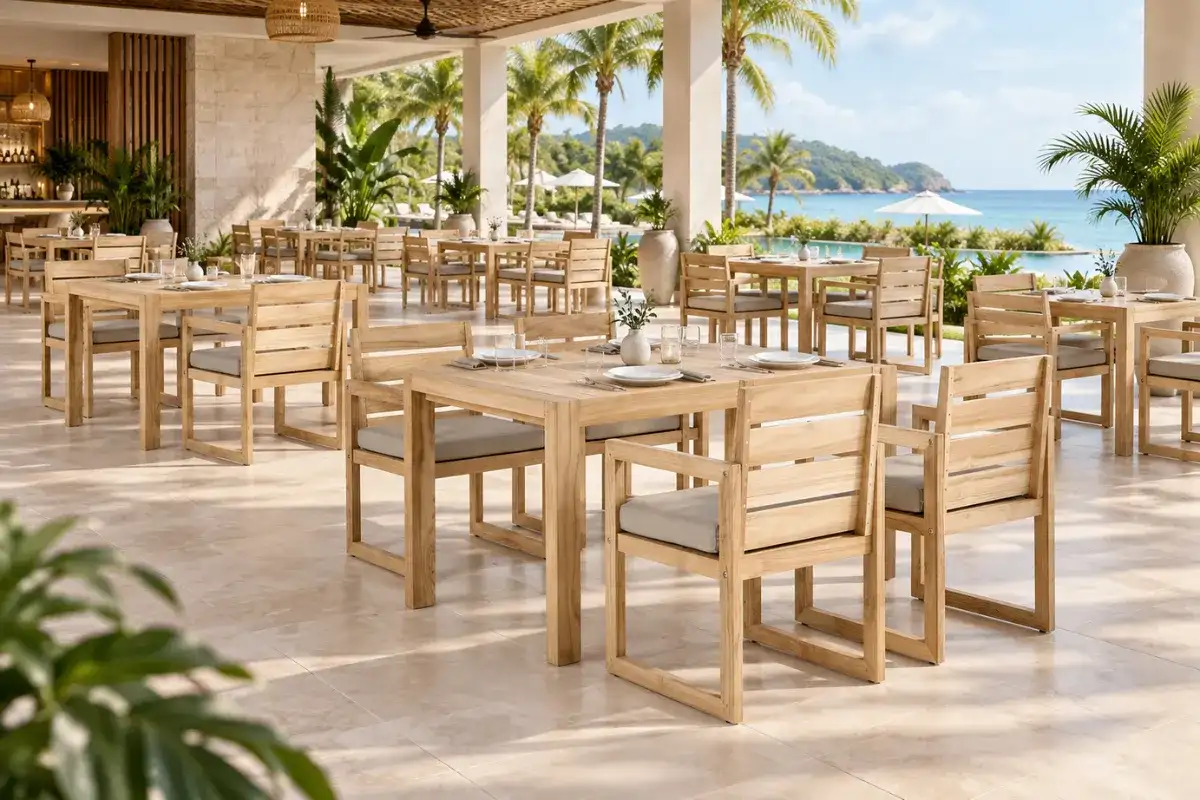
Commercial outdoor dining areas in hotels, resorts, restaurants and cafés must combine guest comfort with reliable performance under frequent use and changing weather conditions. Unlike residential products, commercial outdoor dining sets are used more intensively, moved and cleaned more often, and therefore require careful evaluation of materials, frame construction, stability, weather resistance and maintenance. This guide covers the key factors buyers should consider when sourcing commercial outdoor dining tables and chairs, from material selection and layout planning to quality control and supplier evaluation.
1. What Makes Commercial Outdoor Dining Sets Different?
The key difference between residential and commercial products is the environment in which they are used. While residential dining chairs may see occasional use, chairs in hotels, resorts and busy cafés are used by many guests each day and frequently moved for cleaning or layout changes, placing greater demands on durability and overall construction.
1.1 Designed for frequent daily use
For high-traffic hospitality spaces, frames, joints, welding points and connection areas must remain stable under frequent use. Tables also need a secure base and even support to prevent movement during service.
When evaluating commercial outdoor dining sets, buyers should look beyond appearance and inspect frame alignment, welding quality, table support and hardware. A heavier product is not necessarily stronger; structural design, material specifications and workmanship are equally important.
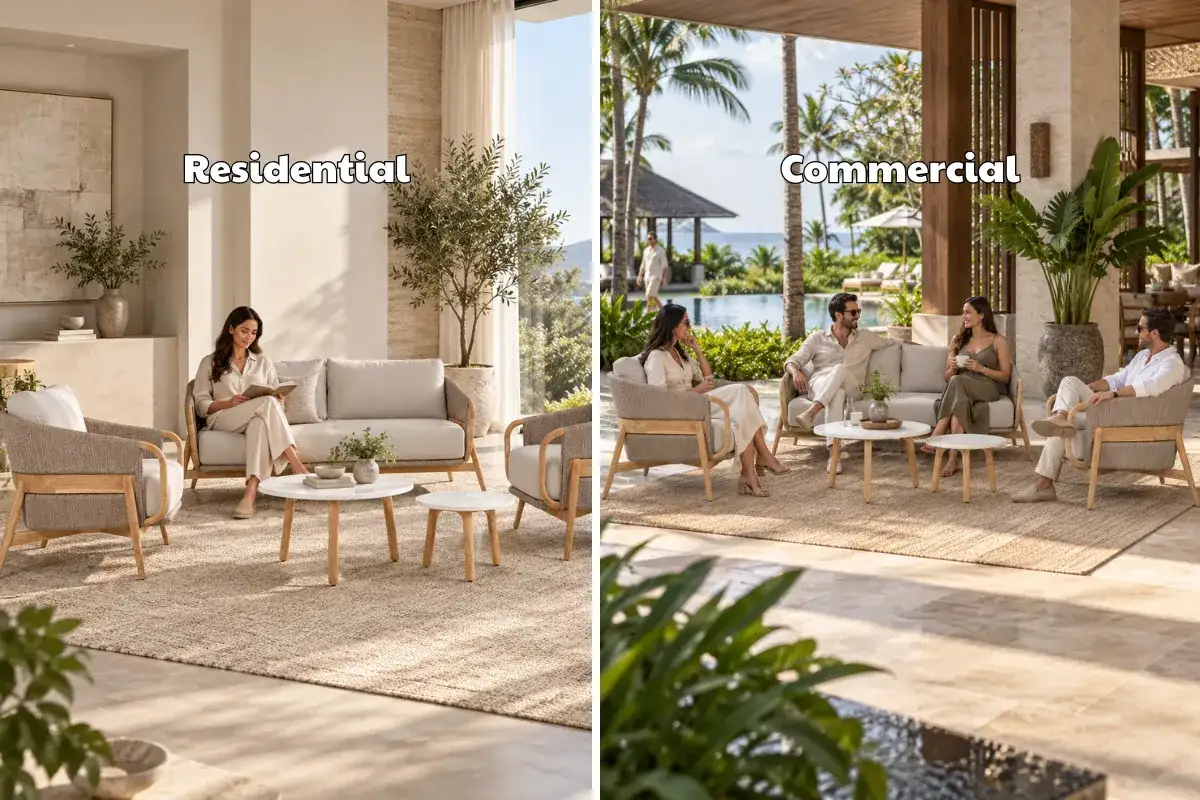
Commercial outdoor products are designed to handle more frequent use than residential settings.
1.2 Outdoor conditions create additional challenges
Outdoor dining products face sunlight, rain, humidity, temperature changes and, in coastal areas, salt exposure. Because conditions vary by location, materials suitable for a covered terrace may not perform the same on an open beachfront or poolside area.
Buyers selecting heavy-duty commercial outdoor dining sets should first consider the installation environment. Covered spaces may prioritize comfort and appearance, while fully exposed areas require greater attention to UV resistance, drainage, corrosion resistance and easy cleaning.

Outdoor conditions require materials that resist UV exposure, moisture, corrosion, and frequent cleaning.
1.3 Commercial products must also support operations
Durability is only one part of commercial performance. Chairs should also be easy for staff to move, while tables and seating need to support cleaning, layout changes and daily restaurant operations.
A very heavy chair may be stable but difficult to handle, while an overly lightweight chair may be unsuitable for exposed areas. Choosing commercial outdoor dining sets therefore requires a balance between structural stability, practical weight, comfort and operational efficiency.
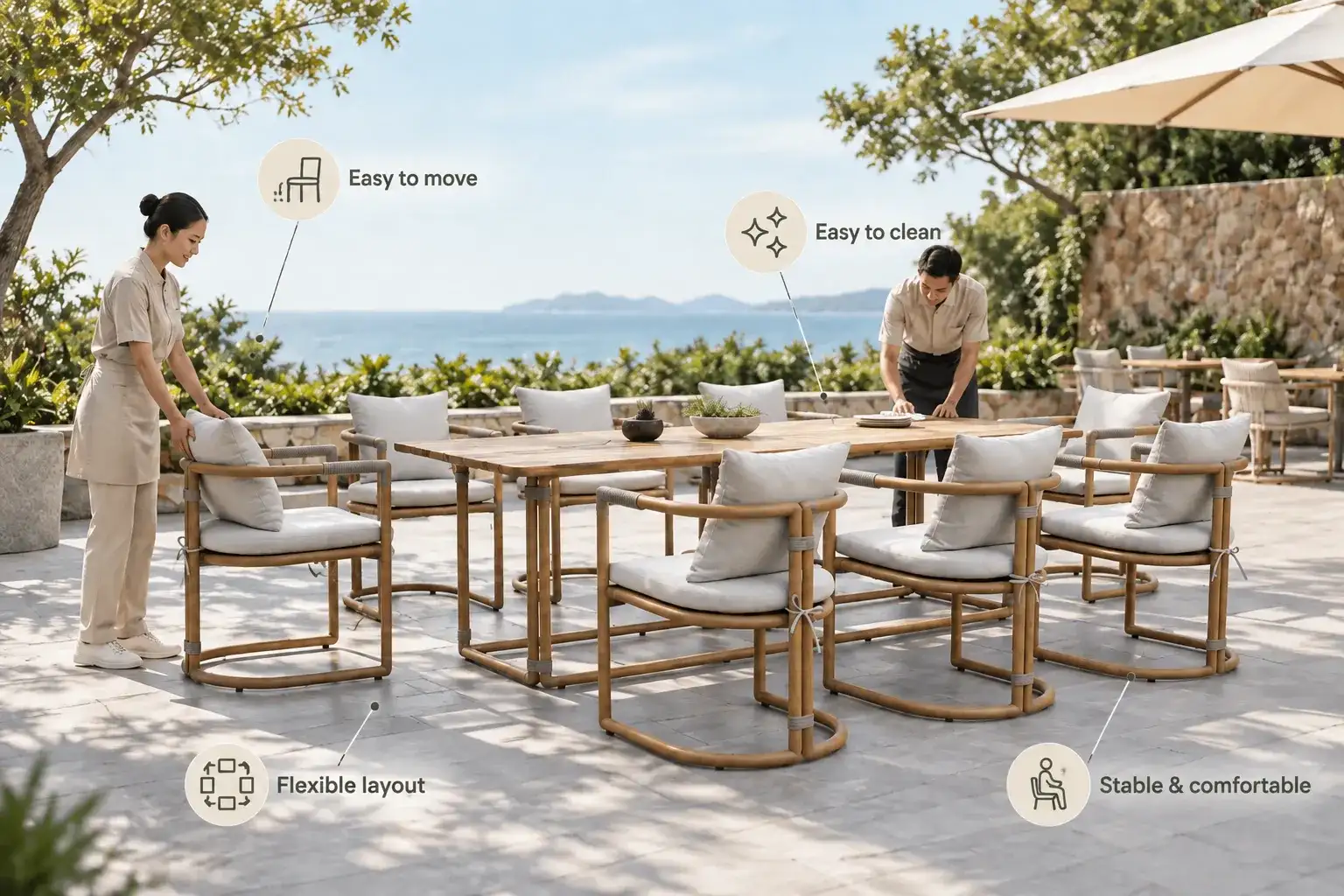
Good commercial design supports both guest comfort and efficient day-to-day restaurant operations.
2. Best Materials for Commercial Outdoor Dining Tables and Chairs
Material selection has a direct impact on appearance, maintenance and long-term performance.
There is no single material that is ideal for every project. Buyers should select materials according to the installation environment, desired aesthetic, expected level of use and maintenance capability.
2.1 Powder-coated aluminum
Powder-coated aluminum is widely used for commercial outdoor dining tables and chairs because it combines relatively low weight, corrosion resistance and design flexibility. Its lighter construction also makes chairs and tables easier for hotel and restaurant staff to rearrange.
Buyers should still evaluate more than the material name. Frame profile, wall thickness where specified, welding, reinforcement, alignment and powder coating all affect product quality. For large hospitality projects, finish and color consistency are also important across multiple units.
Powder-coated aluminum can be combined with outdoor rope, synthetic wicker, teak or different tabletop materials, making it suitable for a wide range of hotel and restaurant concepts.
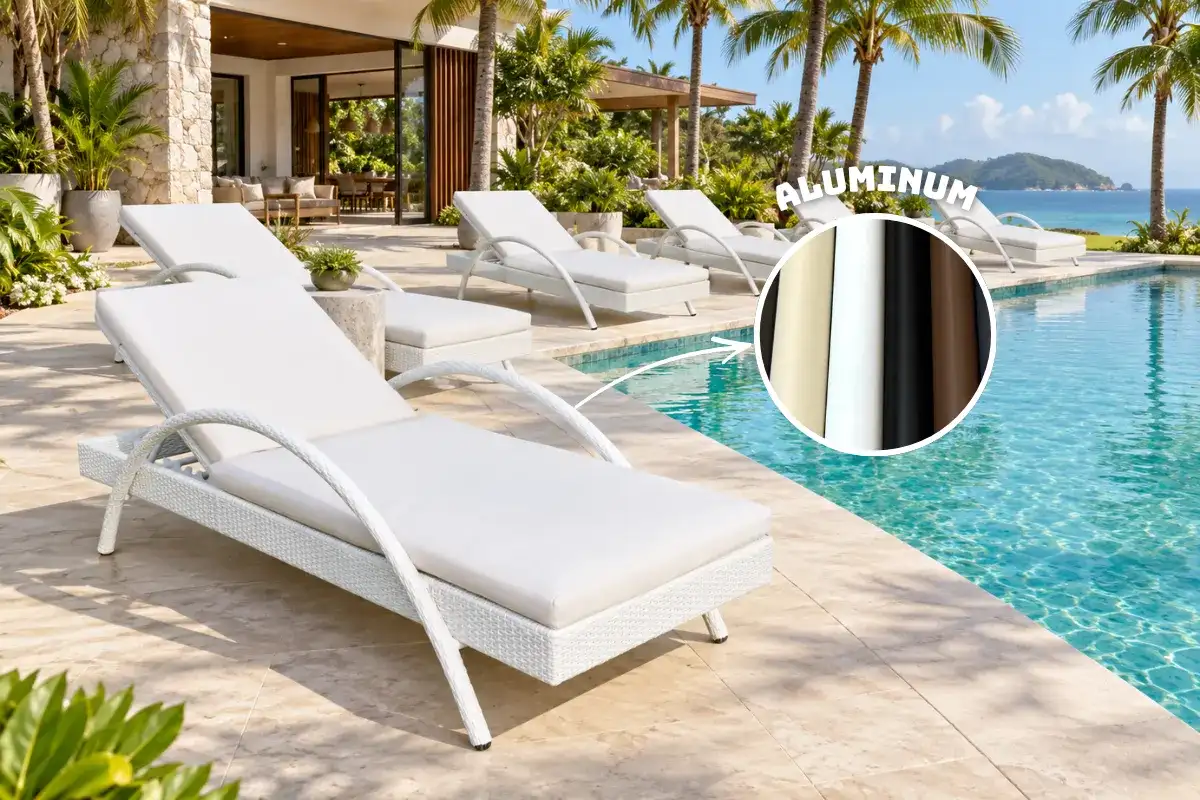
Frame construction and coating quality are key factors when selecting aluminum products for commercial use.
2.2 Teak and outdoor wood
Teak is popular in upscale hospitality projects for its natural appearance and ability to complement resort landscapes and architecture. It is commonly used for dining tables, chair components, tabletops and complete outdoor collections.
Because teak changes naturally over time, buyers should review wood quality, drying, joinery and construction before production and define the expected maintenance approach. Some projects allow teak to weather naturally, while others maintain a warmer tone through periodic care; the key is to match maintenance with the desired visual standard.
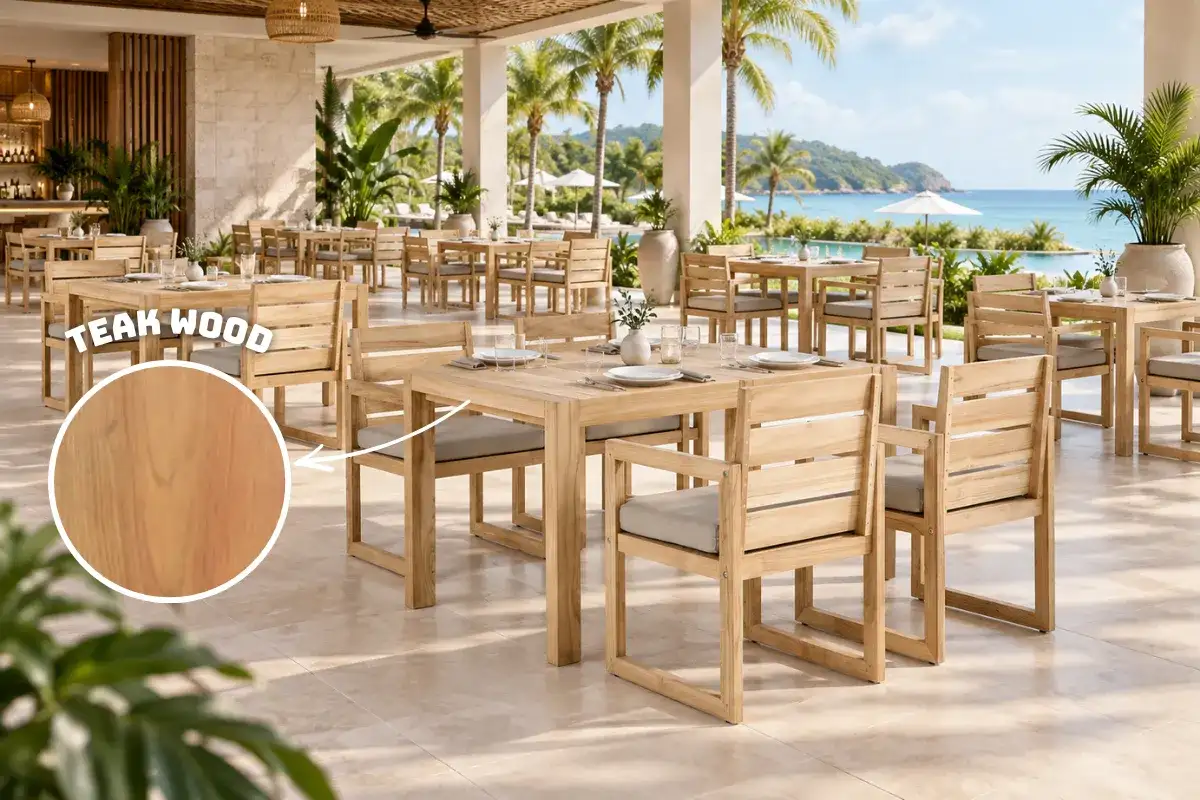
Teak suits premium outdoor settings where natural appearance and long-term maintenance are considered together.
2.3 HDPE synthetic wicker
HDPE synthetic wicker is widely used for commercial outdoor seating when buyers want a handwoven appearance. It is commonly applied to dining chairs, armchairs and bar chairs over a metal frame.
Buyers should evaluate more than color. Strand quality, weaving tension, spacing, direction and finishing points all affect appearance and workmanship. For larger orders, consistency is especially important because uneven weaving or color variation can become obvious across multiple units.
Before production, buyers should review material swatches and, where appropriate, approve a physical sample as the quality reference.
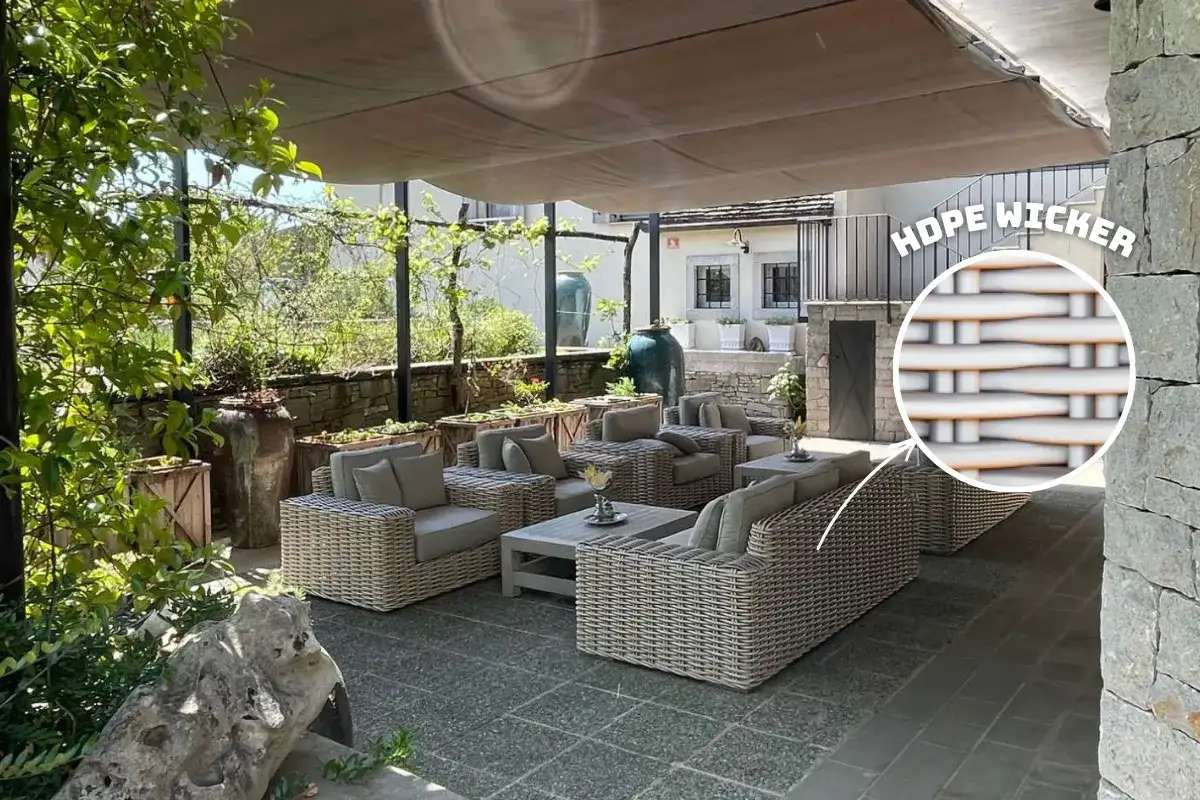
HDPE wicker quality depends on strand consistency, weaving tension, spacing, and finishing details.
2.4 Outdoor rope
Outdoor rope is increasingly used in modern resorts, hotels and restaurants because it creates a lighter, more contemporary appearance. It works well with aluminum or wood frames and suits terraces, poolside restaurants and landscaped dining areas.
Buyers should inspect rope diameter, tension, spacing, attachment points, finishing details and color consistency, while also confirming that the material is suitable for outdoor use. For commercial projects, consistent weaving and proper production control are important to prevent loose or uneven rope after repeated use.
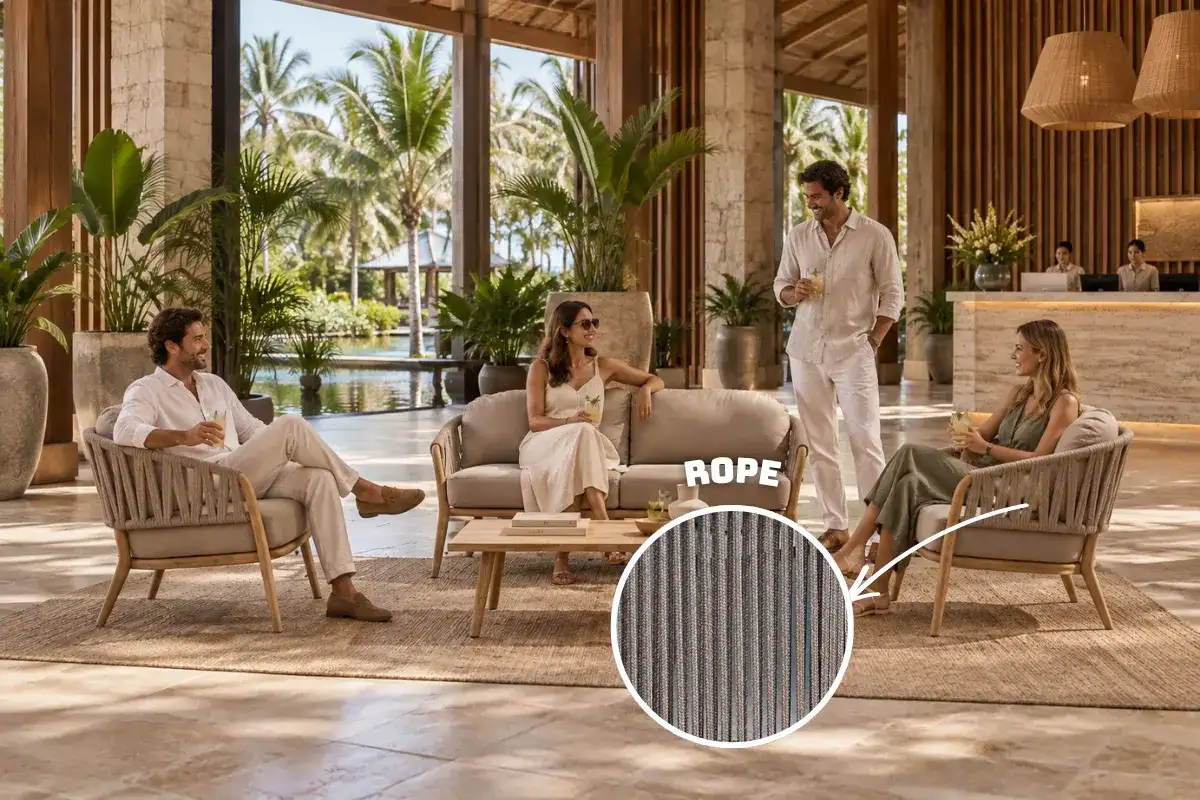
Outdoor rope creates a lighter contemporary look while requiring consistent tension and secure attachment points.
2.5 Tabletops, cushions and fabrics
Tabletops should remain stable, easy to clean and suitable for the intended outdoor conditions. Common options include teak, tempered glass, aluminum and other exterior-compatible surfaces, with selection based on maintenance needs as well as appearance.
Cushions also require careful evaluation. Buyers should check fabric specifications, stitching, zippers, foam construction and whether covers can be removed for cleaning. For exposed areas, fabric, filling and water management should work together effectively.
The best commercial outdoor dining tables and chairs therefore combine compatible materials into a practical system rather than relying on a single material.
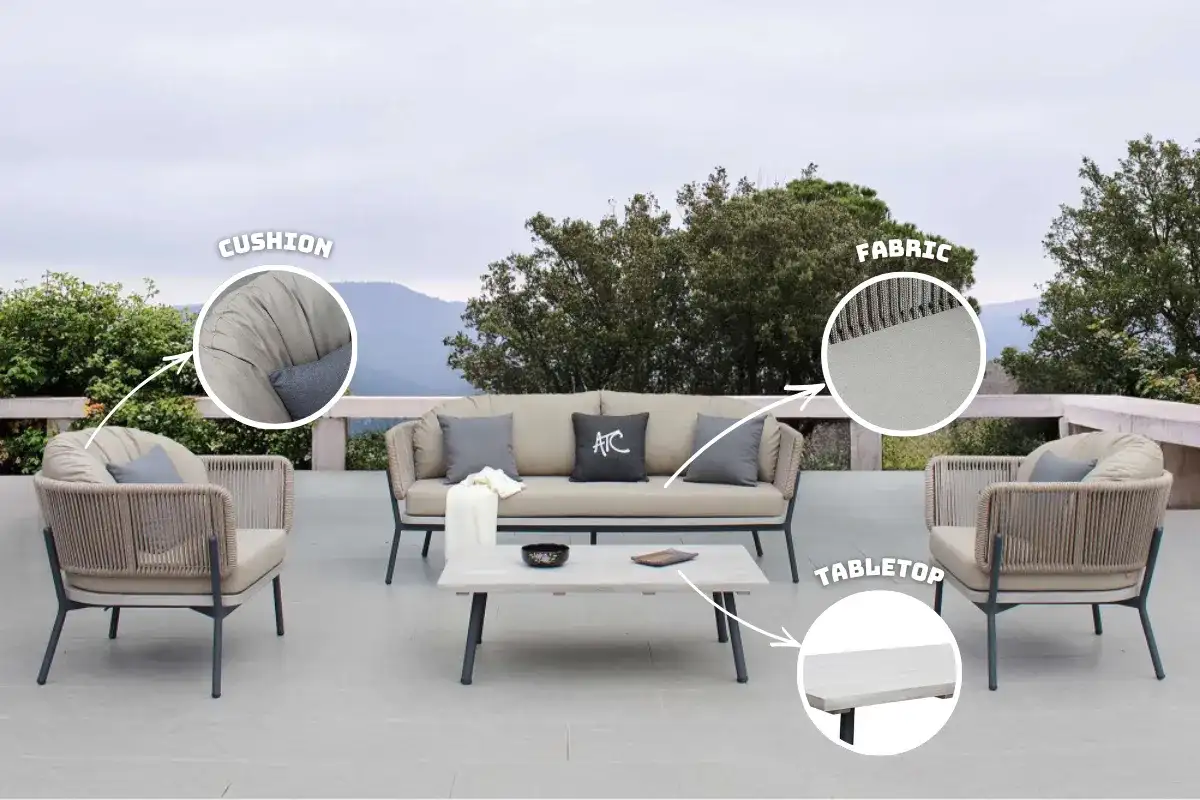
Reliable commercial products combine compatible materials rather than depending on a single component.
3. How to Choose Commercial Patio Dining Sets for Hotels and Restaurants
The right product for one hospitality project may be unsuitable for another.
Before comparing suppliers or designs, buyers should define how the dining area will operate.
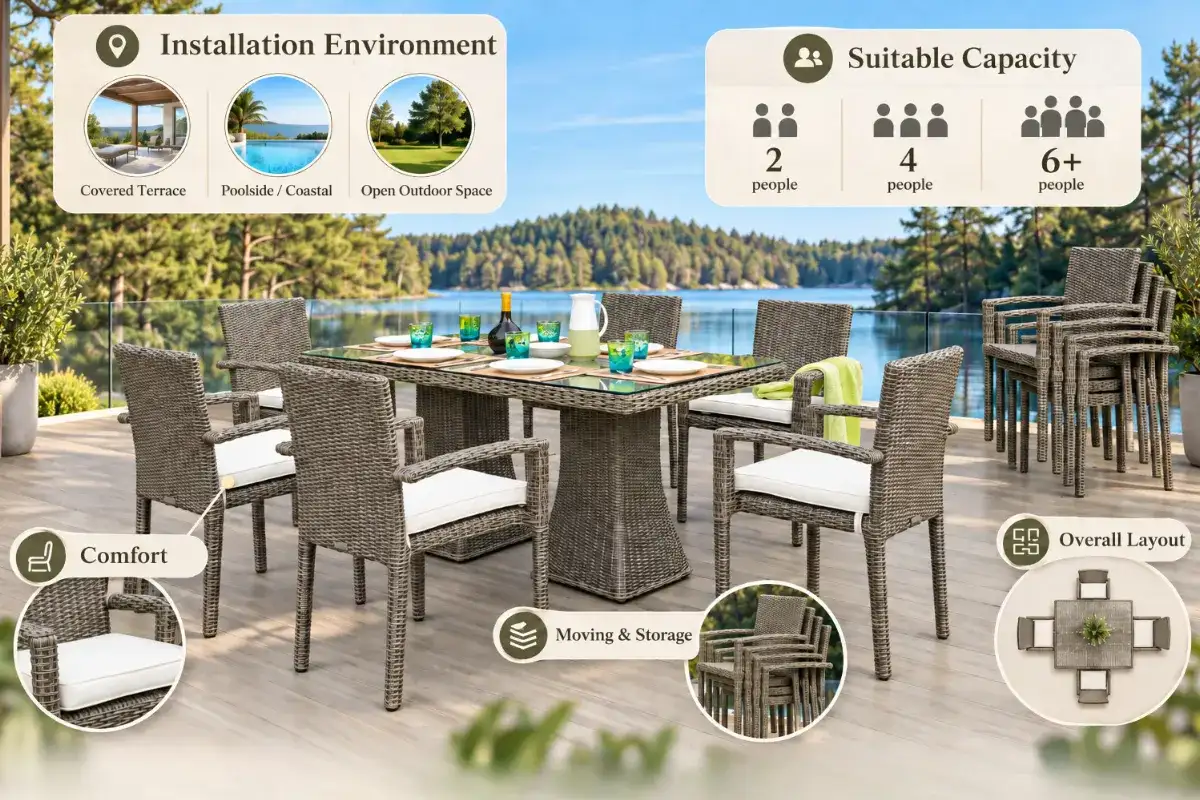
The right commercial dining set should match both the space and the way the area will be used.
3.1 Start with the installation environment
Covered terraces, open gardens, rooftops, poolside restaurants and beachfront resorts expose products to different levels of sunlight, moisture, humidity and salt air.
For this reason, commercial patio dining sets should be selected according to the actual installation environment rather than a general definition of outdoor use. Buyers should first determine where the products will be placed, then choose materials and finishes suited to those specific conditions.
3.2 Choose the correct seating capacity
Table size should match the restaurant concept and expected guest groups. Two-person tables suit cafés and flexible layouts, while four-, six- and larger tables are better for general dining, families or group seating.
However, adding more seats does not always improve efficiency. Guests need enough space to sit comfortably, while staff require clear service paths and chairs need room to move.
Table and chair dimensions should therefore be evaluated together. Armchairs, for example, require more space than armless chairs, so a six-seat table can still feel crowded if chair width and armrest design are not considered.
3.3 Evaluate comfort according to dining duration
Comfort requirements depend on how long guests are expected to stay seated. A café may prioritize short-term convenience, while a resort restaurant needs greater comfort for longer dining sessions.
When evaluating restaurant outdoor dining tables and chairs, buyers should consider seat height, seat depth, backrest support, armrest position, cushion thickness and the relationship between chair and table height.
Whenever possible, buyers should inspect a physical sample, since small differences in proportions or backrest angle can noticeably affect comfort during extended use.
3.4 Consider staff handling and storage
Operations teams should also be involved in product selection, especially when chairs need to be stacked, tables are moved frequently, or layouts change for events and different service periods.
For some projects, stackability and easy storage are priorities; for others, comfort and design matter more. This is particularly important when choosing commercial alfresco dining furniture, as outdoor dining areas often require more flexible layouts than fixed indoor spaces.
3.5 Plan the complete dining layout
Furniture should be planned as part of the overall dining space, with attention to guest circulation, service paths, table spacing, landscaping and nearby architectural elements. Maximizing table count can reduce comfort if chairs block walkways or staff cannot move safely during service.
Shade should also be considered early, as center-pole umbrellas, cantilever umbrellas, pergolas and roof structures can affect table placement. Hotels and resorts may also benefit from using different table sizes for couples, families and groups.
Well-planned commercial patio dining sets support both guest comfort and efficient daily restaurant operations.
4. Commercial Outdoor Dining Set Quality Checklist
Bulk purchasing involves a different level of risk from buying one or two products.
If a defect appears across a production batch, it can affect dozens or hundreds of units. A structured quality-control process is therefore essential.
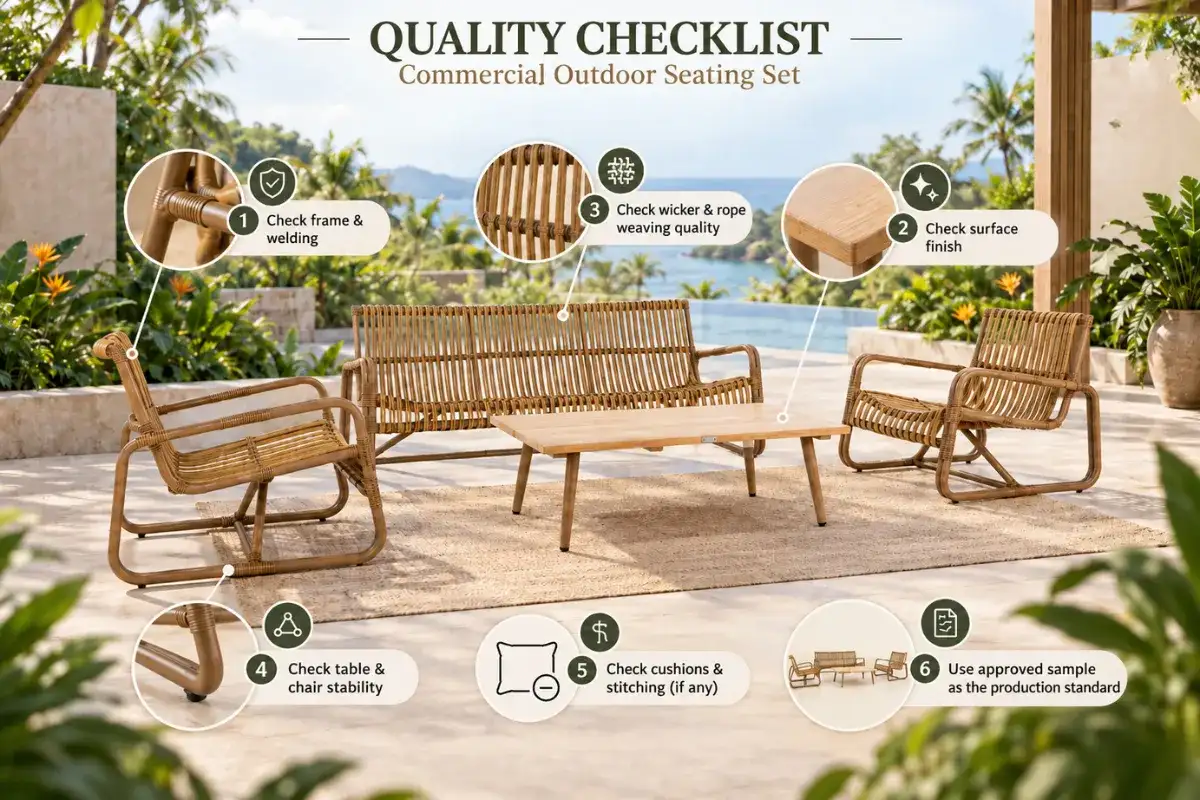
Approved samples and consistent inspection standards reduce quality risks across an entire production batch.
4.1 Check frame construction and welding
The frame is the foundation of the product, so buyers should check alignment, welding, joints, reinforcement and hardware. Chairs should sit evenly, while table frames should remain stable on a level surface.
For heavy-duty commercial outdoor dining sets, structural consistency across multiple units is especially important, as repeated daily use can reveal weaknesses that may not be obvious during a basic visual inspection.
4.2 Inspect surface finishing
Powder coating and other finishes should be checked for scratches, uneven coating, exposed areas and color differences. QC should inspect these details before packaging, when surface defects are easier to identify.
For large restaurant projects, comparing several units side by side can help confirm finish and color consistency across the order.
4.3 Review wicker and rope workmanship
Handwoven wicker and rope require specific inspection standards. Buyers should compare strand type, color, spacing, weaving pattern and tension with the approved sample, paying particular attention to edges and finishing points.
Small variations are natural in handwoven products, but the overall appearance should remain consistent so that multiple units installed together look like the same collection.
4.4 Test tables and chairs for stability
Chairs should remain stable without unusual movement at joints, while tables should perform securely during normal use. QC teams should also verify key dimensions against the approved specifications.
Even small dimensional errors can create problems when products need to fit a planned restaurant layout or when chairs must align correctly with the selected table.
4.5 Inspect cushions and sewing
For chairs with cushions, QC should check dimensions, fabric, stitching, piping where specified, zipper installation and overall fit. Cushions should match the approved material and color reference, especially on large hospitality projects where batch-to-batch color differences may be noticeable.
4.6 Use an approved sample as the production reference
Before mass production, buyers and manufacturers should confirm drawings, dimensions, frame structure, finish, weaving material, fabric and color.
For customized products, a physical pre-production sample can help verify appearance, comfort and construction. Once approved, the sample and specifications become the reference for production and QC, making inspection of commercial outdoor dining sets more objective and consistent.
5. How to Source Commercial Outdoor Dining Sets from a Manufacturer
For large hotel and restaurant projects, the supplier should be evaluated as carefully as the product itself.
A well-designed sample has limited value if the manufacturer cannot reproduce it consistently across the full order.
5.1 Evaluate manufacturing capability
Commercial buyers should understand a manufacturer’s factory scale, production processes, material capabilities, experience and quality-control system. The goal is not simply to choose the largest factory, but one that can handle the specific materials and construction required by the project.
For projects combining aluminum, synthetic wicker, rope, teak and cushions, production must be coordinated across several processes. A capable outdoor furniture supplier should be able to explain how these stages are controlled and how consistency is maintained across the order.
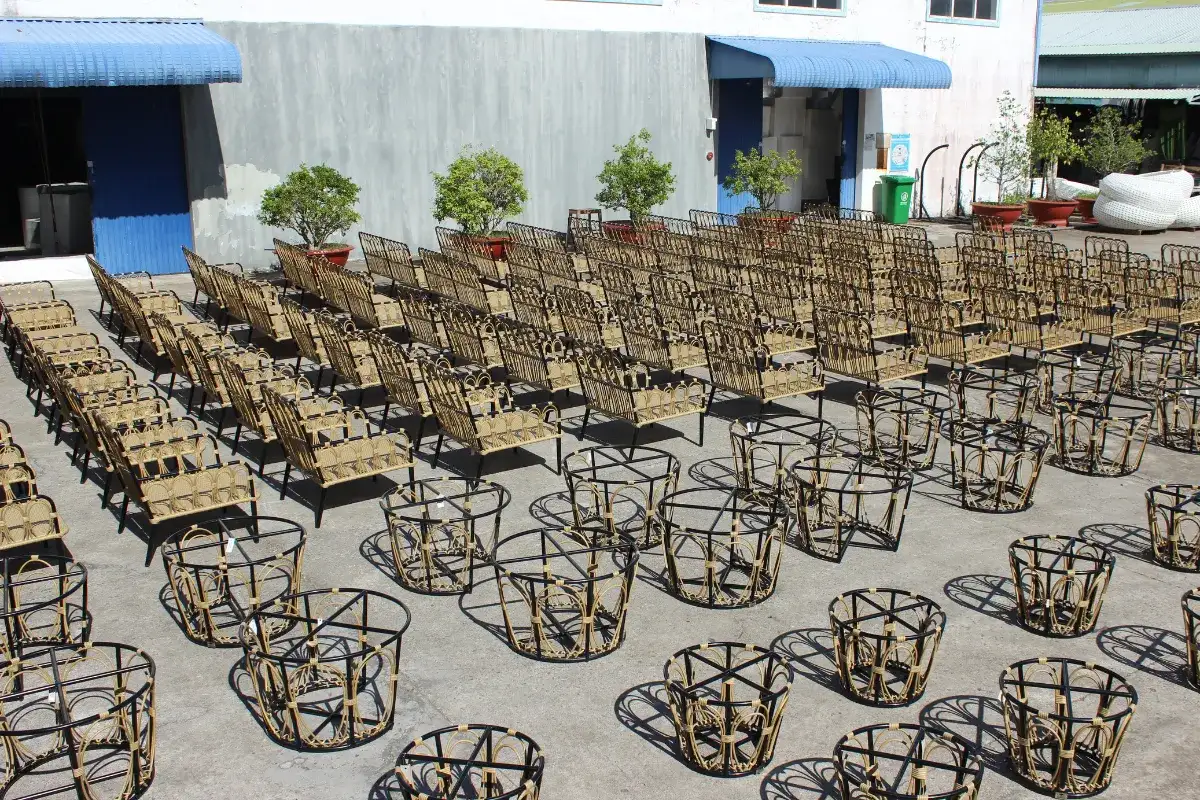
A capable manufacturer must coordinate materials, construction processes, and quality standards across the full order.
5.2 Define specifications before requesting mass production
Specifications should be clear before production begins. For customized commercial outdoor dining sets, buyers should confirm dimensions, frame details, finishes, wicker or rope, wood components, tabletop construction, fabric, cushions and color references.
Drawings help control dimensions and construction, while material swatches provide more reliable references for colors and finishes. Clear specifications make it easier for both buyer and manufacturer to identify deviations.
5.3 Approve samples when customization is significant
A pre-production sample can reduce uncertainty before a large order, especially when dimensions, materials or product details are customized.
The sample allows buyers to review proportions, comfort, construction and appearance before mass production. It can also help ensure dining products coordinate with sofas, lounge chairs, daybeds and other products within the same hospitality project.
Buyers planning a complete hotel or resort project can also review sourcing considerations for wholesale products for hotels, resorts and hospitality projects.
5.4 Establish production and pre-shipment QC
Quality control should take place during production as well as before shipment. Materials and construction can be checked during manufacturing, while final inspection should verify appearance, quantity, stability and packaging.
For customized products, finished units should be compared with the approved sample, drawings and material references. Inspection standards should be agreed before production begins.
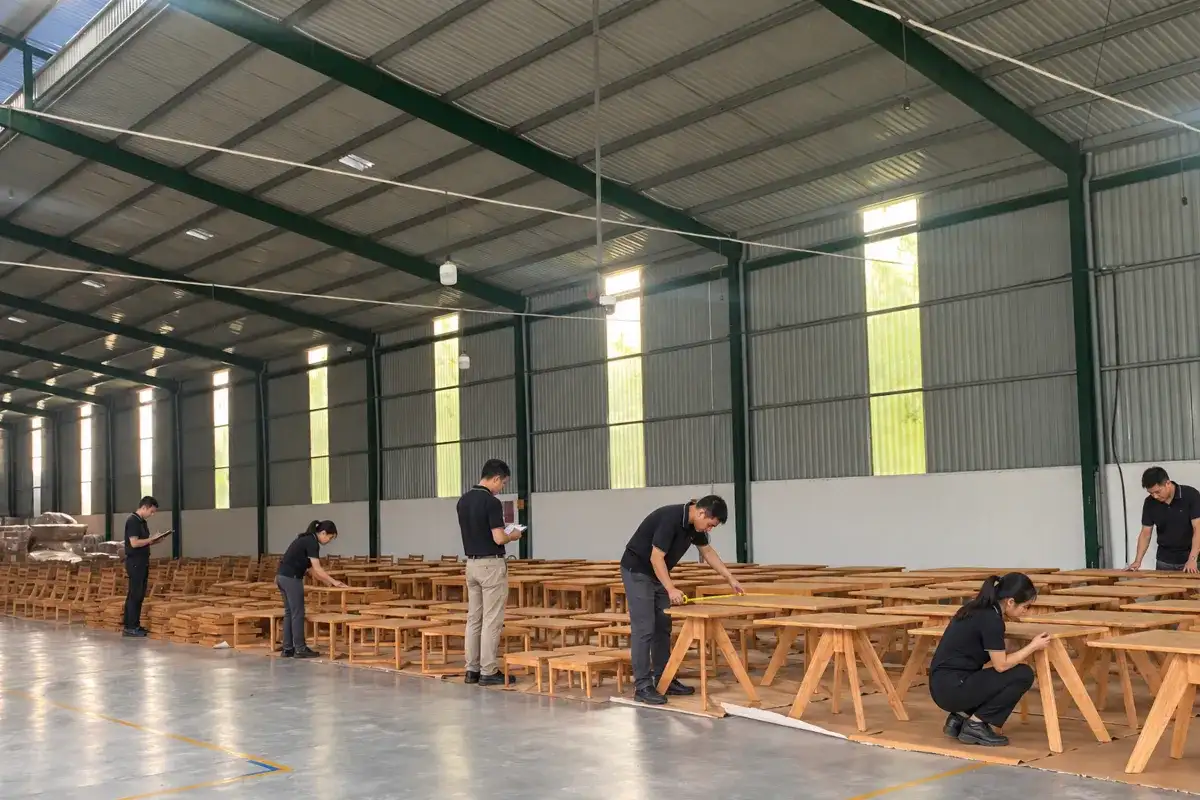
Finished units should be checked against approved samples, drawings, and agreed quality standards.
5.5 Review packaging for export orders
Packaging is important for protecting products during long-distance transportation. Exposed surfaces, legs, armrests and tabletops should be properly protected against movement, abrasion and impact.
Commercial buyers should review the packing method before shipment. Product dimensions and packing configuration should also be considered because they can affect container loading efficiency and logistics costs.
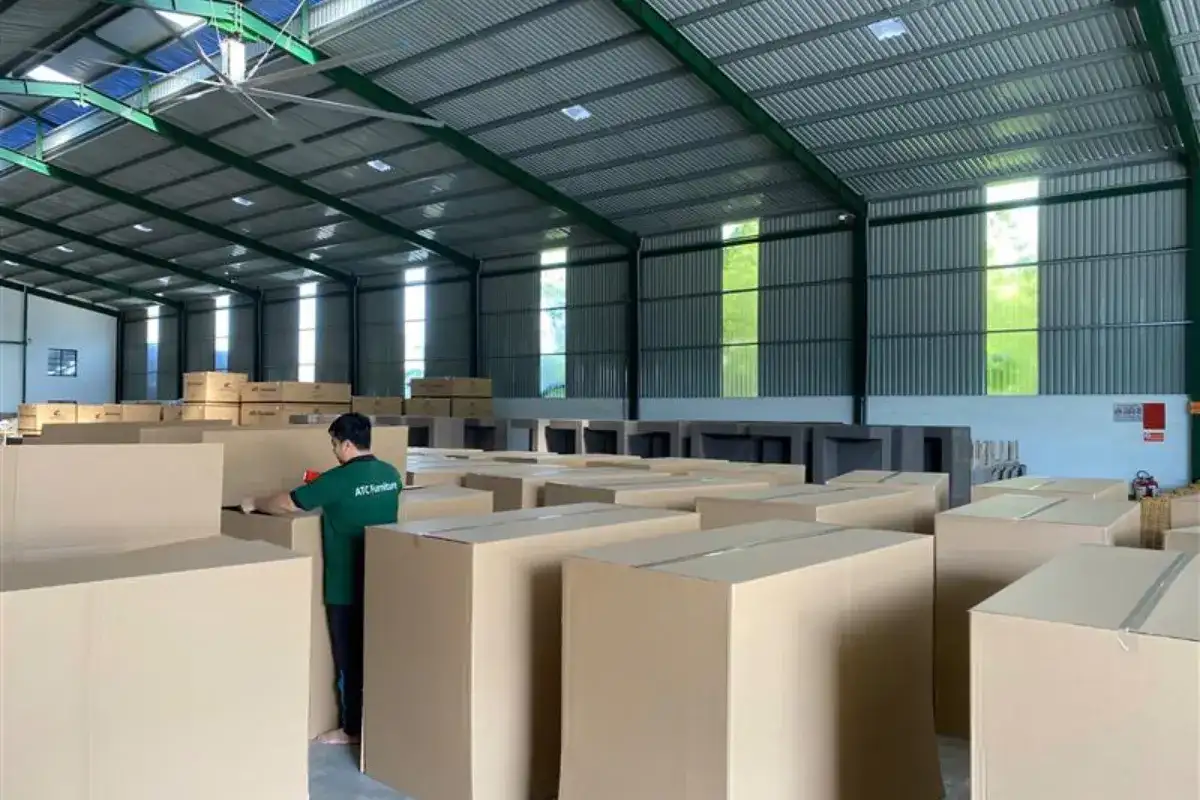
Export packaging should protect exposed surfaces and structural parts throughout long-distance transportation.
5.6 Consider manufacturing experience with outdoor materials
Manufacturers experienced with exterior products are generally more familiar with outdoor materials, woven construction, powder-coated frames, fabrics and export packaging. For synthetic wicker projects, buyers may also consider a Vietnam patio outdoor wicker manufacturer and supplier.
ATC Furniture has manufactured indoor and outdoor products in Vietnam since 2006, with an approximately 30,000 m² factory working with powder-coated aluminum, HDPE synthetic wicker, outdoor rope, teak and outdoor fabrics.
For hotel and restaurant projects, customization should be supported by repeatable production specifications. When sourcing commercial outdoor dining sets in bulk, consistency across the full order is just as important as the quality of the approved sample.
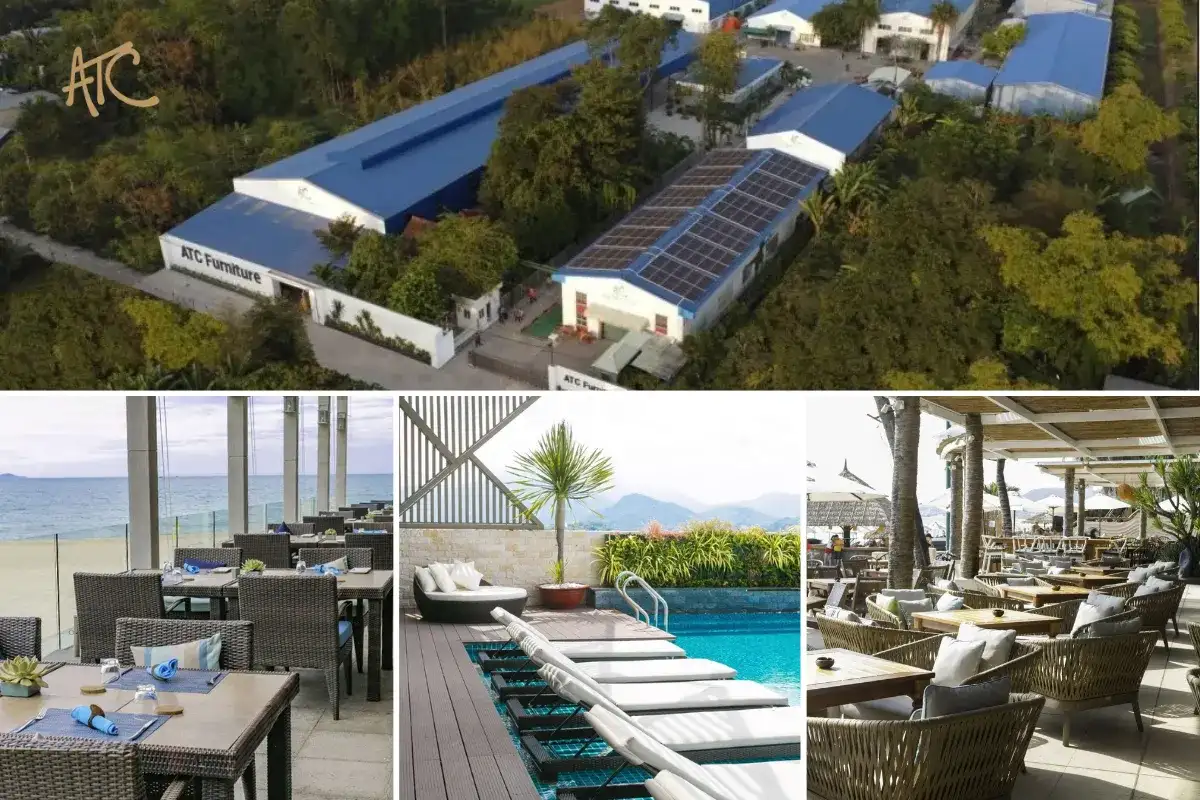
Experienced manufacturers understand how materials, production, and project requirements work together.
6. Frequently Asked Questions About Commercial Outdoor Dining Sets
6.1 What are the best materials for commercial outdoor dining sets?
There is no single best material for every project. Powder-coated aluminum offers corrosion resistance and relatively low weight, teak provides a natural premium appearance, HDPE synthetic wicker creates a handwoven look, and outdoor rope suits contemporary hospitality designs.
Many commercial outdoor dining sets combine several materials. The best choice depends on exposure conditions, maintenance needs, restaurant operations and the desired design.
6.2 What is the difference between commercial and residential outdoor dining sets?
Commercial products are designed for more frequent use, handling and cleaning than residential products. Hotels and restaurants therefore need to consider frame stability, construction, maintenance and consistency across larger quantities.
Commercial products do not always need to be heavy; the key is whether their construction suits the intended operating environment.
6.3 What should restaurants look for when buying outdoor dining tables and chairs?
When evaluating restaurant outdoor dining tables and chairs, buyers should consider durability, stability, comfort, weather exposure, cleaning requirements and staff handling.
Table and chair dimensions should also work together. For large orders, buyers should confirm material specifications, inspect samples where possible and review the supplier’s QC process to ensure consistent quality across the order.
6.4 Can commercial patio dining sets be customized for hotel and restaurant projects?
Yes. Depending on the manufacturer, commercial patio dining sets can often be customized in dimensions, frame finishes, wicker, rope, fabrics, cushions and selected construction details.
Customization should be controlled through drawings, material swatches and approved samples so that the final specifications can be followed consistently during production and QC.