Vietnam Furniture Sourcing Guide: A Practical Guide for Outdoor Furniture Buyers
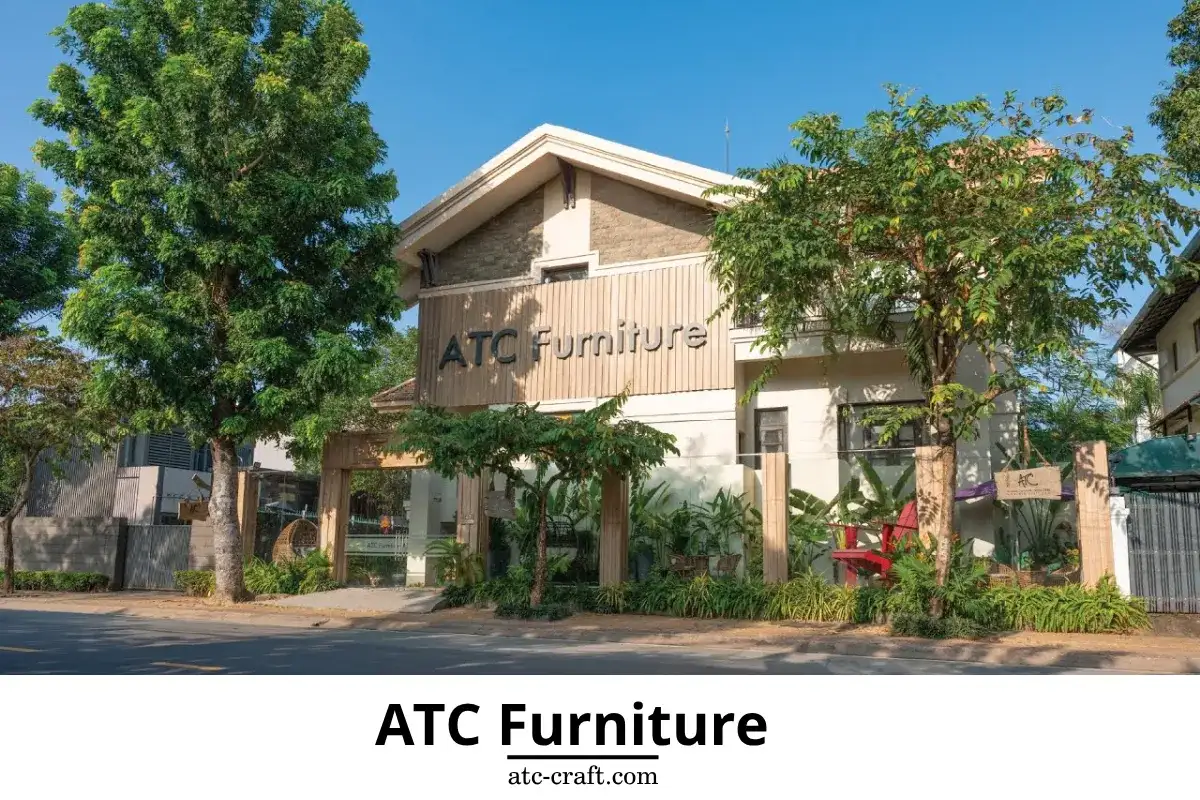
Vietnam has become an important manufacturing base for furniture supplied to retailers, distributors, hospitality projects, and commercial buyers in international markets. From synthetic wicker and outdoor wood to aluminum, rope, and mixed-material collections, furniture from Vietnam offers B2B buyers a wide range of sourcing options across different product categories and price levels.
However, successful sourcing requires more than finding an attractive product or comparing quotations. Buyers need to define specifications clearly, evaluate supplier capabilities, understand production and shipping requirements, and establish quality expectations before placing an order.
This Vietnam furniture sourcing guide explains the key steps outdoor furniture buyers should follow when sourcing from Vietnam, from preparing project information and shortlisting suppliers to managing quotations, quality risks, and long-term supplier relationships.
1. Who Should Use This Sourcing Guide
Sourcing furniture in Vietnam involves different priorities depending on business model, order volume, target market, and product requirements. A retailer may focus on collection variety and mixed-container options, while a hospitality buyer may prioritize durability, customization, and project schedules.
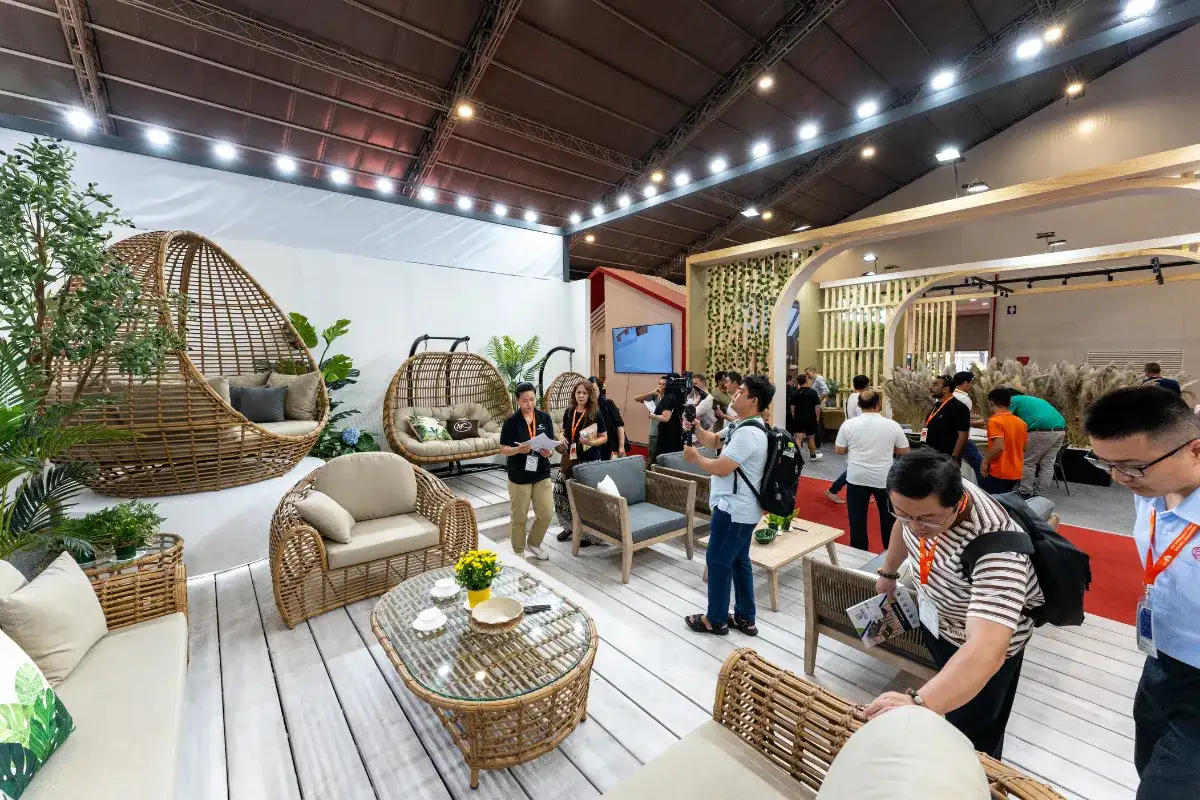
Professional sourcing starts with the right supplier for each business need.
This guide is intended for professional buyers looking for reliable furniture supply, particularly those sourcing outdoor and commercial furniture in bulk.
1.1 Importers, Retailers, Hospitality Buyers, and Project Procurement Teams
This guide is particularly relevant for:
- Importers and distributors looking for stable production capacity, consistent quality, competitive commercial terms, and reliable export support.
- Furniture retailers sourcing ready-made collections, private-label products, or mixed-container orders for different markets.
- Hospitality buyers purchase furniture for hotels, resorts, restaurants, villas, and other commercial spaces where durability and project consistency are important.
For international hospitality projects, buyers can also explore hospitality furniture sourcing in Vietnam to better understand the country’s manufacturing strengths, material options, and supplier capabilities.
- Project procurement teams that need suppliers capable of following technical specifications, delivery schedules, and project-specific requirements.
- OEM and ODM buyers developing customized furniture collections based on their own designs, materials, dimensions, finishes, or branding requirements.
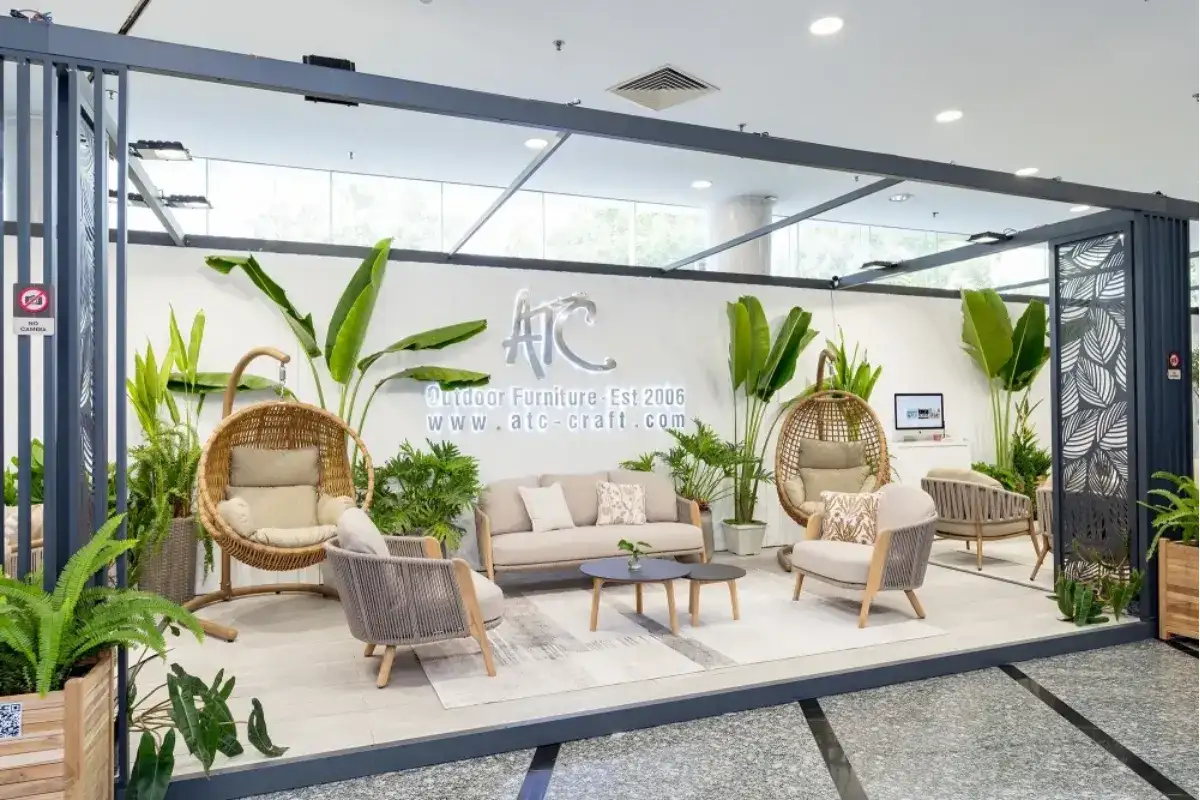
Reliable sourcing depends on quality, consistency, and manufacturing capability.
For these buyers, choosing a supplier should not depend on price alone. Manufacturing capability, product consistency, communication quality, export experience, and the ability to meet agreed specifications all affect the success of a long-term sourcing program.
2. What to Prepare Before Contacting Vietnam Furniture Suppliers
Before contacting Vietnam furniture suppliers, buyers should prepare clear and complete project information. The more specific the requirements are, the easier it is for manufacturers to recommend suitable materials, estimate production costs, and provide accurate quotations.
Incomplete information can lead to pricing differences, specification errors, or repeated revisions during product development.
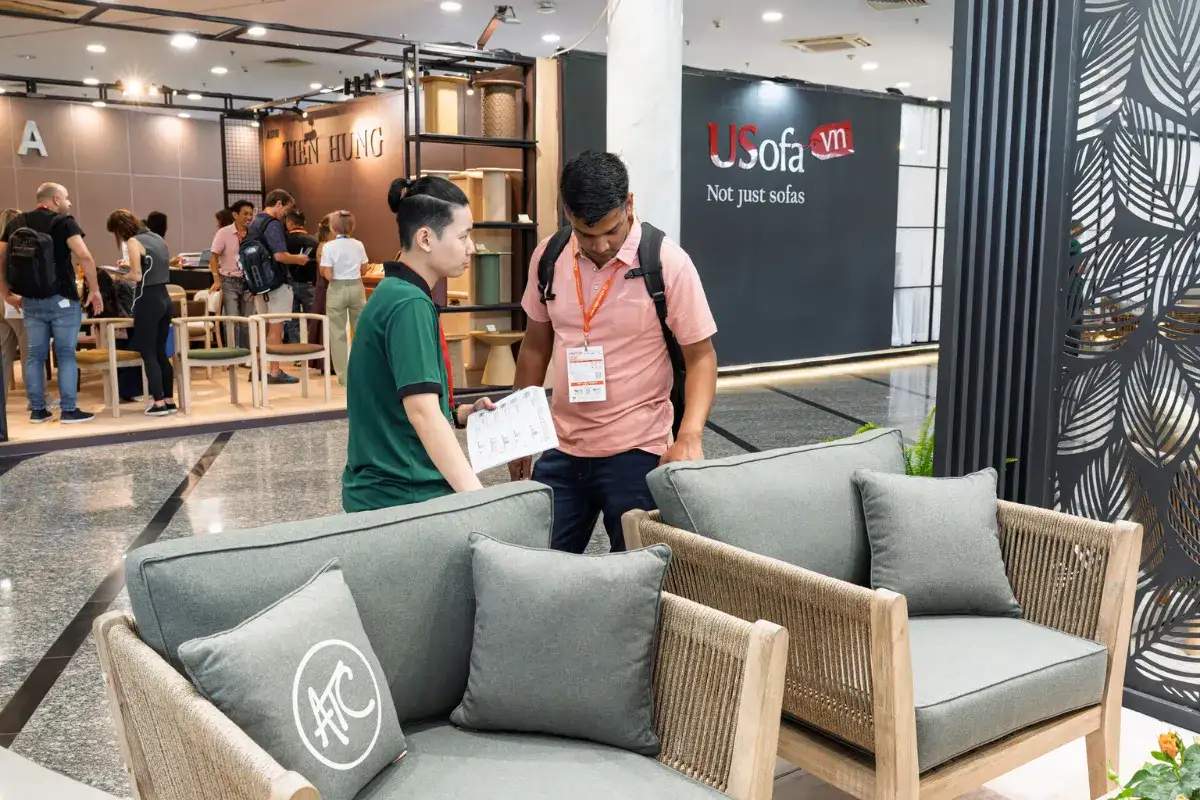
Detailed preparation helps buyers communicate requirements clearly
with furniture suppliers.
2.1 Product Specs, Target Materials, Order Volume, Drawings, and Shipping Requirements
Buyers should prepare the following information before requesting a quotation:
- Product specifications: Include dimensions, frame construction, finishes, cushion details, assembly requirements, and other technical requirements.
- Target materials: Specify preferred materials such as teak, powder-coated aluminum, synthetic wicker, rope, outdoor fabric, or mixed-material combinations.
- Estimated order volume: Share expected quantities, trial order plans, MOQ expectations, container requirements, or annual purchasing volume when available.
- Drawings and reference documents: Provide CAD drawings, technical drawings, reference images, or annotated photos to help suppliers understand design details more accurately.
- Quality requirements: Clarify performance expectations, inspection standards, testing requirements, and target market requirements where relevant.
- Shipping requirements: Confirm destination country, preferred Incoterms, packaging requirements, labeling, shipping marks, and expected delivery schedule.
Clear preparation allows suppliers of furniture from Vietnam to evaluate whether their production capability matches the project before moving into sampling or bulk production.
For buyers sourcing wood furniture from Vietnam or mixed-material outdoor collections, defining specifications early is particularly important because material selection, finishes, construction methods, and packaging can directly affect production cost and lead time.
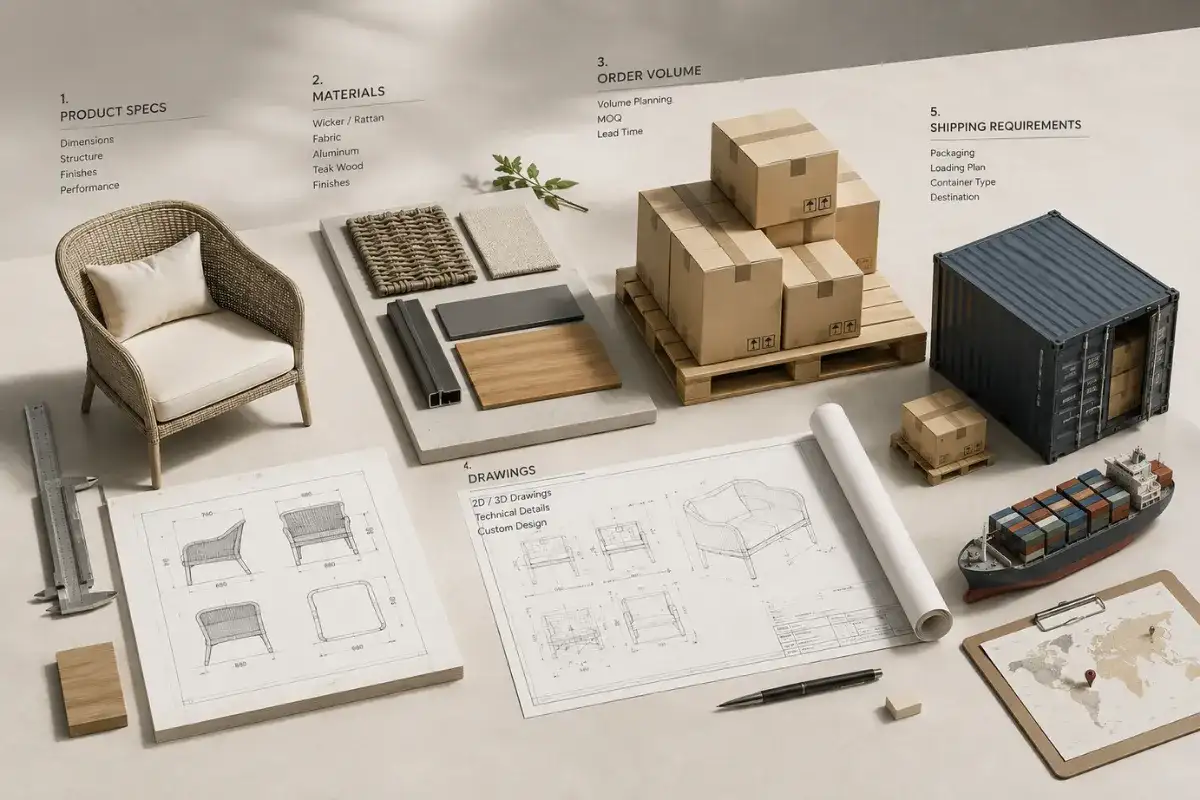
Early planning helps align materials, production, packaging, and lead times.
3. How to Shortlist Reliable Suppliers
Shortlisting reliable Vietnam furniture suppliers requires more than comparing product photos or quotations. B2B buyers should evaluate whether a manufacturer has the production capability, export experience, product range, quality control, and communication standards needed for the project.
A structured evaluation process helps reduce sourcing risks before sampling or bulk production begins.
Production scale: Prioritize large-scale manufacturing operations to prevent supply chain bottlenecks or production delays.
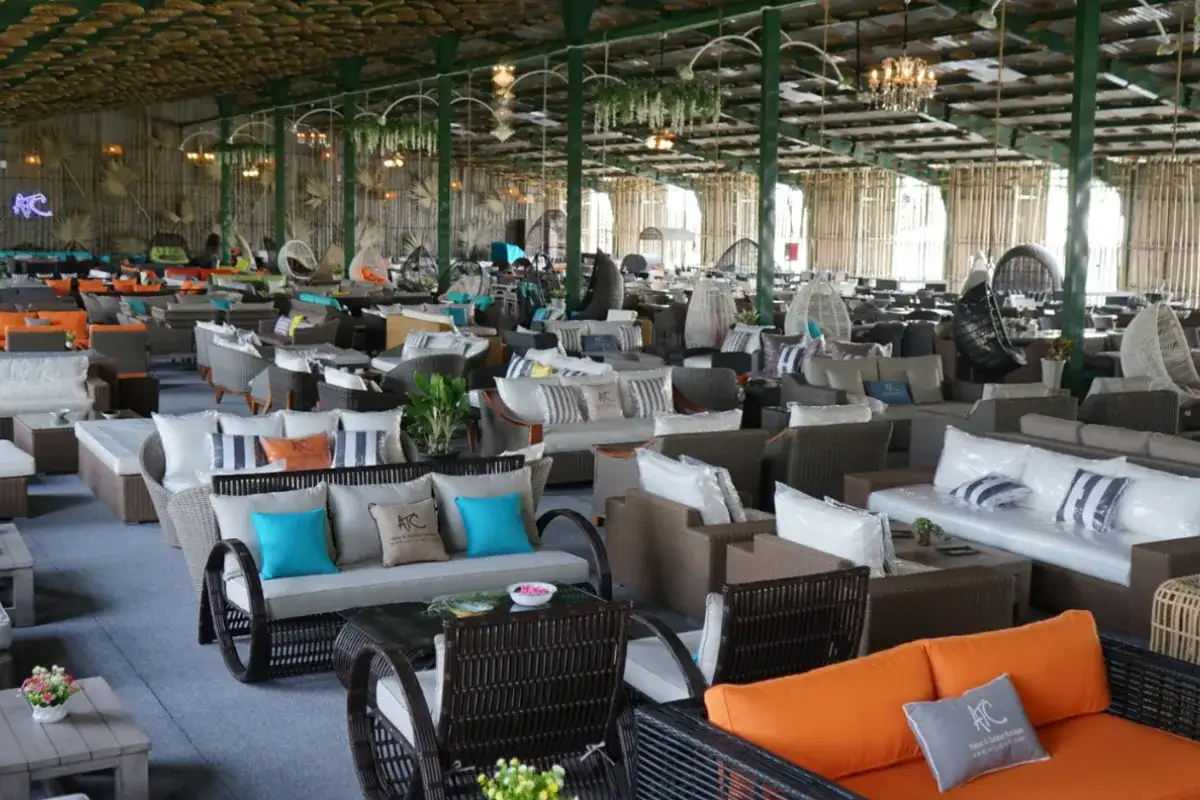
Reliable suppliers combine production scale, product variety, and consistent quality.
Factory facilities: Review whether the factory has suitable equipment, organized production areas, and facilities that support the required product categories and order volume.
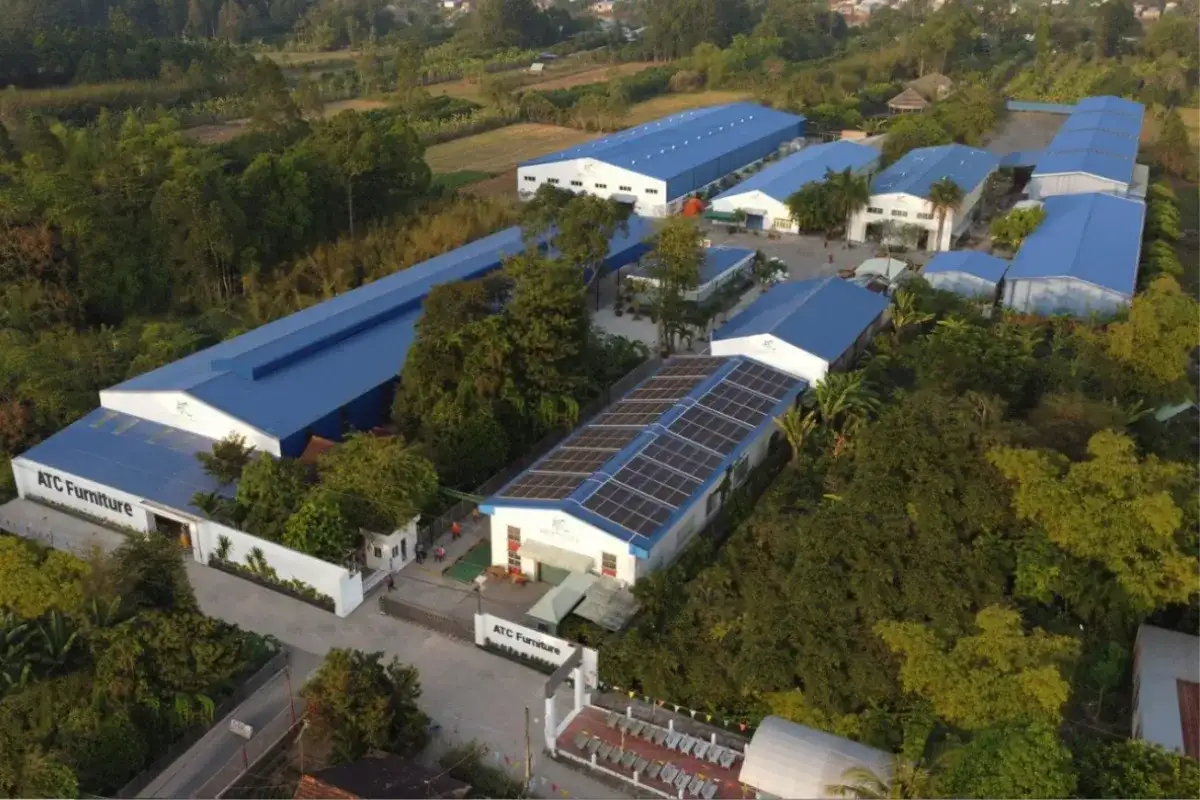
Factory facilities reflect a supplier’s ability to support production requirements.
Official website: A clear and regularly updated website can help buyers review product categories, company information, and available manufacturing capabilities before making direct contact.
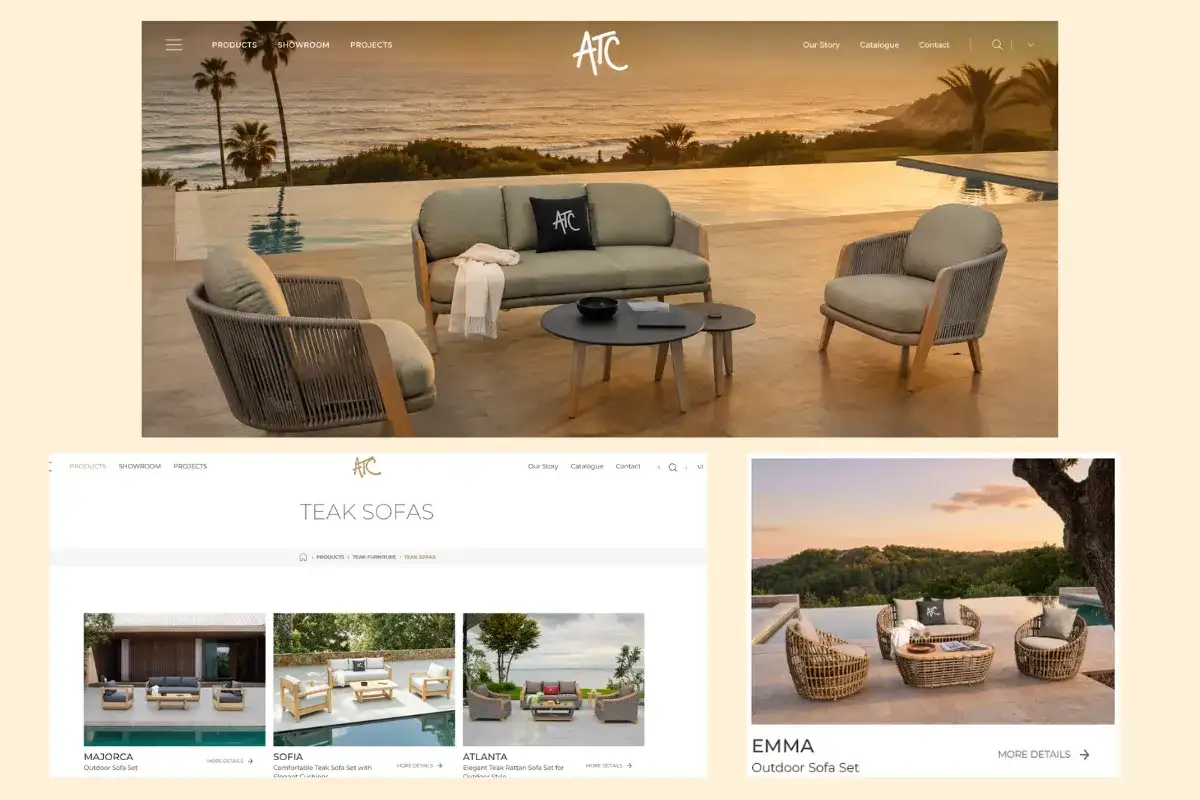
Updated product information helps buyers evaluate suppliers before direct contact.
Project portfolio: Reviewing previous retail, hospitality, or commercial projects can help buyers understand whether the supplier has experience with similar requirements.
Buyers who want to compare multiple manufacturers in person can also attend a Vietnam furniture fair in 2026 to explore product collections, meet suppliers, and support their sourcing decisions.
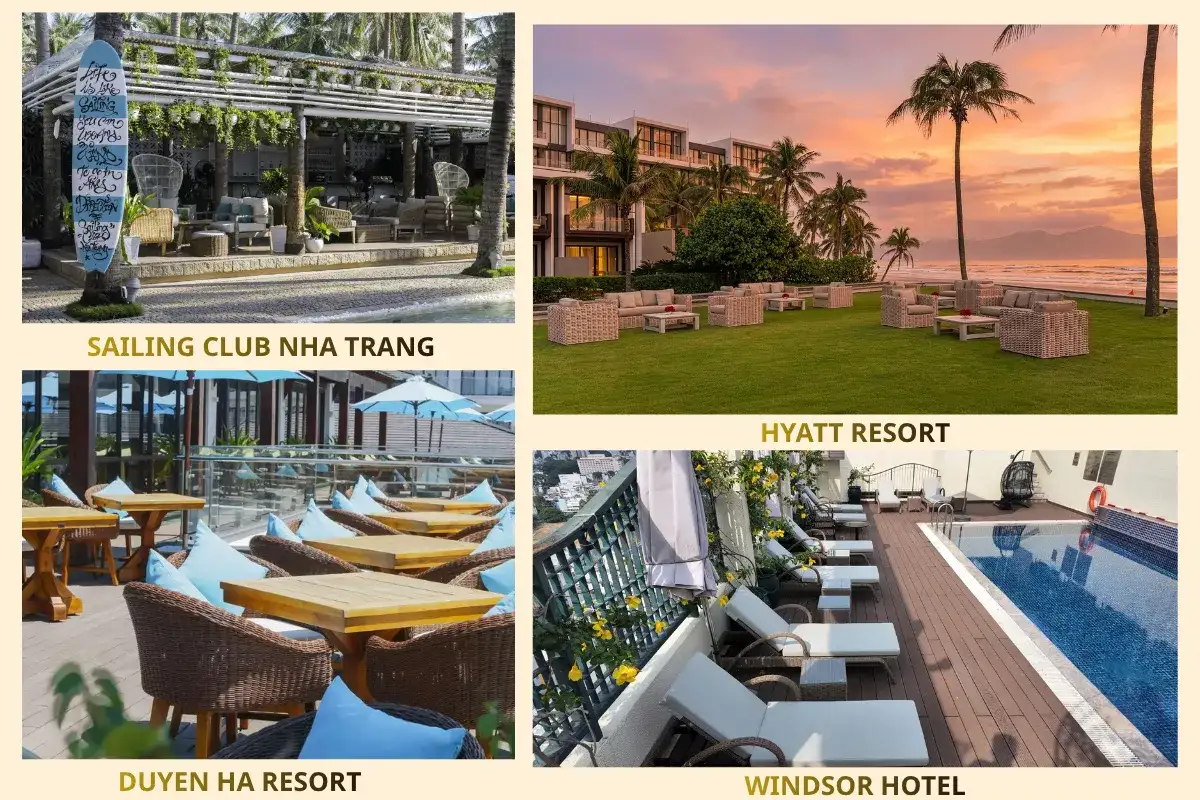
Completed projects demonstrate experience across diverse hospitality environments.
3.1 Factory Capability, Export Experience, Product Range, and Communication Quality
Key factors to review include:
|
Criteria |
What Buyers Should Check |
Factory capability |
Production capacity, workforce, equipment, production planning, and ability to handle expected order volumes |
Export experience |
Experience with international orders, export documentation, packaging, and destination-market requirements |
Product range |
Relevant outdoor furniture categories, materials, and ability to support complete collections |
Quality control |
Incoming material checks, in-process inspection, final inspection, and sample approval procedures |
Communication quality |
Response time, technical accuracy, clarity of updates, and ability to confirm revisions in writing |
Project experience |
Previous work with retailers, hospitality projects, distributors, or other B2B buyers with similar requirements |
Factory size alone does not determine supplier reliability. Buyers should focus on whether production capacity matches expected order volume and whether the supplier can maintain consistent quality across repeated orders.
When evaluating wooden furniture Vietnam suppliers or manufacturers producing synthetic wicker, aluminum, rope, and mixed-material collections, buyers should also review material sourcing, finishing quality, construction details, and available product samples.
Export experience is another important factor, particularly for buyers importing furniture from Vietnam for the first time. Manufacturers familiar with international shipments are generally better prepared to coordinate export packaging, documentation, labeling, and container loading requirements. Buyers can also use a Vietnam furniture sourcing fair guide to compare suppliers and prepare for in-person sourcing visits.
Clear communication is equally important. A reliable supplier should be able to answer technical questions, confirm specifications accurately, communicate production updates, and document changes throughout the sourcing process.
4. Questions to Ask Before Requesting a Quotation
A quotation should be based on the same specifications across all suppliers. Before comparing prices, buyers should confirm the commercial and production terms that can affect total cost, lead time, product consistency, and after-sales support.
Clarifying these details early makes quotations easier to compare and reduces unexpected changes after sampling or production begins.
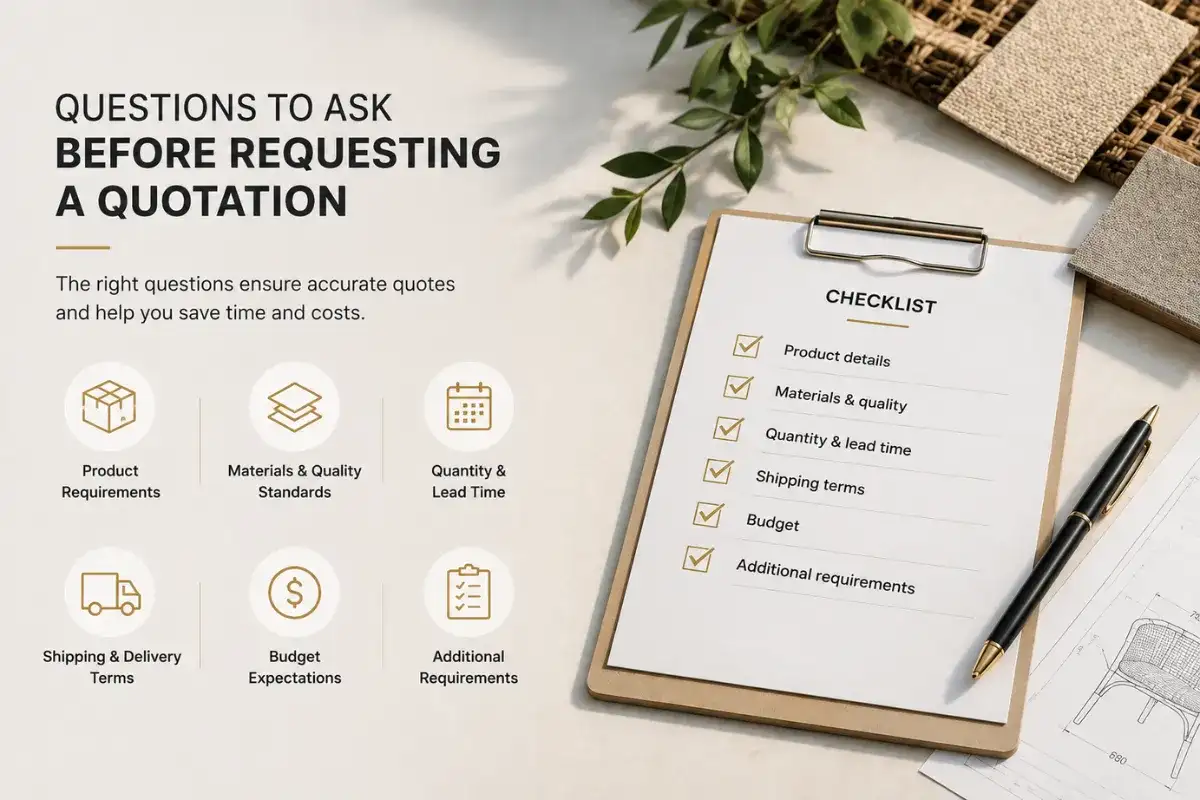
Clear requirements help buyers receive accurate and comparable quotations.
4.1 MOQ, Sample Cost, Lead Time, Packaging, Warranty, and Customization
|
Topic |
What Buyers Should Confirm |
Minimum Order Quantity (MOQ) |
MOQ per item or collection, mixed-container options, and requirements for trial orders |
Sample cost |
Sample price, development fee, sample lead time, and whether any fees can be credited toward a bulk order |
Production lead time |
Standard production time, peak-season capacity, and factors that may affect delivery schedules |
Packaging |
Export cartons, protective packaging, KD requirements, labeling, shipping marks, and retail-ready packaging if needed |
Warranty |
Warranty coverage, claim procedures, replacement parts, and after-sales support |
Customization |
Available changes to dimensions, materials, finishes, fabrics, colors, branding, and packaging |
For buyers sourcing furniture made in Vietnam, these questions are especially important when comparing multiple manufacturers because a lower unit price may not include the same packaging, customization, sampling, or service conditions.
Buyers should also confirm which terms are included in the quotation, such as tooling, sample development, packaging, testing, and shipping-related charges. This helps ensure that supplier comparisons are based on equivalent requirements rather than price alone.
Minimum Order Quantity (MOQ): MOQ affects both unit cost and shipping efficiency. Buyers should confirm whether the supplier allows mixed-container orders, trial quantities, or different MOQ levels across product categories.
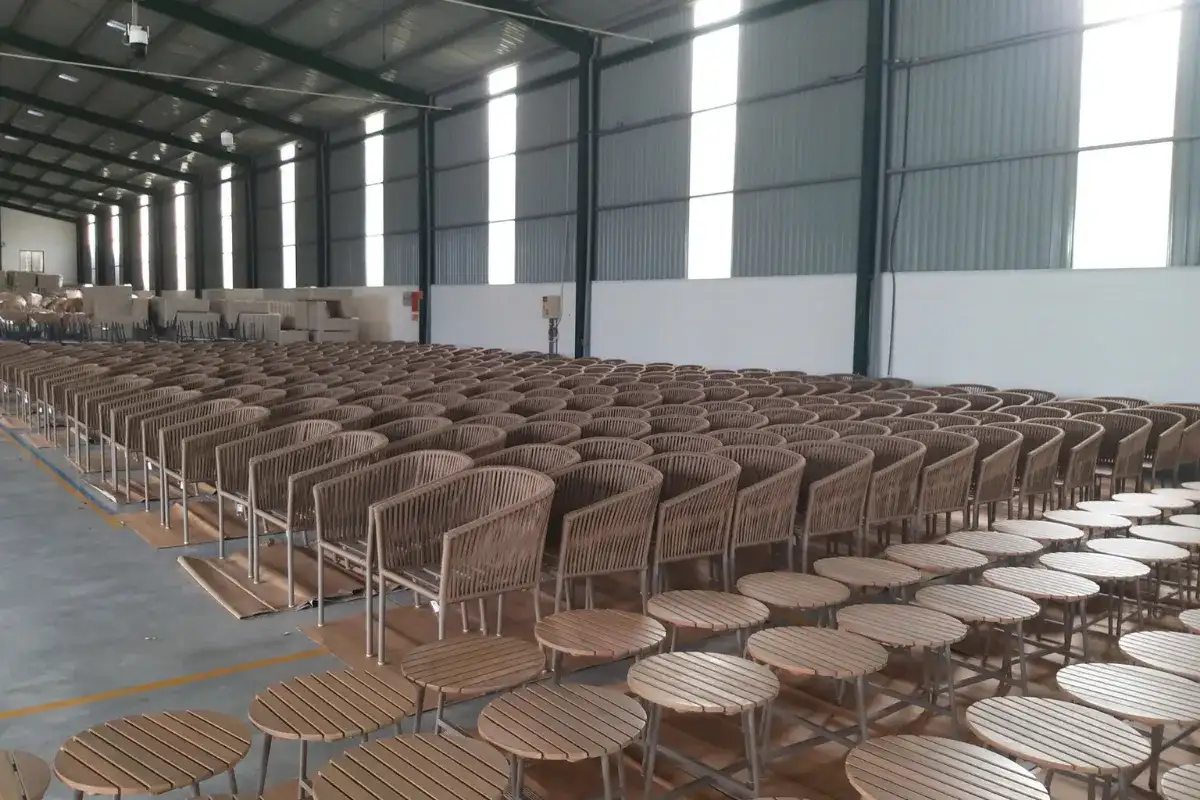
Order volume should align with supplier capacity and shipping requirements.
Sample costs:Sample development helps buyers verify materials, construction, finishes, and design details before bulk production. Confirm sample fees, lead time, and whether any costs can be credited toward a future order.
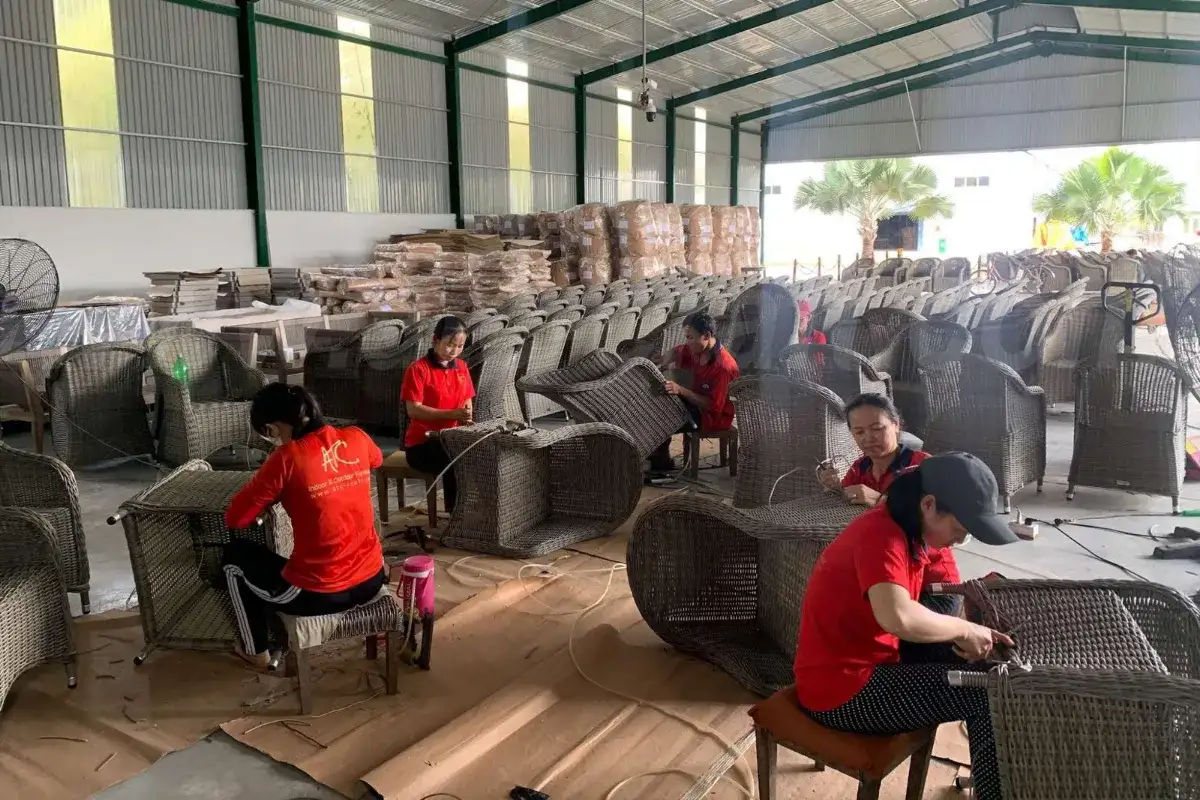
Sample approval helps ensure product details meet buyer requirements.
Lead time, packaging, warranty, and customization: Beyond pricing, buyers should clarify production schedules, export packaging, warranty terms, and customization options to ensure the quotation reflects the full scope of the project.
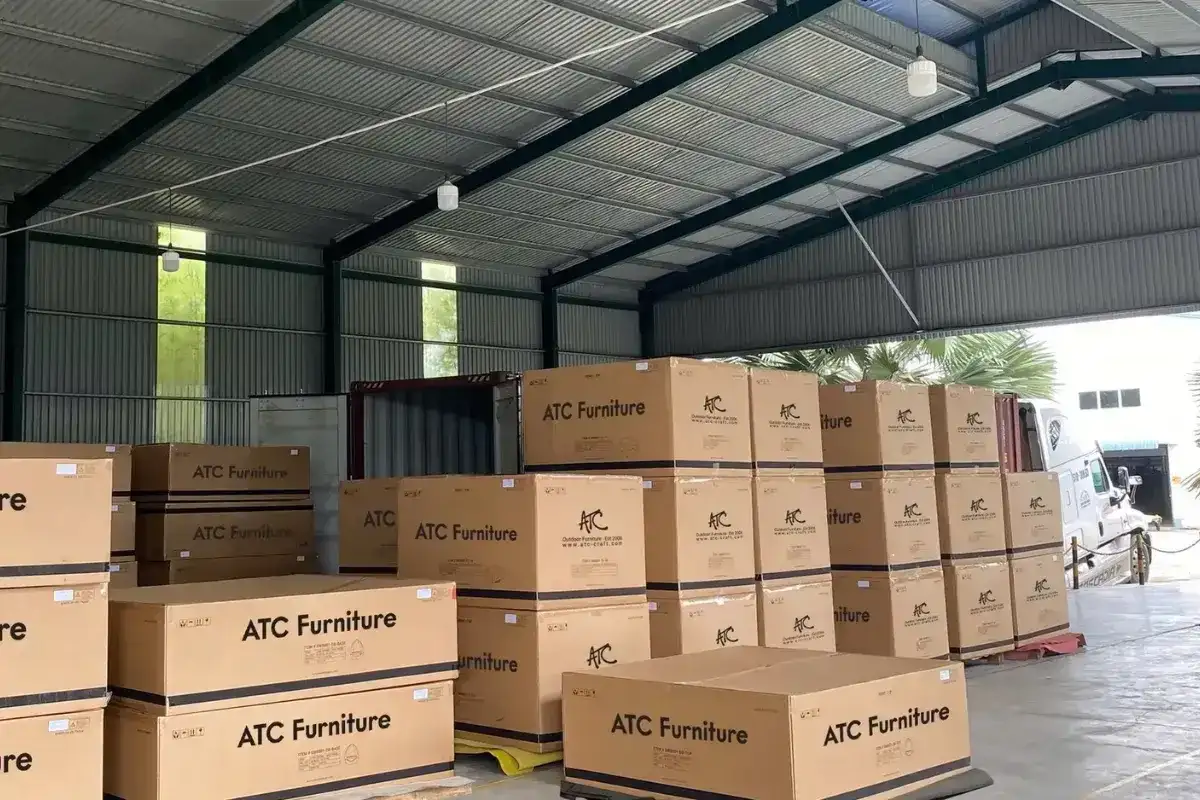
Proper packaging helps protect furniture throughout international shipping.
5. Common Sourcing Risks and How to Reduce Them
Sourcing furniture from Vietnam can be highly effective, but buyers still need to manage common risks related to quality, production, communication, logistics, and total cost. Identifying these risks early helps protect project timelines and reduces unexpected issues before shipment.
5.1 Common Sourcing Risks
|
Risk |
How to Reduce It |
Inconsistent product quality |
Approve samples, confirm specifications in writing, and inspect goods before shipment |
Production delays |
Agree on a realistic schedule and monitor key production milestones |
Specification errors |
Use technical drawings, approved samples, and written confirmations for all revisions |
Shipping damage |
Confirm export packaging, protective materials, and container loading requirements |
Hidden costs |
Calculate total landed cost, including freight, duties, inspections, and logistics |
Unverified supplier capability |
Review factory capacity, quality control procedures, export experience, and project references |
These risks can affect both first-time importers and experienced buyers, especially when product requirements, quality standards, or delivery expectations are not clearly defined from the beginning.
5.2 How Buyers Can Reduce Sourcing Risks
Reducing sourcing risks requires buyers to control quality, confirm delivery schedules, manage total costs, and evaluate supplier reliability before placing large orders. A structured sourcing process helps prevent disruptions and creates clearer expectations between buyers and manufacturers.
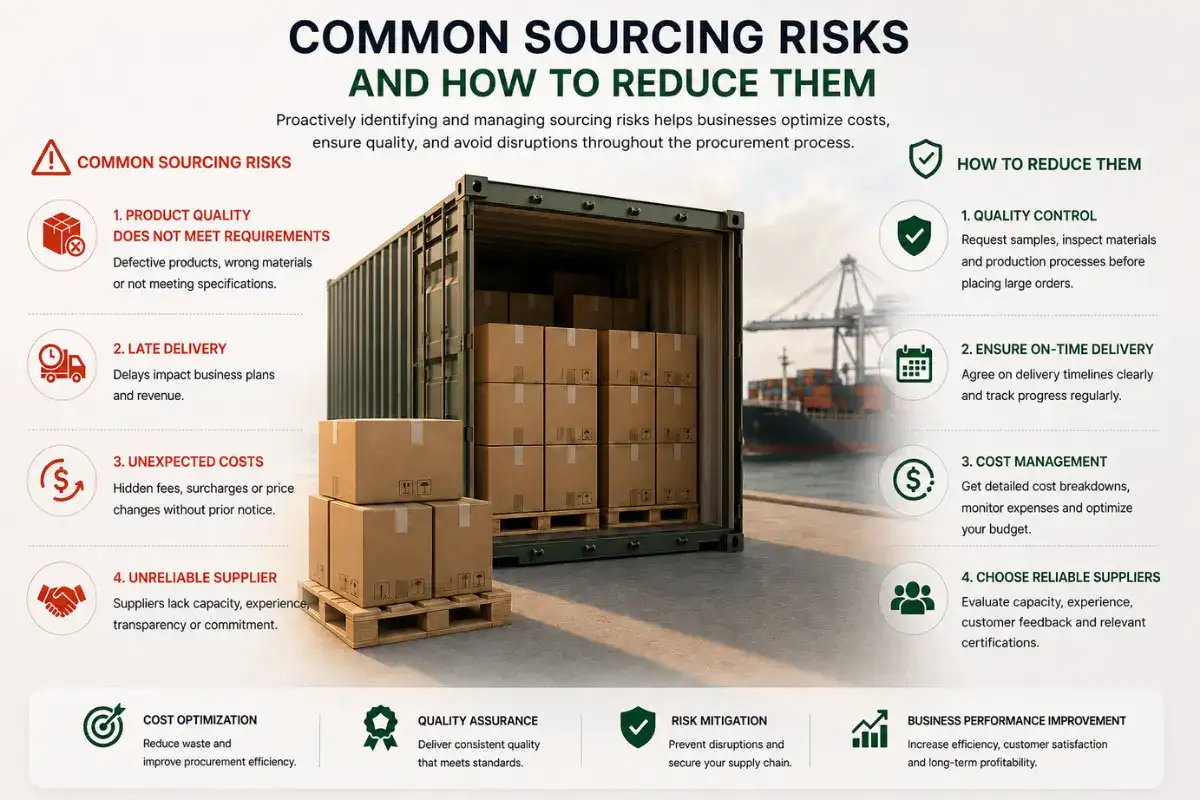
Quality control, delivery planning, cost management, and supplier evaluation are key steps for reducing sourcing risks when buying furniture from Vietnam.
6. Where ATC Craft Fits as a Vietnam Outdoor Furniture Partner
For B2B buyers sourcing Vietnam furniture for outdoor, hospitality, and commercial projects, working with a manufacturer that can support product development, customization, quality control, and export coordination can make the sourcing process more efficient. ATC Craft manufactures outdoor furniture for retailers, distributors, hospitality projects, and other commercial buyers, with product options including synthetic wicker, outdoor wooden furniture, aluminum, rope, and mixed-material collections.
ATC Craft also supports OEM and ODM projects, allowing buyers to customize dimensions, materials, finishes, weaving styles, fabrics, colors, branding, and packaging based on market or project requirements. For buyers sourcing wood furniture from Vietnam or other furniture made in Vietnam, sample development can help confirm specifications, construction details, finishes, and overall product quality before bulk production. The company also supports quality control, production coordination, and export preparation throughout the order process.
ATC Furniture supports B2B buyers from product development to export preparation.
7. Frequently Asked Questions
7.1 Is Vietnam a Good Country for Furniture Sourcing?
Yes. Vietnam has a well-established furniture manufacturing and export industry serving international retailers, distributors, hospitality buyers, and commercial projects. Buyers can source a wide range of products, including synthetic wicker, wooden furniture, aluminum furniture, rope collections, and mixed-material designs.
7.2 What Should Buyers Prepare Before Contacting Vietnam Furniture Suppliers?
Buyers should prepare product specifications, preferred materials, estimated order quantities, technical drawings or reference images, quality requirements, destination market, packaging needs, and shipping expectations. Clear information helps suppliers provide more accurate quotations and reduces revisions later in the sourcing process.
7.3 How Can Buyers Evaluate a Reliable Furniture Supplier in Vietnam?
A reliable supplier should be evaluated based on factory capability, quality control, export experience, product range, communication quality, sample consistency, and ability to meet agreed specifications. Buyers should avoid making decisions based only on price or factory size.
7.4 What Is the Typical MOQ When Sourcing Furniture From Vietnam?
MOQ varies by supplier, product type, material, and customization requirements. Some manufacturers may also offer mixed-container options or smaller trial orders. Buyers should confirm MOQ terms early because they can affect unit pricing, production planning, and shipping efficiency.
7.5 How Can Buyers Reduce Risks When Importing Furniture From Vietnam?
Buyers can reduce sourcing risks by approving samples, confirming specifications and revisions in writing, monitoring production schedules, conducting inspections when necessary, and checking packaging before shipment. It is also important to compare total sourcing value, including quality, service, logistics, and long-term supplier reliability, rather than focusing only on the lowest quotation.