Wicker Furniture Quality Checklist for Outdoor Furniture Buyers
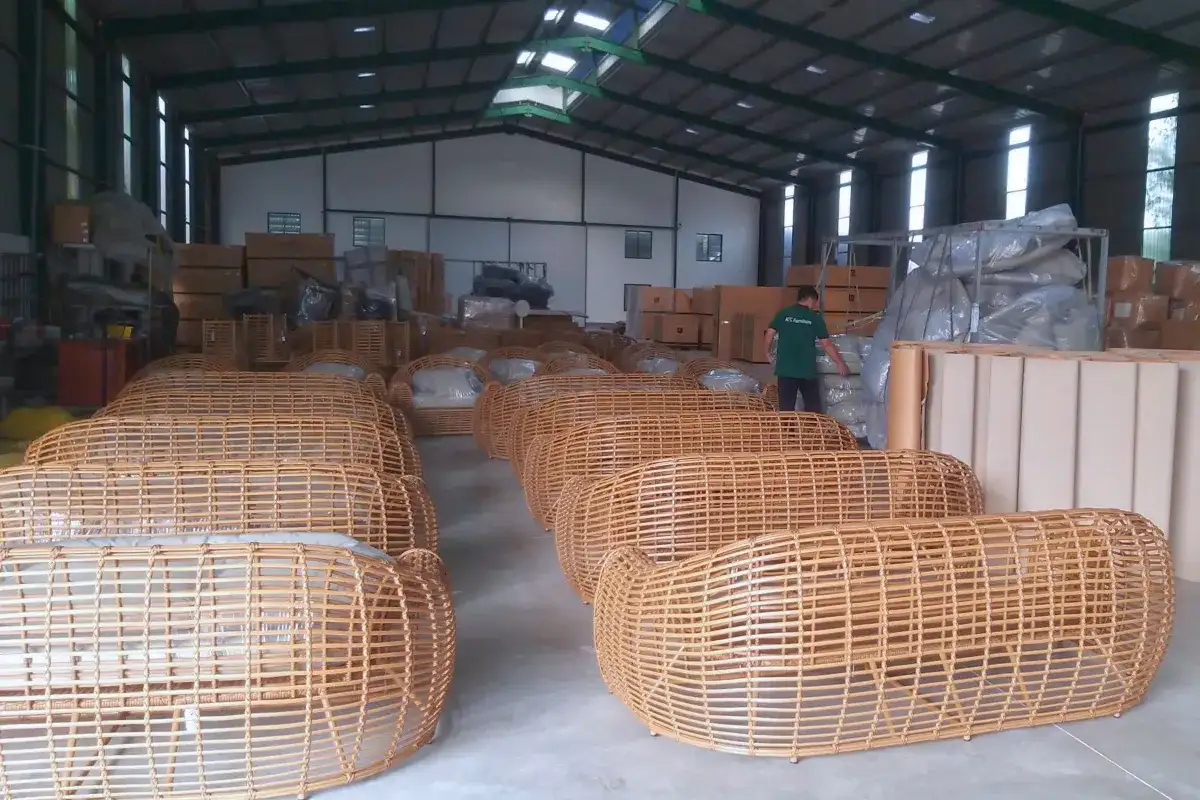
Choosing a supplier for wholesale wicker furniture involves much more than comparing product catalogs or prices. Long-term product performance depends on material quality, frame construction, weaving consistency, manufacturing standards, and the supplier's ability to maintain quality across every production batch. Without a structured evaluation process, buyers may face inconsistent workmanship, shipment delays, or products that fail to meet commercial expectations.
This wicker furniture quality checklist provides a practical framework for evaluating manufacturers before placing bulk orders. It combines essential product inspection points with supplier assessment criteria to help buyers identify high quality outdoor furniture, compare factories objectively, and reduce sourcing risks. Whether you're conducting a furniture sourcing checklist, reviewing an outdoor furniture supplier checklist, or performing a furniture factory audit checklist, these guidelines support more informed purchasing decisions, particularly when sourcing Vietnam wicker furniture for international markets.
Quick Wicker Furniture Quality Checklist
|
Category |
Status |
|
HDPE resin wicker verified |
☐ |
|
Powder-coated aluminum frame inspected |
☐ |
|
Weaving quality checked |
☐ |
|
Surface finishing reviewed |
☐ |
|
Outdoor cushion specifications confirmed |
☐ |
|
Weather resistance verified |
☐ |
|
Production capacity evaluated |
☐ |
|
Export documents reviewed |
☐ |
|
Factory audit completed |
☐ |
|
Pre-shipment inspection scheduled |
☐ |
1. Why Supplier Evaluation Matters Before Bulk Orders
A well-designed wicker chair or sofa does not guarantee long-term quality. For B2B buyers, distributors, and hospitality projects, the priority is choosing a supplier that can consistently deliver the same standard across every shipment.
When sourcing high quality outdoor furniture, buyers should evaluate material quality, frame construction, weaving techniques, surface finishing, and the factory's quality control system. Weaknesses in any of these areas can affect durability and weather resistance.
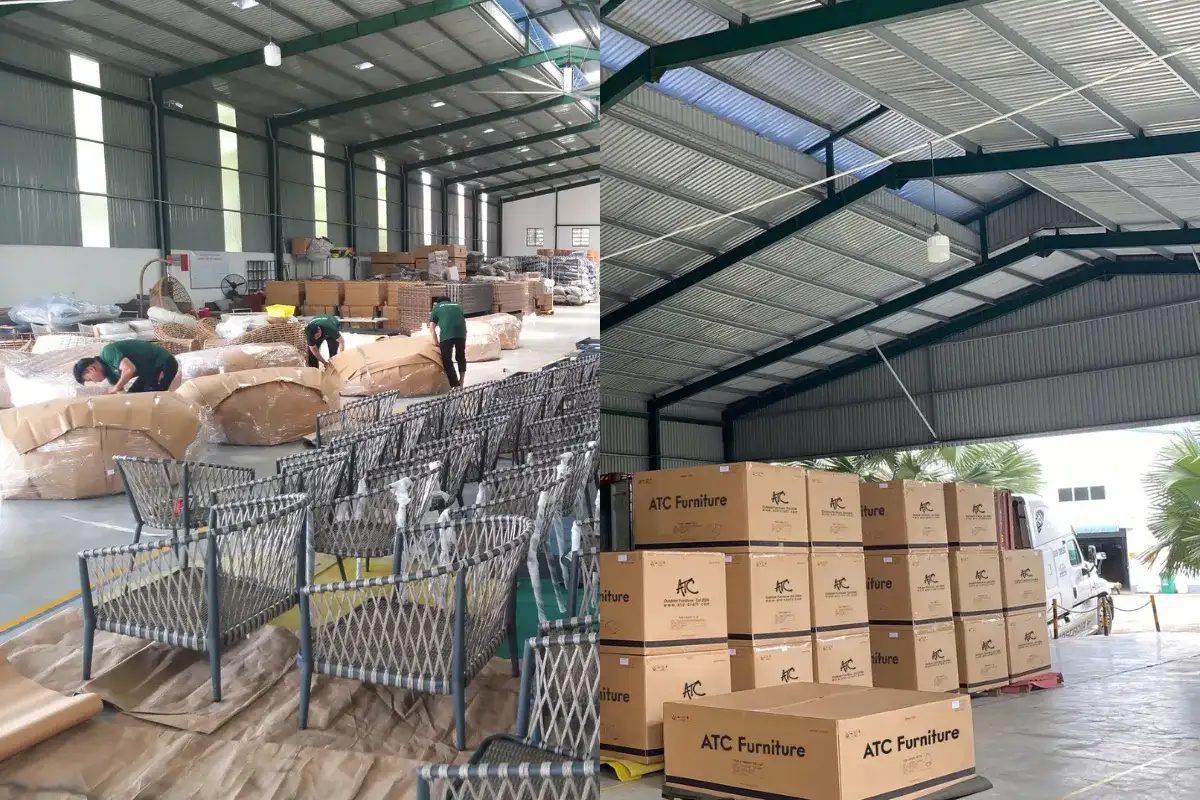
Organized packing and warehouse management help ensure export-ready quality.
A wicker furniture quality checklist helps buyers compare suppliers using consistent criteria, including production capability, material sourcing, export experience, and quality management. This structured approach reduces sourcing risks and supports better supplier selection for long-term commercial projects.
2. Factory and Export Capability Checklist
Before inspecting product quality, buyers should first evaluate whether a manufacturer has the production capability to support long-term orders. A factory may produce an excellent sample, but consistent quality depends on stable manufacturing systems, reliable material sourcing, experienced production teams, and established export processes.
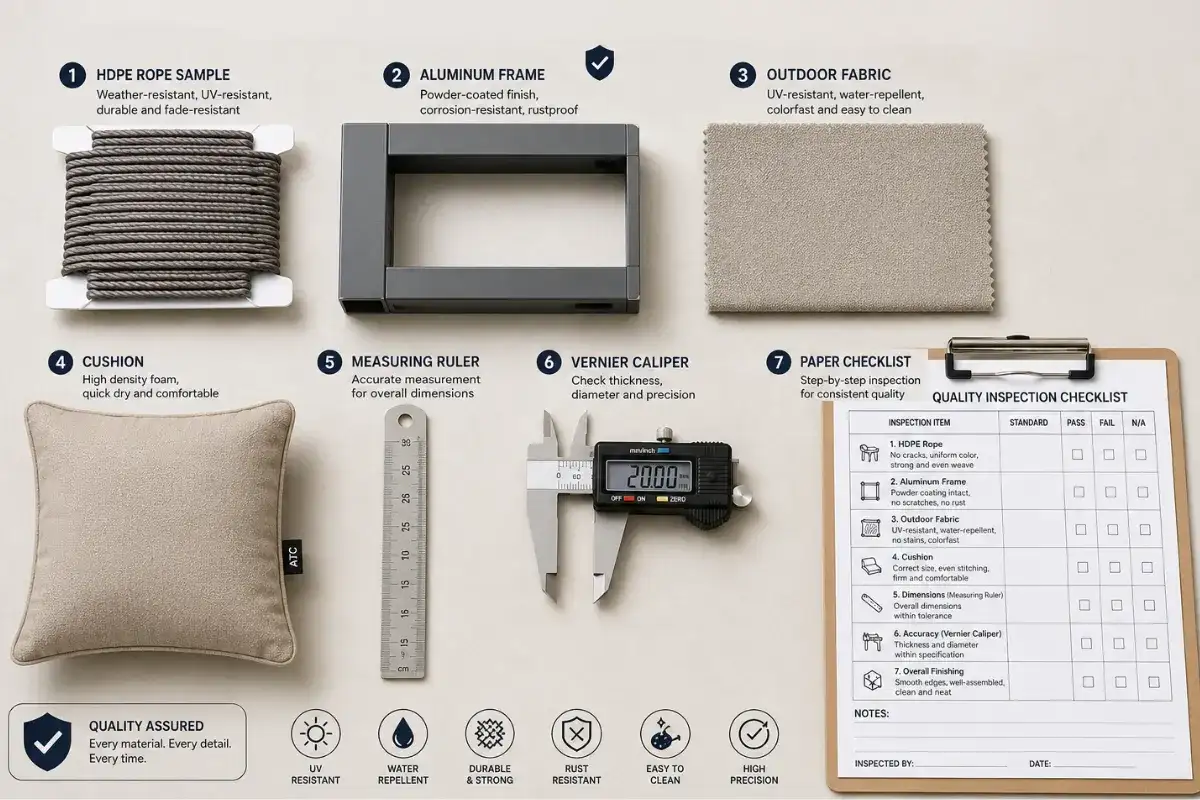
A complete evaluation checklist helps assess overall manufacturing capability. (Illustration image)
For companies purchasing wholesale wicker furniture, factory capability is often a stronger indicator of long-term reliability than price alone. Manufacturers with organized production planning, experienced export departments, and well-managed supply chains are generally better prepared to meet delivery schedules, handle customized orders, and maintain consistent quality across multiple production runs.
A comprehensive furniture factory audit checklist should therefore evaluate both manufacturing operations and export readiness before any purchasing decision is made.
2.1 Production Capacity, Material Sourcing, Product Categories, and Export Documents
Use the following checklist to assess a manufacturer's production capability and export readiness.
Production Capacity
- Verify monthly production capacity and average lead times.
- Confirm dedicated production lines for outdoor furniture.
- Review OEM, ODM, and private label manufacturing capabilities.
- Understand how production schedules are managed during peak seasons.
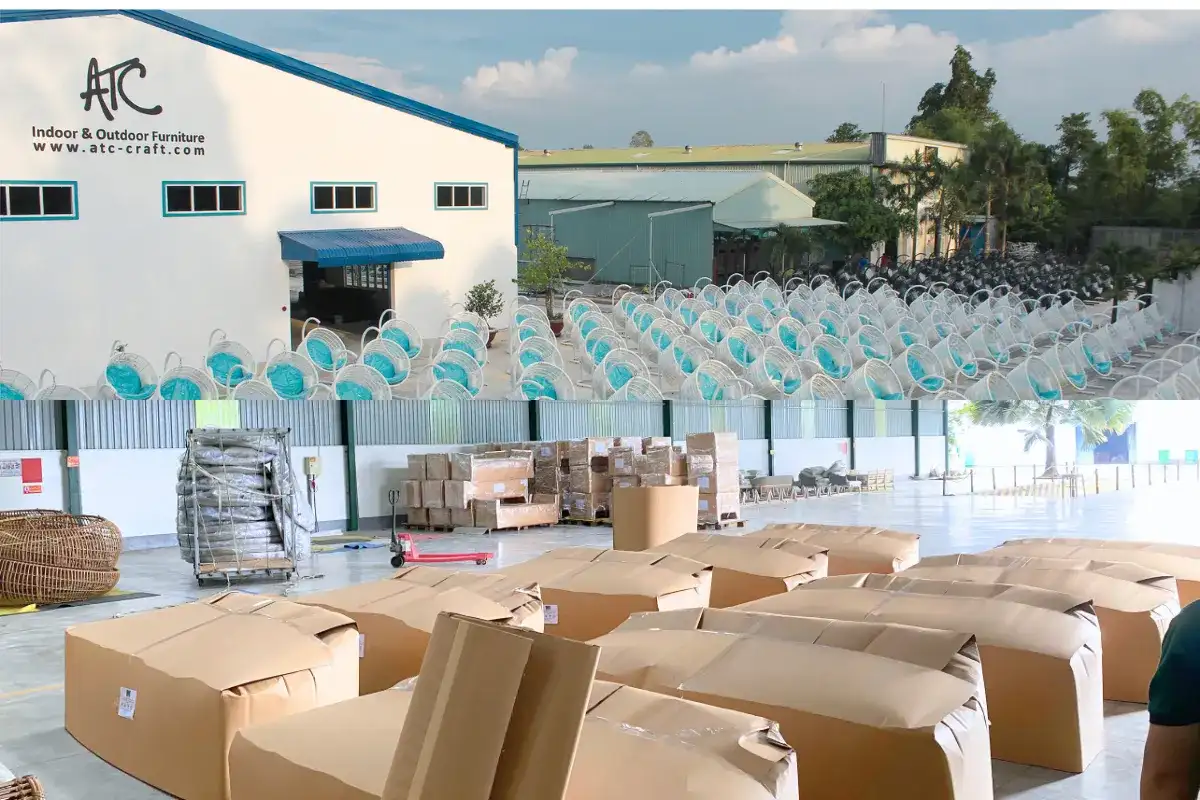
Evaluate production capacity, warehouse management, and export readiness together.
Material Sourcing
- Confirm that HDPE resin wicker, aluminum frames, outdoor fabrics, cushions, and hardware are sourced from qualified suppliers.
- Review incoming material inspection procedures before production begins.
- Verify traceability for key raw materials throughout the manufacturing process.
- Check FSC Chain of Custody (CoC) certification for wood components where applicable.
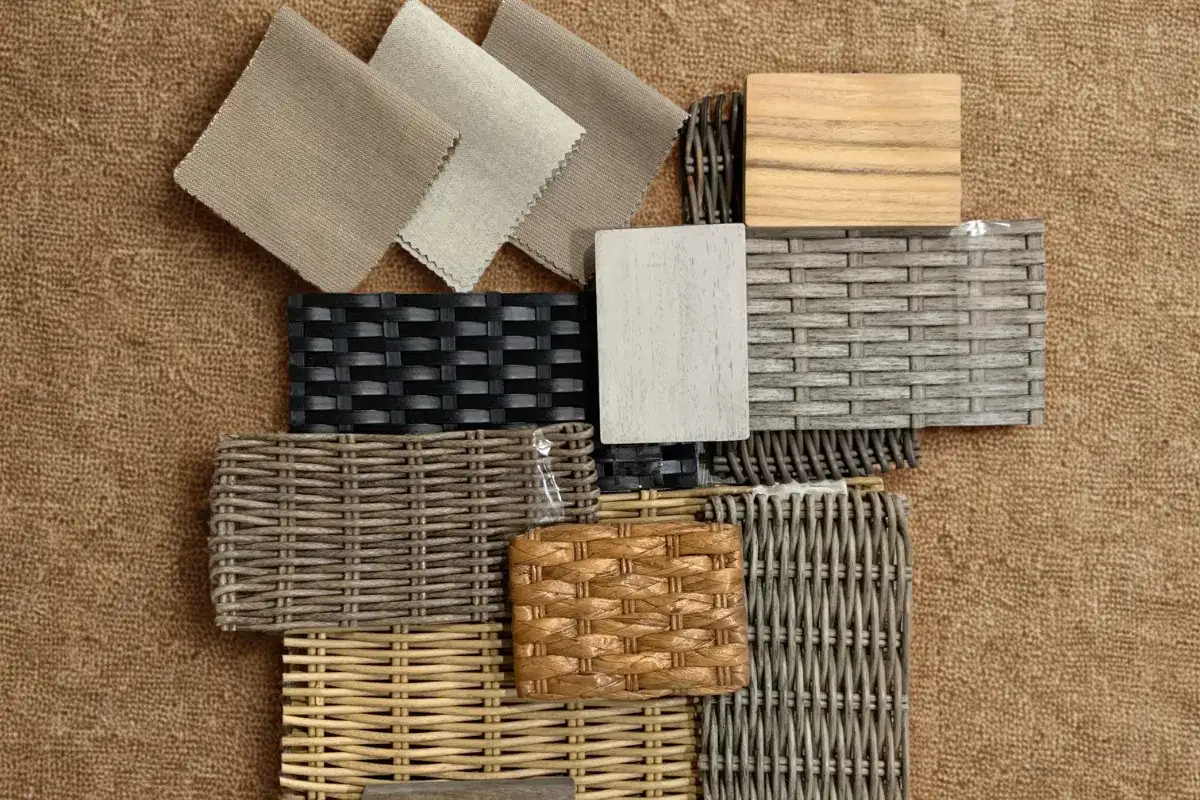
Evaluating raw materials is the foundation of durable outdoor furniture.
Product Categories
- Evaluate the manufacturer's experience producing dining sets, lounge furniture, sofas, daybeds, and sun loungers.
- Review previous commercial, hospitality, or wholesale export projects.
- Assess consistency when manufacturing different styles of quality wicker furniture.
- Request examples of customized OEM or private label projects.
Export Documents
- Verify business registration and export qualifications.
- Confirm the availability of commercial invoices, packing lists, certificates of origin, and destination-specific documentation.
- Review export experience in your target markets.
- Ensure the supplier understands product compliance and shipping requirements for international buyers.
3. Product Quality Checkpoints
A manufacturer's production capability shows whether it can handle large orders, but product quality determines whether those products will perform reliably in real-world outdoor environments. During a supplier evaluation, buyers should look beyond appearance and inspect the construction, materials, and finishing that directly influence durability.
For high quality outdoor furniture, consistent quality across every production batch is just as important as an attractive design. Even small variations in frame construction, weaving tension, coating quality, or cushion specifications can affect product lifespan, customer satisfaction, and after-sales costs. Reviewing these checkpoints helps buyers confirm that quality is built into the manufacturing process rather than relying solely on final inspections.
An effective outdoor furniture quality control checklist should evaluate every major component before production is approved and again before shipment.
2. Factory and Export Capability Checklist
Before inspecting product quality, buyers should first evaluate whether a manufacturer has the production capability to support long-term orders. A factory may produce an excellent sample, but consistent quality depends on stable manufacturing systems, reliable material sourcing, experienced production teams, and established export processes.
For companies purchasing wholesale wicker furniture, factory capability is often a stronger indicator of long-term reliability than price alone. Manufacturers with organized production planning, experienced export departments, and well-managed supply chains are generally better prepared to meet delivery schedules, handle customized orders, and maintain consistent quality across multiple production runs.
A comprehensive furniture factory audit checklist should therefore evaluate both manufacturing operations and export readiness before any purchasing decision is made.
2.1 Production Capacity, Material Sourcing, Product Categories, and Export Documents
Frame Strength
- Inspect welds to ensure they are smooth, clean, and free from visible cracks or gaps.
- Confirm the frame uses powder-coated aluminum or another corrosion-resistant material suitable for outdoor environments.
- Verify frame dimensions, wall thickness, and structural stability against approved specifications.
- Check that chairs and tables remain stable on a level surface without wobbling.
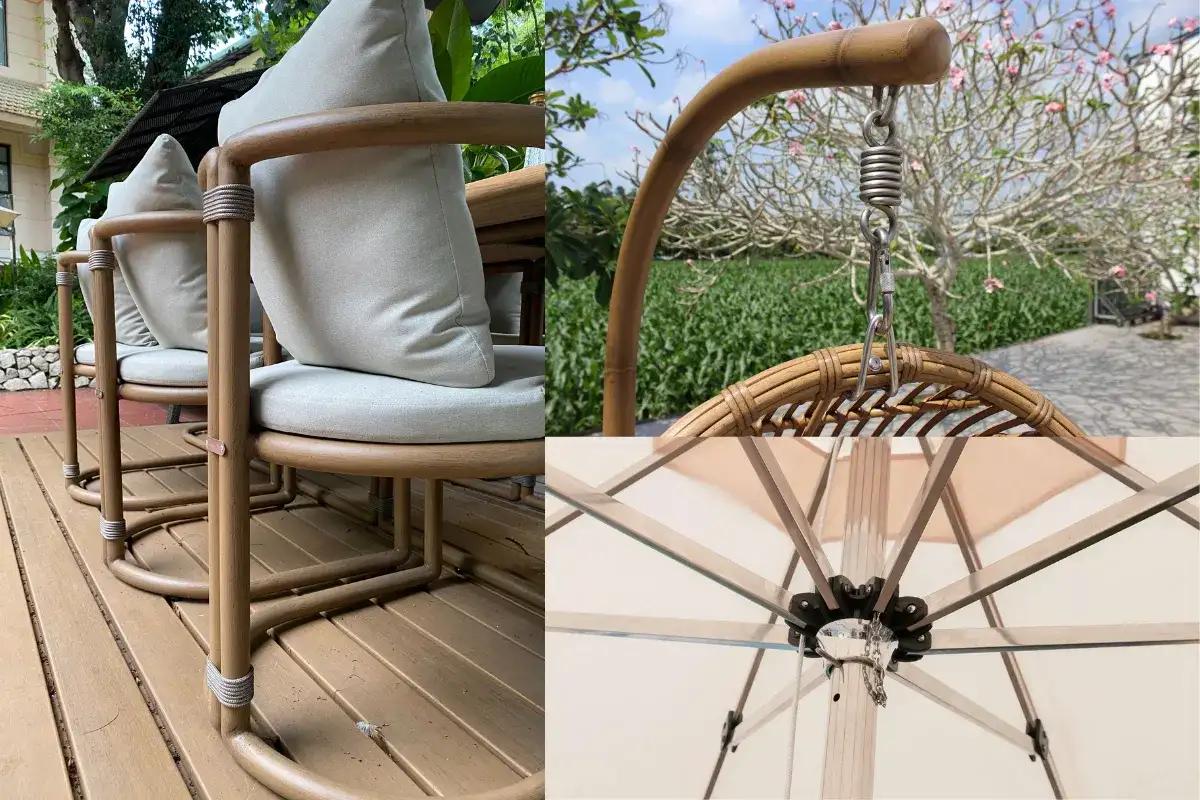
A strong frame provides lasting durability and structural stability.
Weaving Quality
- Ensure the wicker weave is tight, even, and consistent across the entire product.
- Inspect corners, edges, and high-stress areas for loose strands, gaps, or uneven patterns.
- Confirm the use of premium HDPE resin wicker designed for long-term outdoor use.
- Compare multiple products from the same production batch to verify consistent workmanship when manufacturing quality wicker furniture.
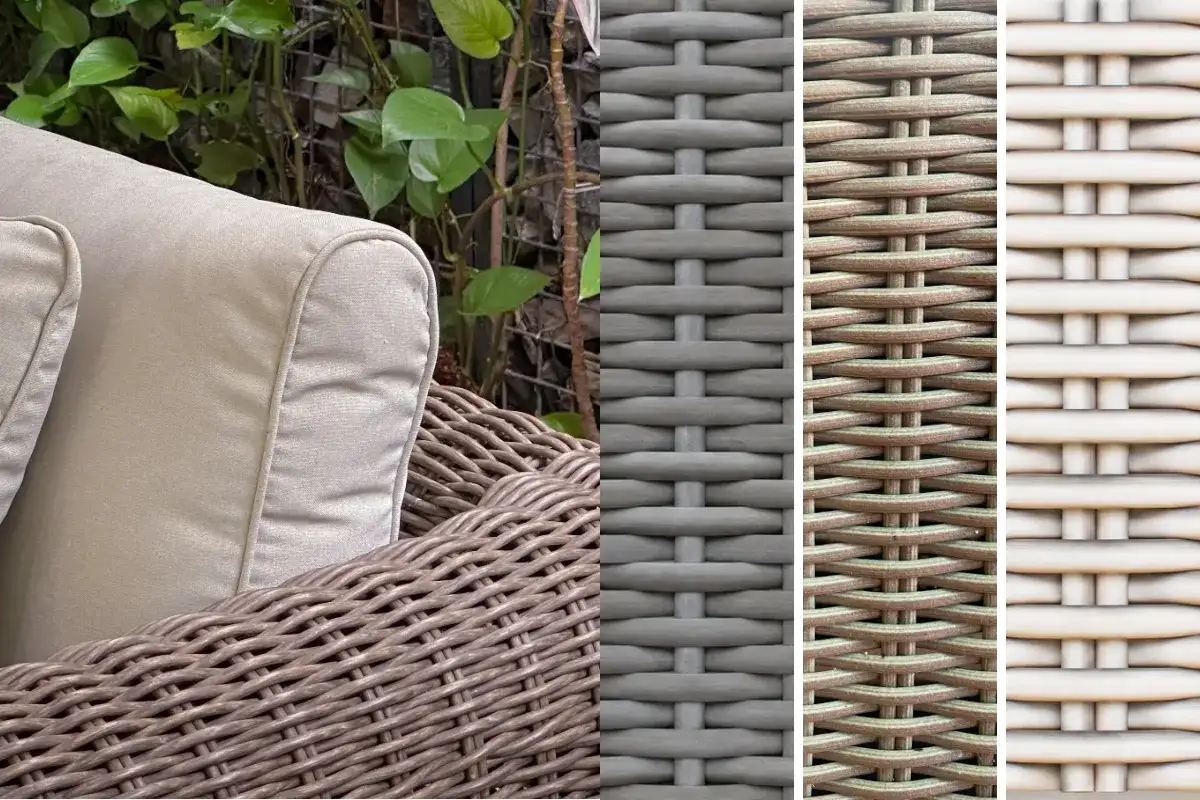
Consistent HDPE weaving enhances both durability and visual appeal.
Surface Finishing
- Examine powder-coated surfaces for uniform color and complete coverage.
- Look for scratches, bubbles, pinholes, discoloration, or other visible finishing defects.
- Confirm that welded joints and concealed areas receive the same protective coating as exposed surfaces.
- Review the factory's inspection procedures for surface quality before packaging.
Cushion Specifications
- Verify that outdoor fabrics are resistant to UV exposure, moisture, mildew, and fading.
- Check foam density and resilience to ensure long-lasting comfort and shape retention.
- Inspect stitching, seams, zippers, and removable covers for durability and easy maintenance.
- Confirm fabric colors and specifications remain consistent throughout the production batch.
Outdoor Durability
- Request available test reports for UV resistance, corrosion resistance, and weather performance.
- Confirm that screws, connectors, and fastening hardware are designed for prolonged outdoor exposure.
- Verify that finished products undergo final quality inspections before packing.
- Review procedures for identifying, isolating, and correcting defective products before shipment.
4. Sample Review and Pre-shipment Inspection
A factory audit should be followed by product verification before mass production and shipment. Buyers should confirm that dimensions, materials, frame construction, weaving, colors, cushions, and workmanship match the approved sample, which serves as the quality benchmark for the entire order.
Before shipment, a final inspection should verify product quality, dimensions, packaging, labeling, and quantities. Many importers also use AQL (Acceptance Quality Limit) sampling to assess batch quality. Combining sample approval with pre-shipment inspection helps reduce the risk of receiving defective or inconsistent products.
5. Red Flags Buyers Should Avoid
|
Good Factory |
Warning Signs |
|
QC documents |
Missing QC |
|
Stable weaving |
Uneven weaving |
|
Export records |
No export experience |
|
Traceability |
Unknown materials |
Competitive pricing and attractive samples do not always guarantee a reliable supplier. Buyers should look beyond the product and evaluate the factory's manufacturing processes and quality management system to reduce the risk of inconsistent quality, production delays, and post-shipment issues.
Common warning signs include the lack of standardized production procedures, incomplete quality records, poor material traceability, and missing testing documentation. Buyers should also verify that certifications apply to the products currently being manufactured.
Transparency is another key indicator of a reliable supplier. Manufacturers that openly share their production processes, quality control procedures, production capacity, and export capabilities are generally more trustworthy than those that restrict factory access or provide incomplete documentation.
6. How to Use the Checklist When Comparing Suppliers
A wicker furniture quality checklist is most effective when every supplier is evaluated using the same standards. Instead of focusing only on price or product samples, buyers should compare production capability, material sourcing, product quality, export readiness, and quality management. This structured approach also works well as an outdoor furniture supplier checklist, especially when sourcing wholesale wicker furniture.
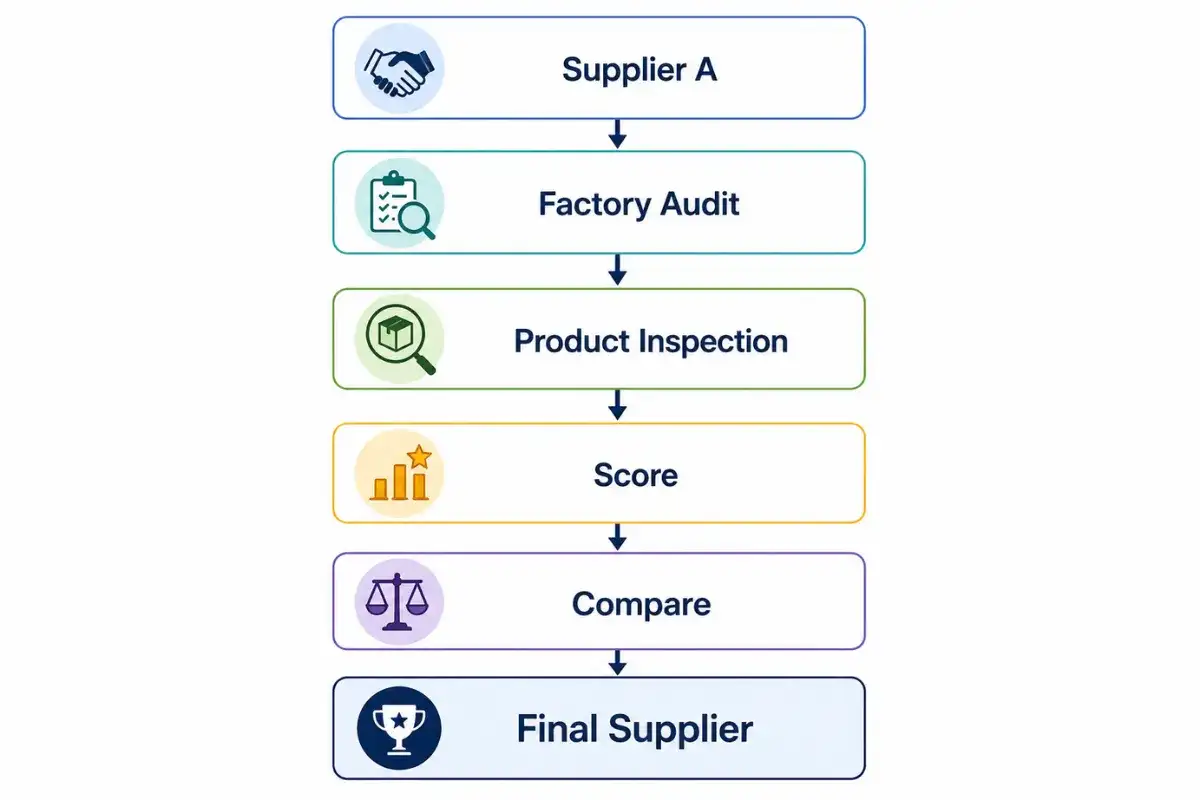
A standardized checklist makes supplier comparison more objective and consistent. (Illustration image)
Supplier evaluation should continue after the first order. Regular factory audits, product inspections, and performance reviews help ensure manufacturers maintain consistent quality, reduce sourcing risks, and support long-term business partnerships.
7. Frequently Asked Questions (FAQs)
7.1 What is a wicker furniture quality checklist?
A wicker furniture quality checklist is a structured evaluation tool used to assess material quality, frame construction, weaving consistency, finishing, durability, and supplier capabilities before placing bulk orders. It helps buyers compare manufacturers using consistent, objective criteria.
7.2 Why is HDPE resin preferred for outdoor wicker furniture?
HDPE resin offers excellent UV resistance, weather durability, and flexibility compared with lower-grade synthetic materials. Combined with a powder-coated aluminum frame, it is widely used in high quality outdoor furniture designed for long-term outdoor applications.
7.3 How can buyers evaluate wholesale wicker furniture suppliers?
In addition to inspecting product quality, buyers should review manufacturing capacity, raw material sourcing, export experience, quality control procedures, and production consistency. A furniture factory audit checklist provides a practical framework for evaluating suppliers before placing large orders.
7.4 Is Vietnam a good sourcing destination for wicker furniture?
Yes. Vietnam wicker furniture manufacturers are well known for combining skilled craftsmanship with competitive production costs and strong export capabilities. However, buyers should still conduct supplier evaluations, factory audits, and product inspections to ensure consistent quality and compliance with project requirements.
7.5 Should every shipment undergo a pre-shipment inspection?
Yes. A pre-shipment inspection helps verify that finished products meet approved specifications before export. It confirms product quality, packaging, labeling, and shipment quantities while reducing the risk of receiving defective or inconsistent products.