Weatherproof Restaurant Dining Chairs: Material Comparison (Aluminum, Teak & Resin Wicker)
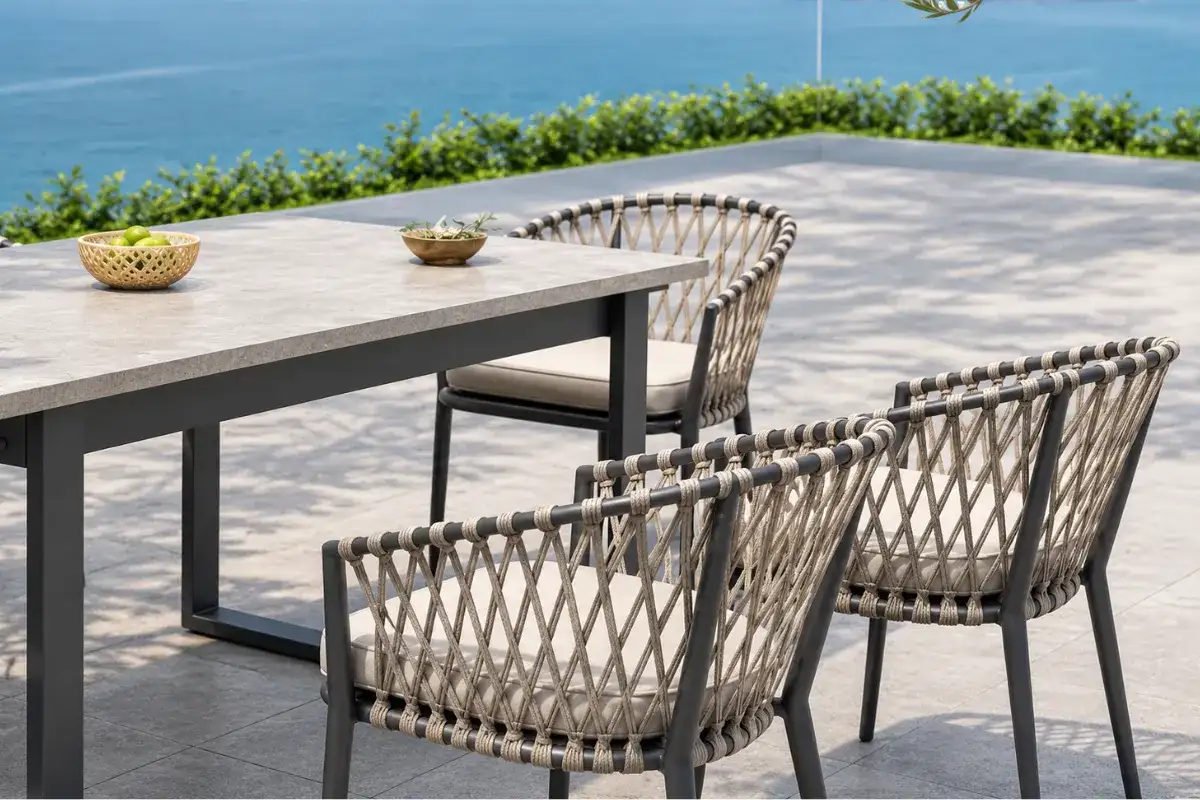
Choosing the right weatherproof restaurant dining chairs is important for restaurants, hotels, resorts and other hospitality projects with outdoor dining areas. Unlike residential seating, commercial chairs face frequent use, regular cleaning and ongoing exposure to sunlight, rain, humidity and spills. Material durability and maintenance therefore play an important role in long-term performance.
Powder-coated aluminum, teak wood and HDPE resin wicker are three common materials used for outdoor restaurant seating. Each offers different advantages in weight, weather resistance, appearance, maintenance and suitability for specific environments.
This guide compares these three materials and explains what commercial buyers should consider when selecting outdoor dining chairs for restaurant patios, rooftops, poolside areas and other hospitality projects.
1. What Are Weatherproof Restaurant Dining Chairs?
Weatherproof restaurant dining chairs are designed for commercial outdoor spaces exposed to frequent use, sunlight, rain and humidity. Unlike appearance alone, long-term performance depends on factors such as frame construction, material quality, moisture resistance, UV resistance and maintenance requirements.
For restaurants, hotels and other hospitality projects, these factors help determine whether outdoor chairs are suitable for the installation environment and daily operating conditions.
1.1 How Commercial Restaurant Chairs Differ From Residential Chairs
Commercial restaurant chairs typically experience more frequent use than residential seating. They may be moved, cleaned and used repeatedly throughout the day, making frame strength, structural stability and consistent construction important considerations.
When selecting weatherproof restaurant dining chairs, commercial buyers should check the frame, joints, finishes, material specifications and ease of maintenance. For bulk orders, consistency in dimensions, construction and finishing is also important to maintain uniform quality across the dining area.
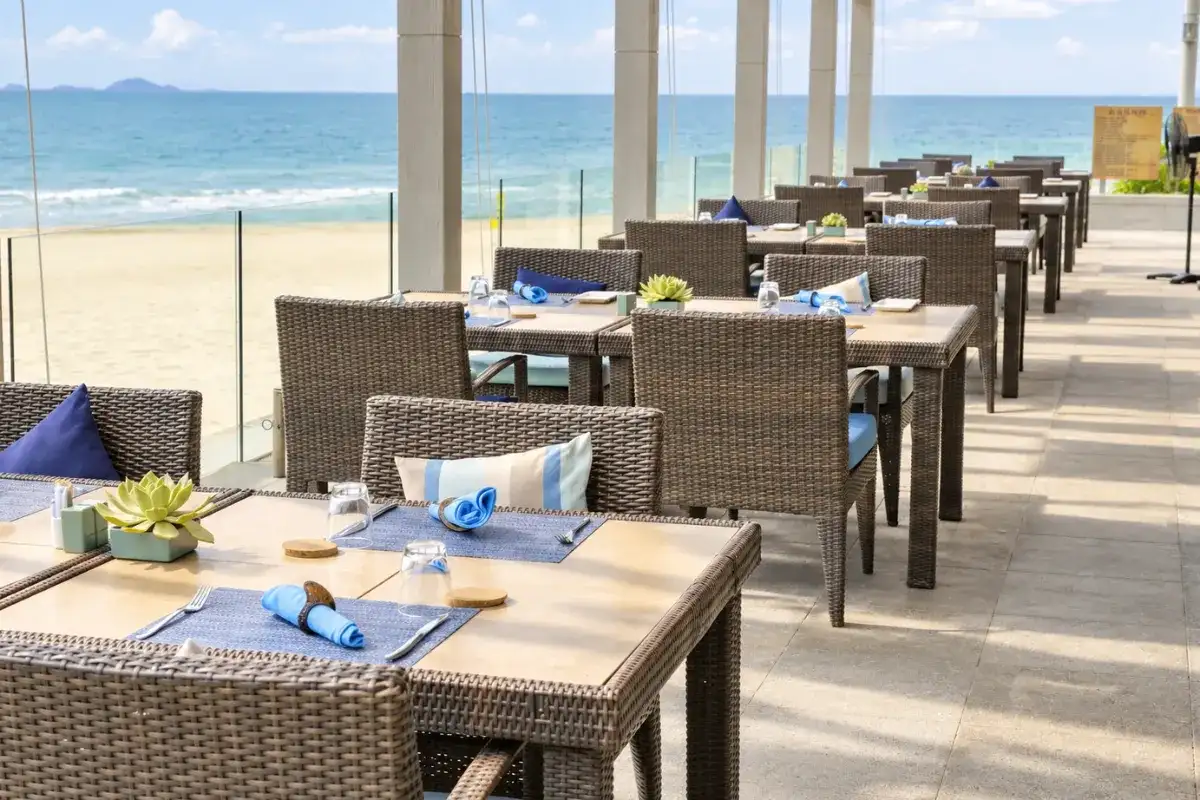
Commercial restaurant chairs need consistent construction and appearance across multiple units.
1.2 What “Weatherproof” Means for Outdoor Restaurant Seating
“Weatherproof” refers to outdoor seating made with materials and finishes designed to handle common conditions such as sunlight, rain and humidity. For commercial all weather dining chairs, this includes how the frame, surface finish and woven materials perform when exposed to moisture and UV over time.
However, weatherproof does not mean maintenance-free. Commercial buyers should still consider cleaning and care requirements to help outdoor chairs maintain their appearance and performance.

Weatherproof materials are designed to perform under common outdoor conditions such as sunlight, rain and humidity. (Illustration Image)
1.3 Where Weatherproof Restaurant Dining Chairs Are Commonly Used
Weatherproof restaurant dining chairs are commonly used on restaurant patios, rooftop dining areas, hotel terraces, resorts, poolside spaces and coastal hospitality projects. Each environment can place different demands on outdoor seating.
Restaurant patios may benefit from lightweight chairs that are easy to rearrange, while rooftop areas often require greater stability and UV resistance. For coastal and poolside locations, moisture and corrosion resistance become more important. Matching chair materials to the installation environment can support easier maintenance and more reliable long-term commercial use.
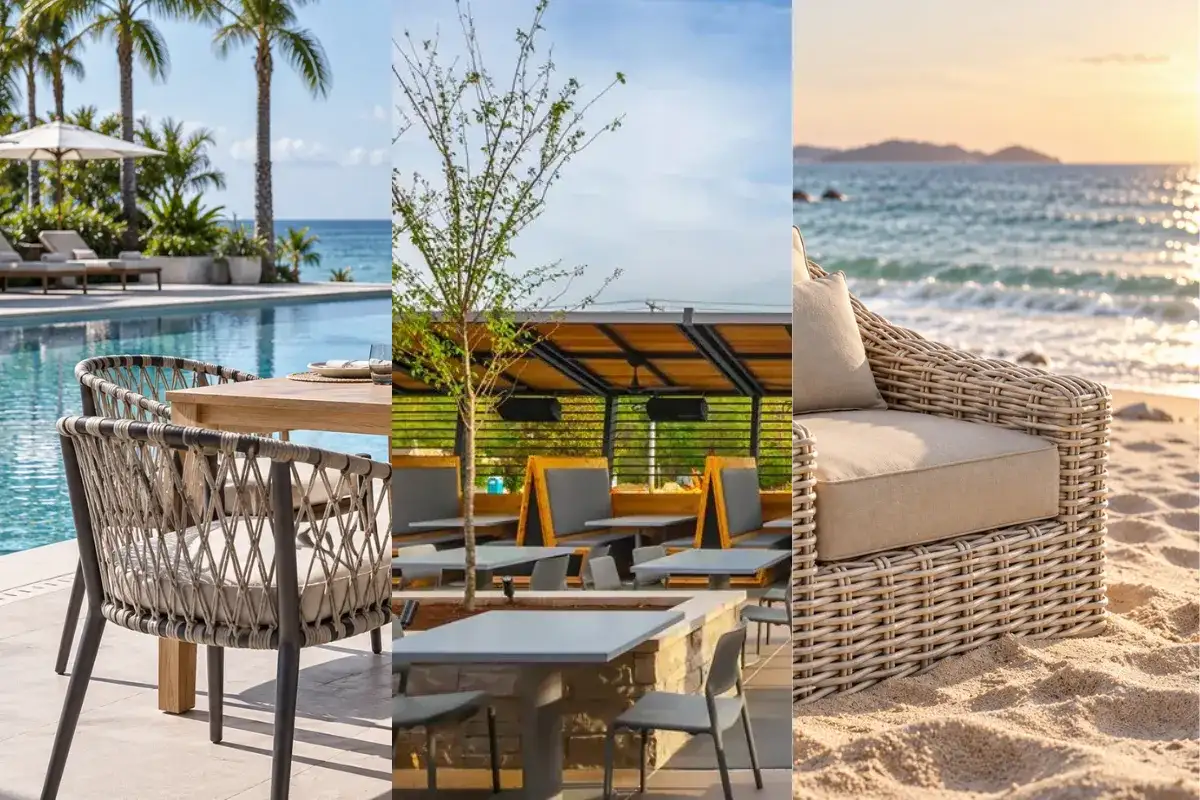
Weatherproof restaurant dining chairs can be used across poolside, patio and coastal dining areas, with different material requirements for each environment
2. Key Features of Durable Outdoor Restaurant Dining Chairs
Durability in commercial outdoor seating depends on more than the material alone. Restaurant buyers should consider how the frame, finishes and exposed surfaces perform under frequent use and outdoor conditions. These factors are especially important when selecting durable materials for restaurant patio chairs that need to maintain both performance and a consistent appearance over time.
2. Key Features of Durable Outdoor Restaurant Dining Chairs
Durable outdoor restaurant dining chairs need to perform under frequent use and changing outdoor conditions. Beyond material selection, commercial buyers should evaluate frame strength, structural stability, moisture resistance, UV performance and finish quality. These factors are important when comparing durable materials for restaurant patio chairs intended for long-term commercial use.
2.1 Heavy-Duty Frame Strength and Structural Stability
Heavy-duty commercial outdoor dining chairs should have strong frames, stable construction and secure connection points to handle frequent daily use. Since restaurant chairs are regularly moved, cleaned and repositioned, structural quality can directly affect long-term performance.
Buyers should inspect the legs, joints, welds and connection points and check that each chair remains stable on a level surface. For bulk orders, consistent dimensions and construction across multiple units are also important for maintaining uniform quality throughout the dining area.
Alt: Heavy-duty commercial outdoor dining chair frame and structural details
Caption: Frame strength, stable legs and secure construction are important for commercial outdoor dining chairs used frequently in restaurant settings.
2.2 Weather and Moisture Resistance
Outdoor restaurant seating is regularly exposed to rain, humidity, spills and moisture from cleaning. Frame materials, protective finishes and exposed components should therefore be suitable for the conditions of the installation area.
For buyers looking for outdoor restaurant chairs with no-rust performance, the main frame should not be the only consideration. Fasteners, joints and other exposed connection points should also be evaluated. Moisture and corrosion resistance become particularly important for coastal, poolside and other high-humidity dining environments.
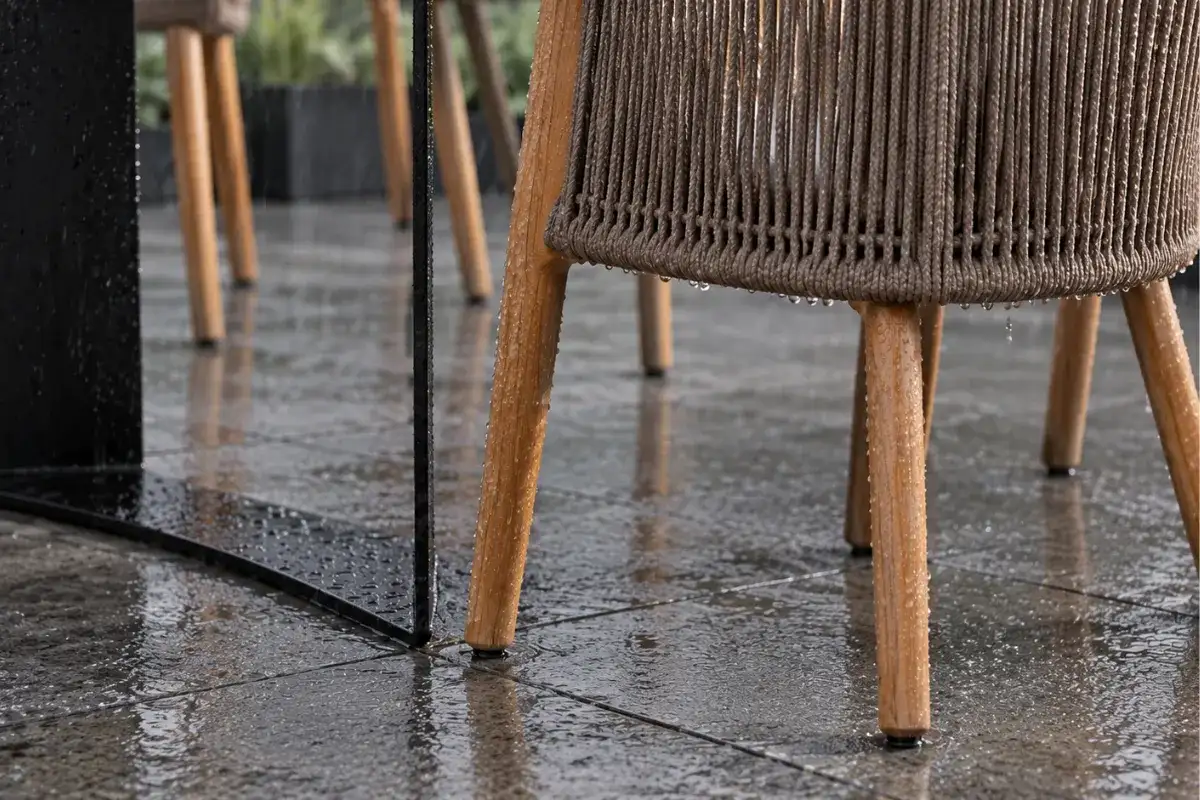
Outdoor restaurant chairs should use materials and finishes suited to rain, humidity and other moisture exposure.(Illustration Image)
2.3 UV and Color Resistance
Prolonged sunlight can cause outdoor materials and finishes to fade or change in appearance. UV-resistant restaurant seating is therefore important for patios, rooftops and other dining areas with high sun exposure.
Commercial buyers should check the UV performance of powder coatings, HDPE wicker and other exposed materials. For bulk orders, color consistency should also be evaluated across multiple chairs to maintain a uniform appearance throughout the restaurant dining area.
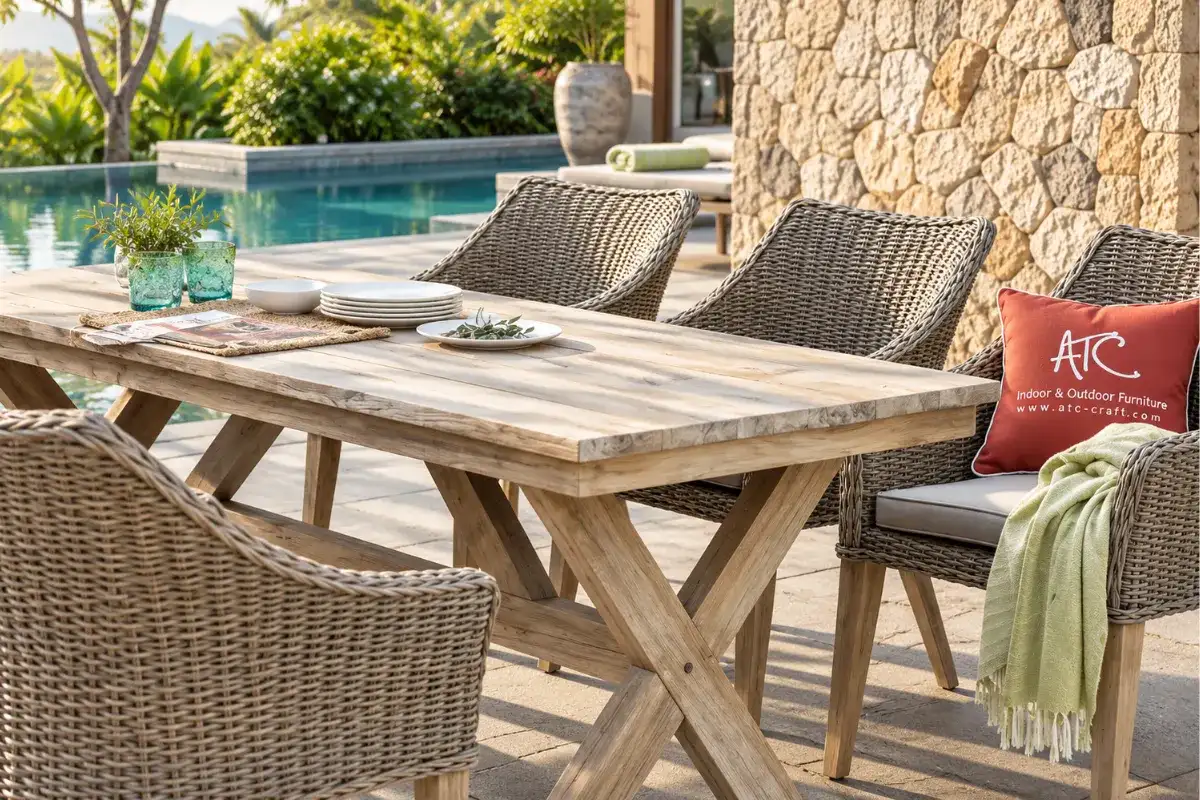
UV resistance and consistent color help outdoor restaurant seating maintain a uniform appearance across commercial dining areas.
3. Best Materials for Weatherproof Restaurant Dining Chairs
Choosing the right material is one of the most important steps when selecting weatherproof restaurant dining chairs. Material choice affects weight, maintenance, weather resistance, appearance and suitability for different commercial environments.
Powder-coated aluminum, teak wood and HDPE resin wicker are three common options for outdoor restaurant seating. Each offers different advantages, so commercial buyers should compare performance, maintenance needs and installation conditions rather than focusing only on appearance or initial price.
3.1 Powder-Coated Aluminum
Powder-coated aluminum is widely used for commercial outdoor dining chairs because it is relatively lightweight, easy to handle and suitable for many outdoor environments. Its lower weight can make chairs easier for restaurant staff to move, rearrange and clean around during daily operations.
Aluminum does not rust like iron or untreated steel, making it a practical choice for buyers looking for outdoor restaurant chairs with no-rust performance. However, coating quality still matters. Buyers should inspect the powder-coated finish, welds, joints and exposed connection points because scratches or poor finishing can affect long-term appearance and durability.
For bulk orders, frame dimensions, coating quality and color should remain consistent across multiple units. Powder-coated aluminum is particularly suitable for restaurant patios, rooftops and other commercial dining areas where low maintenance and easy handling are priorities.
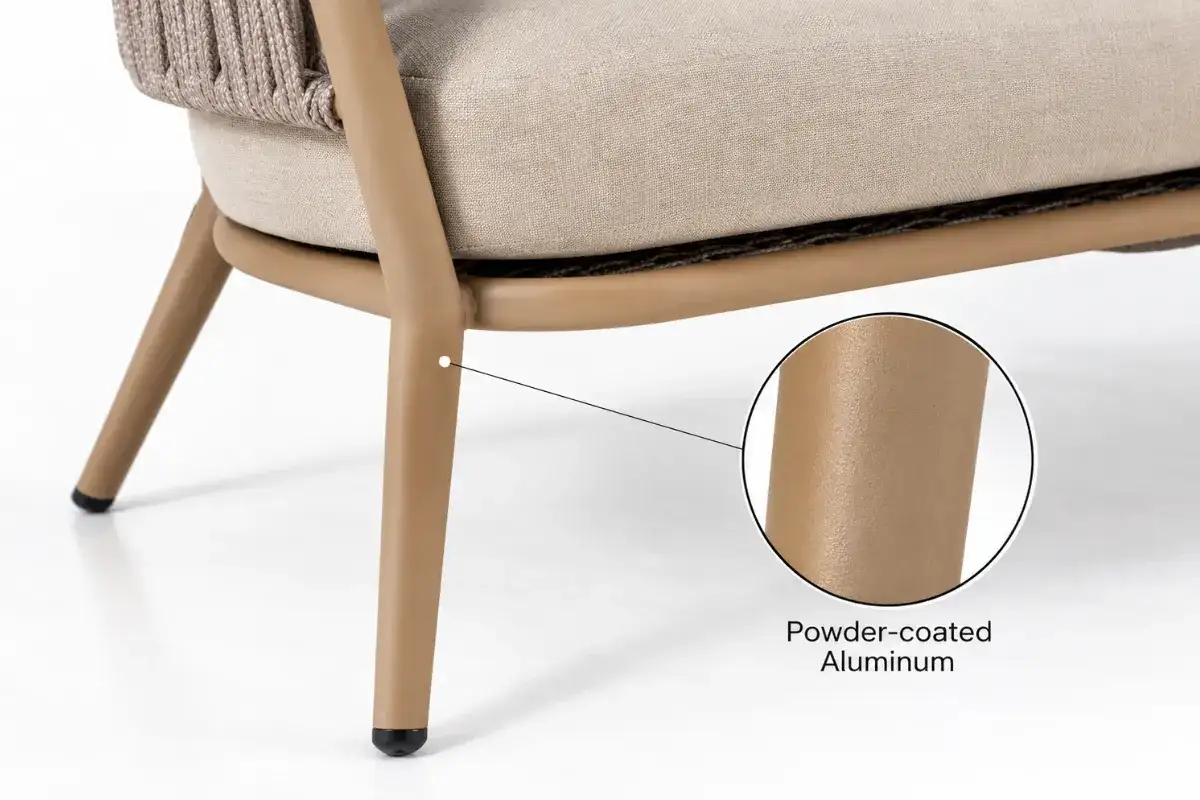
Powder-coated aluminum offers a lightweight, low-maintenance option for commercial outdoor dining areas.(Illustration Image)
3.2 Teak Wood
Teak wood is commonly chosen for outdoor restaurant seating when a warm, natural appearance is preferred. Its natural oils help it perform well in exterior environments, while solid wood construction can provide the stability required for commercial dining use.
When exposed outdoors, untreated teak gradually develops a silver-grey patina. Restaurants that want to maintain the original wood tone may need periodic cleaning and care. Buyers should therefore consider both the desired appearance and long-term maintenance requirements before selecting teak chairs.
For commercial orders, wood quality, moisture condition, joints, surface finishing and consistency between units should be evaluated carefully. Teak is well suited to premium restaurant terraces, resorts and hospitality projects where natural materials are part of the overall design concept.
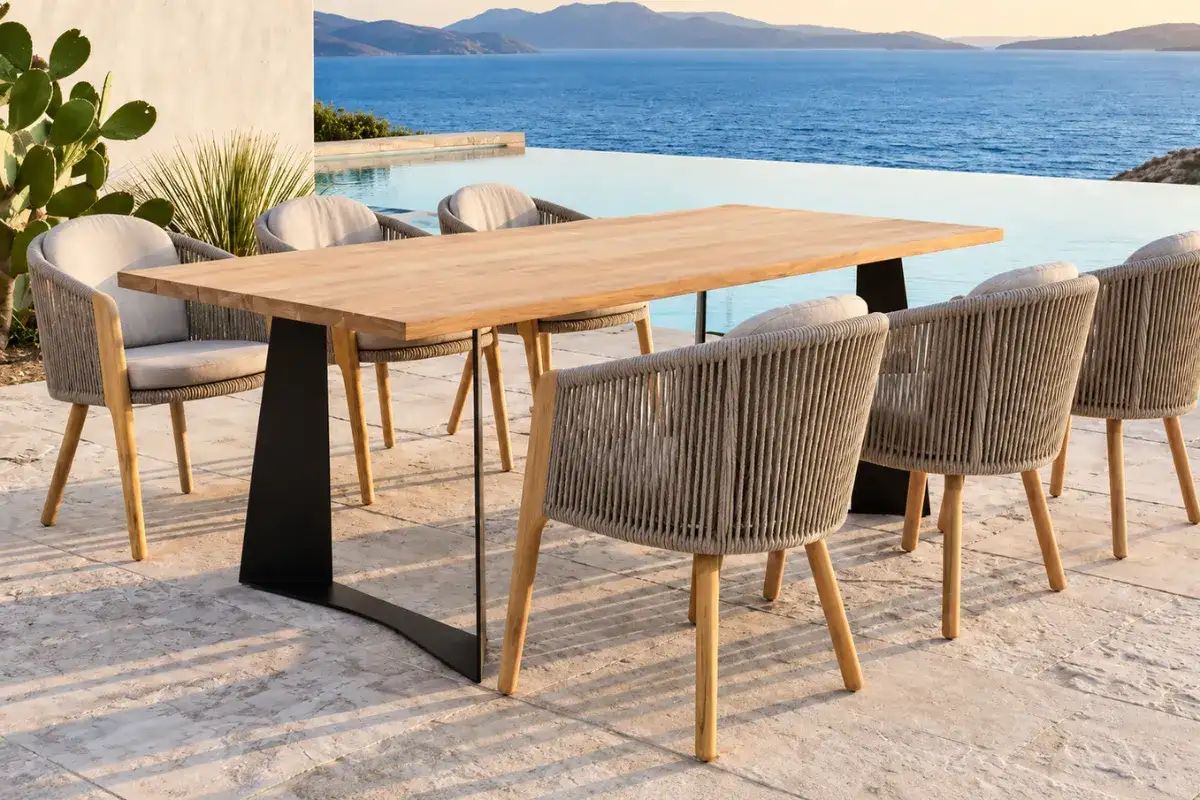
Teak wood brings a warm, natural appearance and solid outdoor performance to restaurant, resort and hospitality dining areas.
3.3 HDPE Resin Wicker
HDPE resin wicker offers a handwoven appearance while being designed for outdoor use. It is commonly woven over a structural frame, often aluminum, combining visual texture with practical outdoor performance.
For commercial all weather dining chairs, buyers should evaluate more than weave color or pattern. Important factors include UV resistance, strand quality, weaving tension, attachment points and consistency across multiple chairs. Poorly controlled weaving can create visible differences when many identical units are installed in the same dining area.
Cleaning requirements should also be considered because woven surfaces contain more gaps than simple metal frames. HDPE resin wicker is especially suitable for restaurant patios, resorts and hospitality spaces where buyers want a softer, more textured outdoor seating style.
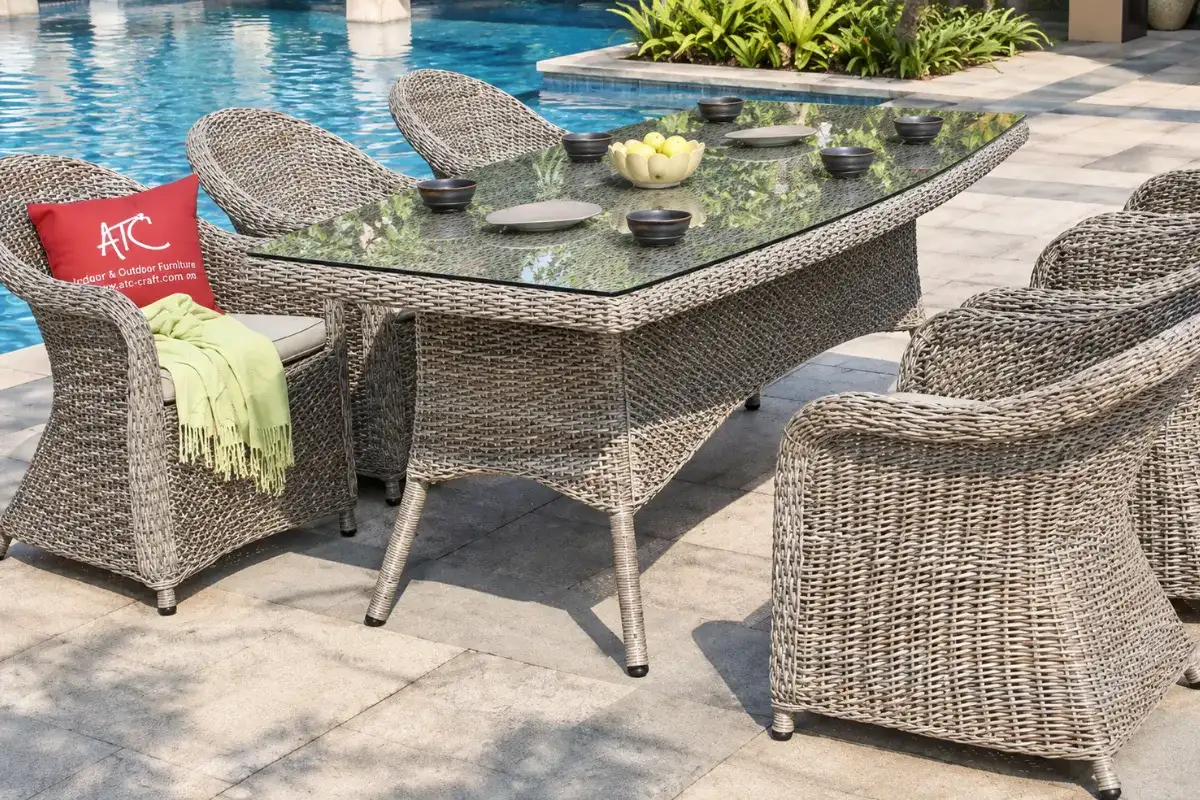
HDPE resin wicker combines a handwoven appearance with outdoor performance for restaurant, resort and hospitality dining areas.
3.4 Aluminum vs. Teak vs. Resin Wicker: Quick Comparison
There is no single material that is best for every restaurant project. The most suitable option depends on the installation environment, maintenance capacity, desired appearance and daily operating needs.
|
Factor |
Powder-Coated Aluminum |
Teak Wood |
HDPE Resin Wicker |
Weight |
Relatively lightweight |
Generally heavier |
Depends on the supporting frame |
Moisture performance |
Good with suitable coating and construction |
Naturally suited to outdoor use |
Good when quality outdoor-grade wicker is used |
UV considerations |
Coating quality is important |
Color naturally changes with exposure |
UV stability of wicker should be checked |
Maintenance |
Relatively low |
Periodic care may be needed to maintain original appearance |
Regular cleaning of woven surfaces |
Appearance |
Modern and clean |
Warm and natural |
Textured and handwoven |
Suitable applications |
Patios, rooftops, cafés |
Premium restaurants, resorts, terraces |
Patios, resorts, hospitality spaces |
For commercial buyers, material comparison should be only one part of the purchasing decision. Frame construction, material grade, workmanship, finish quality and supplier quality control can all influence the long-term performance of weatherproof restaurant dining chairs.
4. How to Choose the Right Material for Different Restaurant Environments
The performance of outdoor restaurant chairs can vary depending on where they are installed. Commercial buyers should consider sun exposure, moisture, wind, cleaning frequency and how often the seating needs to be moved. Matching these conditions with suitable materials can help improve durability, simplify maintenance and support more efficient restaurant operations.
4.1 Choose Lightweight and Easy-Care Chairs for Restaurant Patios
Restaurant patios often require flexible seating layouts, with chairs moved or rearranged throughout the day. Lightweight materials such as powder-coated aluminum can make handling, cleaning and repositioning easier for staff.
When comparing durable materials for restaurant patio chairs, buyers should also consider rain exposure, sunlight and cleaning requirements. HDPE resin wicker can be a suitable option when a softer woven appearance is preferred, but weave quality and ease of maintenance should be checked before bulk ordering.
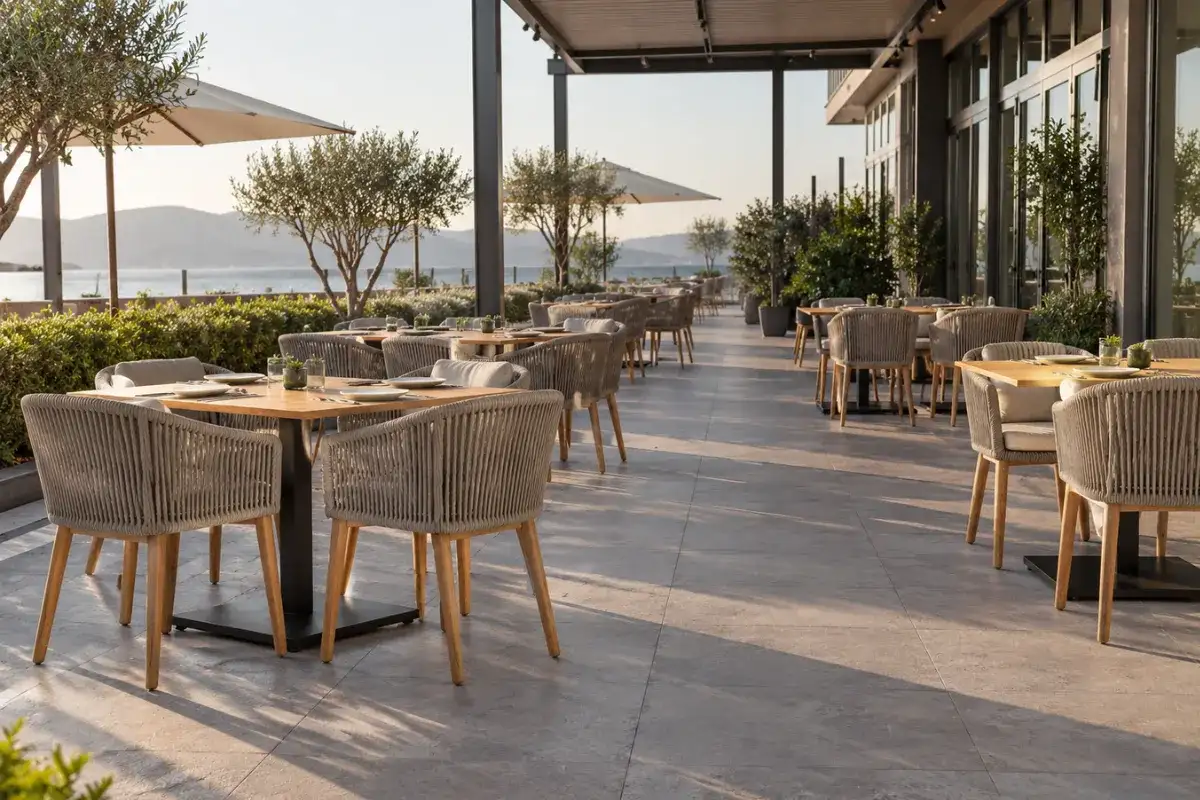
Lightweight, easy-care chairs support flexible seating layouts and practical daily operations on restaurant patios.(Illustration Image)
4.2 Prioritize Stability and UV Resistance for Rooftop Restaurants
Rooftop restaurants are often exposed to stronger sunlight and wind than ground-level dining areas. For this reason, buyers should prioritize chair stability, suitable weight and UV-resistant restaurant seating.
Powder coatings, HDPE wicker and other exposed materials should be evaluated for UV performance to help reduce fading and visible surface changes over time. The chair footprint, frame construction and overall stability should also match the specific rooftop conditions.
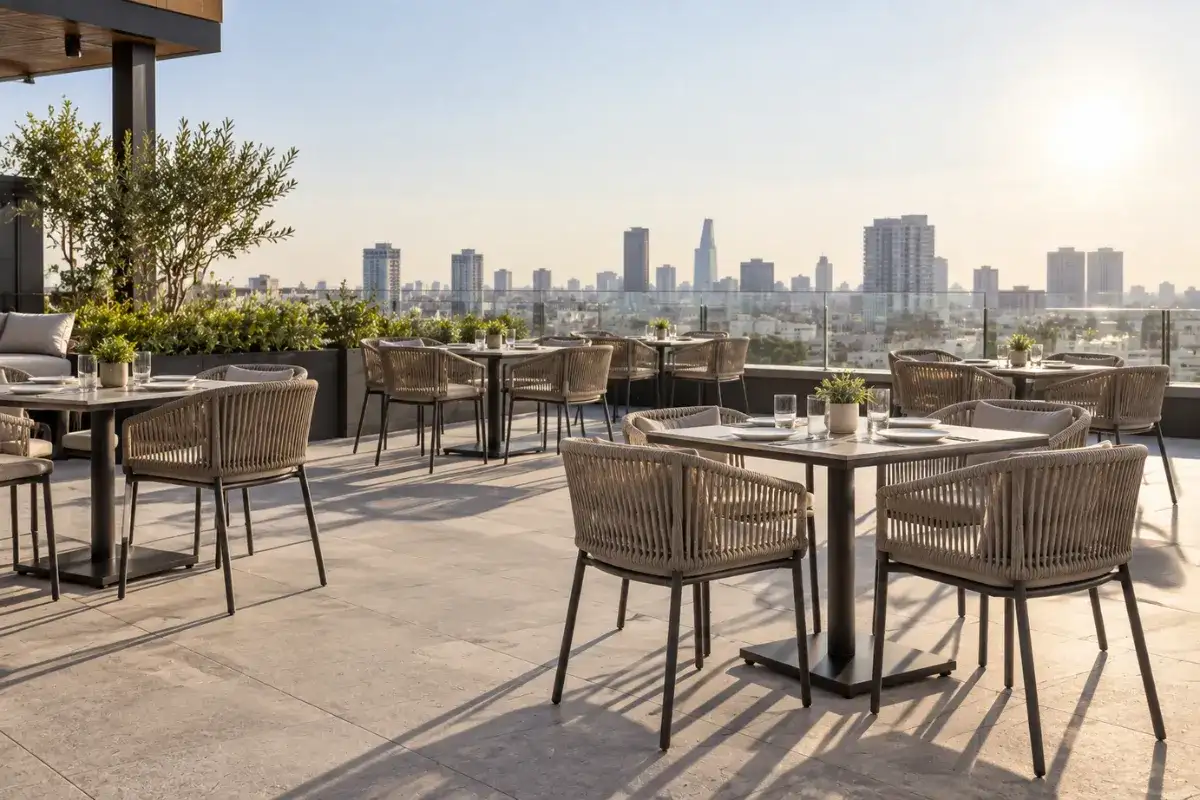
Rooftop dining areas need stable outdoor chairs with materials and finishes.
(Illustration Image)
4.3 Prioritize Moisture and Corrosion Resistance for Coastal and Poolside Areas
Coastal restaurants and poolside dining areas require seating that can handle frequent moisture exposure and, in coastal locations, salt-laden air. Material selection and protective finishes are therefore important for long-term commercial use.
Powder-coated aluminum, teak wood and HDPE resin wicker can all be considered when their construction is suitable for the environment. Buyers looking for outdoor restaurant chairs with no-rust performance should also inspect fasteners, joints and exposed connection points, not only the main frame.
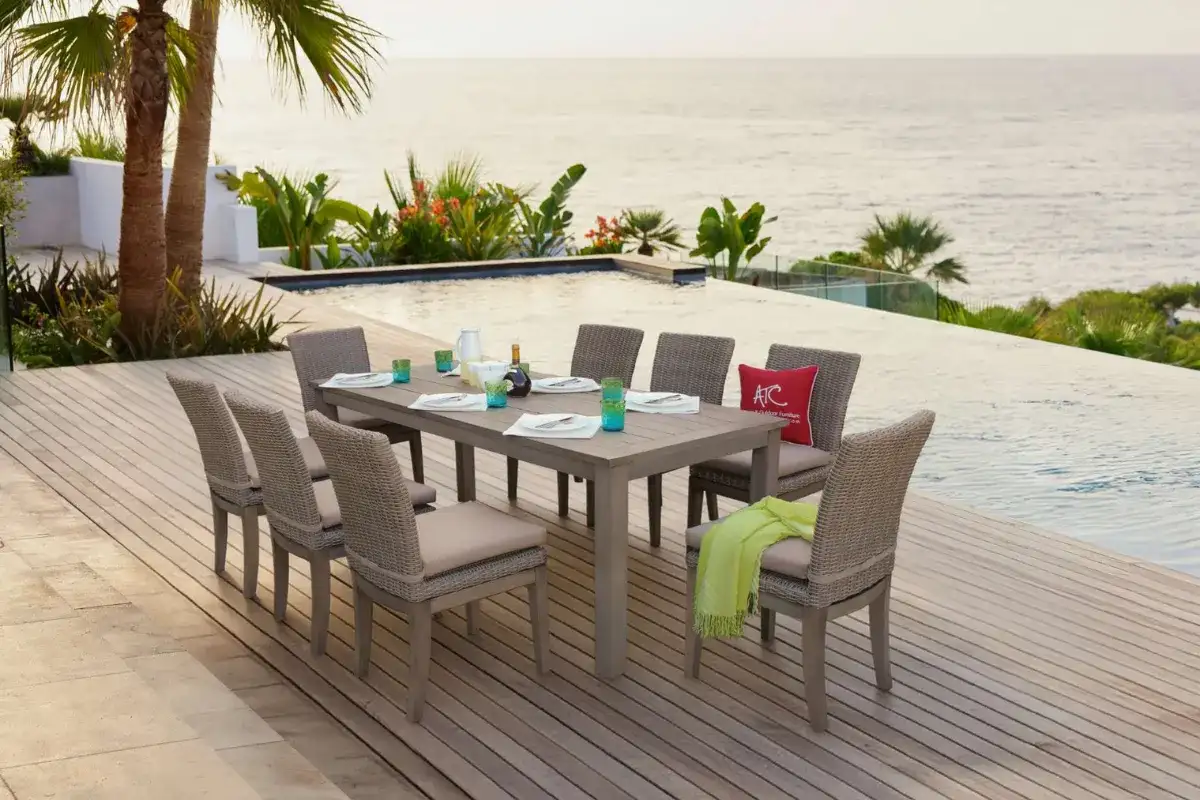
A poolside dining area requires materials and components suited to moisture and potentially corrosive outdoor conditions.
5. What to Check Before Ordering Restaurant Dining Chairs in Bulk
Before ordering restaurant dining chairs in bulk, commercial buyers should evaluate more than design and unit price. Chair dimensions, table compatibility, material specifications, comfort and product consistency can all affect installation and daily restaurant operations. Confirming these details before production can help reduce purchasing risks and ensure the chairs meet project requirements.
5.1 Chair Dimensions, Table Compatibility and Comfort
Chair dimensions should be evaluated together with the dining table. Buyers should check overall width, depth, height, seat height and armrest height where applicable. Adequate clearance between the chair, tabletop and table base is important for guest comfort and practical use.
For larger restaurant projects, spacing between chairs, guest circulation and staff service routes should also be considered. Reviewing chair dimensions together with compatible outdoor dining sets can help buyers plan a more functional commercial dining layout.
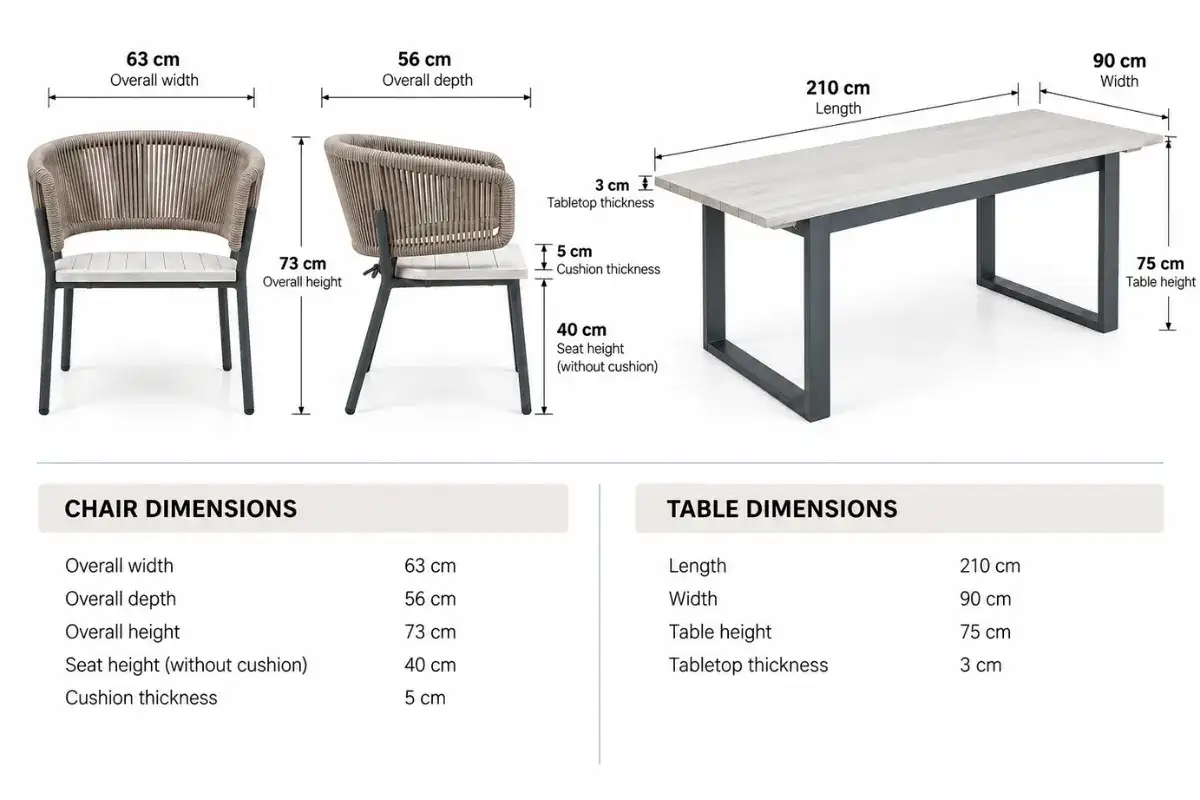
Chair width, depth, height and seat height should be reviewed together with table dimensions to ensure comfortable seating, proper clearance and practical restaurant layouts.
5.2 Material Specifications and Finishes
Material names alone are not enough to evaluate commercial all weather dining chairs. Products made from aluminum, teak or HDPE resin wicker can perform differently depending on material quality, construction and finishing.
Buyers should request clear specifications for frames, coatings, wood, wicker and other exposed components. For powder-coated aluminum, check coating consistency and weld finishing. For teak, evaluate wood quality and surface finishing. For HDPE resin wicker, important factors include strand quality, UV resistance, weaving tension and attachment points.
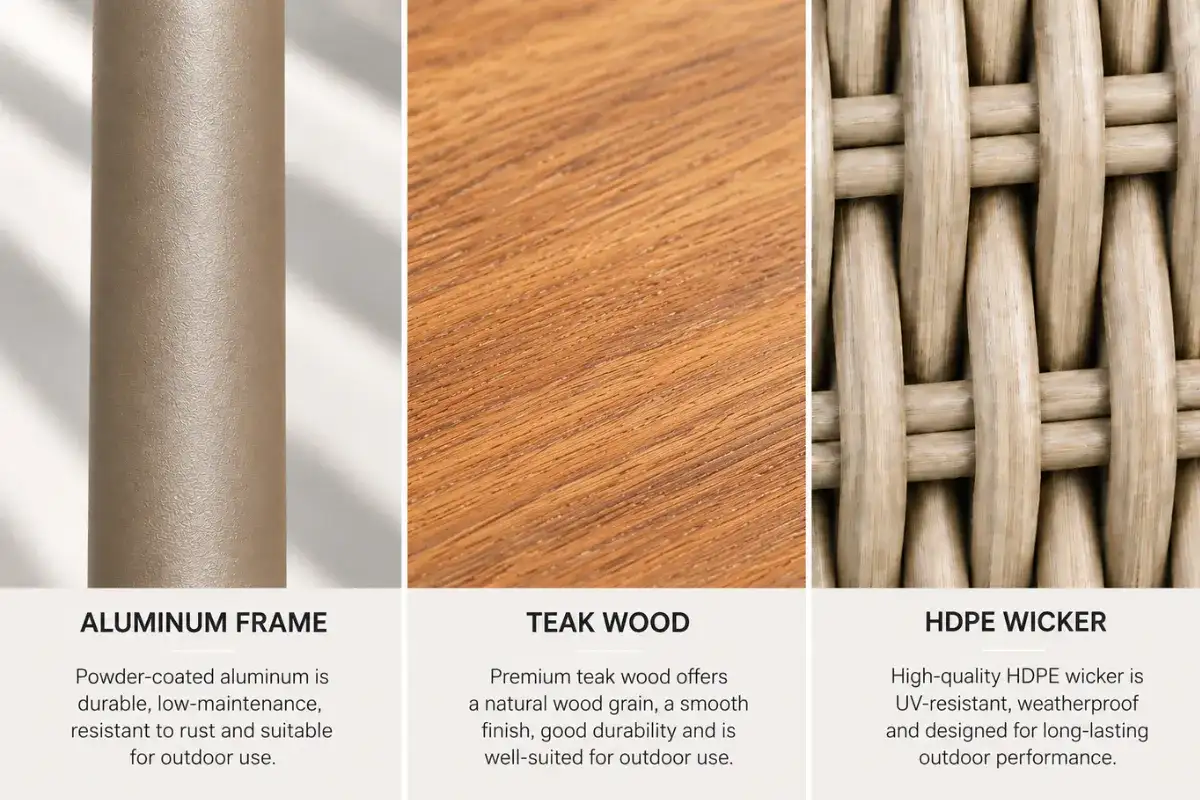
Material quality and finishing should be evaluated individually, including aluminum coating consistency, teak grain and surface finish, and HDPE wicker strand quality and weave consistency.(Illustration Image)
5.3 Product Samples and Consistency Across Large Orders
For larger orders, a product sample can help buyers verify dimensions, comfort, stability, material appearance and workmanship before full production. An approved sample can also provide a clear reference for final quality inspection.
Consistency is especially important when dozens or hundreds of chairs are installed in the same restaurant. Buyers should compare dimensions, finish color, wood tone where applicable, weaving tension and overall workmanship across multiple units. Clear specifications and an approved sample can help maintain consistent quality throughout a bulk order.
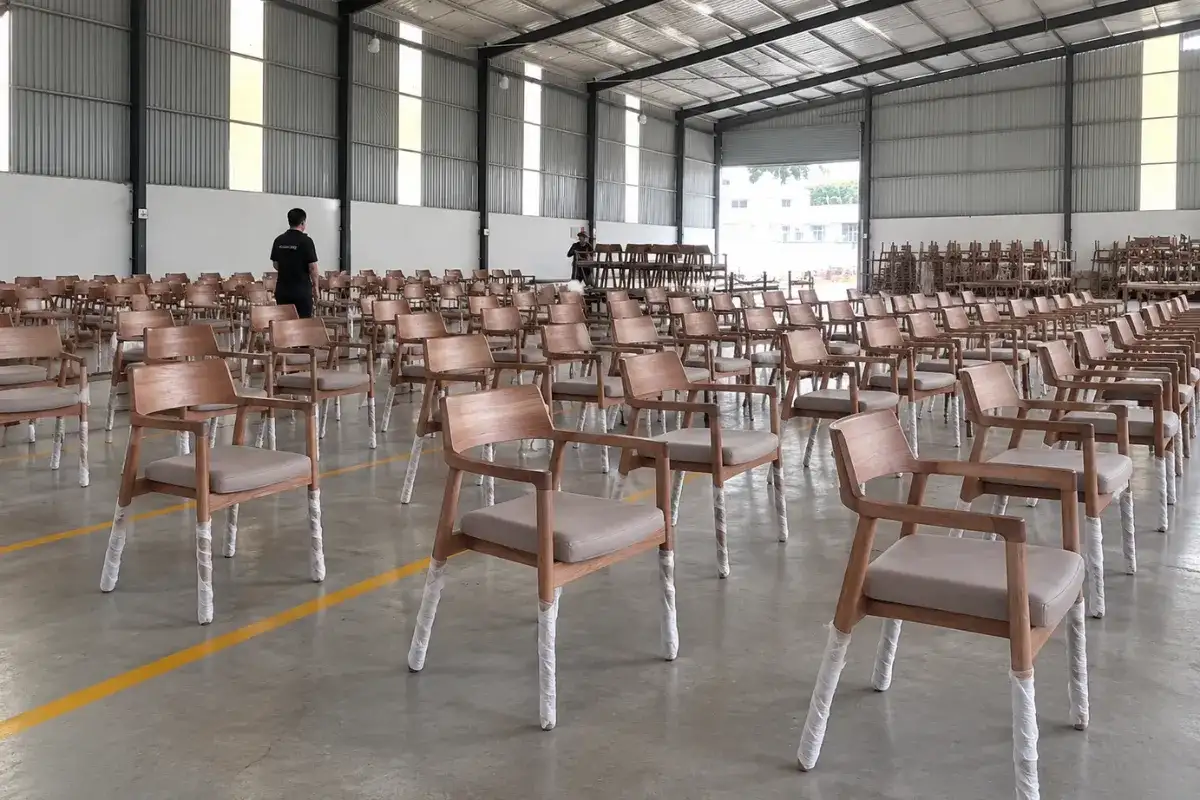
Consistent dimensions, finishes and workmanship should be checked across multiple chairs before completing a large commercial order.
6. How to Source Weatherproof Restaurant Dining Chairs for B2B Projects
Sourcing weatherproof restaurant dining chairs for B2B projects requires more than comparing unit prices. Commercial buyers should also review project specifications, order quantities, production time, packaging, quality control and supplier capability. These factors are especially important for restaurants, hotels, resorts and hospitality projects purchasing chairs in large quantities.
6.1 Project Requirements and Product Specifications
Before requesting a quotation, buyers should prepare clear project requirements, including chair quantity, dimensions, materials, intended use and installation environment. Detailed specifications help suppliers understand the project accurately and reduce unnecessary revisions during the quotation process.
Important details may include overall dimensions, frame material, surface finish, seating comfort and other project requirements. Reference images, technical drawings or an approved sample can also help communicate expectations more clearly.
For larger commercial projects, confirming specifications early can support more consistent sample approval, production and final quality inspection.
6.2 MOQ, Lead Time and Packaging
MOQ (minimum order quantity) and production time should be confirmed early when sourcing commercial outdoor dining chairs. Buyers should clarify the required order quantity, expected production schedule and whether different product models can be included within the same order where applicable.
Packaging is also important for international B2B orders. Buyers should review packed dimensions, the number of chairs per carton and whether products are stackable or require assembly. These details can affect shipping volume, container planning, handling and storage at the destination.
For large projects, delivery schedules should also be coordinated with restaurant opening, renovation or installation timelines to reduce the risk of delays.
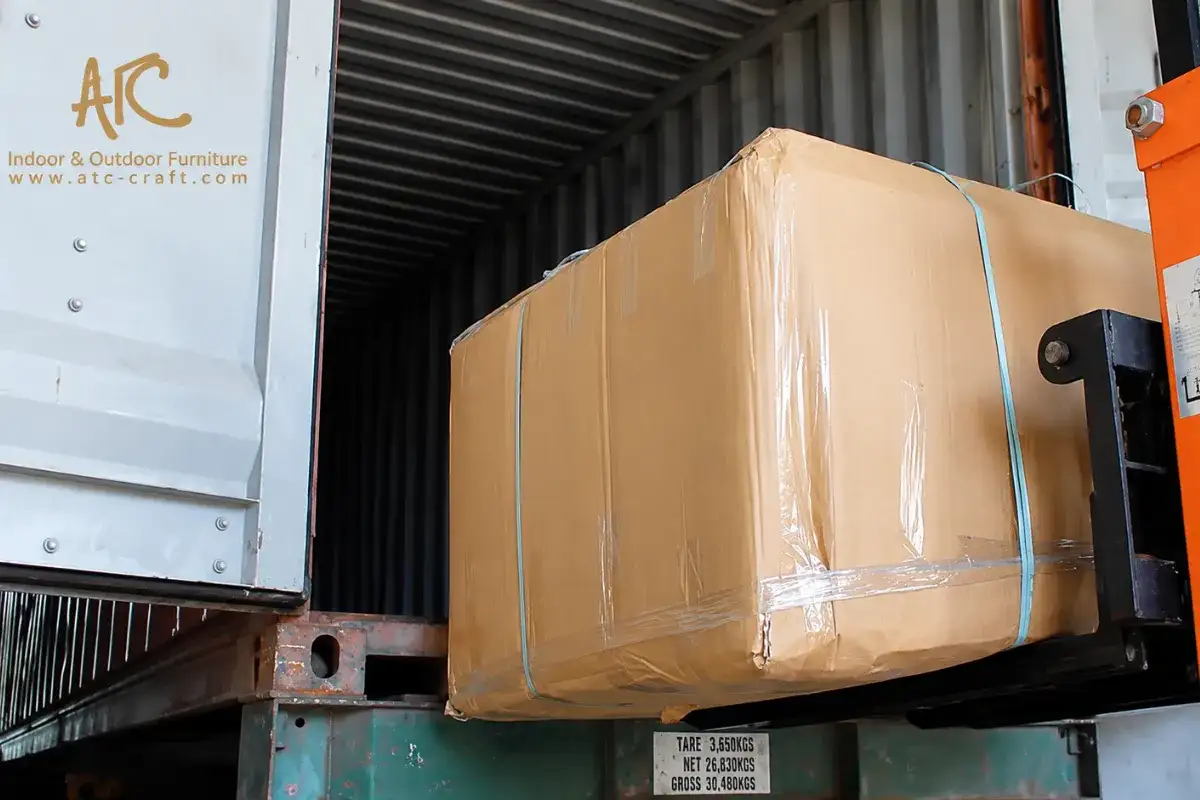
MOQ, production time, packaging dimensions and container planning should be confirmed early to support efficient shipping and project delivery schedules.
6.3 Quality Control, Supplier Capability and Replacement Support
Quality control is essential when purchasing commercial all weather dining chairs in large quantities. Buyers should confirm inspection criteria before production, including dimensions, frame stability, weld quality, surface finishing, color consistency, weaving tension and overall workmanship.
Supplier capability should also be evaluated beyond the lowest quotation. Production capacity, material control, communication and inspection procedures can all influence the consistency and reliability of a bulk order.
Replacement support is another important consideration for commercial projects. Buyers should confirm whether matching chairs, components or materials can be supplied later if replacements are required. This can help restaurants maintain a consistent dining concept over time.
7. FAQs About Weatherproof Restaurant Dining Chairs
7.1 What Is the Best Material for Weatherproof Restaurant Dining Chairs?
There is no single best material for every project. Powder-coated aluminum is lightweight and relatively low maintenance, teak wood offers a warm, natural appearance, and HDPE resin wicker provides a textured, handwoven look.
When selecting weatherproof restaurant dining chairs, buyers should consider the installation environment, frequency of use, maintenance requirements and desired appearance. The best material is the one that matches both the operating conditions and design needs of the restaurant.
7.2 Do Aluminum Outdoor Restaurant Chairs Rust?
Aluminum does not rust like iron or untreated steel, making it a practical material for outdoor restaurant seating. However, the quality of the powder coating, welds, fasteners and connection points can still affect long-term outdoor performance.
For coastal and poolside projects, buyers looking for outdoor restaurant chairs with no-rust performance should evaluate the complete chair construction rather than the aluminum frame alone.
7.3 Are Resin Wicker Chairs Suitable for Commercial Restaurants?
Yes. HDPE resin wicker can be suitable for commercial restaurants when the wicker, supporting frame and construction are designed for outdoor use. Buyers should check UV resistance, strand quality, weaving tension, attachment points and ease of cleaning.
For bulk orders, weave pattern, tension and color should also remain consistent across multiple chairs to maintain a uniform appearance throughout the dining area.
7.4 How Long Do Outdoor Restaurant Dining Chairs Last?
The lifespan of outdoor restaurant dining chairs depends on material quality, construction, climate, frequency of use and maintenance. For this reason, there is no single lifespan that applies to every product or installation environment.
Commercial buyers should evaluate durability through product specifications, samples and quality control. Regular cleaning, inspection and appropriate maintenance can also help extend the service life of outdoor restaurant seating.
7.5 What Should Buyers Check Before Ordering Restaurant Chairs in Bulk?
Before ordering restaurant dining chairs in bulk, buyers should confirm dimensions, comfort, materials, finishes, quantity and product specifications. A physical sample can also help evaluate stability, workmanship and appearance before full production.
For B2B orders, buyers should additionally confirm MOQ (minimum order quantity), production time, packaging, quality control procedures and replacement support. Clear specifications and an approved sample can provide useful references for evaluating the final order.