Tropical Island Resort Furniture: Marine-Grade, High-Humidity Outdoor Solutions
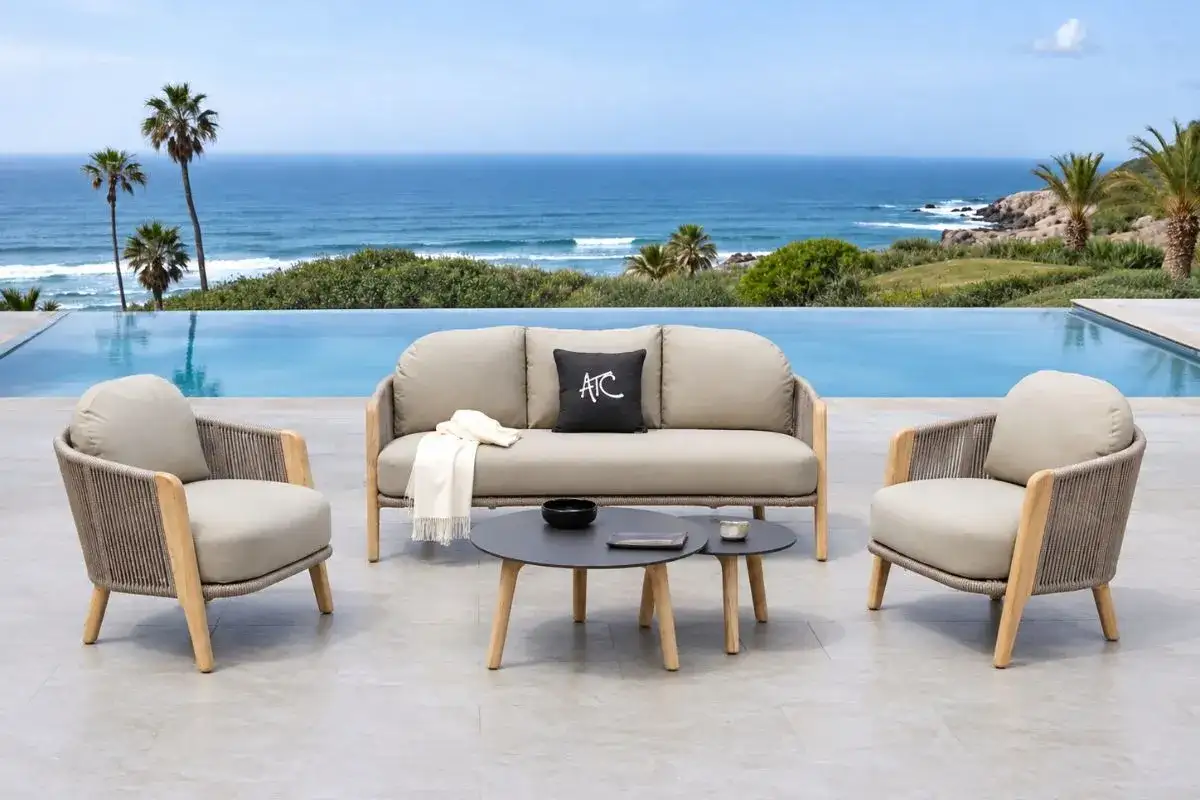
Choosing tropical island resort furniture means balancing guest comfort and design with salt air, humidity, sun, rain, and demanding delivery conditions. For projects in the Maldives, Caribbean, Southeast Asia, and other island destinations, furniture requirements can vary significantly between beachfront lounges, pool decks, covered reception areas, and private villa terraces.
A successful sourcing plan should therefore consider more than appearance. Buyers need to understand site exposure, material specifications, daily maintenance, delivery access, replacement requirements, and how the furniture will be used across different resort areas. This guide explains how these factors can be coordinated from supplier selection and material review through sample approval, logistics, and long-term operation.
1. How to Choose an Island Resort Outdoor Furniture Supplier
An island project places unusual demands on outdoor furniture. Even within one resort, a beachfront sofa and a chair beneath a covered terrace may face very different levels of salt spray, direct sun, rain, and daily use.
1.1 Define the Resort’s Climate and Outdoor Exposure
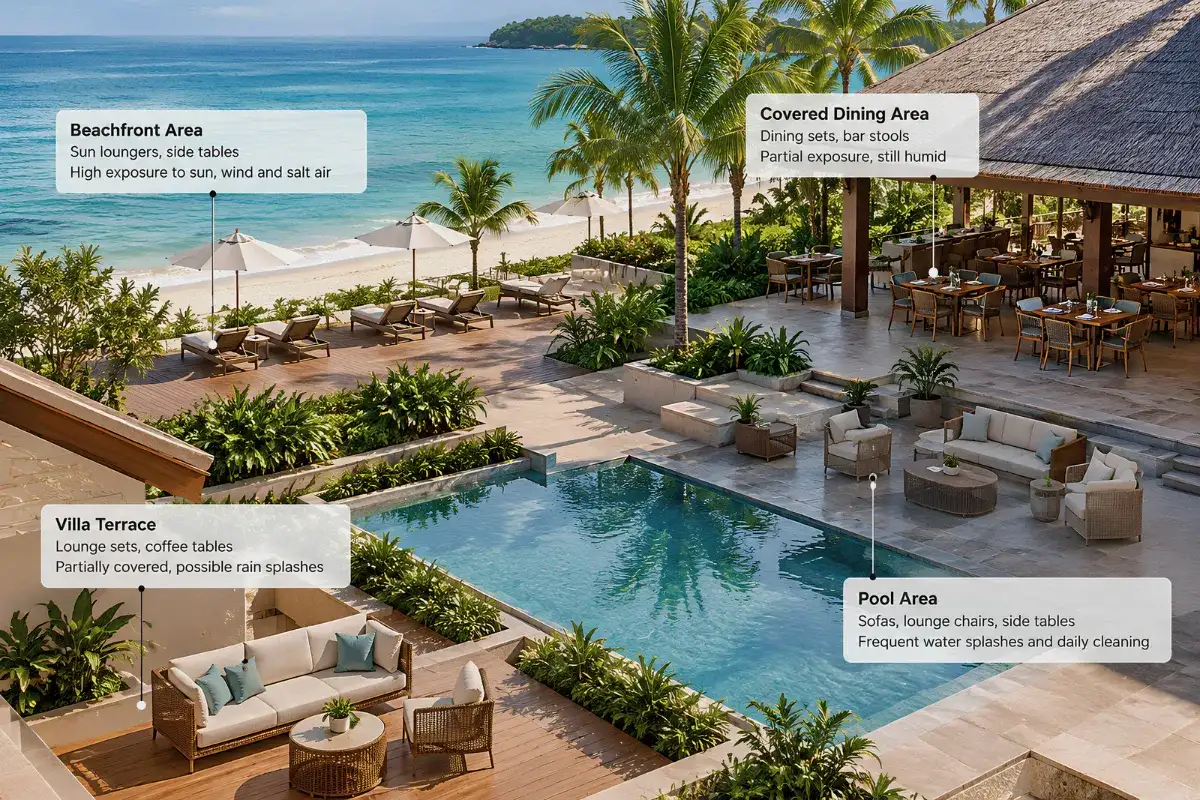
A suitable island resort outdoor furniture supplier should understand where and how each product will be used. Beachfront seating may receive sea spray, wind, and direct sunlight throughout the day, while covered villa terraces remain exposed to humid air and occasional wind-driven rain. Poolside furniture also needs to account for wet swimwear, splashes, sunscreen, and frequent cleaning.
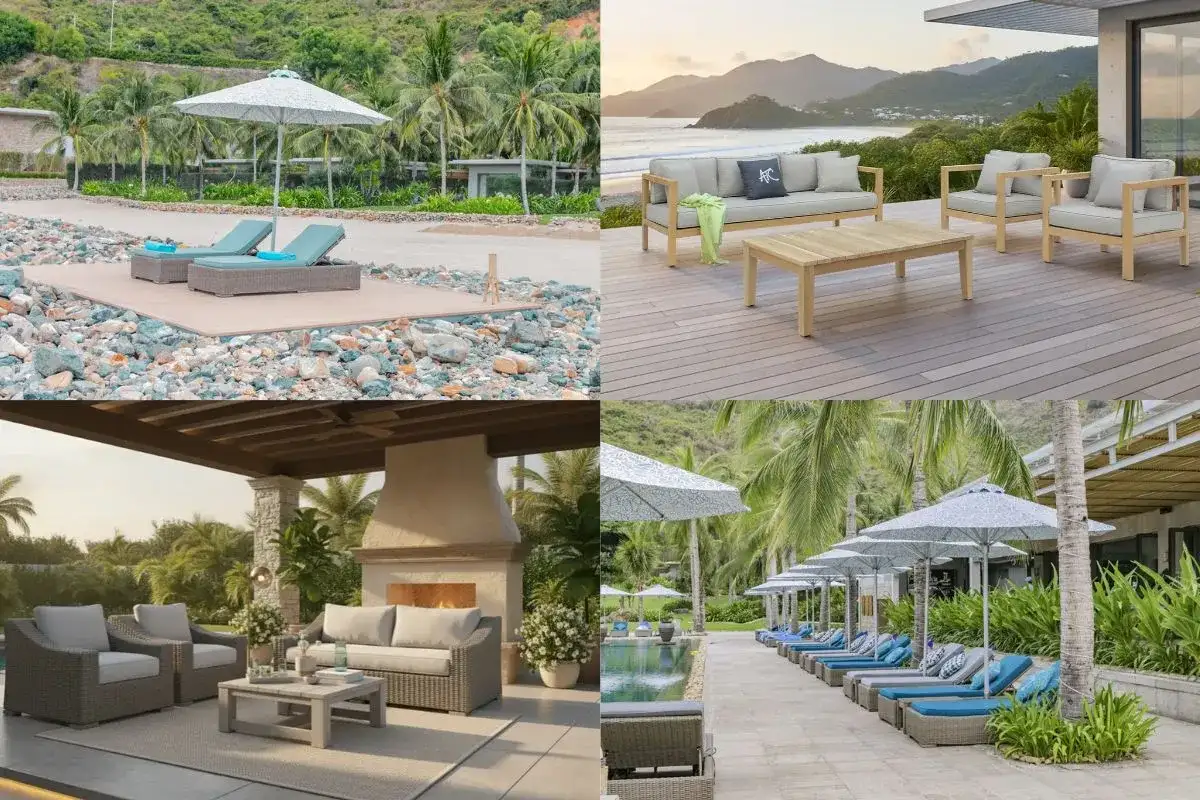
Furniture solutions for different tropical resort outdoor environments.
Site photographs and layout drawings are more useful when accompanied by information about shelter, expected use, cleaning routines, and cushion storage. The supplier can then recommend materials and construction according to actual conditions rather than relying on a general “outdoor” classification.
1.2. What Does Marine-Grade Mean for Outdoor Furniture?
The term “marine-grade” should be clarified at component level. It may refer to a frame material, protective finish, hardware, or another specific part of the product. One marine-grade component does not automatically define the performance of the entire furniture piece.
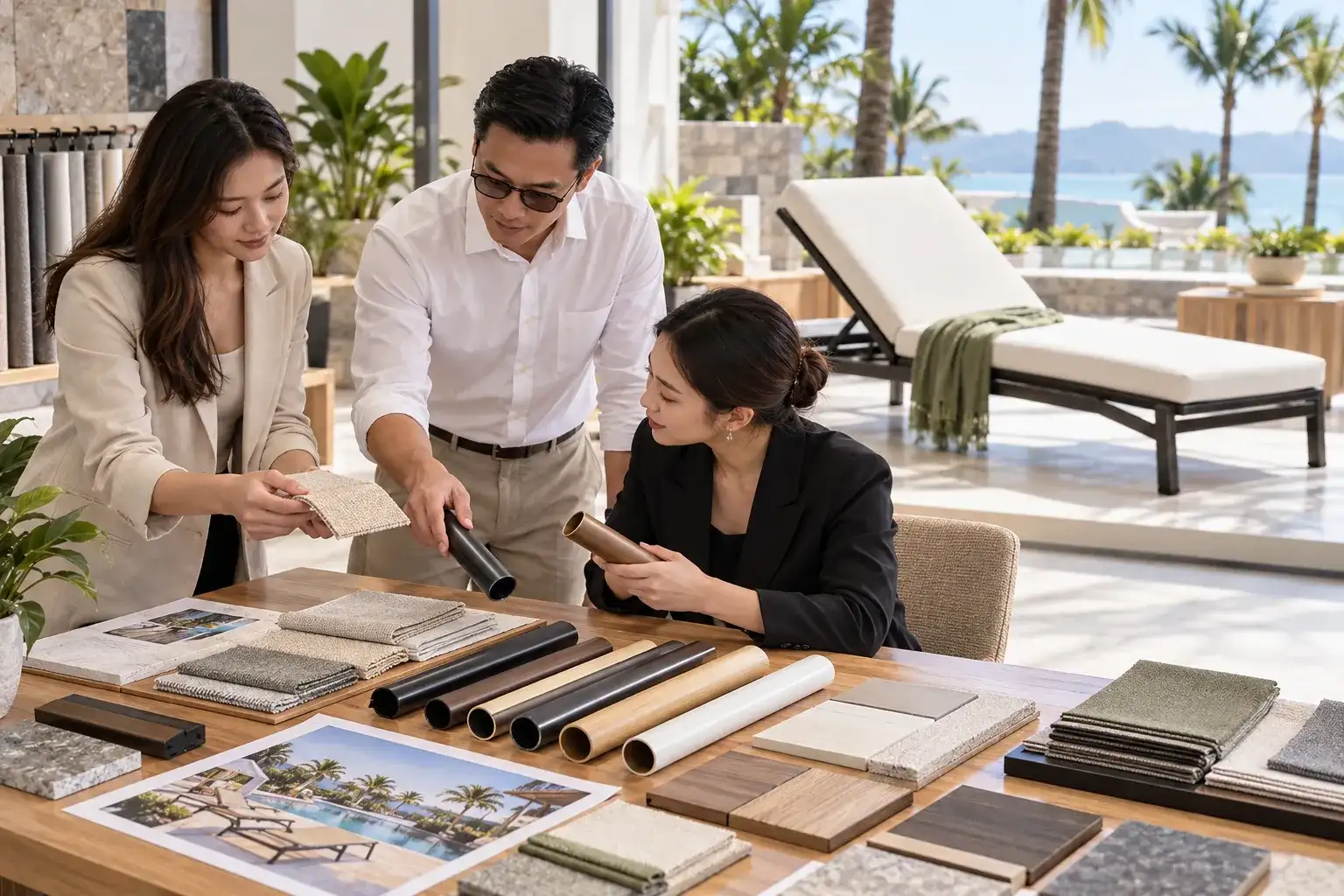
Reviewing materials and finishes for coastal resort furniture. (Illustrative image)
For example, a frame specification still leaves questions about fasteners, joints, coating systems, and maintenance. Buyers should ask the supplier to explain what has been specified, which conditions it is intended to address, and any recommended care or exposure limitations.
1.3. What Salt-Resistance Specifications Should Buyers Request?
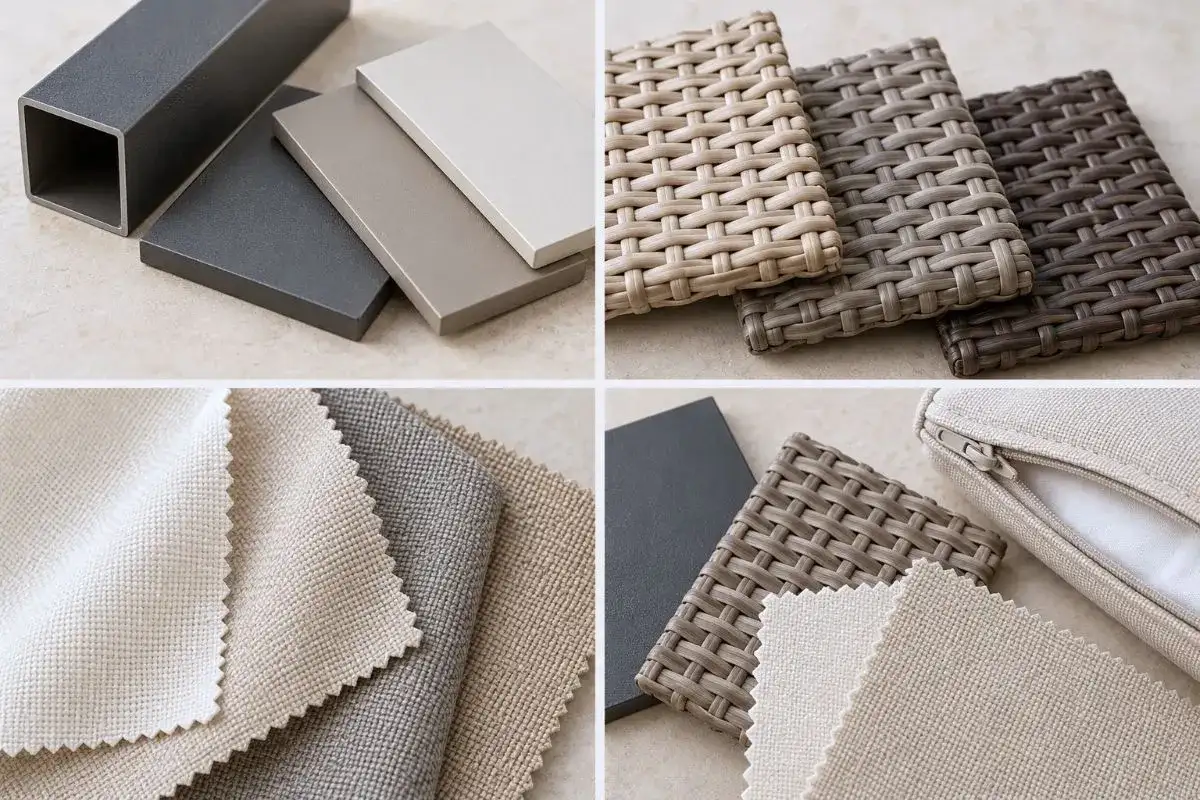
A useful coastal specification should cover the frame, finish, and hardware. Frame details may include material grade, tube dimensions, wall thickness, and joint construction, while finish information should explain surface preparation and coating. Hardware specifications should identify bolts, screws, hinges, and other fittings used in exposed or concealed areas.
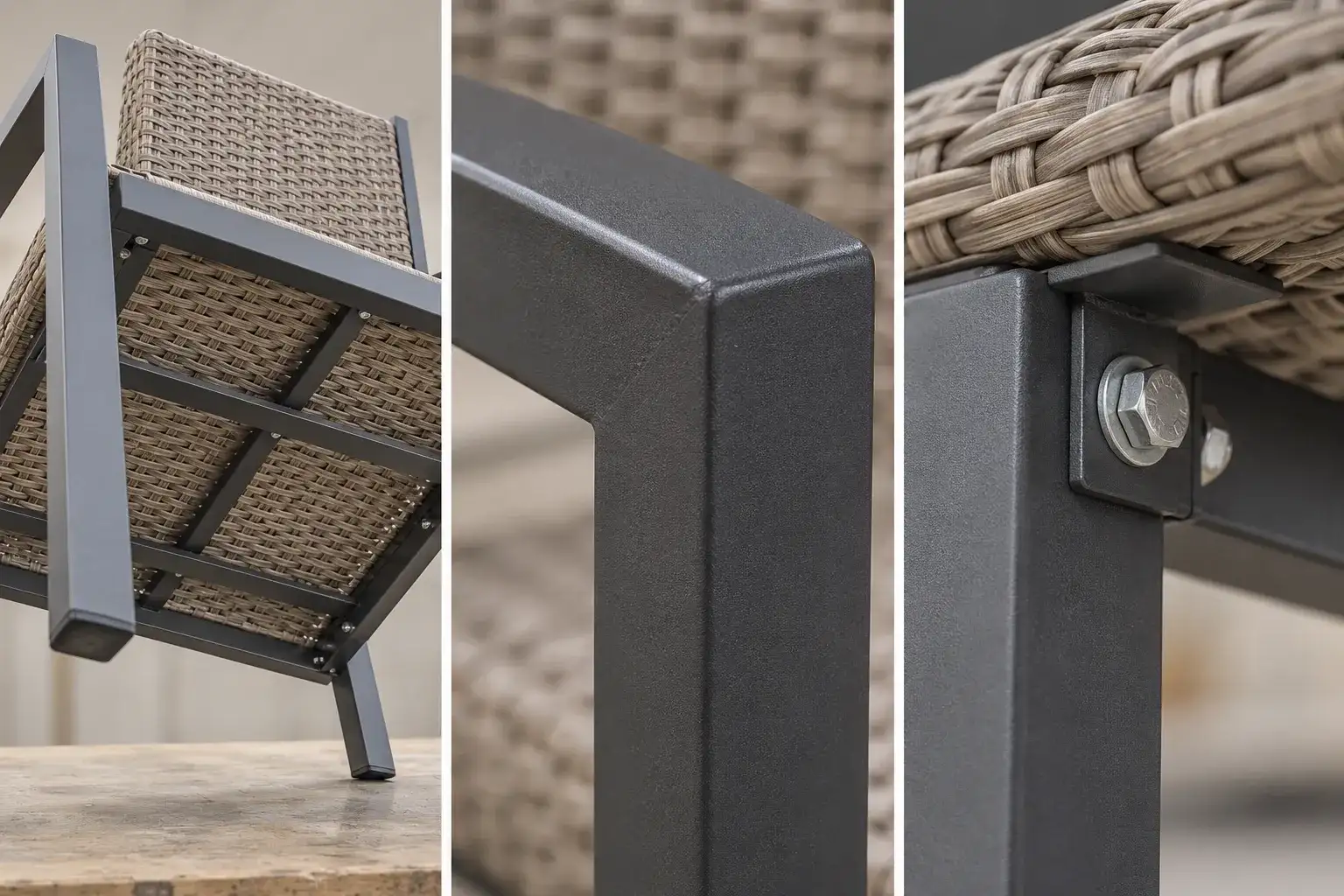
Frame, finish and hardware details for coastal outdoor use. (Source: Internet)
Where relevant documentation is available, test reports can support the review when they clearly identify the component tested, test conditions, and results. These documents should be considered alongside maintenance instructions, warranty terms, and replacement-part availability. Keeping approved specifications with the sample also gives buyers and production teams a common reference for later inspection.
2. Choosing Tropical Resort Patio Seating Sets for Guest Comfort
Furniture selection should respond to how guests actually use each space. Private terraces, shared lounges, and open-air reception areas may share the same design palette while requiring different product types and proportions.
2.1. Which Seating Sets Work Best for Private Villa Terraces?
Two-person sets, compact sofas, and corner sofas suit different terrace layouts. Two lounge chairs with a small table create a comfortable setting for couples, while a compact sofa can provide shared seating where space is limited. Larger terraces may accommodate corner seating if there is enough room for its full footprint.
When choosing tropical resort patio seating sets, buyers should consider how the furniture supports activities such as morning coffee, reading, or casual dining. Table size, seat orientation, backrest height, and circulation between the villa, pool, and terrace all affect whether the space feels comfortable or crowded.
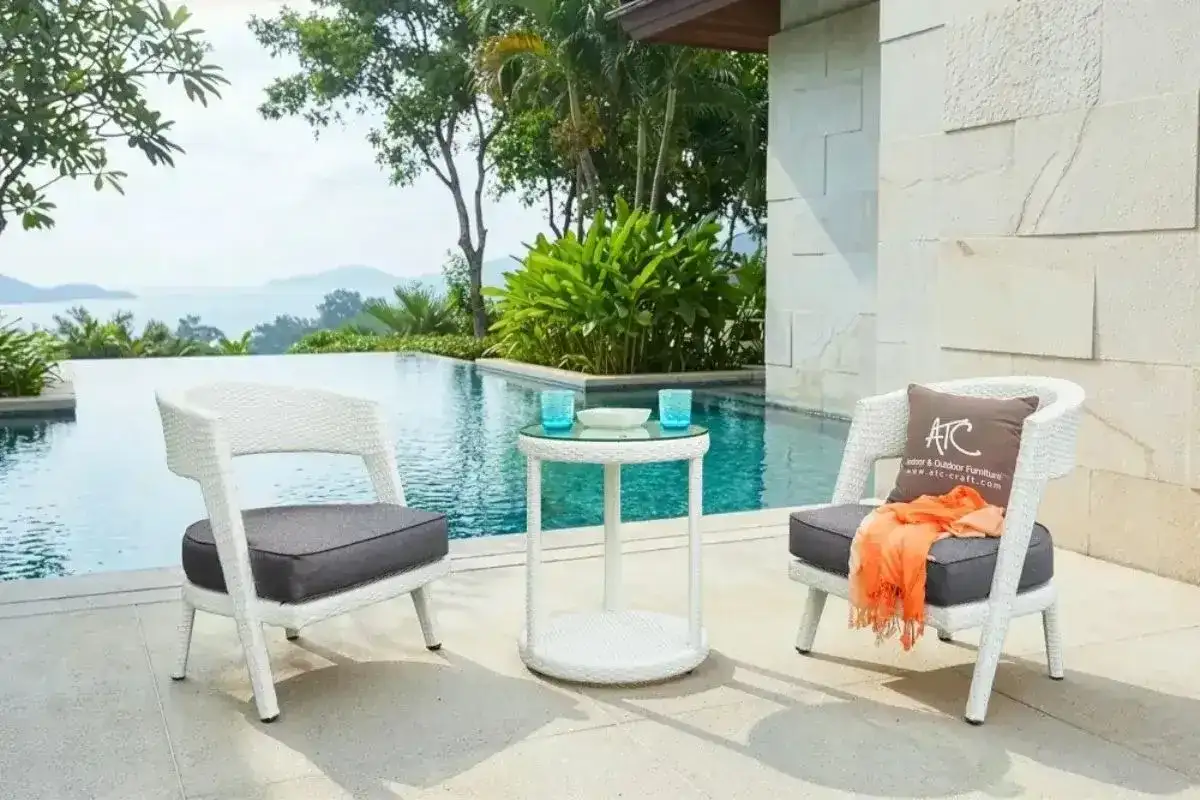
Compact patio seating for a private villa terrace.
2.2. Planning Shared Lounges and Open-Air Reception Areas
Shared lounges need to accommodate guests arriving alone, as couples, or in groups. A combination of sofas and individual chairs provides more flexibility than one large seating arrangement, while several smaller groups can create separate conversation areas within an open reception space.
Coffee tables and side tables should remain within comfortable reach without restricting movement. The layout should also account for luggage, staff service, and cleaning access around and beneath the furniture. Reviewing these practical needs before ordering helps identify arrangements that may look attractive on a plan but become inconvenient in daily operation.
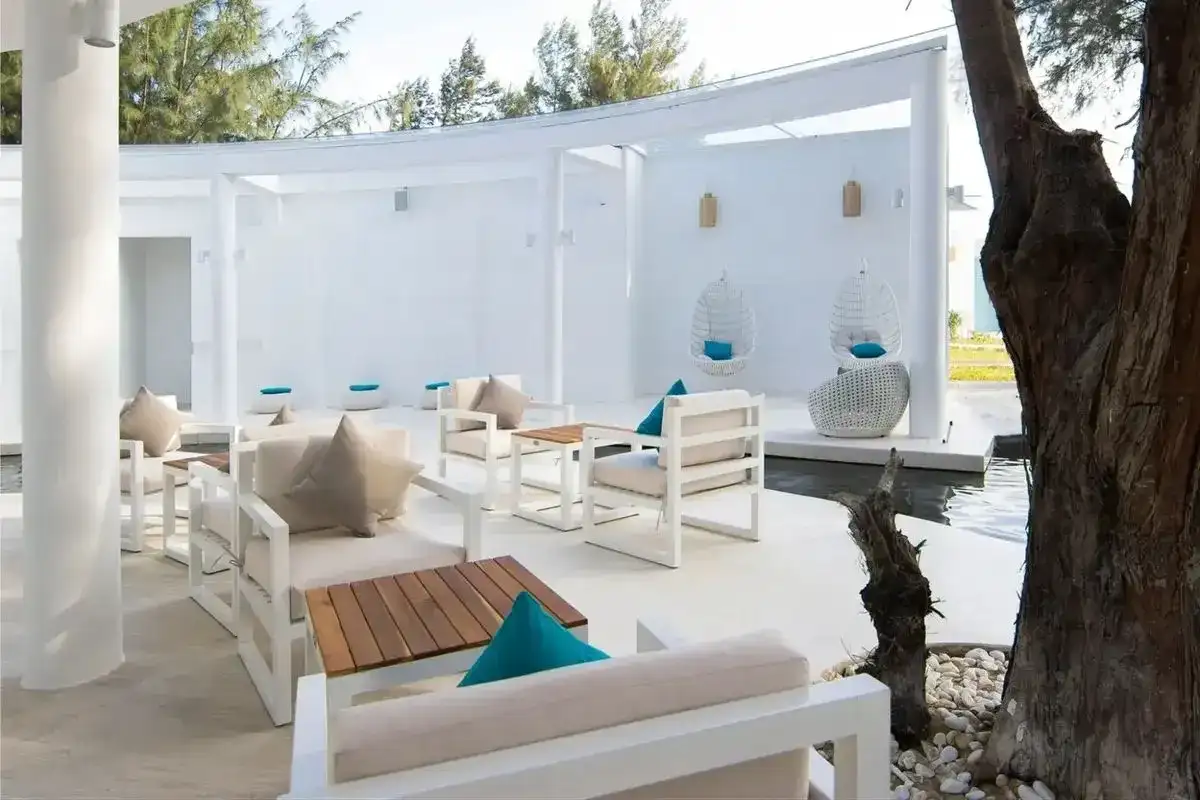
Flexible seating for shared resort lounge areas.
2.3. Coordinating Design with Everyday Resort Operations
Different outdoor areas do not need identical furniture, but common frame colors, woven finishes, or cushion fabrics can create a consistent resort identity. Private villa terraces may use compact seating while shared lounges apply the same palette to larger sofas and lounge chairs.
Coordinated colors, wicker and fabrics for a consistent resort look.
Operational details should be considered alongside design. Removable covers, manageable furniture weights, and shared cushion dimensions where practical can simplify cleaning and replacement. Approved finish and material references also make future orders easier to coordinate.
3.Planning Wholesale Furniture Orders for Caribbean and Island Resorts
A Caribbean hotel outdoor furniture wholesale project becomes easier to manage when product requirements are organized by location rather than treated as one general furniture order.
3.1. Build a Product Schedule for Each Outdoor Area
Each area should have a defined product list covering quantities, dimensions, materials, finishes, cushion requirements, and expected exposure. This connects the design plan with the supplier’s quotation and makes differences between zones easier to control.
A zone-based product schedule helps connect the design plan with specifications and order quantities.
For example, beachfront lounges may require different finish or cushion specifications from covered dining areas even when both share the same visual theme. Recording these differences also helps buyers evaluate substitutions because any alternative should suit the same location, function, and operating conditions.
3.2. How Should Buyers Compare Wholesale Furniture Quotations?
Wholesale quotations should be compared against the same frame, finish, woven material, cushion, hardware, and packaging requirements. Similar product photographs can hide important differences in construction, while one quotation may include accessories or upgrades that another does not.
Purchase price is only part of the project cost. Shipping volume, onsite assembly, maintenance requirements, spare parts, and future replacement needs can all affect the overall value of the order. A useful comparison therefore considers not only what the product costs, but also what is included and how practical the furniture will be after installation.
3.3. Plan Packaging, Island Delivery, and Spare Components
Packaging should reflect both international transport and final site access. Assembled furniture can reduce onsite work, while knock-down construction may be easier to move through narrow pathways or restricted access points if packed dimensions are smaller.
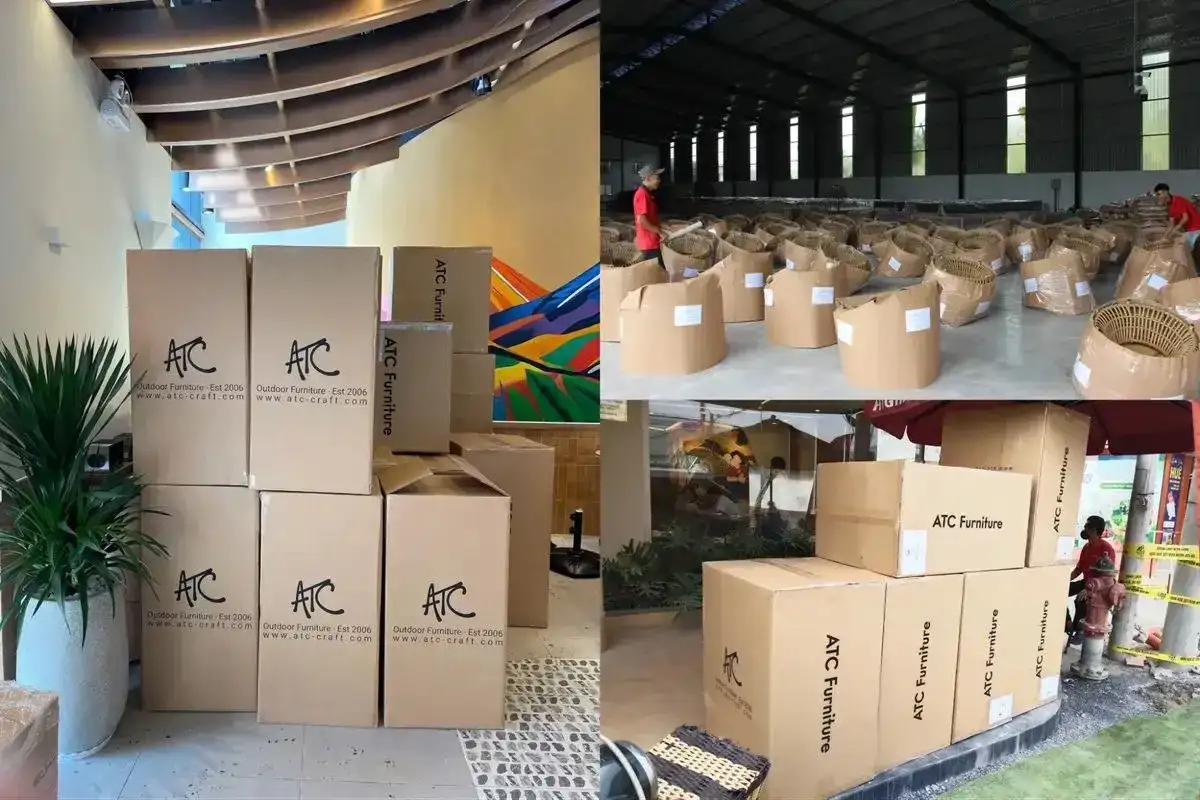
Export packaging prepared for island resort delivery.
Island projects may also require ferry or barge transfers, local transport, and temporary storage after the shipment reaches port. Buyers should therefore confirm packed dimensions, handling requirements, and delivery routes before production. A practical stock of fittings, hardware, or cushion covers can also reduce reliance on urgent replacement shipments later.
4. Selecting Humidity Resistant Outdoor Furniture for Resorts
Choosing humidity resistant outdoor furniture for resorts requires more than selecting materials described as suitable for outdoor use. Buyers should consider the complete product, including frame construction, surface finishes, woven components, cushions, and maintenance requirements.
4.1. Is HDPE Wicker Suitable for Tropical Coastal Resorts?
HDPE wicker can be suitable for tropical coastal settings when the weave, frame, and hardware are specified for the intended exposure. Its texture works well across lounge, dining, and poolside furniture, making it useful for coordinated resort collections.
When reviewing poly rattan wicker furniture, buyers should compare the proposed fiber, weave consistency, frame construction, attachment points, and available UV-performance information rather than relying only on an “all-weather” description.
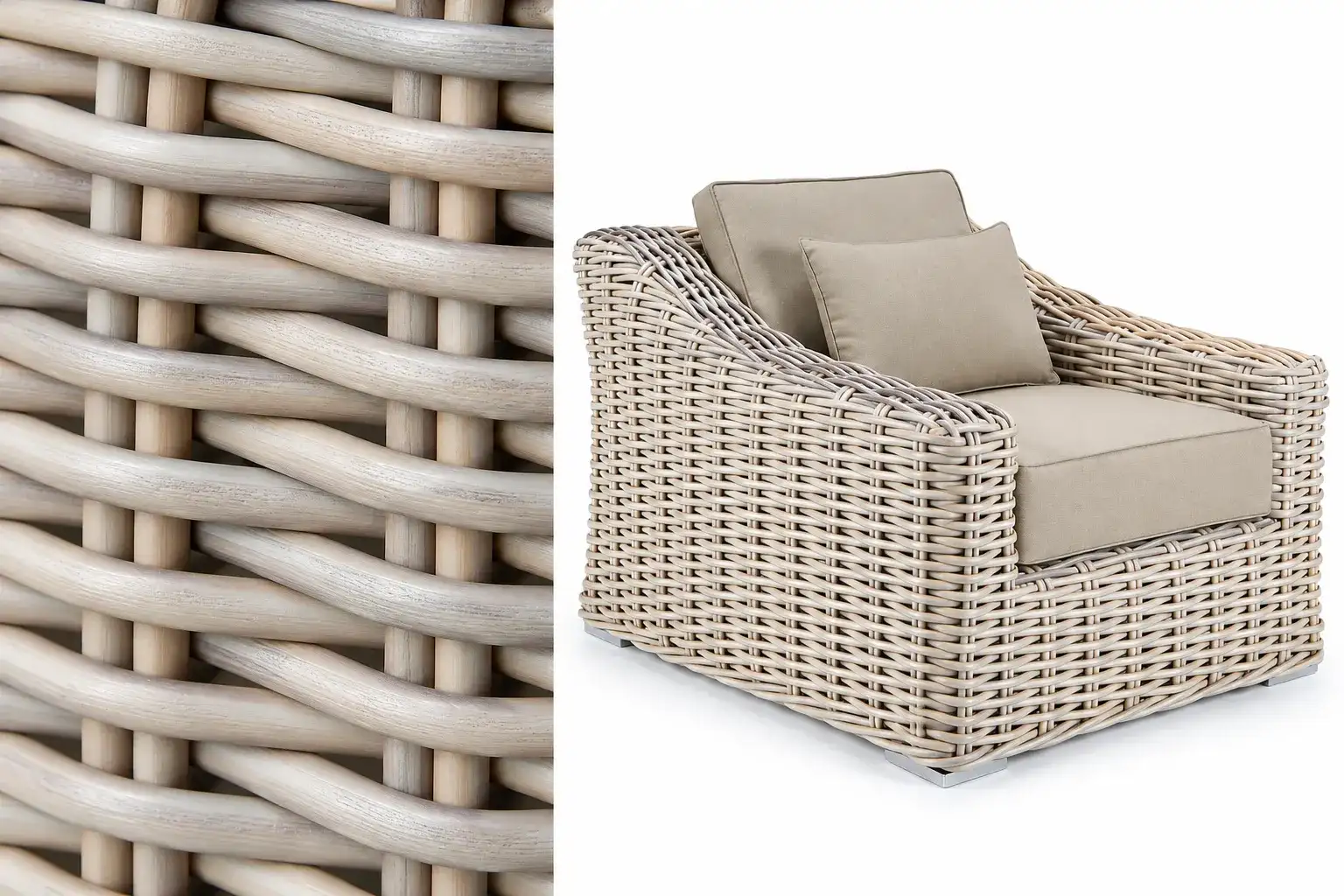
HDPE wicker for humid tropical resort environments.
An evenly tensioned weave with secure fixing points is an important sample-quality check, especially around corners and seat edges. The design should also allow practical cleaning of sand and dirt from woven areas.
4.2. Comparing Aluminum and Teak for Humid Outdoor Spaces
Aluminum offers relatively lightweight construction, which can be useful when resort staff frequently rearrange furniture or move it for cleaning. Its suitability still depends on tube dimensions, weld quality, coating coverage, hardware, and how damaged finishes are handled during maintenance.
Teak creates a warmer, more natural appearance for terraces and lounges. Buyers should consider timber quality, joints, surface treatment, product weight, and how the resort expects the wood to age. A property that accepts natural weathering will have different maintenance requirements from one that wants to preserve a consistent original color.
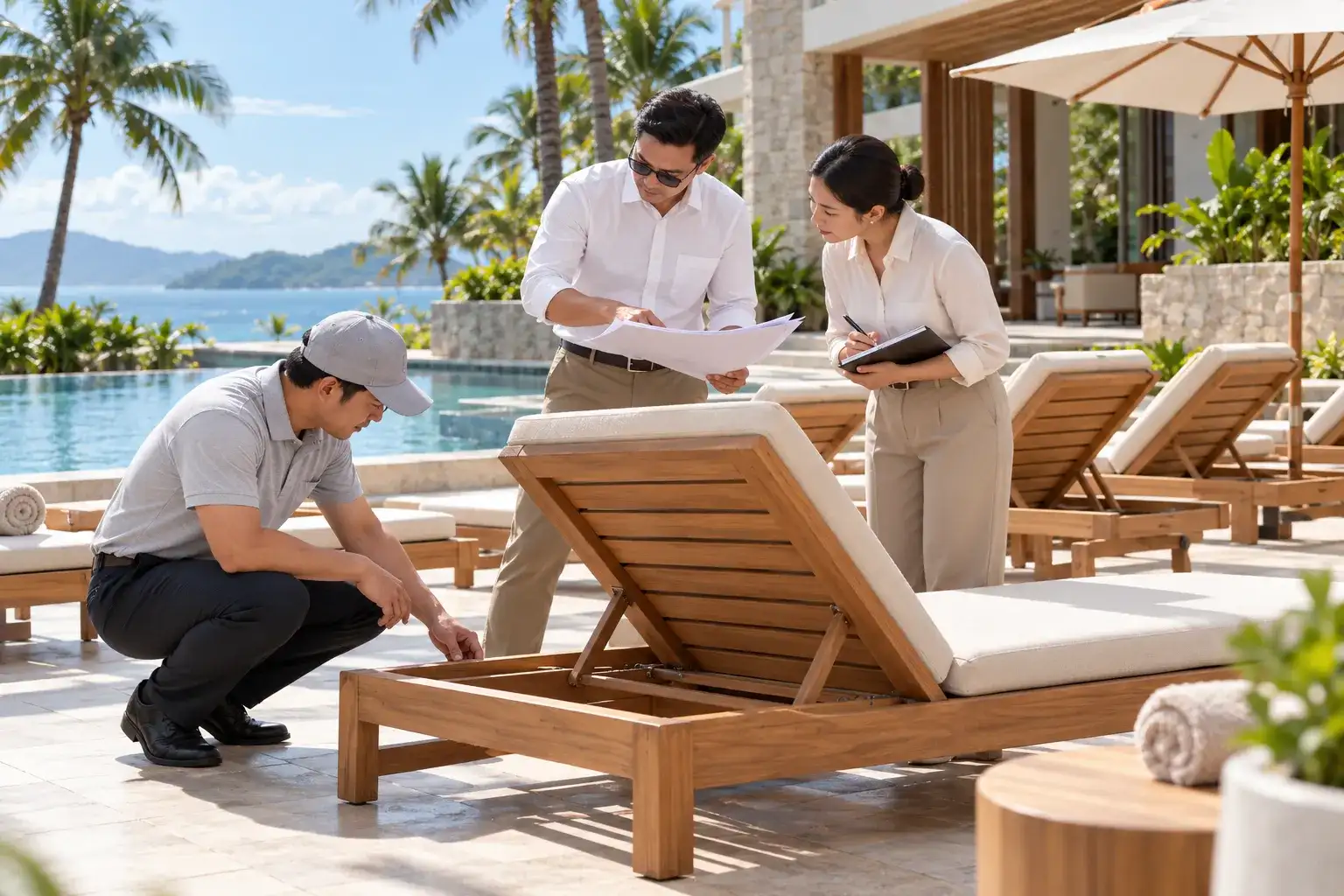
Teak loungers inspected for resort outdoor use.
Neither material should be selected by name alone. The more important question is whether the complete product and its maintenance requirements suit the intended location.
4.3.Which Outdoor Fabrics and Cushion Fillings Suit High Humidity?
Outdoor fabrics such as Polyester, Olefin, and Sunbrella options should be compared through specific product information, including colorfastness, water protection, and cleaning instructions. The selected fabric code matters because performance can vary between products and collections.
Fabric performance should also be distinguished from cushion construction. Water-repellent fabric helps shed surface moisture, while quick-draining cushion systems are designed to allow water to escape. Open-cell outdoor foam can support drainage and airflow when the cover and cushion base are designed accordingly.
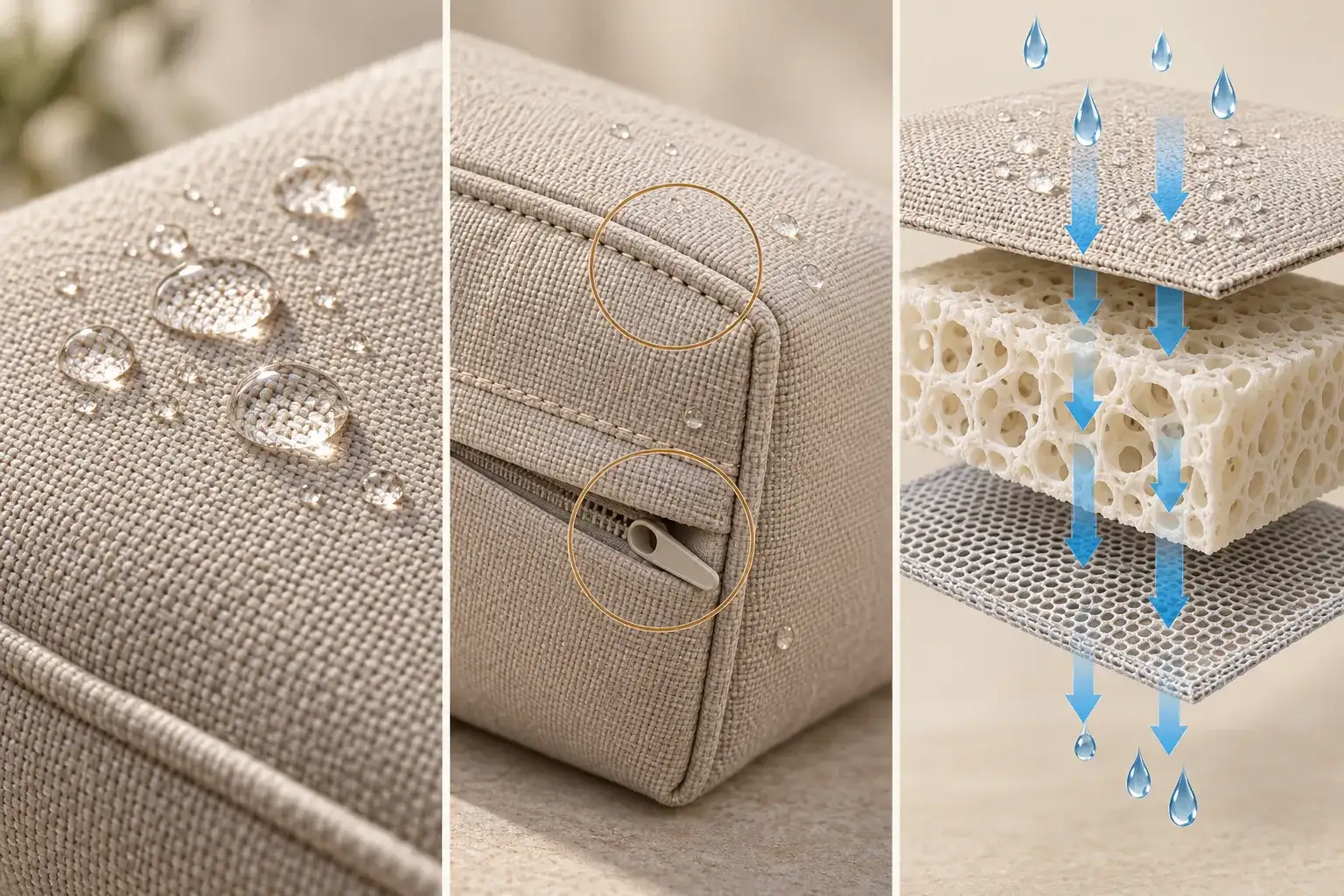
Water-repellent fabric and quick-drying cushion construction. (Source: Internet)
For exposed seating, buyers can also assess how the proposed cushion behaves after wetting and drying. This helps connect material specifications with the cleaning, drying, and storage routines available at the resort.
4.4. Cleaning, Drying, and Storage for Long-Term Use
Regular care remains necessary even when outdoor materials are selected for humid coastal environments. Salt deposits, joints, fittings, and woven recesses should be cleaned according to the manufacturer’s instructions, while cushions should dry fully before being covered or stored.
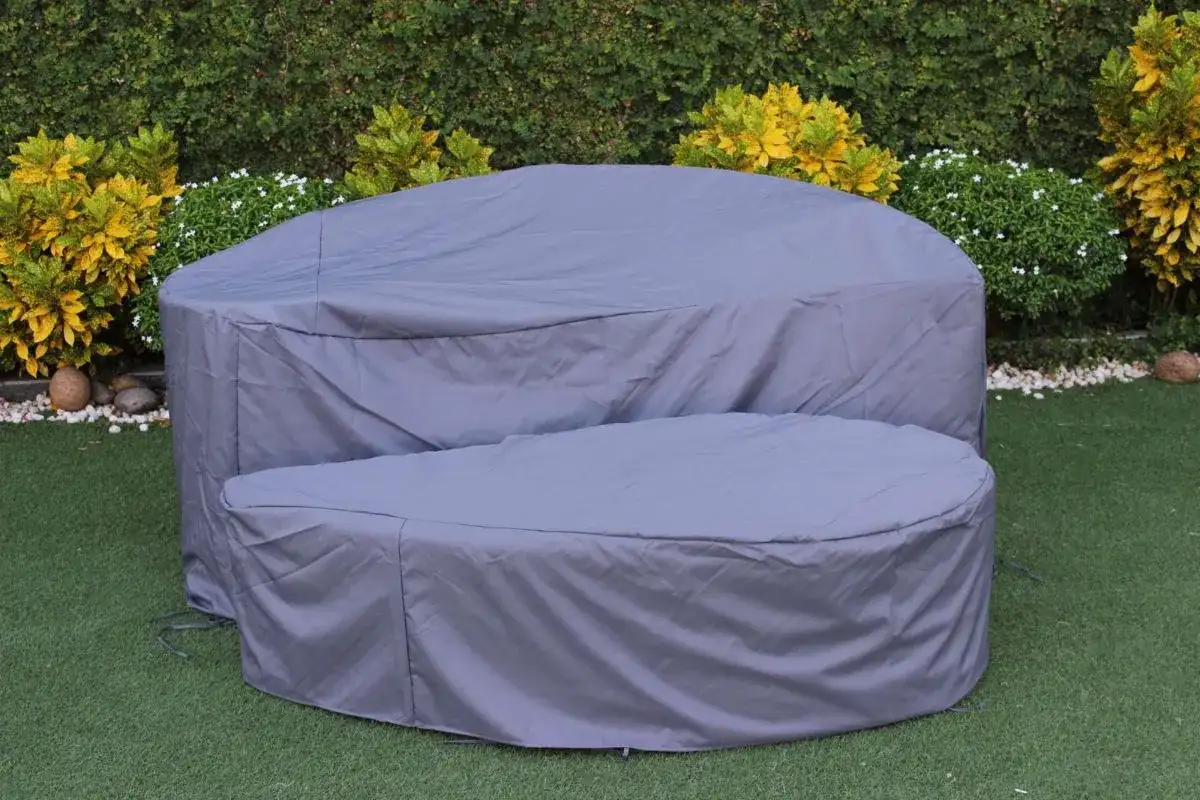
Protective cover for outdoor furniture storage and care.
Clear responsibility for cleaning, drying, and covering furniture helps turn maintenance recommendations into a routine that resort teams can realistically follow.
5. Choosing a Maldives Resort Outdoor Daybed Manufacturer
A Maldives resort outdoor daybed manufacturer should be able to develop furniture around the actual installation site, guest capacity, and delivery requirements rather than treating the daybed as a standalone decorative product.
5.1. Match Daybed Designs to Pool Decks and Villa Terraces
Large pool decks may accommodate shared daybeds, while private villa terraces need closer attention to doors, circulation, views, and available shade. Usable lounging dimensions often provide a better indication of capacity than the overall footprint alone.
Canopies and side panels can add shade or privacy, but their size and operation should suit the site’s wind, rain, and sea-spray conditions. A visually impressive daybed still needs to remain practical for guests and staff.
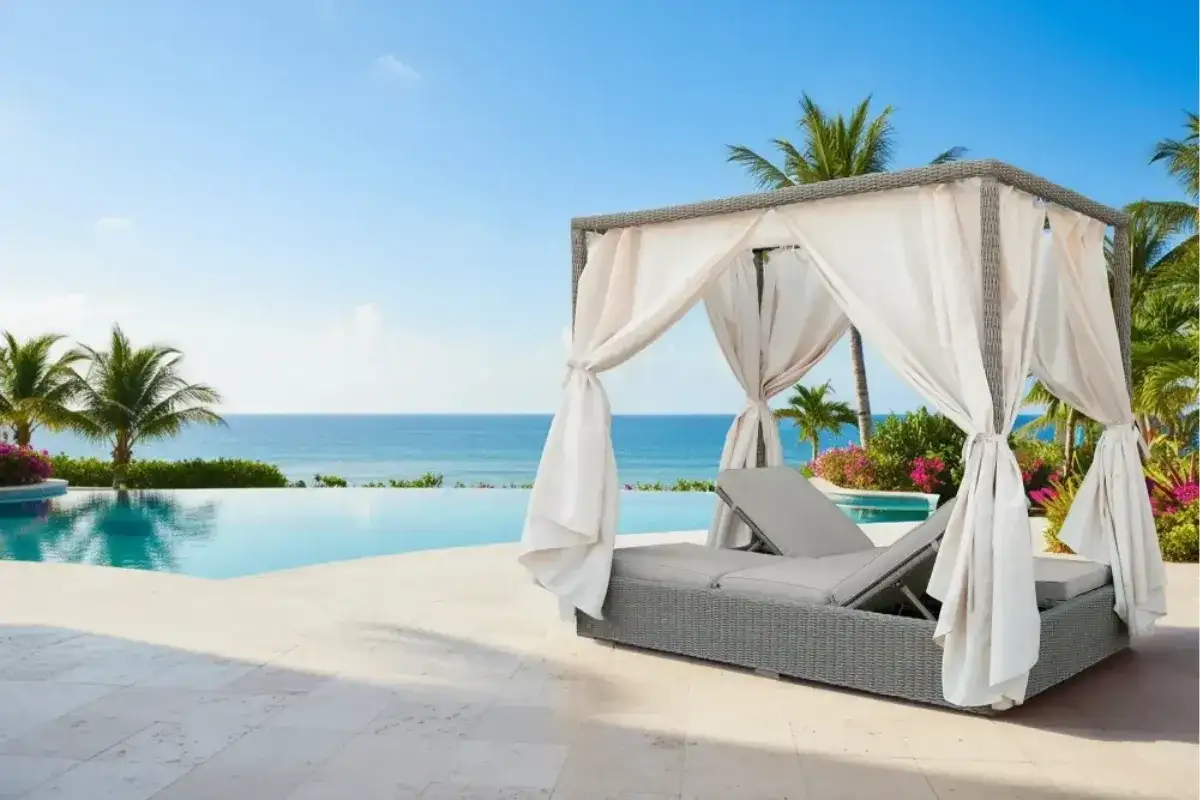
Outdoor daybed for Maldives pool decks and villa terraces.
5.2. What Should Buyers Check Before Approving a Daybed Sample?
Sample approval should cover dimensions, stability, joints, finish quality, cushion fit, comfort, and ease of access. Sitting and reclining on the sample helps confirm whether the usable lounging space matches expectations, while inspection of edges, connections, and the underside reveals details that may not be visible in drawings.
The sample should also be reviewed from a maintenance perspective. Cushions need to remain manageable to remove, staff should be able to clean beneath the platform, and adjustable canopies should operate smoothly. Where relevant, wind-related instructions should explain when a canopy needs to be retracted or when the product should be moved to shelter.
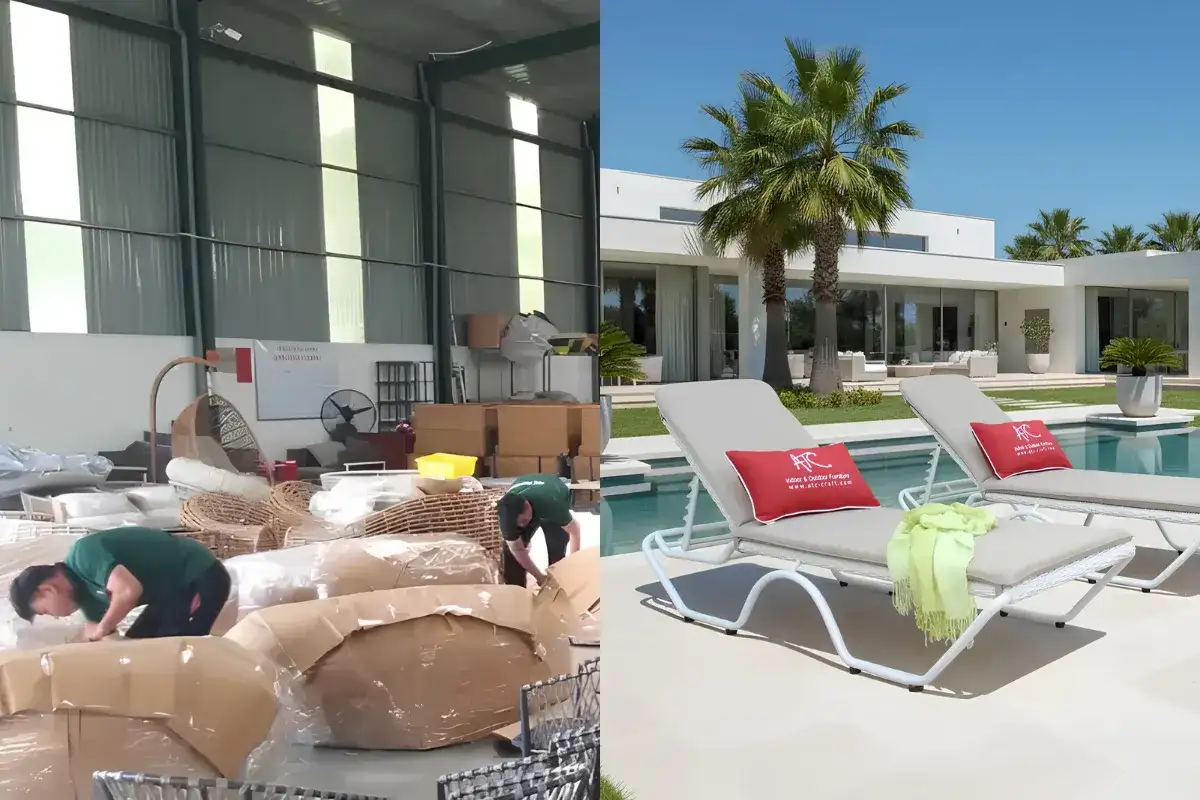
Sample approval helps confirm dimensions, stability, cushion fit, and ease of operation before production.
5.3. Confirm Customization, Replacement Cushions, and Delivery Access
Drawings, material swatches, and the approved sample should bring dimensions, colors, materials, and cushion construction into one agreed specification. This gives production and inspection teams a clear reference for customized products.
Delivery access should also be reviewed before the design is finalized. Packed dimensions and component weights need to work with jetties, pathways, doorways, and villa terrace access. Where onsite assembly is required, the shipment should include the agreed hardware, tools, and instructions.
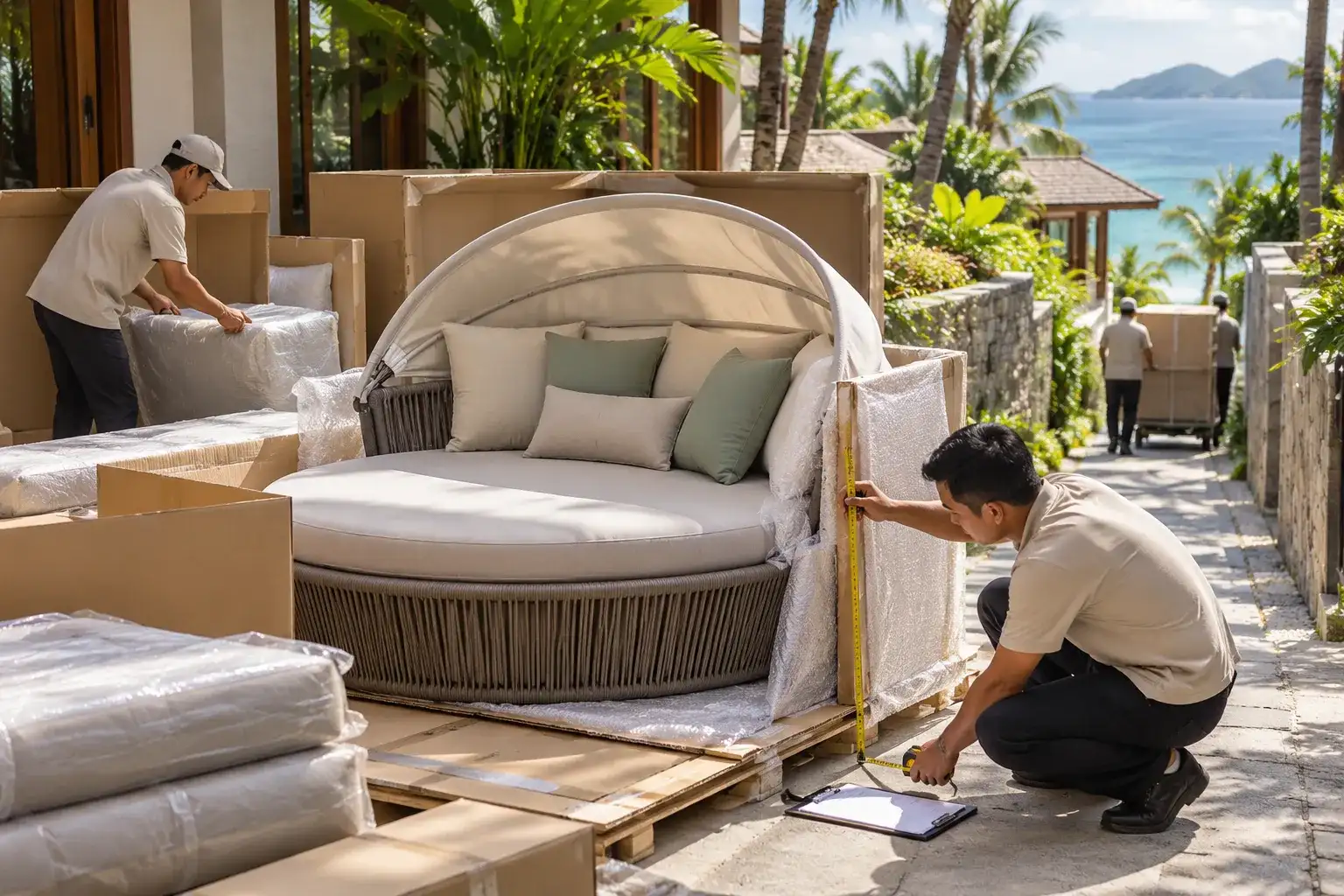
Package dimensions and site access should be checked before finalizing the product. (Illustrative image)
Clear product codes, replacement-cushion options, and expected replenishment lead times can also support future maintenance.
6. Working with ATC Furniture for Tropical Island Resort Projects
ATC Furniture can support tropical hospitality projects through coordinated outdoor product categories, material options, customization, and production planning.
6.1. Coordinated Outdoor Collections for Different Resort Areas
ATC Furniture manufactures and exports outdoor furniture from Vietnam, including sofas, dining sets, bar sets, loungers, and daybeds. These categories can be coordinated across private villa terraces, shared lounges, outdoor dining areas, and pool decks.
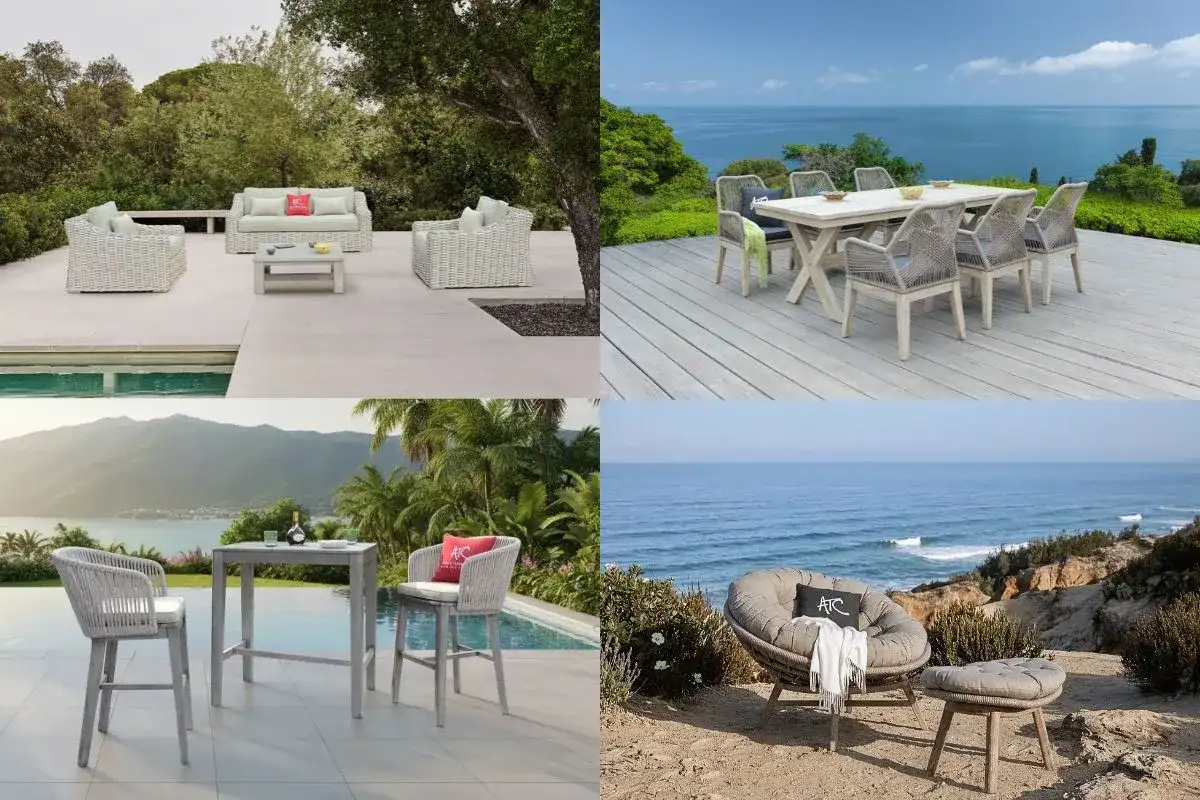
Coordinated outdoor collections for tropical island resort projects.
A common palette of frame colors, woven finishes, and cushion fabrics can connect these areas while allowing each space to use furniture suited to its function and level of exposure.
6.2. Material Selection, OEM/ODM, and Production Support
ATC’s material options include HDPE wicker, powder-coated aluminum, rope, and wood, with fabric choices discussed according to the selected collection. OEM/ODM services can support changes to designs, dimensions, colors, and materials, subject to manufacturing feasibility and order requirements.
The final project specification should connect these choices with drawings, material references, and sample approval. Production schedules, quality-control checkpoints, and export packaging arrangements can then be agreed for the order. Where coastal exposure, testing, or warranty coverage is relevant, buyers should review those requirements against the proposed specification and available documentation before production.
6.3. Share Your Project Requirements with ATC Furniture
Buyers can share the project location, layout drawings, quantities, preferred materials, exposure conditions, and expected delivery schedule with ATC Furniture. Site photographs and island access information can also help clarify installation and transport requirements.
These details provide a practical basis for discussing product selection, customization, packaging, and delivery planning. Contact ATC Furniture to develop a proposal based on the resort’s design, operational, and sourcing requirements.
7. FAQs About Tropical Island Resort Furniture
7.1. Does Marine-Grade Outdoor Furniture Still Need Regular Maintenance?
Yes. Marine-grade specifications do not remove the need for cleaning and inspection. Salt removal and care for finishes, joints, and fittings should follow the supplier’s recommendations, especially in areas exposed to regular sea spray.
7.2. Can Outdoor Cushions Stay Outside Throughout the Rainy Season?
Only when the complete cushion specification and manufacturer’s instructions support that use. Water-repellent fabric alone does not keep the filling dry during prolonged rain, so drainage, drying conditions, and storage arrangements still matter.
7.3. Should Beachfront and Covered Areas Use the Same Furniture Specifications?
Not necessarily. Beachfront areas may require different finishes, fittings, or cushion specifications because of greater salt spray, rain, and direct exposure. Covered areas can use the same visual language while following specifications suited to their lower exposure.
7.4. What Should Buyers Ask an Island Resort Outdoor Furniture Supplier Before Ordering?
Buyers should confirm material and finish specifications, intended exposure, sample approval requirements, quality-control procedures, packaging, delivery access, replacement components, and expected replenishment lead times. Reviewing these points before production can reduce problems during installation and long-term operation.
7.5 What Should Buyers Ask an Island Resort Outdoor Furniture Supplier Before Ordering?
Buyers should confirm material and finish specifications, intended exposure, sample approval requirements, quality-control procedures, packaging, delivery access, replacement components, and expected replenishment lead times. Reviewing these points before production can reduce problems during installation and long-term operation.