The Ultimate Guide to Sourcing Resort Style Patio Furniture for Luxury Hospitality Projects
Resort style patio furniture influences both guest experience and the operational performance of outdoor hospitality spaces. Across hotels, resorts, villas, beach clubs, restaurants, and other commercial environments, furniture must do more than look attractive. It needs to provide comfort, withstand frequent use, support daily maintenance, and remain visually consistent across different areas of the property.
For procurement teams, hotel developers, designers, distributors, and project buyers, sourcing the right furniture therefore requires more than selecting a collection based on appearance. Buyers need to consider materials, climate, project location, furniture applications, maintenance requirements, customization options, and the supplier’s ability to support commercial orders.
This guide explains how to evaluate resort patio furniture for different hospitality spaces, compare common outdoor materials, assess commercial performance requirements, and work with suppliers that can support large-scale sourcing and long-term project needs.
1. What Defines Resort Style Patio Furniture?
Resort style patio furniture is designed to create a comfortable, cohesive, and visually appealing outdoor environment while meeting the operational needs of hospitality spaces. Depending on the project, it may include lounge sets, dining collections, sun loungers, coffee sets, daybeds, bar furniture, and seating for balconies or private villas.
Design styles may range from tropical and coastal to modern or luxury, but most hospitality projects share similar priorities: comfort, visual consistency, durability, and easy maintenance. Ergonomic proportions, supportive cushions, suitable table heights, coordinated materials, colors, fabrics, and finishes all contribute to a better guest experience and a more unified property.
Because outdoor furniture is exposed to sunlight, moisture, food, drinks, dust, and frequent cleaning, buyers should also consider maintenance requirements and commercial performance. Structural stability, durable finishes, suitable outdoor materials, and replaceable components can help support long-term use.
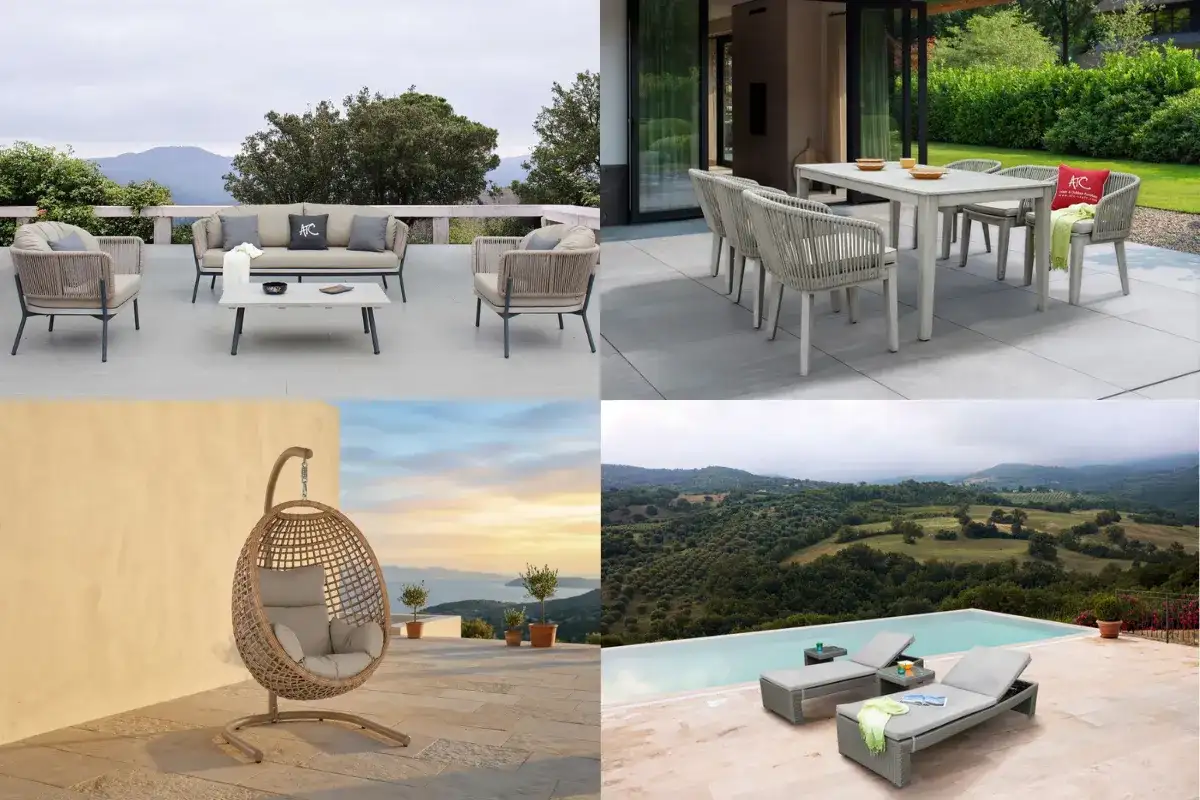
Resort style patio furniture balances comfort, visual consistency and practical performance across different outdoor zones.
Before contacting suppliers, buyers should define the resort concept, product categories, quantities, site conditions, maintenance expectations, and installation schedule. This helps manufacturers recommend more suitable materials, construction methods, and product specifications.
2. Best Materials for Resort Patio Furniture
Material selection affects appearance, weather resistance, maintenance, weight, comfort, and long-term project value. There is no single material that is ideal for every hospitality project. The most suitable option depends on climate, furniture type, design concept, site conditions, and maintenance expectations.
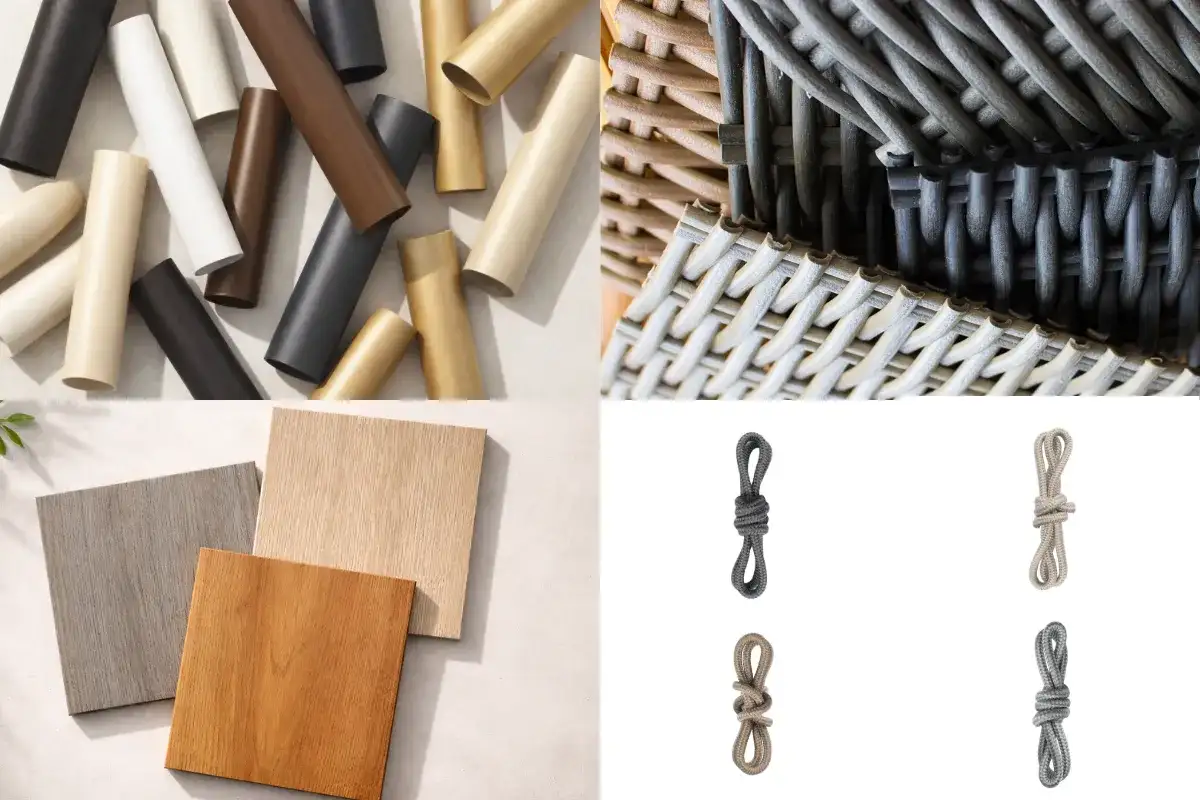
Aluminum, HDPE wicker, wood and outdoor rope offer different advantages in appearance, durability and maintenance for resort projects.
2.1 Aluminum
Powder-coated aluminum is widely used for resort patio furniture because it is lightweight, corrosion-resistant, and suitable for many outdoor applications.
It can be used as the primary visible material or as an internal frame combined with synthetic wicker, rope, wood, or outdoor fabric. Aluminum is particularly practical for dining chairs, lounge chairs, sofa frames, bar stools, and poolside furniture because staff can move products relatively easily during cleaning or layout changes.
Buyers should review frame construction, welding quality, reinforcement points, powder-coating consistency, and surface finishing. In commercial environments, the quality of the frame and coating can be just as important as the appearance of the finished product.

Aluminum combines low weight and corrosion resistance, making it practical for a wide range of resort outdoor applications.
For coastal projects, buyers should also discuss the level of environmental exposure with suppliers. Salt air, high humidity, and frequent moisture may require additional attention to surface protection, hardware, and maintenance.
2.2 Synthetic Wicker
Synthetic wicker is commonly used for resort style patio furniture because it provides a woven appearance while offering more practical outdoor performance than natural rattan in exposed areas.
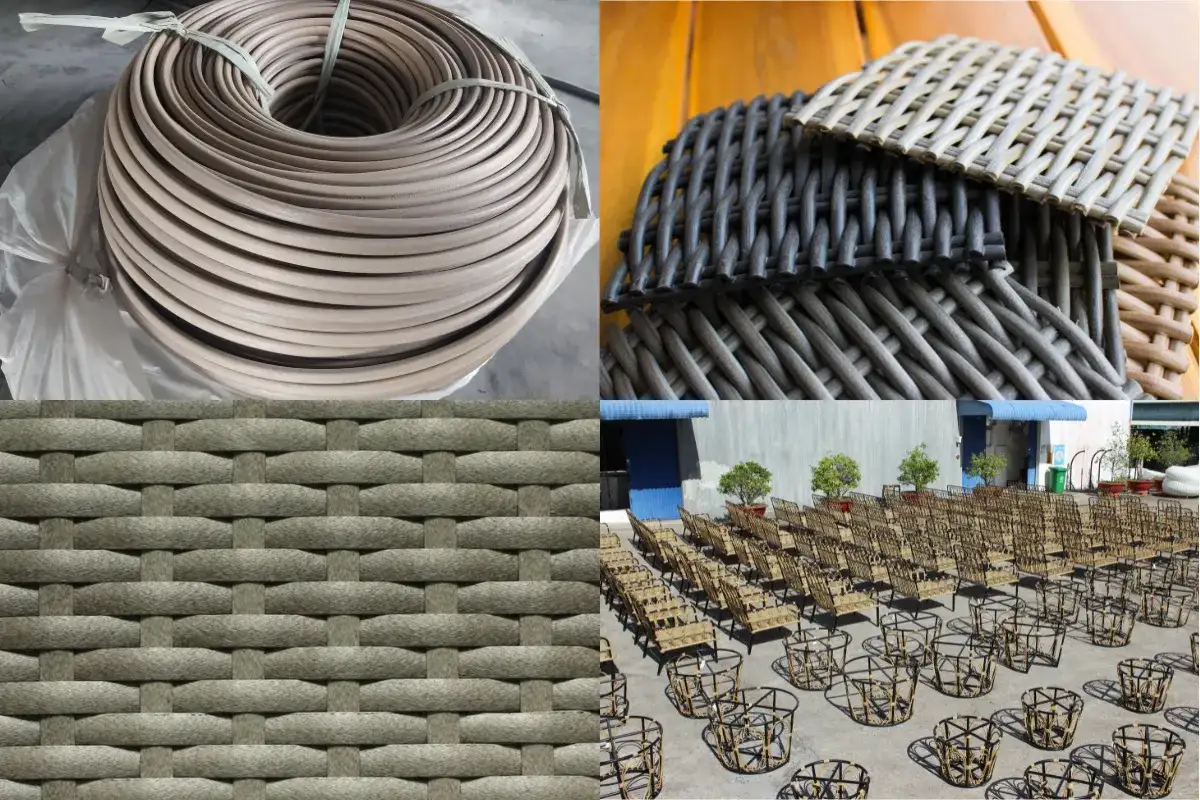
Synthetic wicker combines a handwoven appearance with practical performance for outdoor resort environments.
It can be applied to sofas, dining chairs, lounge chairs, daybeds, bar furniture, and complete outdoor collections. Different fiber profiles, colors, and weaving patterns also provide flexibility for tropical, coastal, contemporary, and luxury resort concepts.
When sourcing synthetic wicker, buyers should check fiber specifications, UV stability, flexibility, weave tension, attachment points, and consistency across approved samples. The frame beneath the wicker should also be evaluated because the woven surface alone does not determine structural durability.
For projects looking for all weather resort furniture, synthetic wicker combined with a suitable aluminum frame can be a practical option when materials are selected for the expected climate and use conditions.
2.3 Teak, Rope, and Outdoor Fabric
Teak is often selected for premium hospitality projects because of its natural appearance and suitability for outdoor environments. It works particularly well for dining collections, loungers, accent details, and furniture designed for tropical or high-end resort concepts.
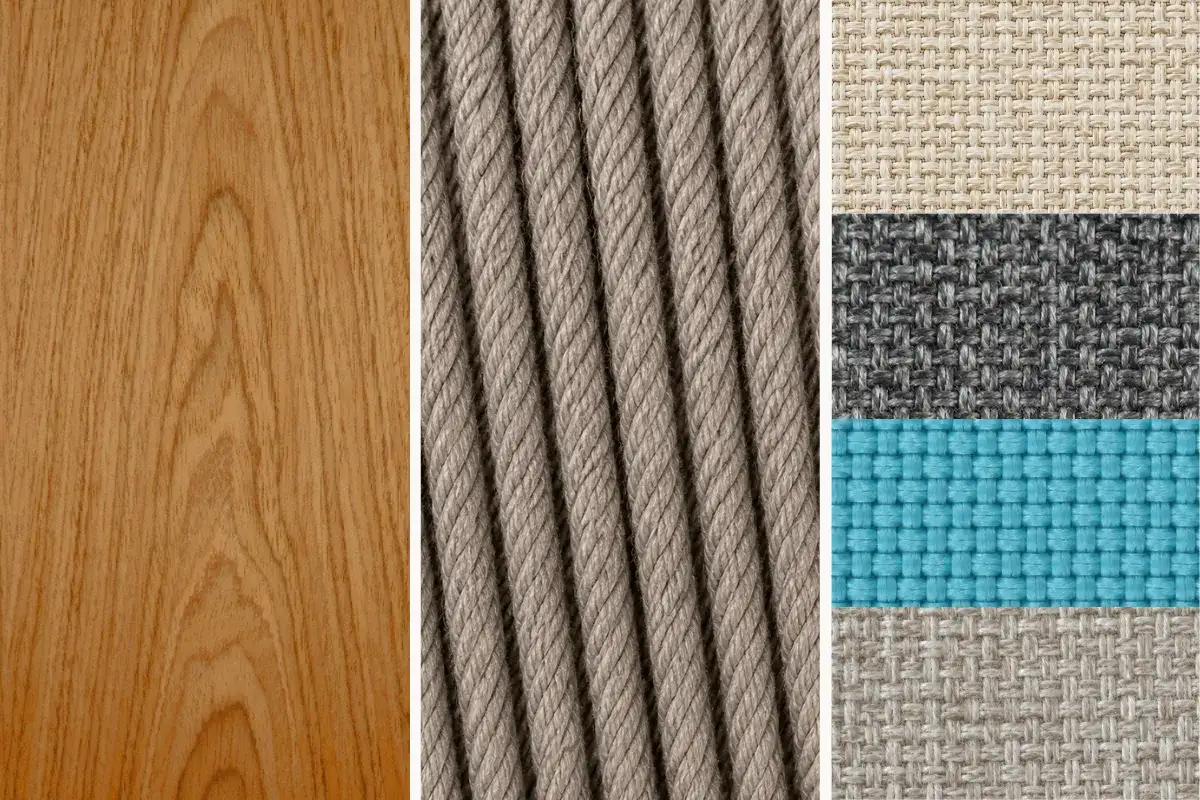
Teak, outdoor rope and performance fabrics combine natural warmth, contemporary texture and practical outdoor performance.
However, buyers should consider how the wood will age and what maintenance is required if the project wants to preserve its original color and finish.
Outdoor rope creates a softer, contemporary appearance and is frequently combined with aluminum frames. Its performance depends on fiber quality, attachment methods, UV stability, moisture resistance, and the way tension is maintained across the product.
Performance fabrics and outdoor cushions are equally important. Buyers should evaluate fabric specifications, colorfastness, water repellency, foam construction, stitching, zipper quality, and drainage. Cushion design can significantly affect maintenance in poolside, coastal, and high-humidity environments.
The most suitable material combination should therefore be selected according to where the furniture will be used rather than design preference alone.
3. Choosing Furniture for Different Resort Areas
A resort rarely uses one furniture type across every outdoor space. Pool decks, restaurants, terraces, balconies, and private villas all have different functional and operational requirements.
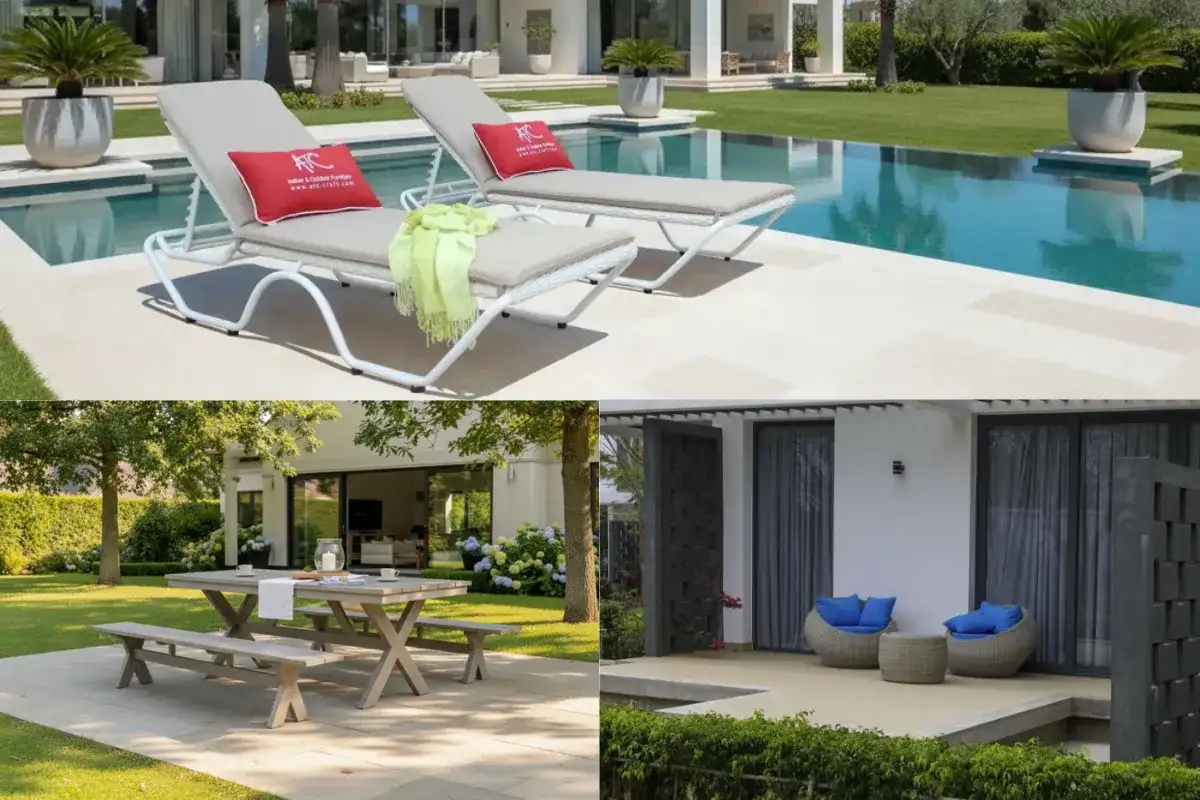
Different resort areas require products suited to their specific function, space and guest experience.
3.1 Poolside and Lounge Areas
Poolside areas typically require sun loungers, side tables, daybeds, lounge chairs, and sometimes outdoor sofas.
Furniture in these locations is frequently exposed to sunlight, water, sunscreen, and regular cleaning. Buyers should prioritize easy-to-maintain surfaces, stable construction, quick-drying cushion systems, and materials suitable for continuous outdoor exposure.
Stackability, mobility, and replaceable cushions can also support resort operations. Furniture that is difficult to move or maintain may increase labor requirements during daily cleaning and layout changes.
Luxury resort patio furniture used around pools should balance comfort with practical maintenance. Deep cushions may create a premium appearance, but drainage and drying performance should be evaluated before finalizing the specification.
3.2 Outdoor Dining Spaces
Outdoor restaurants and dining terraces require chairs and tables that can withstand frequent movement, cleaning, food spills, and repeated guest use.
Commercial resort outdoor furniture for dining areas should provide stable frames, appropriate seat heights, durable tabletops, and surfaces that are easy for staff to maintain.
Buyers should also consider how furniture is arranged during peak service periods. Stackable chairs, lightweight frames, standardized table sizes, and easy-to-clean finishes may improve operational flexibility.
For beachfront or exposed restaurants, material selection should also account for moisture, salt air, wind, and cleaning frequency.
3.3 Villas, Balconies, and Private Areas
Private villas, suites, and balconies often require smaller furniture groups such as coffee sets, compact dining sets, lounge chairs, or two-seat sofas.
These spaces may allow more decorative designs because furniture is used by fewer guests at one time. However, consistency across multiple villas is still important for project management, future replacement orders, and maintaining a unified property concept.
Dimensions should also be reviewed carefully. Oversized furniture can reduce circulation space on smaller balconies or terraces, while furniture that is too small may not match the level of comfort expected in a luxury hospitality environment.
Beyond furniture selection, buyers should consider how products will be moved, cleaned, stored, maintained, and replaced during daily resort operations. Stackability, product weight, removable cushions, replacement covers, spare hardware, and standardized components can simplify maintenance across large hospitality properties.
4. Commercial Performance Requirements
Resort furniture needs to perform under environmental exposure and repeated use while maintaining a consistent appearance across the property.
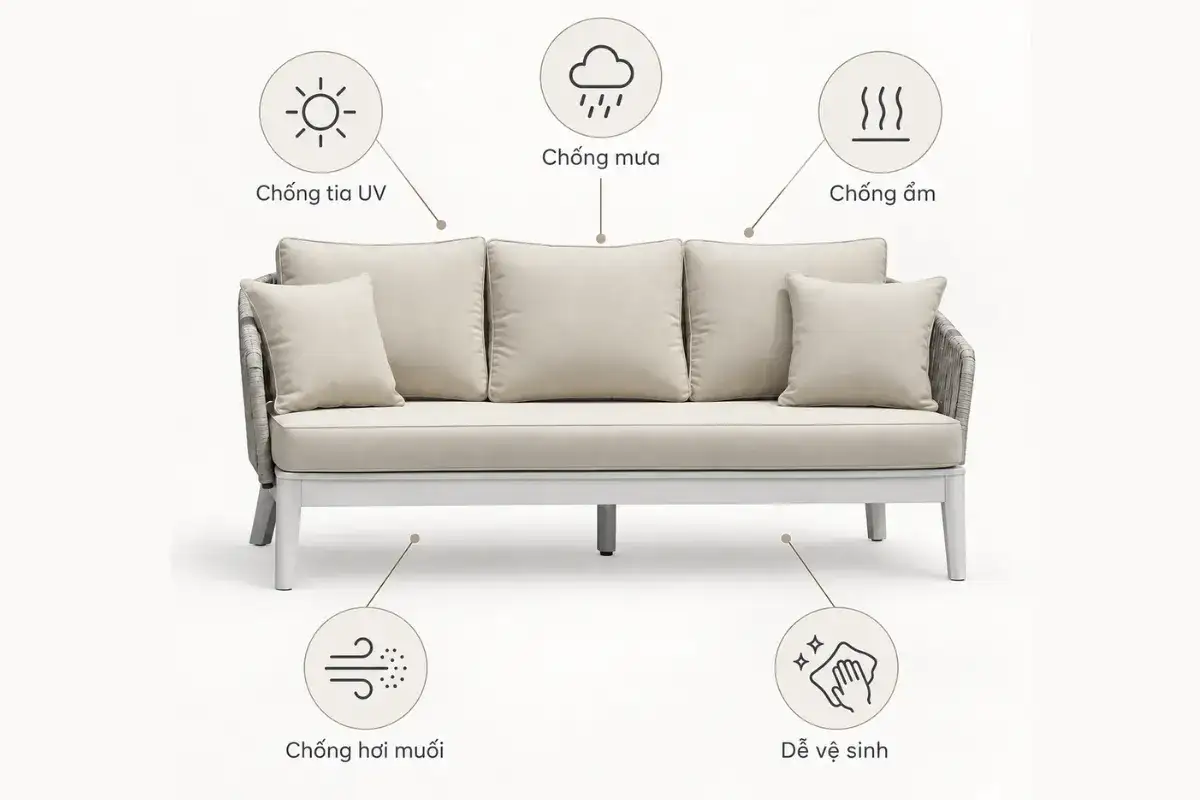
Commercial outdoor products should withstand weather exposure and frequent use while remaining practical to maintain.
4.1 Weather Resistance and UV Exposure
Sunlight can contribute to fading, surface changes, and degradation in unsuitable outdoor materials. Buyers should therefore ask suppliers for relevant specifications for synthetic fibers, coatings, fabrics, wood finishes, and other exposed components.
All weather resort furniture should also be evaluated for moisture exposure, drainage, and drying performance. Even materials designed for outdoor use can perform poorly if water becomes trapped inside cushions, frames, furniture joints, or enclosed components.
Buyers should avoid relying only on general descriptions such as “outdoor use” or “weather resistant.” The expected climate and level of exposure should be discussed with the supplier before materials are approved.
4.2 Structural Durability and Maintenance
Commercial furniture is typically used more frequently than residential furniture. Frames, joints, welding, hardware, and connection points should therefore be reviewed carefully.
Buyers should also consider the maintenance process before approving a collection. Useful questions include:
- Can cushion covers be removed for cleaning?
- Are replacement fabrics or spare parts available?
- Can damaged glides, hardware, or components be replaced?
- Are surfaces suitable for regular cleaning?
- Can furniture be moved easily by resort staff?
- Can individual components be replaced without replacing the entire product?
Maintenance planning should be considered during sourcing rather than after installation. Furniture that allows cushion covers, glides, hardware, or other components to be replaced may be easier to maintain over several seasons than products that require full replacement after relatively minor damage.
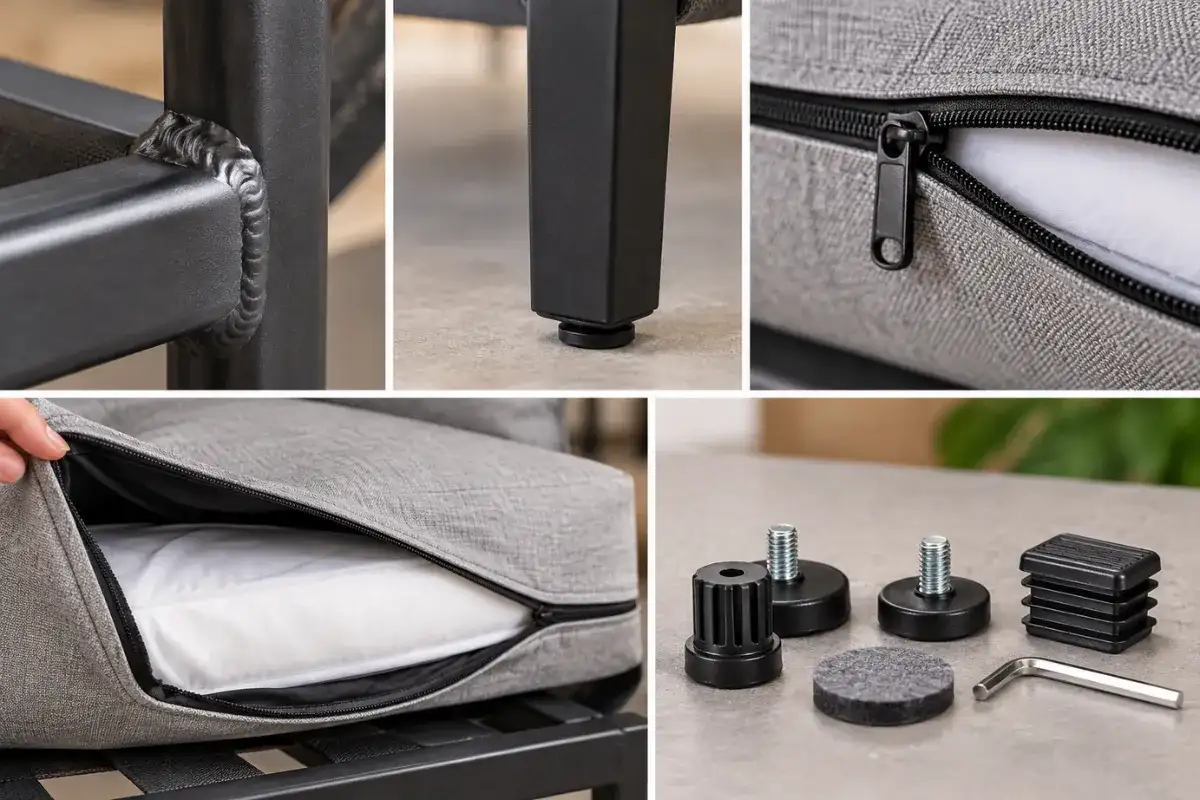
Strong joints, quality hardware and replaceable components help support durability and easier maintenance in commercial resort use.
4.3 Coastal and High-Humidity Conditions
Coastal resorts present additional challenges because furniture may be exposed to salt air, high humidity, strong sunlight, and frequent moisture.
Material and hardware selection should reflect these conditions. Protected aluminum frames, suitable fasteners, outdoor fabrics, synthetic fibers, and appropriate wood finishes may help improve performance depending on the project specification.
Buyers sourcing outdoor furniture for coastal resorts should discuss actual site conditions with the manufacturer rather than relying on a general outdoor-use description. This allows the supplier to recommend materials and construction details that better match the environment.
5. How to Evaluate a Resort Furniture Supplier
For commercial projects, supplier selection can be as important as product selection. Buyers should evaluate whether the manufacturer can consistently reproduce approved specifications, support customization, manage large orders, and coordinate export requirements.
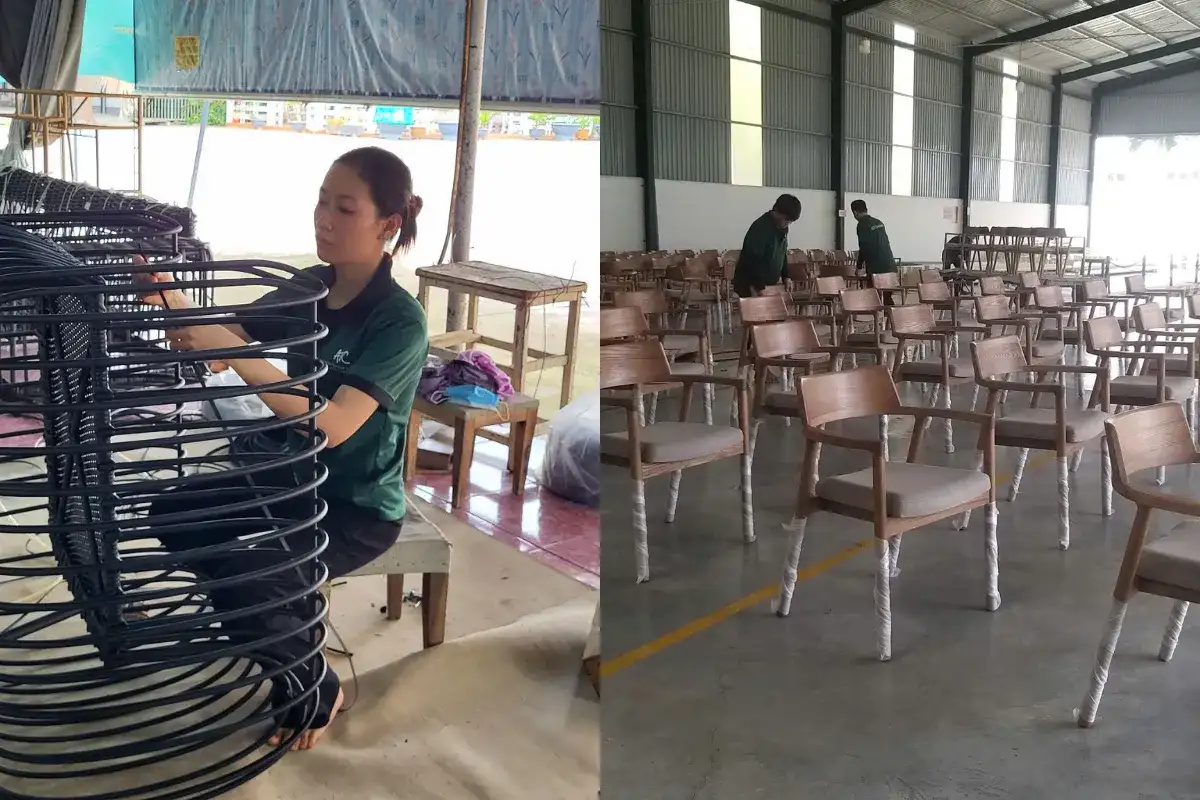
Evaluating production capability helps buyers confirm whether a supplier can maintain consistent quality across large resort projects.
5.1 Manufacturing Capability and Material Quality
Buyers should review production capacity, equipment, workforce, material sourcing, and quality-control procedures.
A supplier should be able to explain how frames are produced, how weaving or upholstery is managed, how materials are checked, and how finished products are inspected.
Material consistency is particularly important for repeat orders. If a resort expands or needs replacement furniture later, significant changes in color, weaving, fabric, wood finish, or coating can create visible inconsistencies across the property.
Buyers should therefore confirm whether approved materials and finishes can be maintained across repeat production batches.
5.2 Customization, OEM/ODM, and Sample Approval
Hospitality projects often require customization to match architectural concepts, interior standards, or brand guidelines.
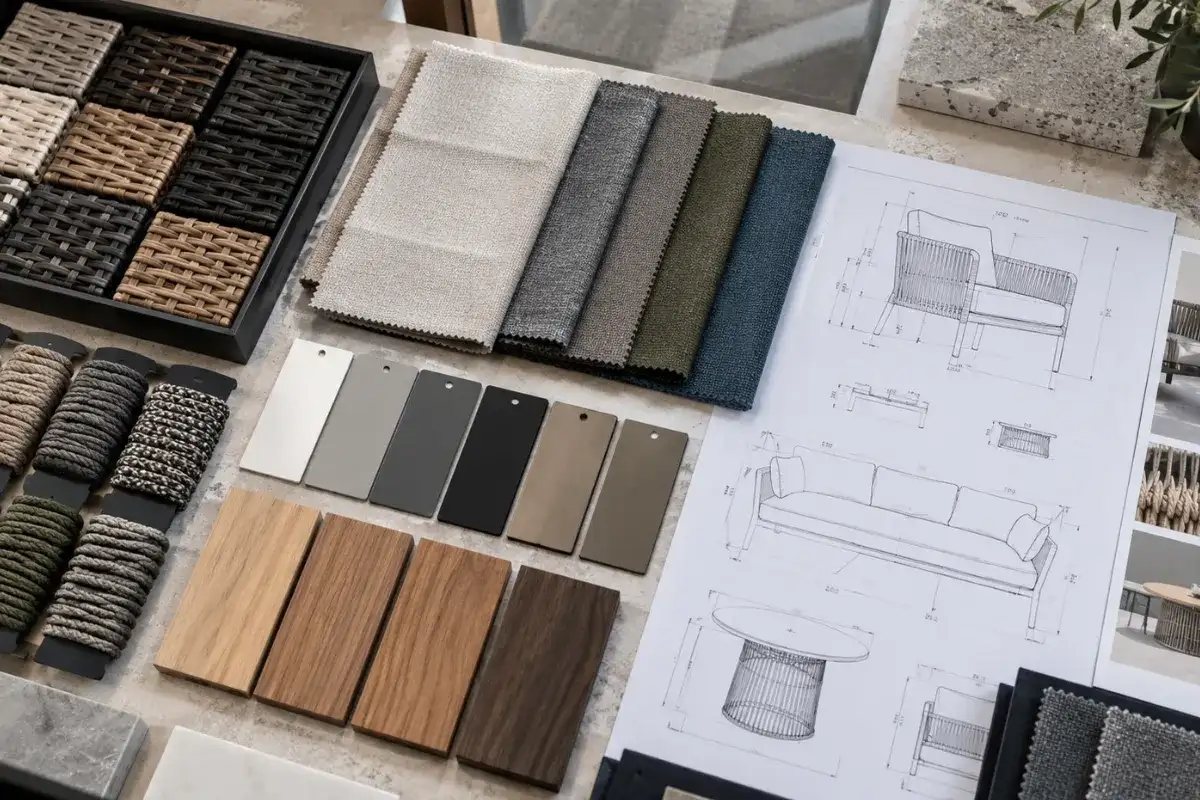
Material samples and technical drawings help buyers confirm customization details before approving production.
Common customization options may include:
- Furniture dimensions
- Frame finishes
- Wicker colors and weaving patterns
- Rope colors
- Outdoor fabrics
- Cushion thickness
- Wood finishes
- Branding
- Packaging
Before mass production, buyers should approve a physical sample or Golden Sample showing the final material, dimensions, colors, construction, hardware, and finishing.
This sample should then become a quality reference for production and final inspection. Any later change to materials or specifications should be documented clearly so both buyer and manufacturer are working from the same approved information.
5.3 Export Experience and Quality Control
Suppliers serving international buyers should understand export packaging, labeling, documentation, container loading, and shipping requirements.
Quality control should not be limited to final inspection. Buyers should ask how incoming materials are checked, how production defects are handled, and how finished products are inspected before packing.
For larger commercial resort outdoor furniture orders, buyers may also choose to conduct a pre-shipment inspection or work with an independent inspection company before releasing the order for shipment.
When comparing suppliers, buyers can use the same evaluation framework for each manufacturer. Production capability, material consistency, sample quality, customization support, lead time, quality control, packaging, communication, and export experience can all be scored against the same project requirements.
This approach makes it easier to compare overall supplier value rather than selecting a manufacturer based only on the lowest quotation.
6. Resort Outdoor Furniture Wholesale: What Buyers Should Check
Wholesale sourcing involves more than negotiating the lowest unit price. MOQ, production planning, packaging, container efficiency, customization, and delivery schedules can significantly affect the total landed cost.
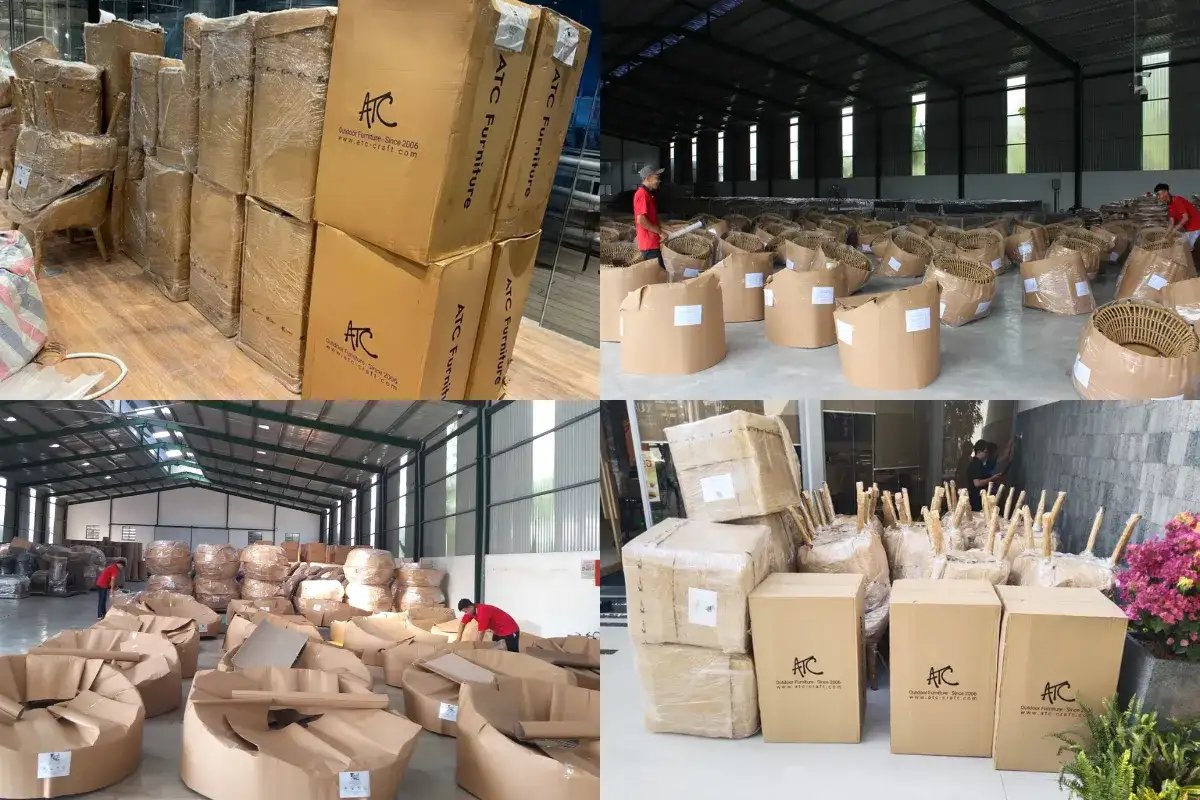
Proper packaging and production planning help protect large wholesale orders and support efficient delivery.
6.1 MOQ, Lead Time, and Order Planning
When sourcing resort outdoor furniture wholesale, buyers should confirm:
- MOQ per product or collection
- Mixed-container options
- Sample or trial-order requirements
- Production lead time
- Peak-season capacity
- Replacement or repeat-order procedures
- Customization requirements
MOQ can vary according to materials, construction, colors, fabrics, and whether custom components are required.
For project orders, delivery timing may also need to align with construction, installation, renovation, or resort opening schedules. Buyers should therefore confirm production milestones early rather than focusing only on the final shipment date.
Staged deliveries may also be useful for larger hospitality projects where different zones are installed at different times.
6.2 Packaging, CBM, and Delivery
Outdoor furniture can take up significant container space, so packaging and CBM have a direct impact on shipping efficiency. Stackable frames, knock-down construction, nesting designs, and optimized carton sizes can help improve container utilization.
However, reducing volume should not compromise product protection. Buyers should review carton strength, corner protection, wrapping, hardware packaging, labeling, and loading plans before shipment.
For large or luxury projects, clear labeling may also help installers identify furniture for different areas. Buyers should consider total landed cost rather than unit price alone, including freight, packaging, inspection, duties, replacement parts, and potential damage.
A supplier with experience in both manufacturing and export logistics can help balance product protection, shipping efficiency, and project schedules.
7. Frequently Asked Questions
7.1 What Is the Best Material for Resort Patio Furniture?
The best material depends on the project environment, furniture application, design concept, and maintenance requirements. Aluminum, synthetic wicker, teak, rope, and outdoor fabrics are commonly used in resort patio furniture because each offers different advantages in durability, appearance, weight, and maintenance.
7.2 How Is Commercial Resort Furniture Different From Residential Furniture?
Commercial resort furniture is generally designed for more frequent use and larger-scale projects. Buyers usually need greater consistency in construction, materials, finishes, maintenance, replacement parts, and quality control across multiple pieces or repeat orders.
7.3 What Should Buyers Check Before Ordering Resort Furniture in Bulk?
Buyers should confirm materials, dimensions, finishes, frame construction, cushions, MOQ, lead time, customization, packaging, quality-control procedures, export requirements, and sample approval before placing a bulk order.
7.4 Is All Weather Resort Furniture Suitable for Coastal Projects?
It can be, but “all weather” should not be treated as a guarantee for every environment. Coastal projects should specifically evaluate corrosion resistance, moisture exposure, UV performance, hardware, fabrics, finishes, and maintenance requirements based on actual site conditions.
7.5 Can Resort Patio Furniture Be Customized for Different Design Concepts?
Yes, depending on the manufacturer. Common customization options include dimensions, frame finishes, wicker or rope colors, fabrics, cushion specifications, wood finishes, branding, and packaging. Buyers should confirm customization capabilities and approve samples before mass production.