Resort Garden Seating Furniture: Courtyard Benches & Lounge Layouts for Hospitality Landscapes
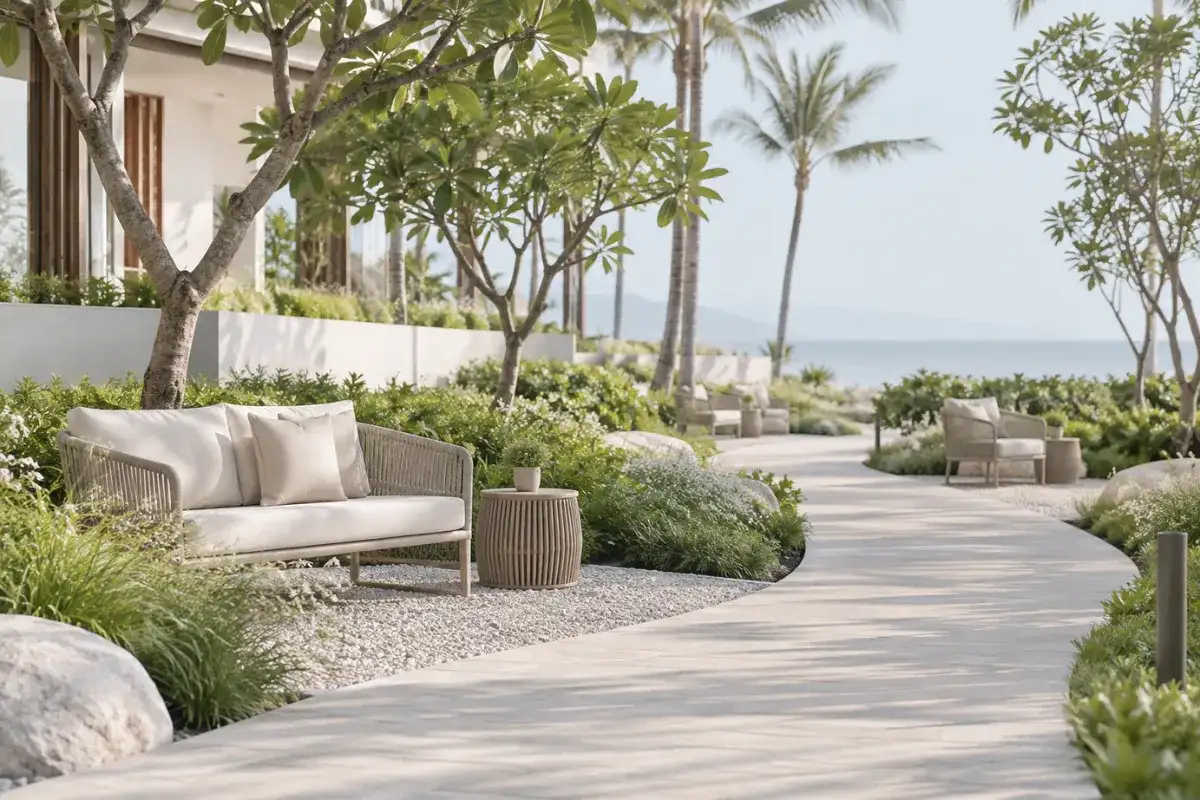
Resort gardens are more than decorative landscapes. They are spaces where guests walk, pause, socialize and enjoy the surrounding environment. Selecting the right resort garden seating furniture therefore requires careful consideration of comfort, circulation, outdoor exposure and the function of each landscaped area.
Different zones also require different seating solutions. A garden pathway may need simple benches for short rest stops, while a courtyard can accommodate sofas and lounge chairs for longer stays. Materials and maintenance requirements may also vary depending on exposure to sunlight, rain and moisture.
For landscape architects, resort planners and commercial buyers, these factors should be considered together. A well-planned seating strategy can support the guest experience while maintaining clear circulation and the intended landscape character throughout the resort.
1. What Is Resort Garden Seating Furniture?
Resort garden seating furniture refers to outdoor seating and related products selected for landscaped hospitality environments. These may include benches, lounge chairs, sofas, armchairs and coffee tables positioned along pathways, in courtyards or near landscape features.
Unlike seating used only on a terrace or patio, garden seating needs to work as part of a wider landscape plan. Its placement can influence where guests pause, how they move between resort areas and how they experience planting, views and other outdoor features.
1.1 How Resort Garden Seating Differs From Standard Outdoor Seating
Resort garden seating is planned around both guest activity and the surrounding landscape. A pathway bench may provide a short rest, while sofas and lounge chairs in a courtyard can support longer conversations and relaxation.
Commercial use also creates practical requirements. Buyers should consider dimensions, seating capacity, materials and maintenance according to expected use. Products should provide comfort without blocking pedestrian routes or making landscaped areas feel crowded.
Across larger projects, consistency also matters. Similar materials, proportions or design language can connect separate garden zones while allowing the type of seating to change according to each area's function.
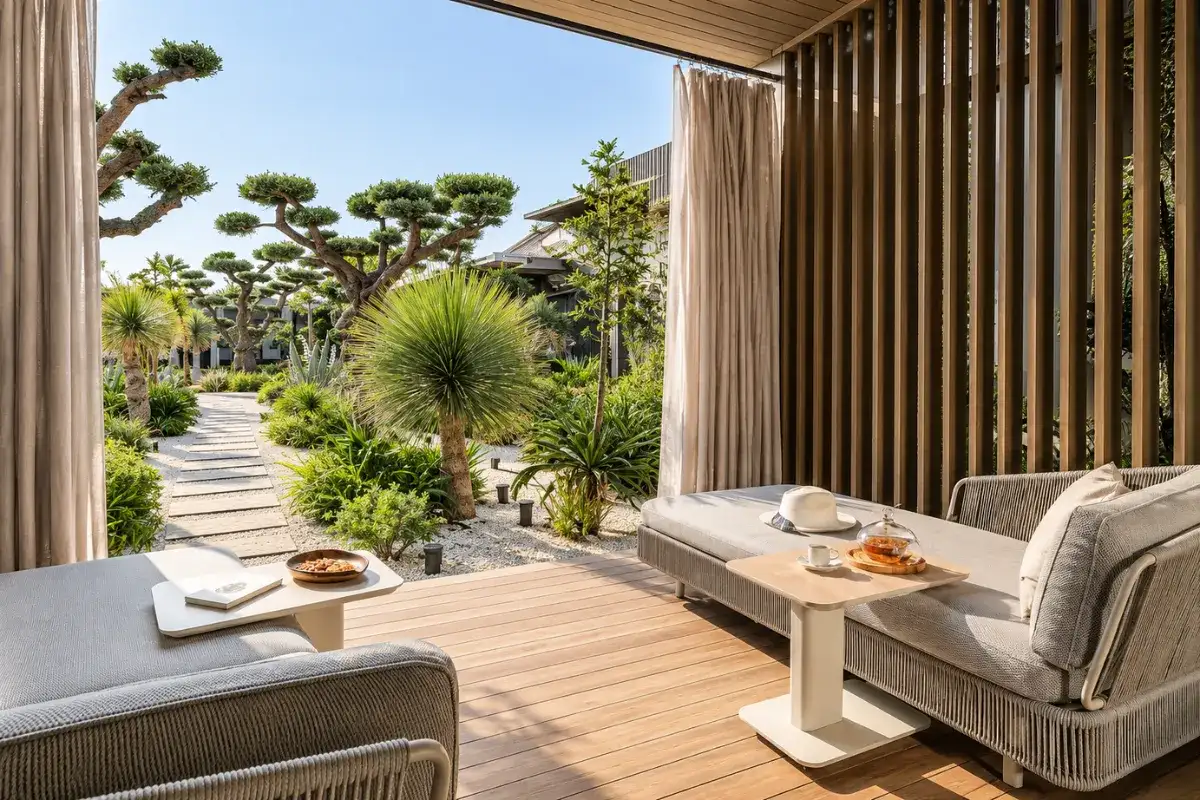
Resort garden seating should respond to guest movement. (Source: Internet)
1.2 Where Garden Seating Is Commonly Used in Resorts
Garden seating may be distributed throughout a resort rather than concentrated in one location. Pathways need simple rest points, courtyards can accommodate larger lounge arrangements, and botanical landscapes may use smaller seating groups near trees, planting or scenic views.
The appropriate seating type therefore depends on how guests use each area and how long they are likely to stay.
|
Resort Area |
Main Function |
Suitable Seating |
|
Garden pathways |
Short rest stops |
Benches, individual chairs |
|
Courtyards |
Socializing and longer stays |
Sofas, lounge chairs |
|
Botanical landscapes |
Viewing and quiet relaxation |
Benches, lounge chairs |
|
Garden lounge areas |
Conversation and relaxation |
Lounge sets, sofas |
Understanding these functions helps planners determine where seating is needed before selecting individual products and quantities.
2. Key Requirements for Resort Landscape Outdoor Furniture
When selecting resort landscape outdoor furniture, buyers should consider how each product will be used, its outdoor exposure and the maintenance required during daily resort operations. Comfort matters, but seating must also work effectively within the surrounding landscape.
2.1 Guest Comfort and Seating Function
Different garden areas require different levels of comfort. Pathway seating may mainly give guests a convenient place to pause before continuing their walk. Here, accessibility, seat dimensions and practical placement may matter more than creating a complete lounge arrangement.
Courtyards and social garden areas serve another purpose. Guests may stay longer to talk, have drinks or enjoy the landscape. Sofas, armchairs and cushioned lounge chairs can better support these extended stays.
Buyers should therefore define the expected activity and duration of use before selecting products. This helps match seating type and capacity to the intended function of each landscape zone rather than applying the same solution throughout the resort.
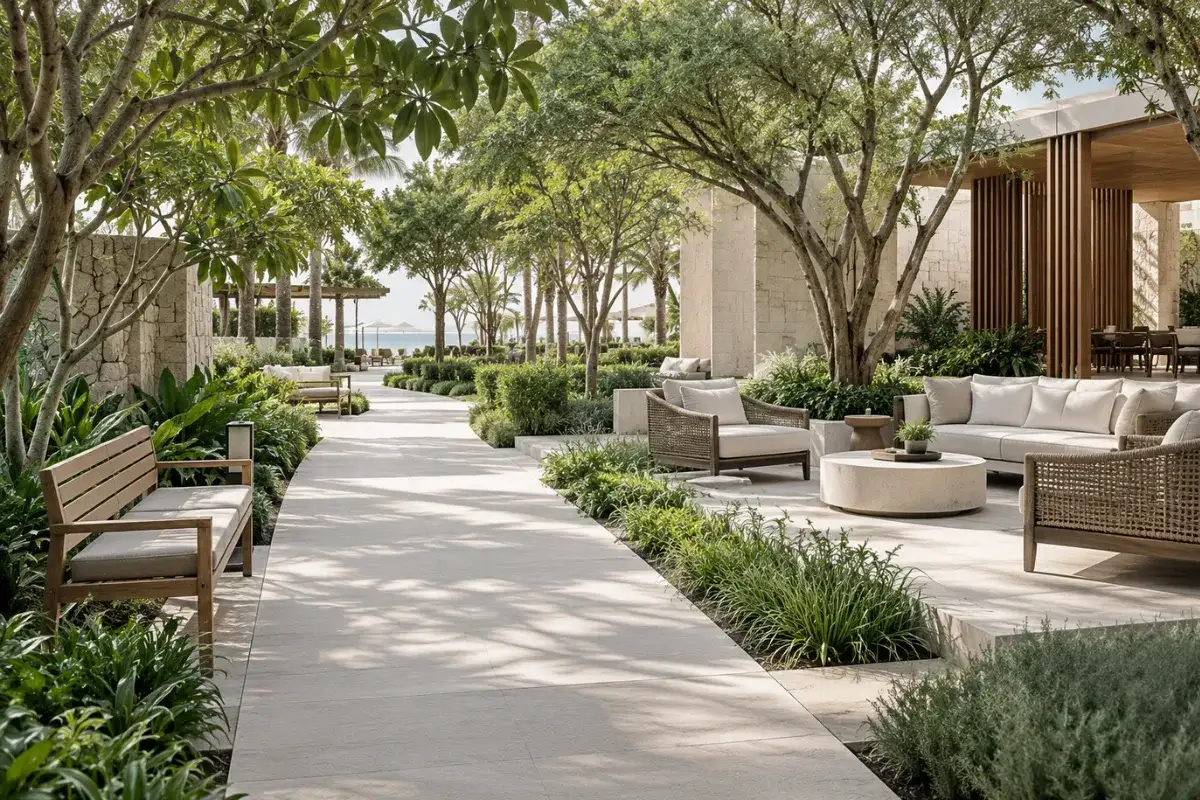
Different resort garden zones require different levels of comfort. (Illustration Image)
2.2 Materials for Sun, Rain and Garden Exposure
Products positioned in resort gardens can face sunlight, rain, humidity and regular outdoor exposure. Material selection should reflect these conditions. Powder-coated aluminum, teak, HDPE wicker and outdoor rope are commonly considered for outdoor applications, while cushions may use fabrics intended for exterior use.
Buyers should review frame construction, surface finishes, UV performance, moisture resistance and cleaning requirements rather than selecting materials only by appearance. Conditions can also vary within one garden. Seating beneath trees may experience different levels of shade and moisture from products positioned in open areas.
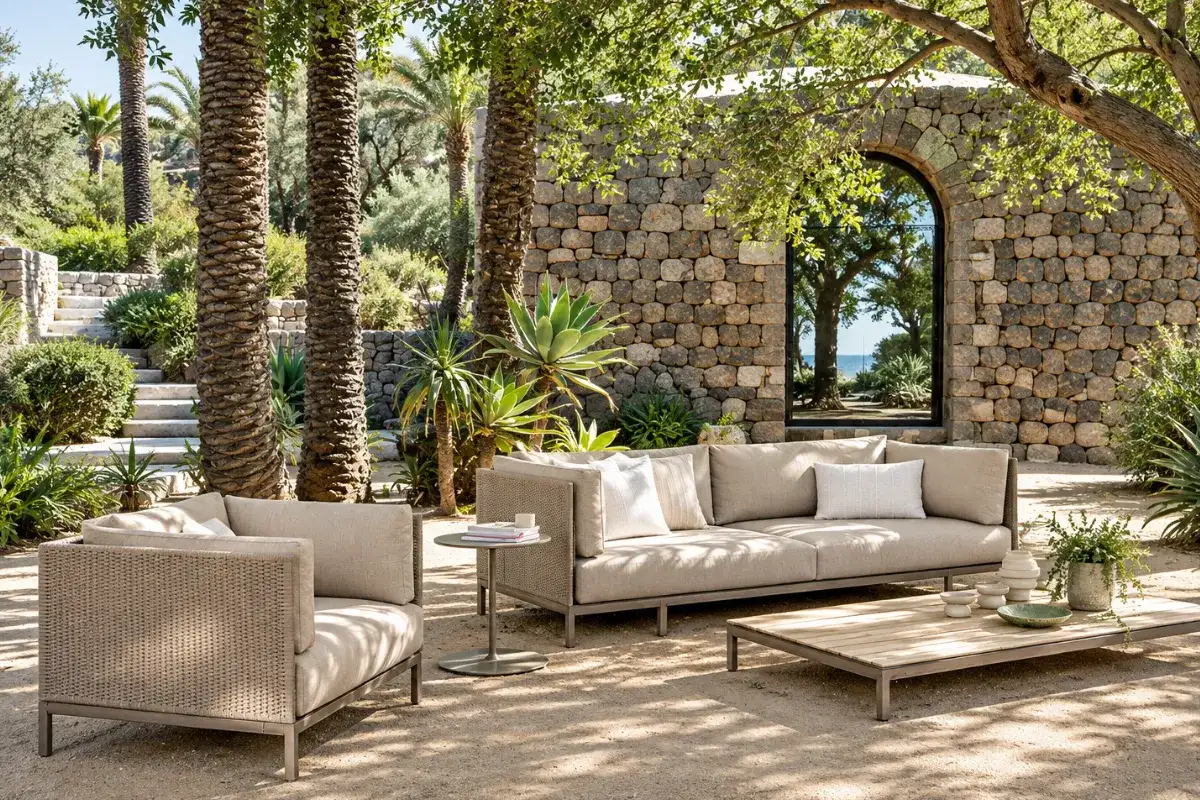
Materials should suit sun, rain, humidity, and site conditions. (Source: Internet)
2.3 Durability and Maintenance in Commercial Resort Areas
Commercial resort seating may require frequent cleaning, repositioning and maintenance. Buyers should examine frames, joints, woven surfaces, finishes and cushion construction when assessing long-term suitability.
Layout also affects maintenance. Staff need sufficient space to clean around seating, manage cushions and maintain nearby planting without unnecessarily moving complete seating groups. Practical access can simplify routine care in frequently used hospitality areas.
For projects requiring multiple units, consistent dimensions, materials and finishes can help maintain a cohesive appearance across landscape zones. Product specifications should also be reviewed consistently when the same model is ordered for several areas.
Considering durability, maintenance and daily operations early helps resort garden seating furniture support both the landscape concept and practical hospitality use.
3. How to Plan Seating Along Resort Garden Pathways
Garden pathways connect accommodation, restaurants, pools, courtyards and other resort facilities. Seating along these routes should create useful places to pause without interrupting pedestrian movement or placing too many products within the landscape.
3.1 Choosing the Right Locations for Rest Points
Rest points can be positioned where guests naturally slow down or may want to spend more time. Suitable locations include wider pathway sections, intersections between walking routes, shaded areas and places overlooking gardens or other landscape features.
The distance between seating points should reflect the scale and function of the route. A long pathway between major facilities may benefit from several rest points, while a short garden walk may need fewer. Seating facing planting, water features or an open garden view can also create a more intentional stopping point.
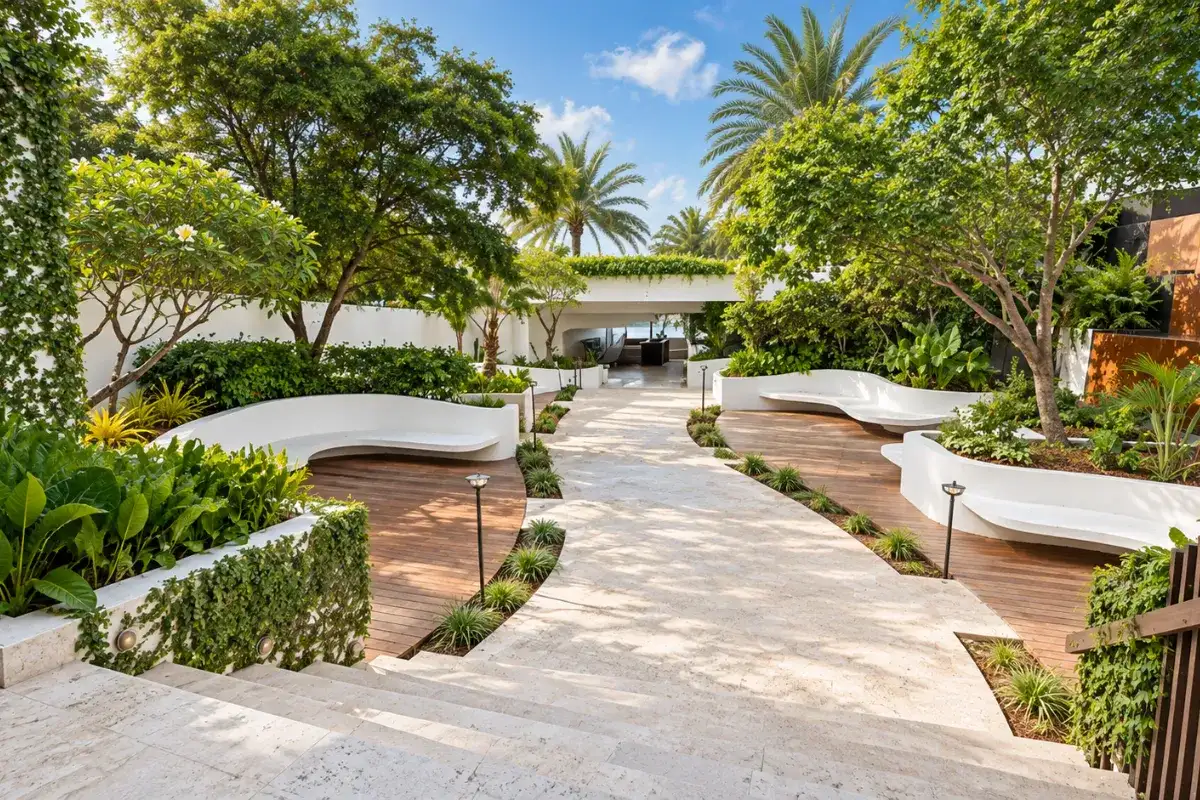
Seating can be placed along wider sections of garden pathways. (Source: Internet)
3.2 Maintaining Clear Garden Circulation
Seating should not reduce the usable width of primary walking routes or create obstacles near intersections, entrances and service access points. Planners should consider both the product footprint and the additional space occupied when guests are seated.
Benches can often sit parallel to a pathway or slightly set back into a landscaped edge. Lounge chairs and larger products generally need more space and are better suited to wider rest areas.
Clear circulation is also important for resort operations. Staff should be able to move through garden routes and access nearby landscaped areas without repeatedly repositioning seating.
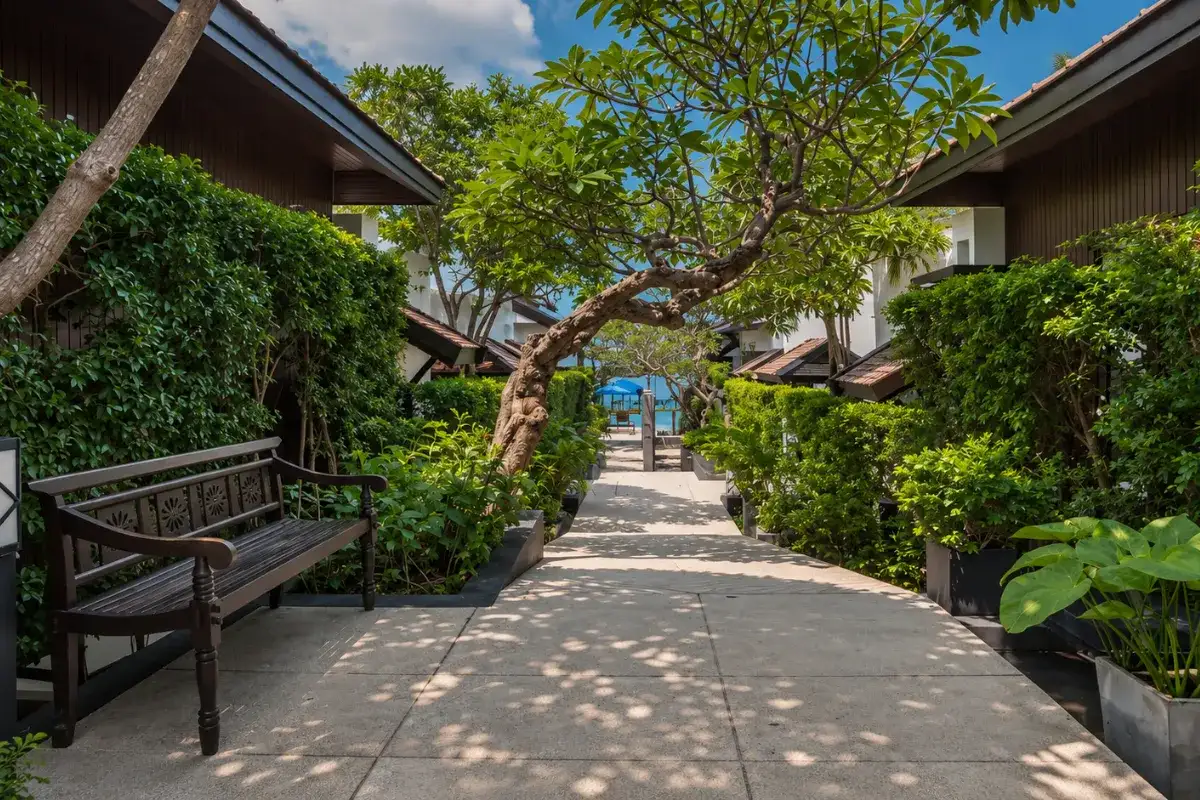
Keeping seating outside the main walking route helps maintain comfortable circulation. (Source: Internet)
3.3 Avoiding Overcrowding in Landscaped Areas
More seating does not necessarily create a better guest experience. Too many benches, chairs or lounge groups can compete with planting, reduce open space and make landscaped pathways feel crowded.
Instead, planners can establish selected rest points based on guest movement, shade, views and distances between resort destinations. Product scale and quantity should also respond to the available landscape area rather than simply maximizing seating capacity.
A balanced layout allows seating to remain useful while keeping vegetation and landscape features visually prominent.
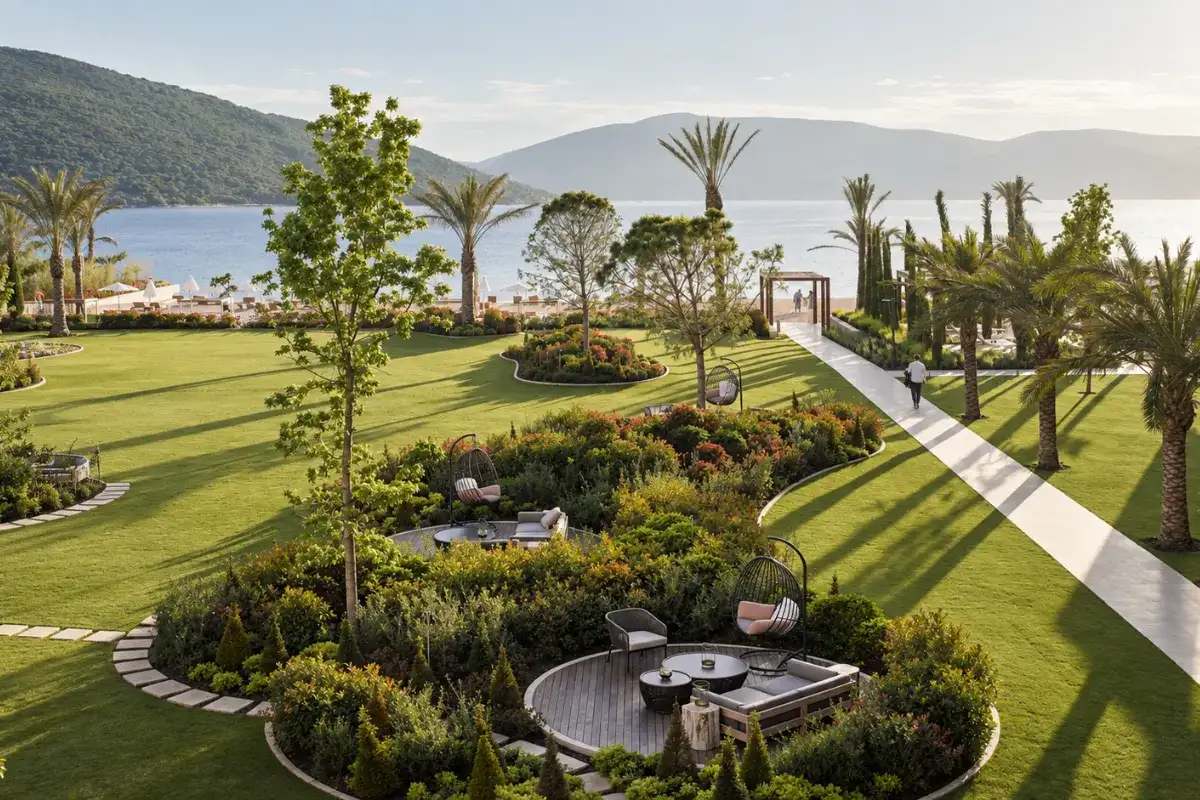
Spacing seating between landscaped areas. (Source: Internet)
4. Hotel Courtyard Outdoor Seating & Lounge Layouts
Courtyards often function as transition and social spaces between resort buildings, gardens, restaurants and guest facilities. Effective hotel courtyard outdoor seating should therefore provide comfortable places to stay while maintaining clear connections between surrounding areas. The layout can be organized around a central lounge zone, along the perimeter or through a combination of both approaches.
4.1 Central Lounge Layouts for Social Areas
A central layout works well when the courtyard has sufficient open space and is intended for conversation or relaxation. Sofas, lounge chairs and coffee tables can be grouped to create a defined social area without separating guests from the surrounding landscape.
For larger courtyards, several smaller arrangements may work better than one oversized seating group. This creates multiple conversation zones while leaving space between them for circulation. Luxury courtyard lounge sets can also be positioned to face important landscape elements such as a central tree, planting feature or water element. The size of each arrangement should reflect expected guest capacity and the available courtyard area.
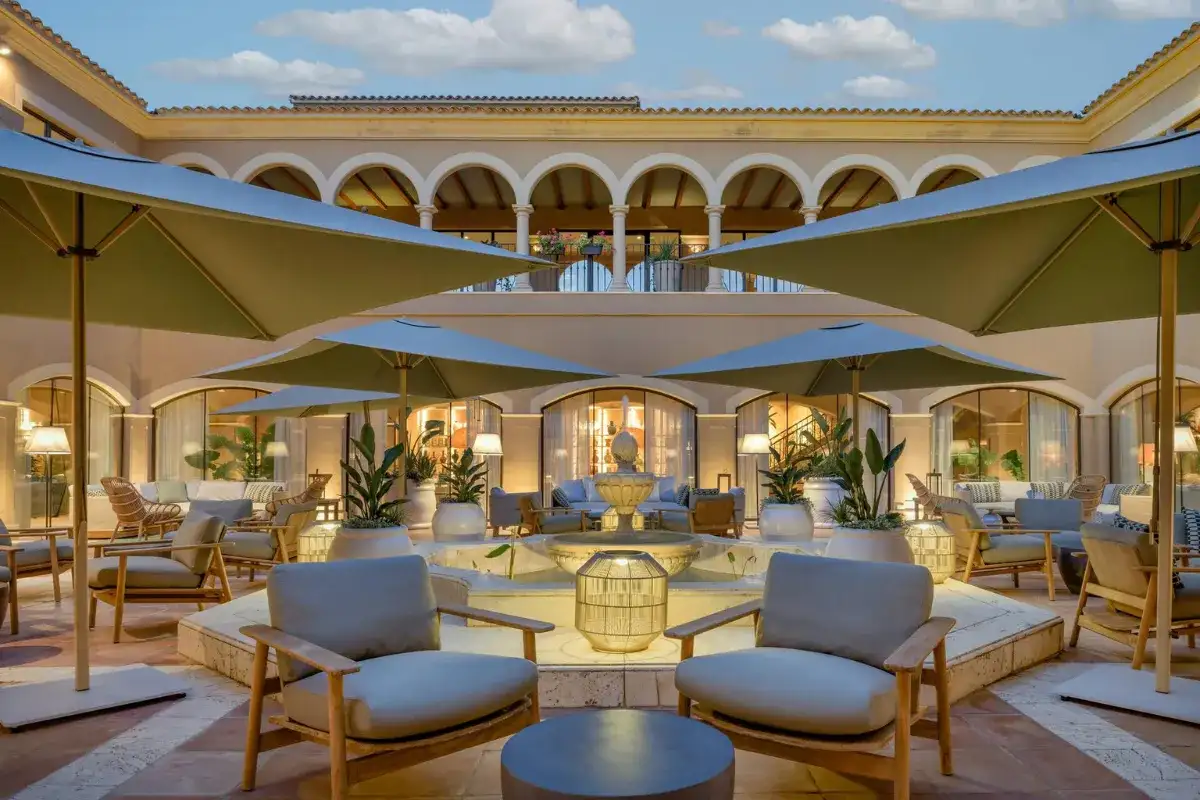
Central lounge arrangements can create comfortable social zones. (Source: Internet)
4.2 Perimeter Seating Around Courtyards
Perimeter seating can preserve more open space in the center of a courtyard. Benches, individual chairs or compact lounge groups may be positioned near planting beds, walls or landscape borders where they do not interrupt primary walking routes.
This approach can be useful when the courtyard also functions as a circulation area. Guests still have places to pause, but the center remains visually open and easier to navigate.
Placement should consider nearby doors, pathways and service routes. Enough clearance should remain around seating so guests and staff can move comfortably through the space.
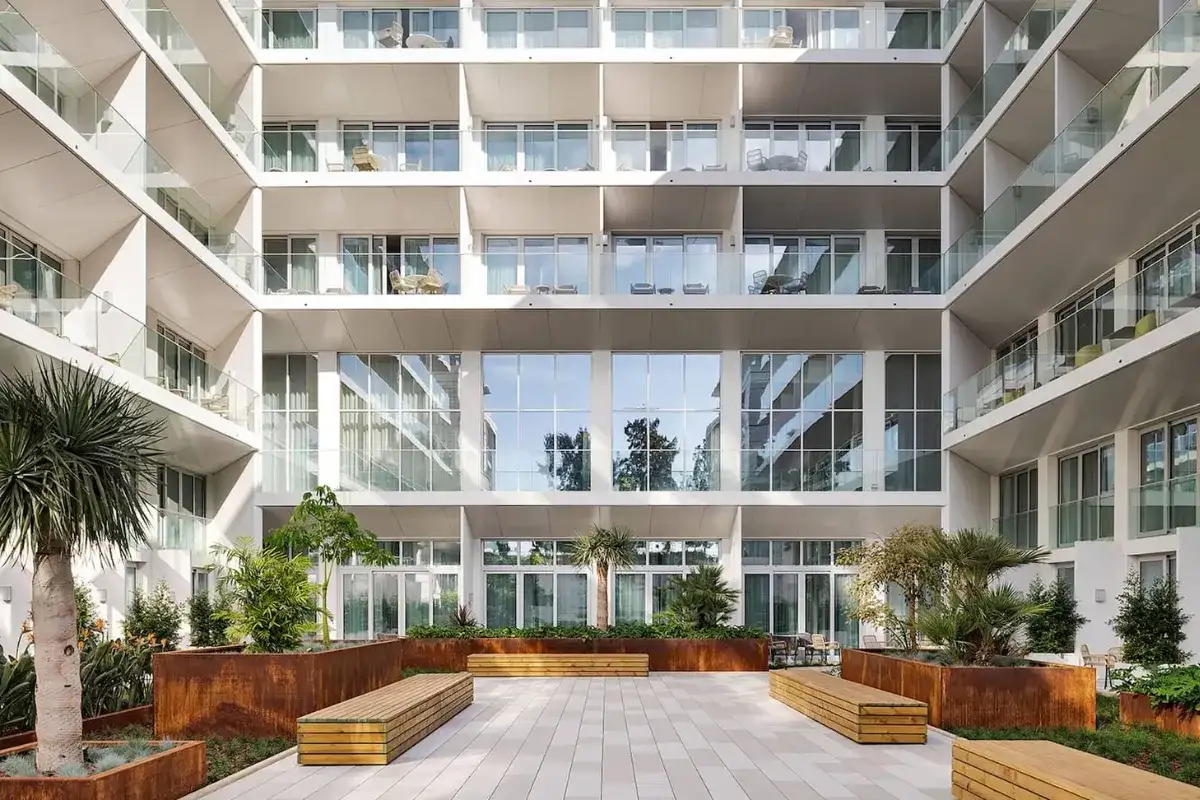
Perimeter seating keeps the center of a resort courtyard open. (Source: Internet)
4.3 Choosing Lounge Sets for Courtyard Spaces
The appropriate lounge set depends on courtyard dimensions, expected capacity and how long guests are likely to stay. A compact arrangement may use two lounge chairs and a small table, while larger social areas can accommodate sofas, armchairs and coffee tables.
Buyers should check product dimensions before determining quantities because circulation space must be considered alongside the footprint of each piece. For courtyard projects requiring coordinated seating groups, ATC's outdoor wicker sofa sets provide examples of sofa configurations that buyers can review when planning lounge areas.
5. Commercial Garden Benches & Botanical Garden Seating
Benches and individual seats are useful in landscaped areas where a complete lounge arrangement would occupy unnecessary space. Commercial garden benches for resorts can create convenient stopping points along walking routes, while seating within botanical landscapes encourages guests to pause and experience planting, shade and surrounding views.
5.1 Commercial Garden Benches for Resorts
Garden benches are suitable for short rest stops because they provide several seats without requiring the footprint of a complete sofa arrangement. They can be positioned beside pathways, near garden intersections or between major resort destinations.
Placement is as important as the bench itself. A bench should be sufficiently set back from the main walking route and oriented toward something guests may want to view, such as planting, an open lawn or another landscape feature. Shade and surrounding pedestrian movement should also be considered when selecting each location.
For larger landscapes, repeating the same or coordinated bench designs across several rest points can help connect separate garden areas and maintain a consistent visual language throughout the resort.
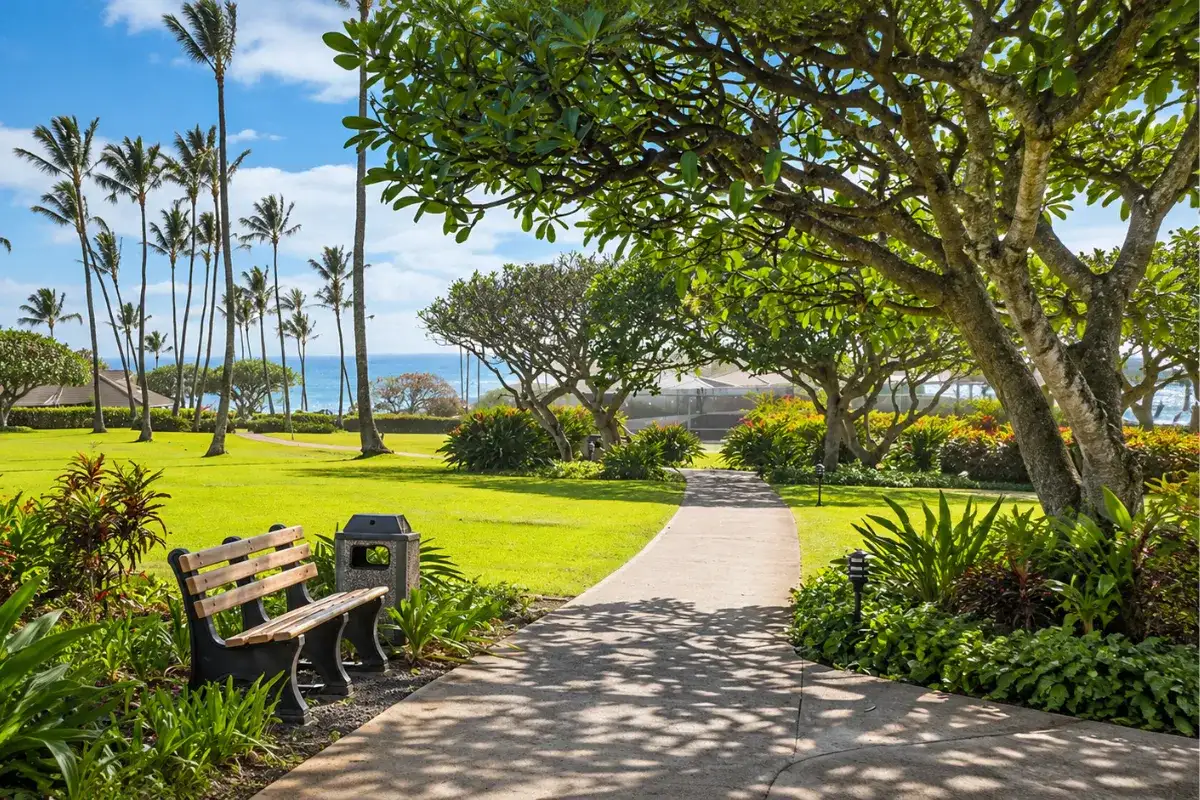
Garden benches can provide compact rest points along resort pathways.
(Source: Internet)
5.2 Seating Around Trees and Landscape Features
Trees, planters and water features can provide natural focal points for seating. Instead of positioning products independently from the landscape, planners can orient benches or chairs toward these elements to create more intentional rest areas.
Clearance remains important. Seating should not restrict access needed for landscape maintenance or create congestion around narrow pathway sections. Enough separation from planting should also be maintained so guests can sit comfortably without interfering with vegetation.
Where several landscape features are located close together, planners can prioritize the strongest views rather than adding seating beside every element. This helps preserve open space and keeps individual rest points visually distinct.
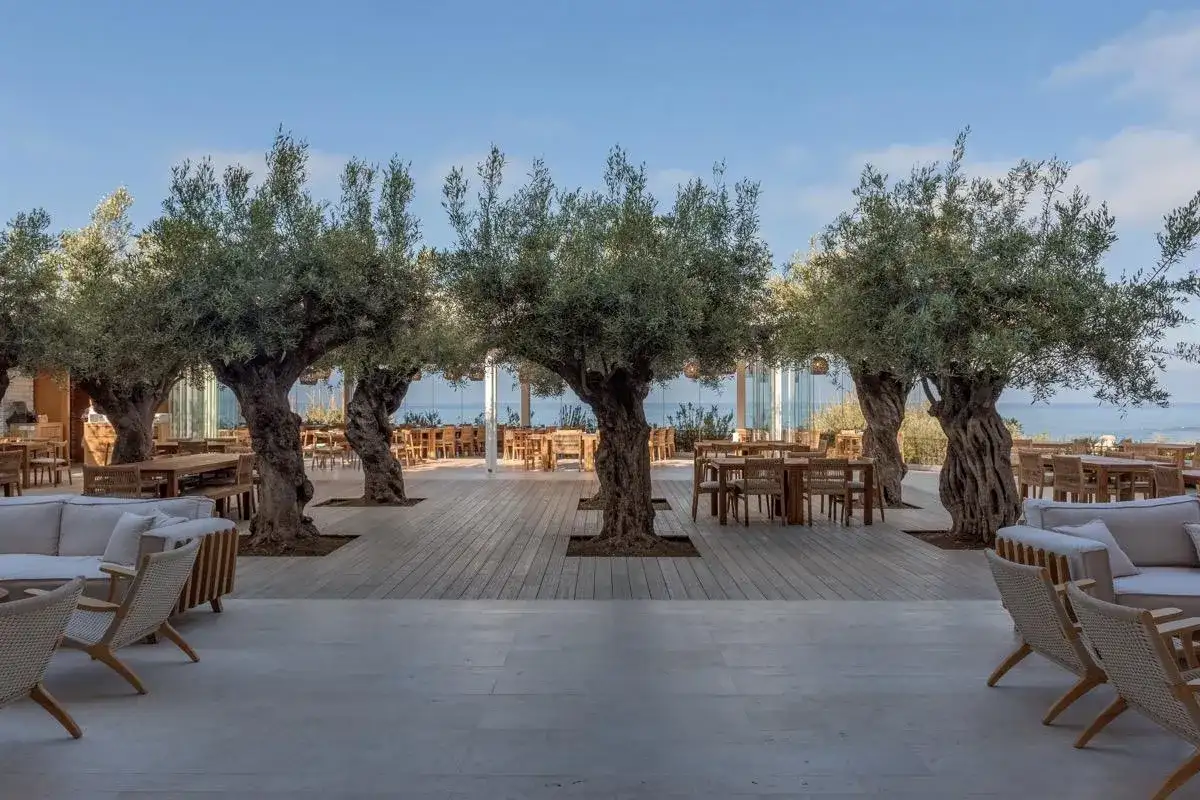
Orienting seating toward trees, planting and scenic features can create intentional rest areas. (Source: Internet)
5.3 Planning Seating for Botanical Garden Areas
For botanical garden seating commercial projects, placement should support viewing and quiet relaxation without competing with the landscape. Seating can be concentrated at selected viewpoints, shaded locations and transitions between different planting zones.
Rather than maximizing seat numbers, planners can prioritize locations where guests are most likely to pause and appreciate the surrounding landscape.
|
Planning Factor |
What to Consider |
|
Rest points |
Locations where guests naturally pause |
|
Shade |
Trees or structures providing relief from direct sun |
|
Views |
Planting, water or other landscape focal points |
|
Circulation |
Clear space around pathways and seating |
|
Landscape integration |
Seating scale and placement relative to planting |
This approach keeps planting and landscape features visually prominent while providing practical places for guests to rest.
6. How to Choose Resort Garden Seating for Different Areas
There is no single seating type that works equally well throughout a resort landscape. Buyers should match resort garden seating furniture to the function, available space and expected duration of use in each area. Pathway rest points may need compact benches, while courtyards and social gardens can support larger lounge arrangements.
6.1 Benches for Pathways and Short Rest Stops
Benches are practical where guests need a temporary place to sit rather than an extended lounge experience. They require relatively little space and can be positioned beside pathways, near intersections or between resort destinations.
Before selecting a bench, buyers should check its overall dimensions, seating capacity, materials and intended placement. The surrounding space also matters. Enough clearance should remain for pedestrians, while the bench should be positioned where seated guests do not interfere with the main circulation route.
Using similar bench designs across several rest points can also support visual consistency within the wider resort landscape outdoor furniture plan. Buyers can determine quantities by reviewing pathway lengths, major destinations and the number of planned rest points.
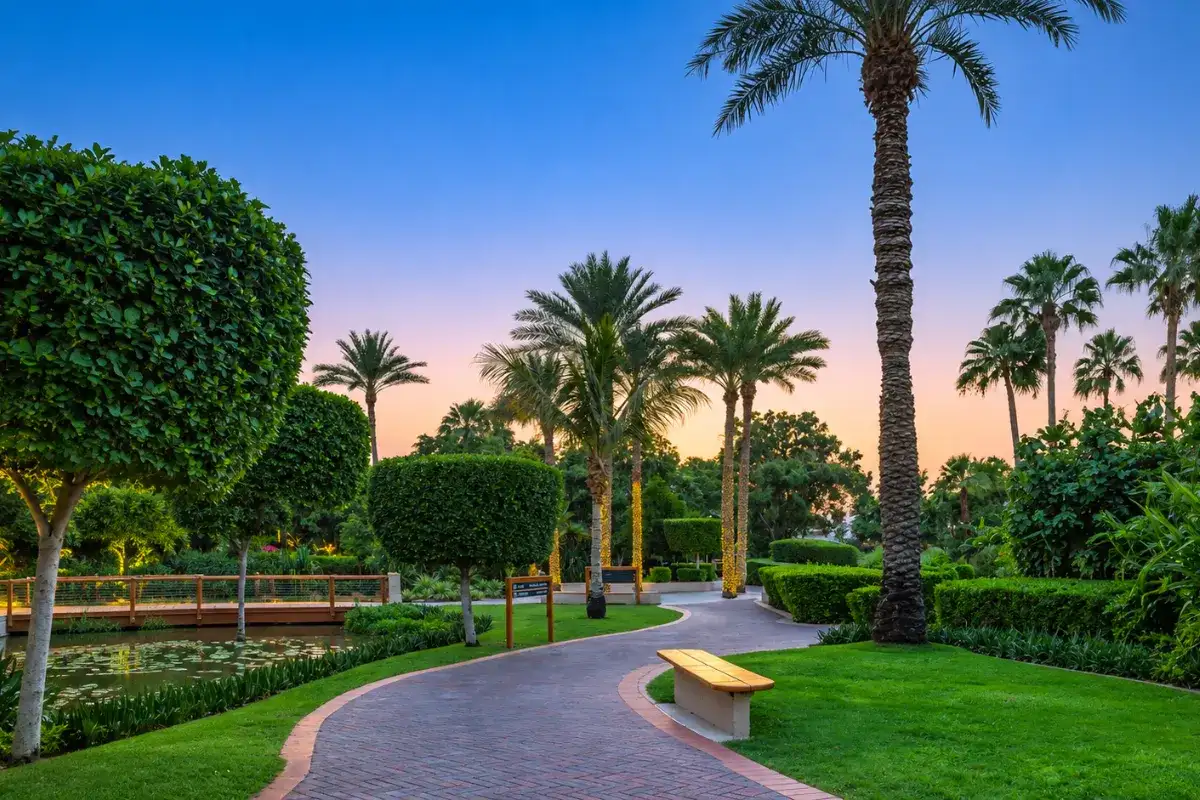
Repeating coordinated benches along resort pathways creates convenient short rest stops. (Source: Internet)
6.2 What to Check Before Ordering in Bulk
For commercial projects, product selection should be followed by a detailed review before quantities are confirmed. Buyers should check dimensions, materials, finishes, cushion specifications and quantities for each landscape zone.
Samples can help buyers review construction and material details before a larger order. Purchasing discussions should also cover MOQ (minimum order quantity), production time, quality control, packaging and delivery requirements. These details are particularly important when several product types are being coordinated within one resort project.
For orders using the same model across multiple locations, specifications and quantities should be clearly documented for each area. This helps connect the landscape plan with practical sourcing requirements while maintaining consistency across the project.
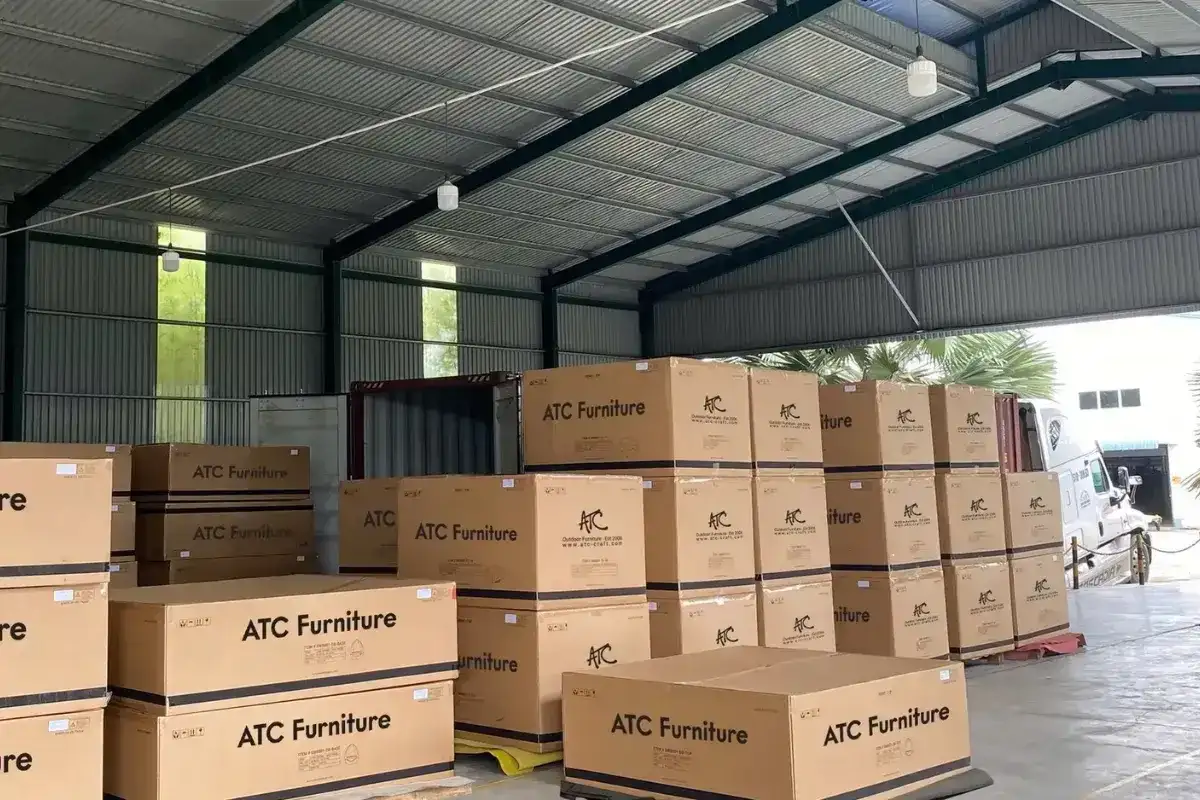
Bulk orders require clear coordination of product quantities, packaging and delivery requirements before shipment.
7. FAQs About Resort Garden Seating Furniture
7.1 What Type of Seating Is Best for a Resort Garden?
The appropriate seating depends on how guests use each area. Benches and individual chairs work well along pathways and at short rest points because they require relatively little space. Courtyards and larger social areas can accommodate sofas, armchairs, lounge chairs and coffee tables for longer stays.
Rather than selecting one seating type for the entire resort, planners should match each product to the function, available space and expected duration of use within each landscape zone.
7.2 Where Should Benches Be Placed Along Resort Garden Pathways?
Benches can be positioned at wider pathway sections, intersections, shaded locations, scenic viewpoints and transitions between major resort areas. They should be set back sufficiently from the main walking route so seated guests do not obstruct pedestrian circulation.
Spacing should also reflect pathway length and guest movement. Longer routes may require several rest points, while shorter garden paths may need only one or two carefully selected locations.
7.3 What Materials Are Suitable for Resort Landscape Outdoor Furniture?
Material selection should consider sunlight, rain, humidity, cleaning requirements and the specific conditions of each placement area. Powder-coated aluminum, teak, HDPE wicker and outdoor rope are commonly considered for outdoor applications.
Buyers should evaluate the complete product specification, including frame construction, surface finishes, woven materials and cushions. Conditions can vary even within the same resort, so products in open areas may have different exposure from seating positioned beneath trees or covered landscape structures.
7.4 How Should Hotel Courtyard Outdoor Seating Be Arranged?
Hotel courtyard outdoor seating can be arranged as central conversation groups, perimeter seating or a combination of both. Central arrangements are suitable for courtyards intended for socializing, while perimeter seating can preserve more open space for circulation.
Product dimensions and the complete footprint of each seating group should be reviewed before quantities are finalized. Adequate clearance around sofas, chairs and tables helps guests and resort staff move comfortably through the courtyard.
7.5 What Should Buyers Check Before Ordering Resort Garden Seating in Bulk?
Before placing a commercial order, buyers should confirm product dimensions, materials, finishes, cushion specifications and quantities for each landscape area. Samples can also be used to review construction and material details before larger quantities are ordered.
Commercial discussions should cover MOQ (minimum order quantity), production time, quality control, packaging and delivery requirements. Clear specifications are particularly important when the same products will be distributed across several garden zones.
Reviewing these details before ordering helps align resort garden seating furniture with the landscape plan, operational requirements and purchasing needs of the overall hospitality project.