Dining & Cafe
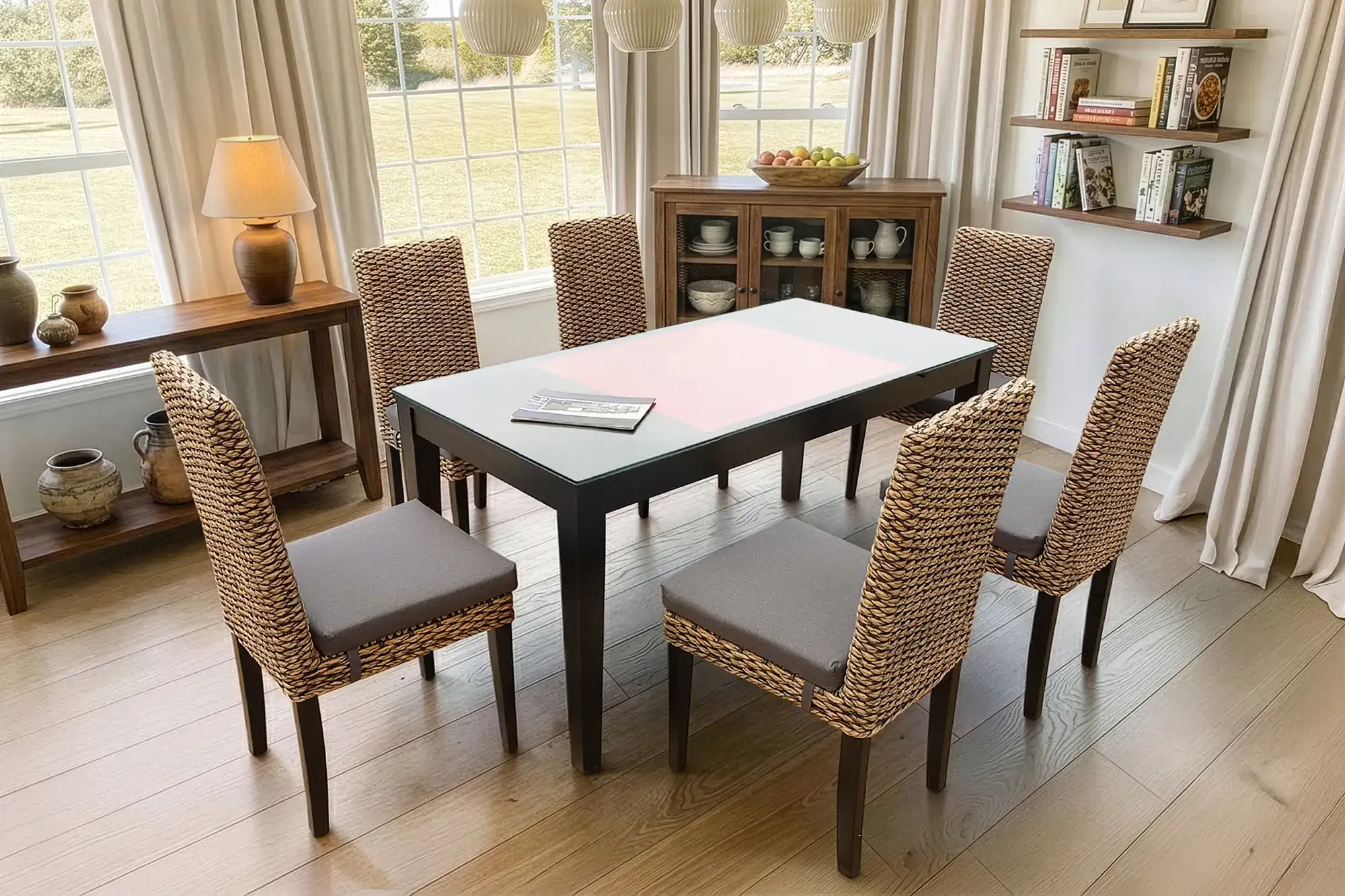
LUMA
Minimalist indoor water hyacinth dining set
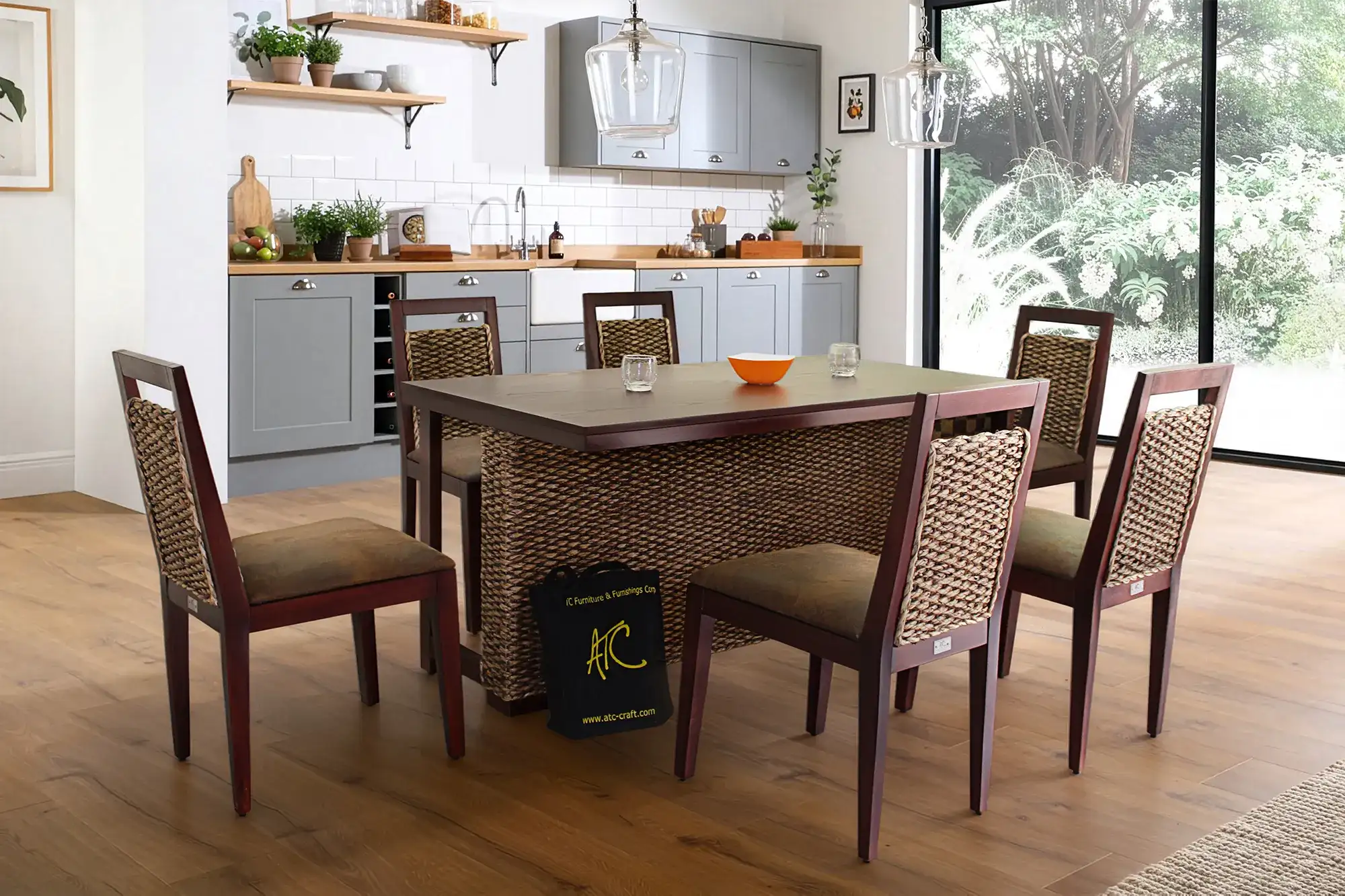
VERONA
Luxurious indoor water hyacinth dining set
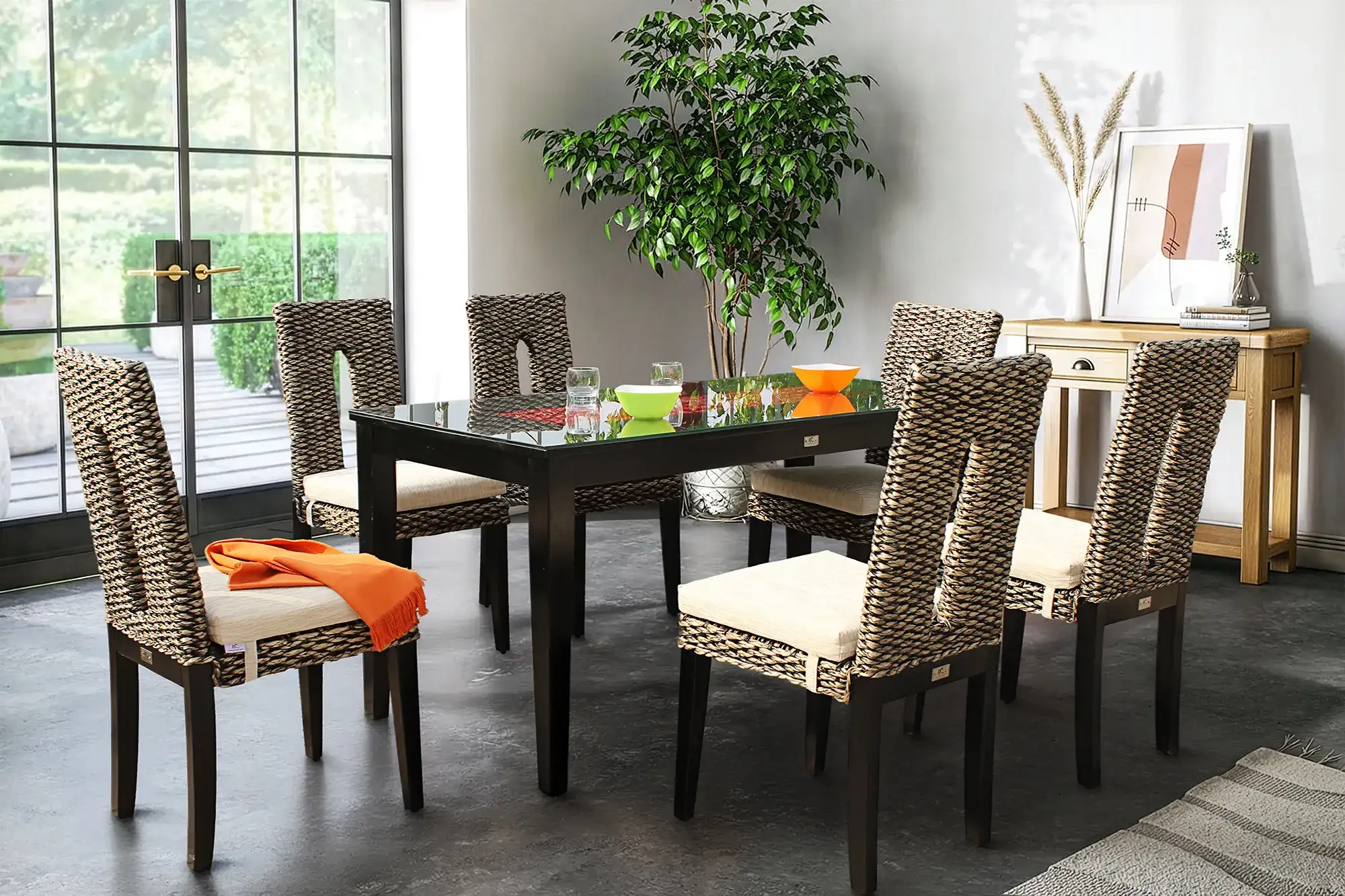
ARIA
Modern indoor water hyacinth dining set
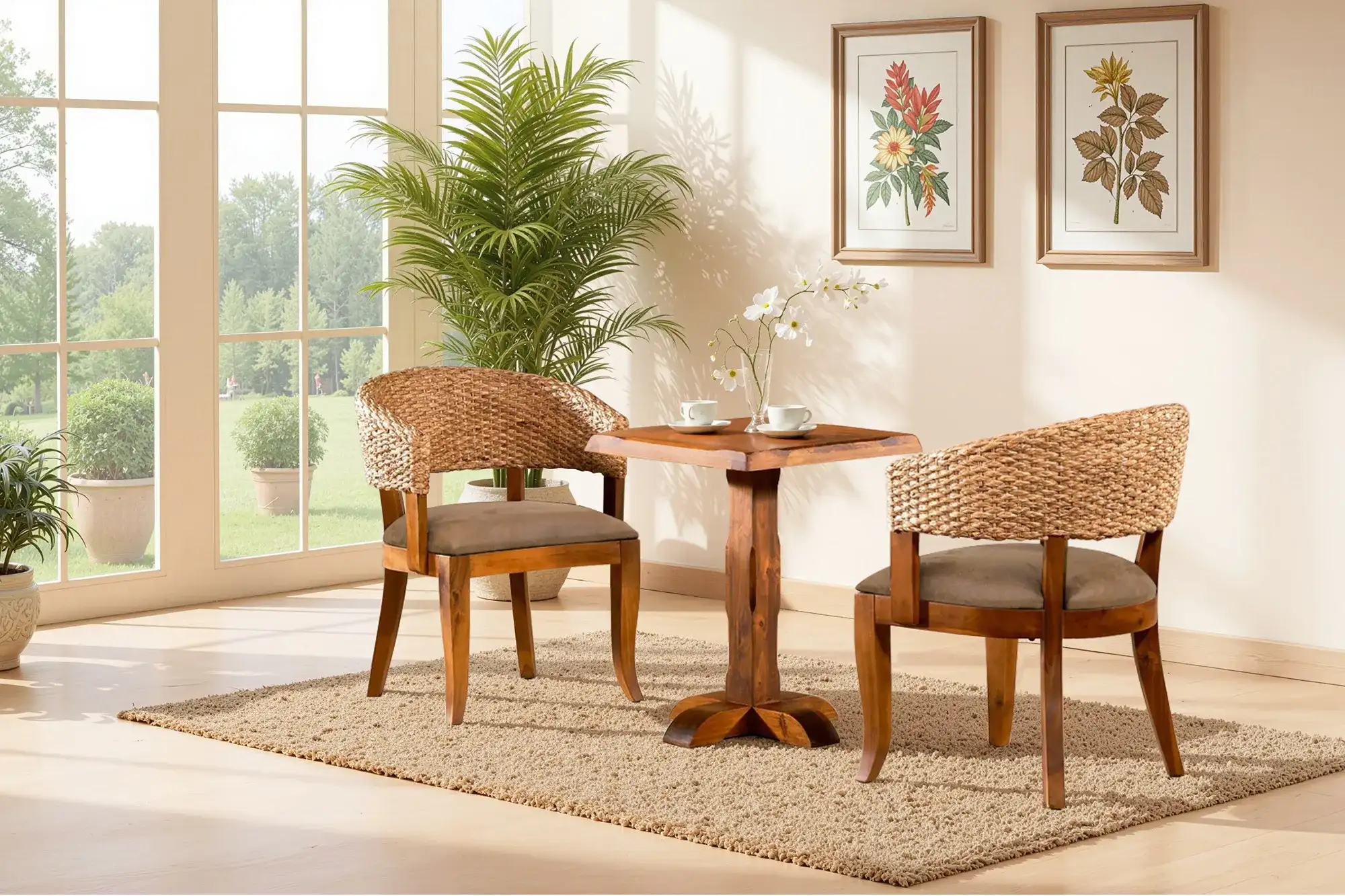
ALOR
Wooden Frame Water Hyacinth Cafe Furniture Set Indoor
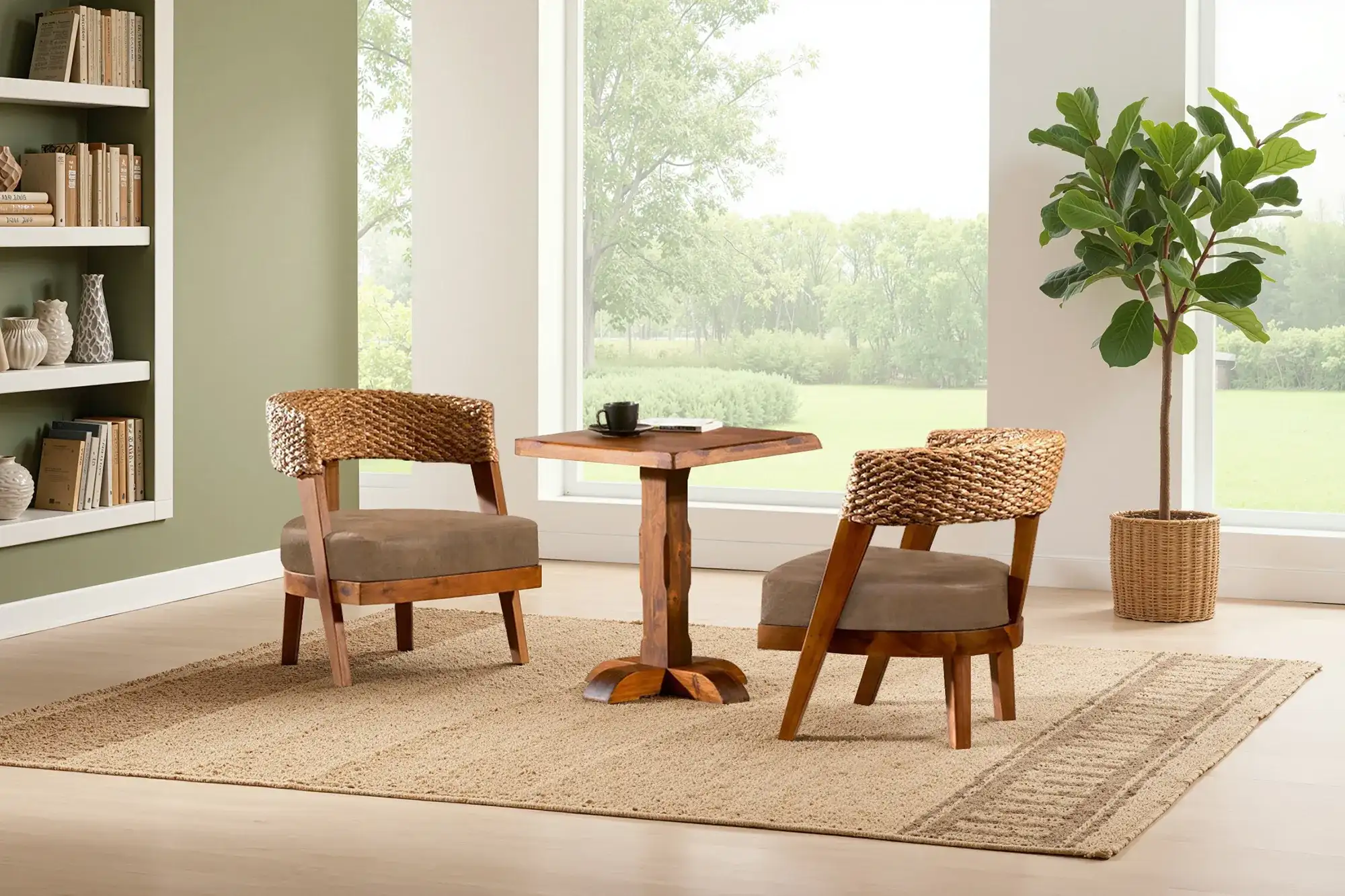
LANAI
Wooden Frame And Wicker Water Hyacinth Cafe Set Indoor
1. Hyacinth Dining Tables: Understanding the Material Before Making a Choice
In modern living spaces, the dining table is no longer simply a place for meals. It is where daily family rhythms unfold, where conversations begin and end, and where people connect with one another in the most natural way. Choosing a hyacinth dining table is therefore not just about selecting a piece of furniture, but about choosing a material that will accompany everyday life.
1.1. What Is Hyacinth and How Is It Used?
Hyacinth is a familiar material in traditional handicrafts. After being harvested, dried, and carefully processed, hyacinth fibers become flexible, lightweight, and reasonably durable. From simple, rustic household items, hyacinth has gradually been applied to furniture closely connected to living spaces, including dining tables.
When used for dining tables, hyacinth retains its natural character. More than that, the material brings a sense of closeness and warmth, making dining areas feel softer and more welcoming. This is why hyacinth dining tables are often chosen for homes that value lived-in comfort over visual display.
1.2. Hyacinth Weaving Structure and the User Experience
The most distinctive feature of a hyacinth dining table lies in its woven structure. Hyacinth fibers are hand-woven in steady, rhythmic patterns, creating surfaces with visual depth and a gentle sense of movement. When light falls across the surface, the woven layers appear soft rather than rigid like perfectly flat materials.
To the touch, the woven surface feels warm and genuine—neither cold like metal nor slippery like glass. This makes everyday contact more pleasant during daily use. The stability of a hyacinth dining table comes from the craftsmanship itself, where the weaving is securely fixed and tightly connected to the frame, creating a reassuring sense of solidity.
1.3. How Is a Hyacinth Dining Table Different from a Wooden One?
Compared to wooden dining tables, hyacinth dining tables offer a very different atmosphere. While wood often conveys strength, clarity, and a certain formality, hyacinth feels visually softer. Its presence lightens the dining area, making the space feel more open and less pressured.
This difference is not about quality, but about the emotional experience each material provides. Choosing between a hyacinth dining table and a wooden one often reflects lifestyle preferences. Those drawn to hyacinth usually seek relaxation, natural textures, and a space that feels easy to live in rather than rigidly perfect.
2. Durability and Change Over Time
One notable characteristic of hyacinth dining tables is how they age. Over time, the woven fibers may deepen in tone, and the surface may soften slightly with use. Small marks from daily life gradually appear, not obvious, but enough to tell a story of time passing.
For many people, these changes do not reduce the table’s value. On the contrary, they add depth and a sense of lived-in warmth, as if the table is aging alongside the family. This kind of beauty does not come from novelty, but from long-term companionship.
3. Things to Know Before Choosing a Hyacinth Dining Table
- Placement: Choose a dry, well-ventilated area so the hyacinth material can maintain its durability and appearance over time.
- Usage habits: Daily routines and how the table is used directly affect its longevity and stability.
- Proper care: Gentle cleaning and avoiding prolonged moisture help keep the woven surface comfortable to the touch.
- Suitability: Hyacinth dining tables are not ideal for every space, but they are especially well suited for those who appreciate natural materials and do not demand absolute perfection.
- Core value: Their value lies not in shine or trendiness, but in the feeling of sitting down, the comfort of each meal, and how naturally the material integrates into daily life.
- Meaning of the choice: When the material is well understood, choosing a hyacinth dining table becomes less about following trends and more about expressing how one wants to live and enjoy their space.
4. Popular Hyacinth Dining Table Styles Today
4.1. Soft-Form Hyacinth Dining Tables with Rounded Lines
Rounded edges and gentle curves create a welcoming look and reduce the “hard” feeling that dining furniture can sometimes have. In dining settings, rounded or semi-curved table shapes also support more open seating arrangements, making it easier for people to face one another and stay connected during meals. This style is especially suitable for families who enjoy long, shared dining moments and casual conversation at the table.
4.2. Compact Hyacinth Dining Tables for Smaller Spaces
Compact table designs focus on efficiency without making the space feel tight. Hyacinth tables in this style usually pair well with two to four chairs, making them a practical choice for apartments, small dining corners, or multi-purpose rooms. The woven surface adds texture and warmth while keeping the overall visual weight light, helping the dining area feel calmer and more open.
4.3. Hyacinth Dining Tables with Bench Seating for Open Layouts
Bench seating offers flexibility and a more relaxed dining experience, especially in open-plan layouts. A long bench placed along one side of the table creates an intimate seating line that can fit more people while still feeling close and connected. This arrangement works well for shared living spaces where the dining area blends into the kitchen or lounge zone, keeping the layout neat and easy to move around.
4.4. Hyacinth Dining Tables Paired with Cushioned Seating
Adding slim cushions to woven hyacinth chairs improves comfort while preserving the material’s natural look. This combination is ideal for longer meals, weekend gatherings, or households where the dining table is used for more than just eating. It supports everyday comfort without taking away the handcrafted character that makes hyacinth furniture feel warm and lived-in.
5. Where Can I See Water Hyacinth Dining Furniture Options?
You can browse ATC Furniture’s water hyacinth dining and café collection to view available designs, styles, and product options. For specific models, specifications, or quotations, contact ATC Furniture directly.