Outdoor Cafe Tables and Chairs: Commercial Sourcing Guide
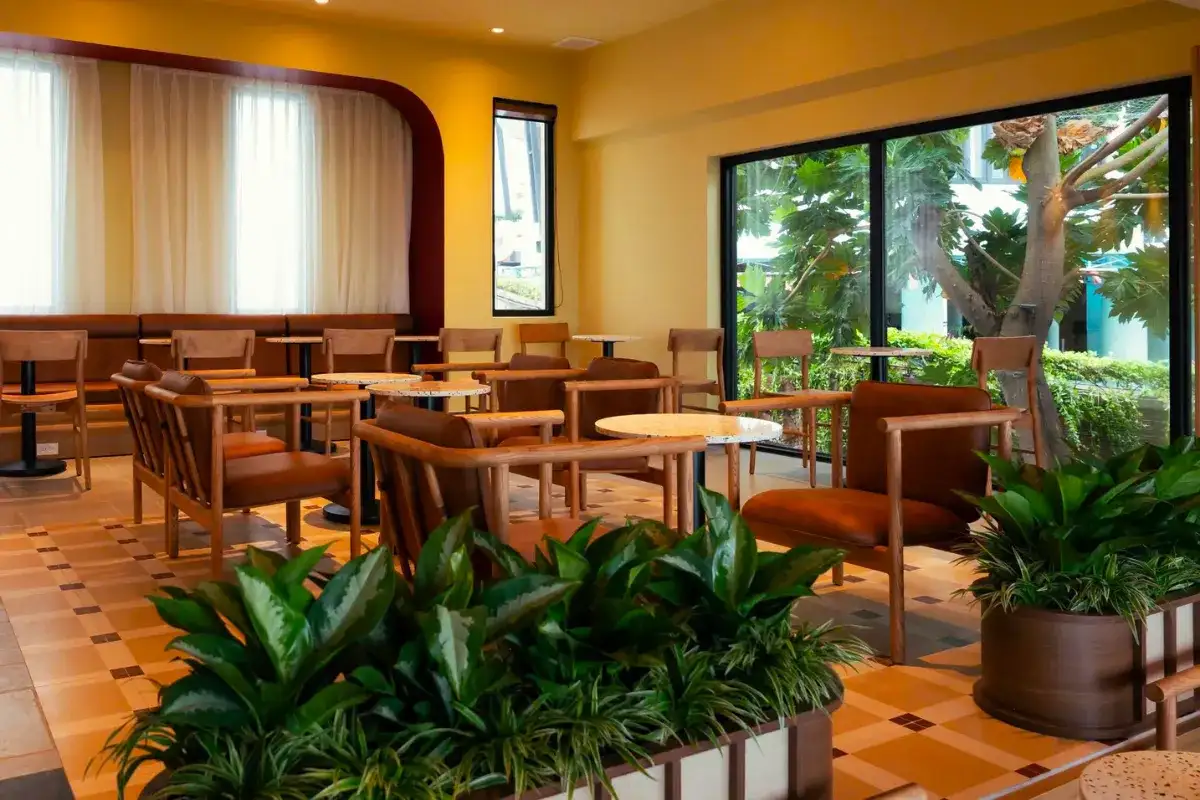
Choosing outdoor cafe tables and chairs for a commercial project requires more than selecting an attractive design. Buyers need to consider materials, construction, weather exposure, stackability, table stability, maintenance, storage, and daily operating conditions. For wholesale orders, supplier capability, samples, quality control, packaging, and lead time are equally important. This guide explains how to evaluate these factors before placing a commercial order.
1. What Makes Outdoor Cafe Tables and Chairs Suitable for Commercial Use?
Products used in cafes, restaurants, hotels, and other hospitality environments are exposed to conditions that can be very different from residential use. Chairs may be moved dozens of times during a busy day, tables are cleaned repeatedly, and outdoor surfaces can face sunlight, rain, humidity, dust, or coastal air.
For this reason, buyers evaluating commercial cafe outdoor furniture should look beyond appearance. A product needs to fit the operating environment as well as the desired design concept.
1.1 Commercial vs. Residential Outdoor Products
Residential products are designed for lighter private use, while a commercial cafe requires frames, joints, finishes, tabletops, and fabrics to withstand frequent daily use. A commercial product does not need to be heavy. Lightweight chairs can be practical for regular rearrangement, provided the construction is durable. Commercial buyers should focus on actual usage and material quality rather than labels such as “heavy duty” or “commercial grade.”
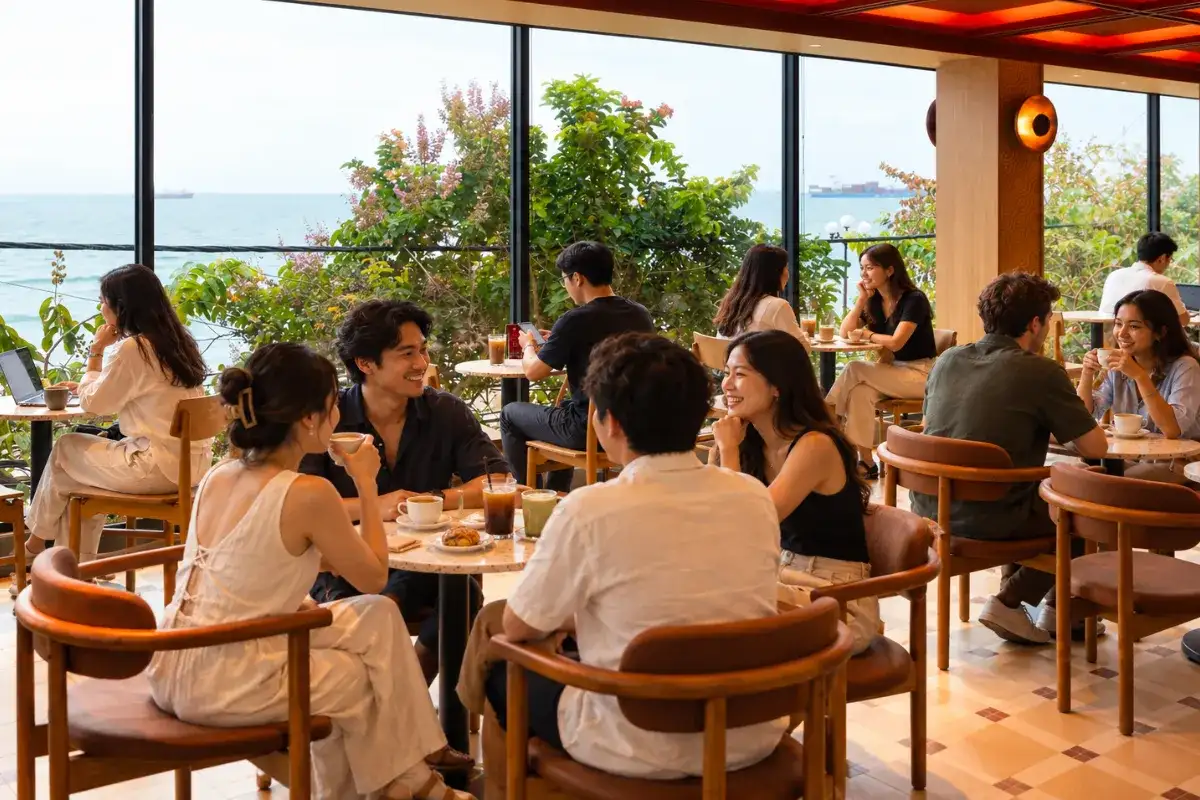
Unlike residential furniture, commercial seating must perform reliably under frequent use throughout the day.
1.2 Key Performance Requirements for Cafe Use
Several details affect long-term performance. Frames, welds, joints, screws, and connection points should remain stable and consistent, while powder coating should cover corners and welded areas evenly.
For woven chairs, buyers should check weaving tension, strand spacing, attachment points, and edge finishing. Tabletops should be stable, easy to clean, and suitable for moisture exposure. Daily maintenance also matters, as complex surfaces or difficult-to-remove cushions can increase work for cafe staff.
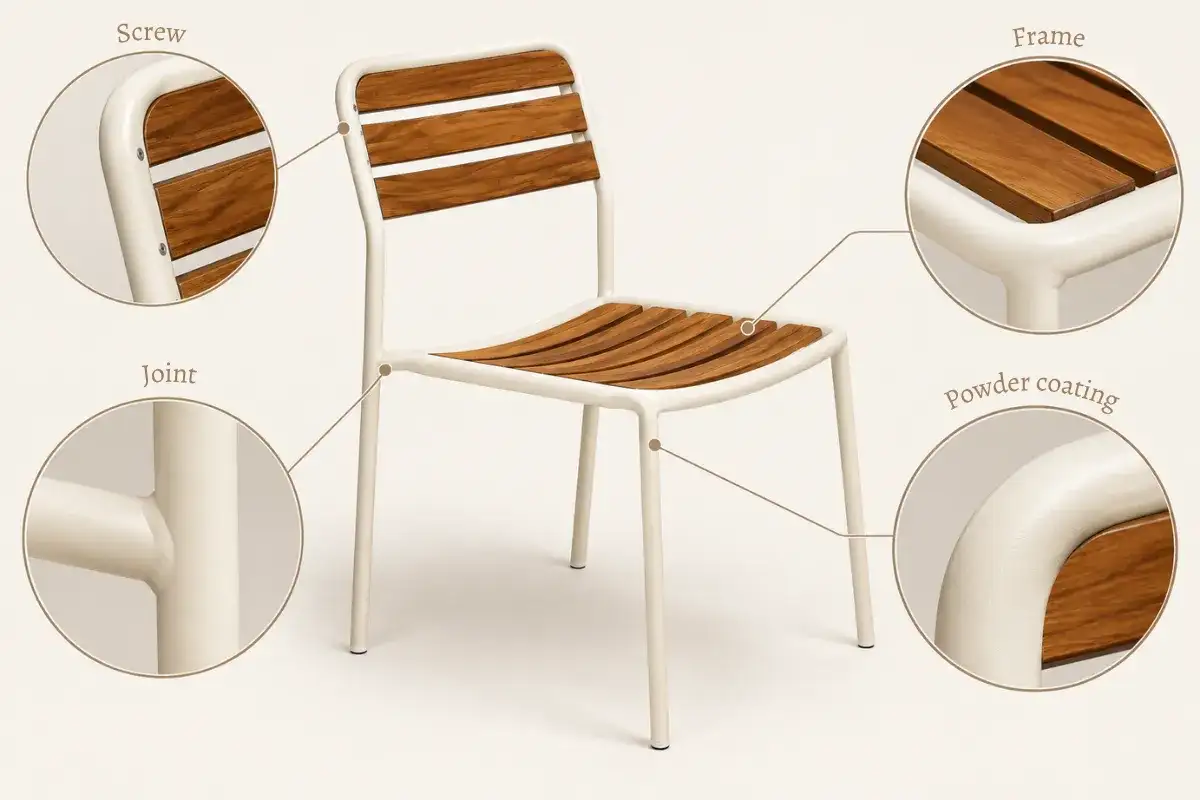
Durability depends on more than materials; joints, welds, fasteners, and surface finishing also require careful inspection.
1.3 Common Commercial Applications
Outdoor cafe products are used in settings such as street cafes, restaurant terraces, hotel courtyards, resorts, rooftop cafes, and poolside areas.
Because each location has different exposure, buyers should consider the installation environment, customer volume, cleaning routine, storage needs, and whether products will remain outdoors permanently before selecting a model.
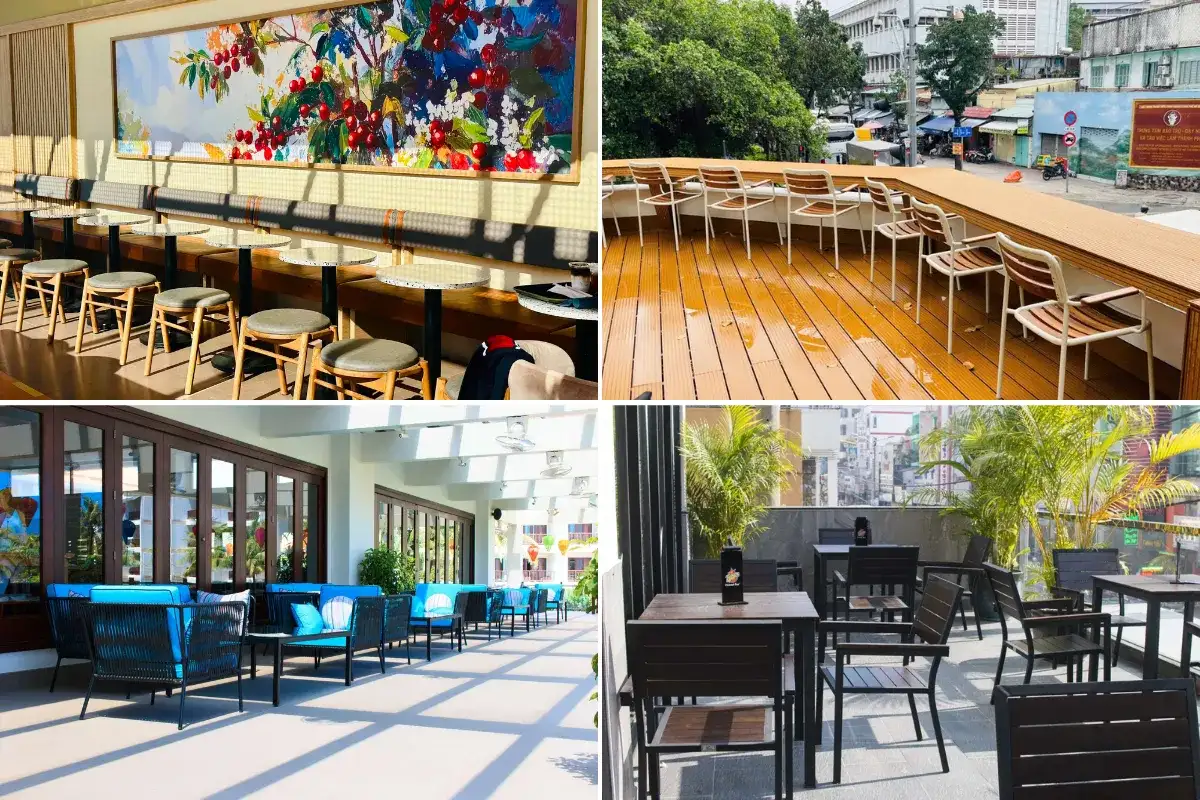
Outdoor cafe furniture can serve different commercial settings, from street-facing terraces to rooftops and hospitality spaces.
2. How to Choose Materials for Outdoor Cafe Tables and Chairs
Material selection affects appearance, maintenance, weight, weather performance, and product construction. When sourcing outdoor cafe tables and chairs, buyers should compare materials according to the actual project environment instead of assuming that one option is suitable for every application.
2.1 Powder-Coated Aluminum
Aluminum is widely used for commercial outdoor products because it is lightweight, corrosion-resistant, and versatile in design. Its lower weight also makes tables and chairs easier to rearrange in cafes.
Buyers should check tube dimensions, wall thickness, welding quality, frame alignment, surface preparation, and powder-coating consistency, especially around welds and joints.
A well-finished aluminum frame can work across cafe terraces, restaurants, hotels, resorts, and other outdoor hospitality settings.
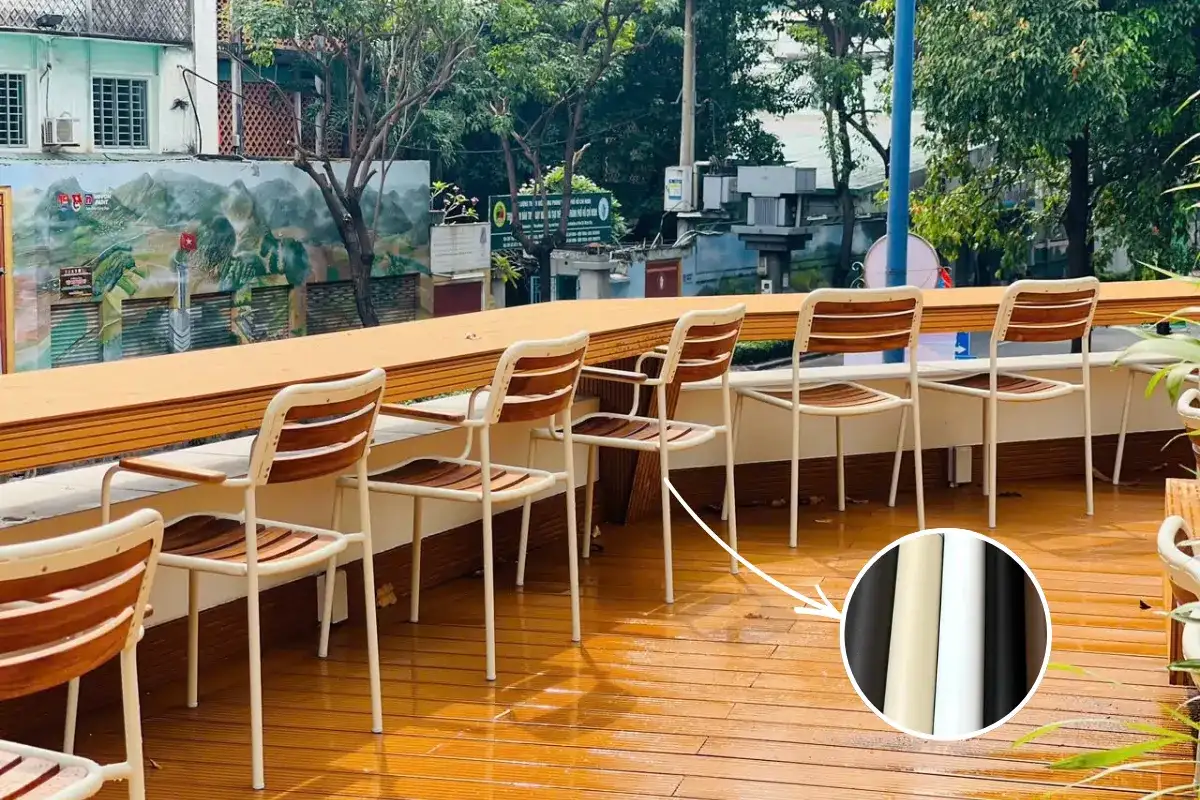
Lightweight aluminum frames make daily furniture movement easier while providing practical resistance to outdoor conditions.
2.2 HDPE Wicker and Outdoor Rope
HDPE synthetic wicker set offers a woven look suitable for tropical, resort, and contemporary hospitality projects. Buyers should check strand consistency, UV stability, weave tension, edge finishing, and frame attachment.
Outdoor rope provides a lighter, more open appearance. Key factors include rope diameter, tension, fastening, UV resistance, and moisture performance. Both materials also offer flexible color customization for commercial projects.
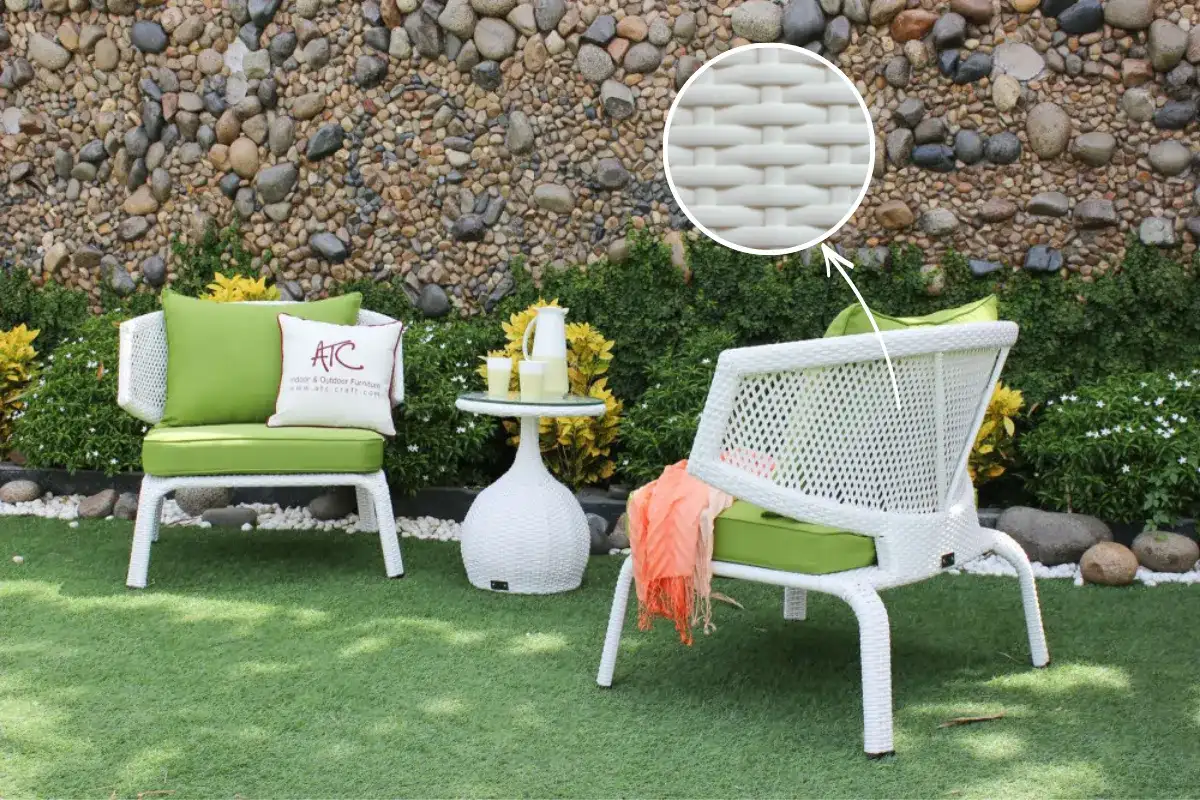
HDPE wicker offers flexible colors and woven textures for cafes, resorts, and modern outdoor hospitality projects.
2.3 Teak and Outdoor Wood
Teak is a popular choice for projects that require a warm, natural appearance, especially in resorts, garden cafes, and boutique hotels.
Buyers should check wood specification, moisture control, joints, surface finishing, hardware, and maintenance requirements. Because teak changes visually over time, its expected aging should also be considered.
When combined with rope, aluminum, or woven materials, buyers should inspect connection points, drainage, and structural movement.
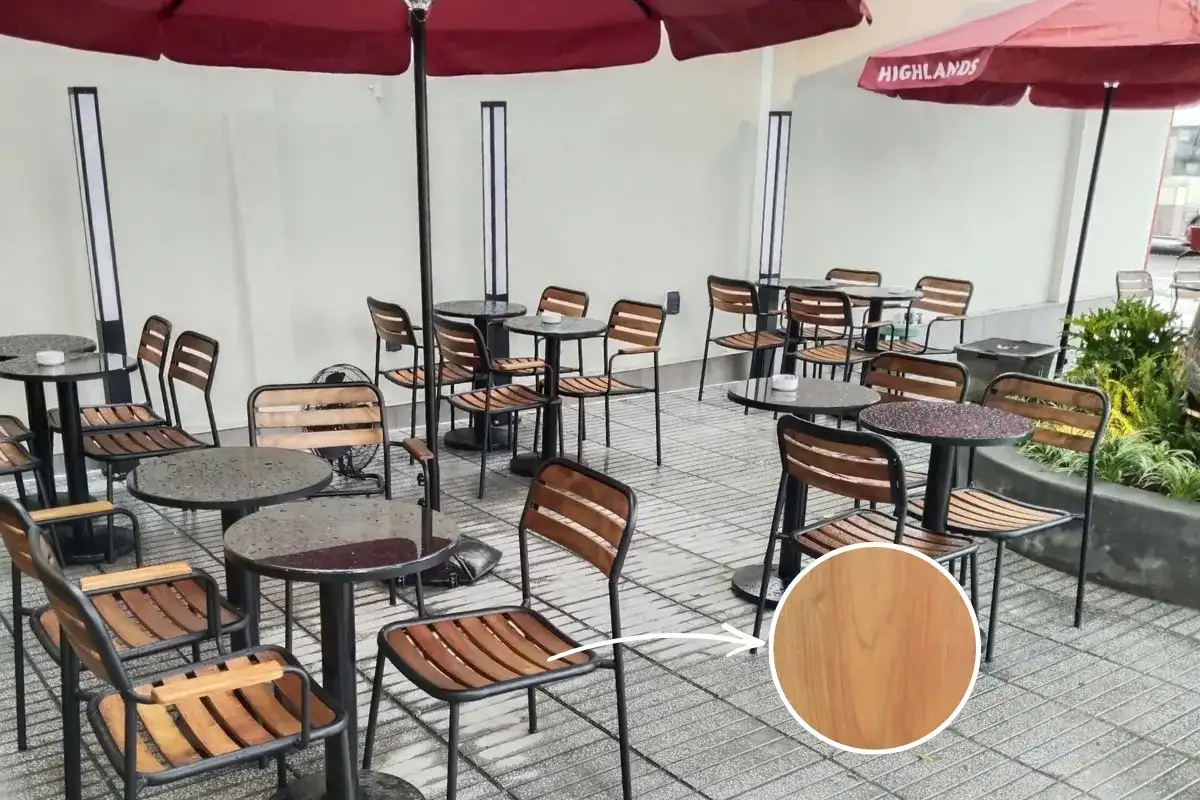
Teak brings natural warmth to commercial outdoor spaces while requiring attention to wood quality, joints, and maintenance.
2.4 Other Commercial Materials
Depending on the project, buyers may also encounter steel, polypropylene, HPL, compact laminate, ceramic, or sintered-stone surfaces.
Each option has advantages and limitations. The goal is not to identify a universally superior material. The right specification depends on climate, operation, design requirements, maintenance capability, and budget.
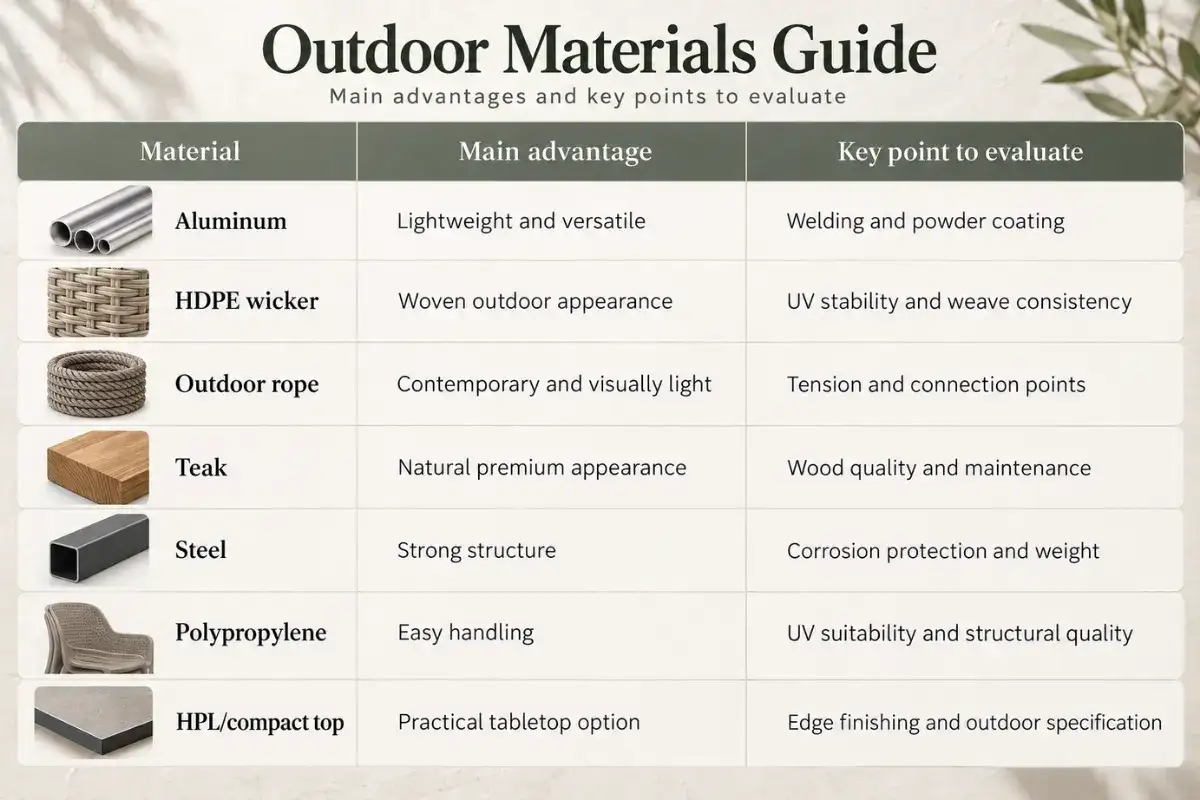
Each outdoor material has different strengths and evaluation points, so selection should follow the actual project conditions.
3. Choosing Commercial Cafe Chairs and Tables
Once the material direction is established, buyers can evaluate product configuration. Chairs and tables should work together in terms of scale, customer comfort, layout flexibility, storage, and daily handling.
3.1 Stackable vs. Non-Stackable Cafe Chairs
Stackability can be particularly valuable for cafes that need to clear terraces, move seating indoors, clean floors, host events, or reconfigure layouts.
For this reason, stackable commercial outdoor cafe chairs are frequently considered for high-traffic hospitality environments.
However, buyers should not evaluate stacking based only on whether one chair physically fits on another. They should also check how many chairs can be stacked safely, where the frames make contact, whether surfaces may become scratched, and how easily staff can lift and separate the chairs.
Non-stackable models may offer more design freedom or larger proportions and may work well in locations where products remain in fixed positions. The correct choice depends on operational needs.
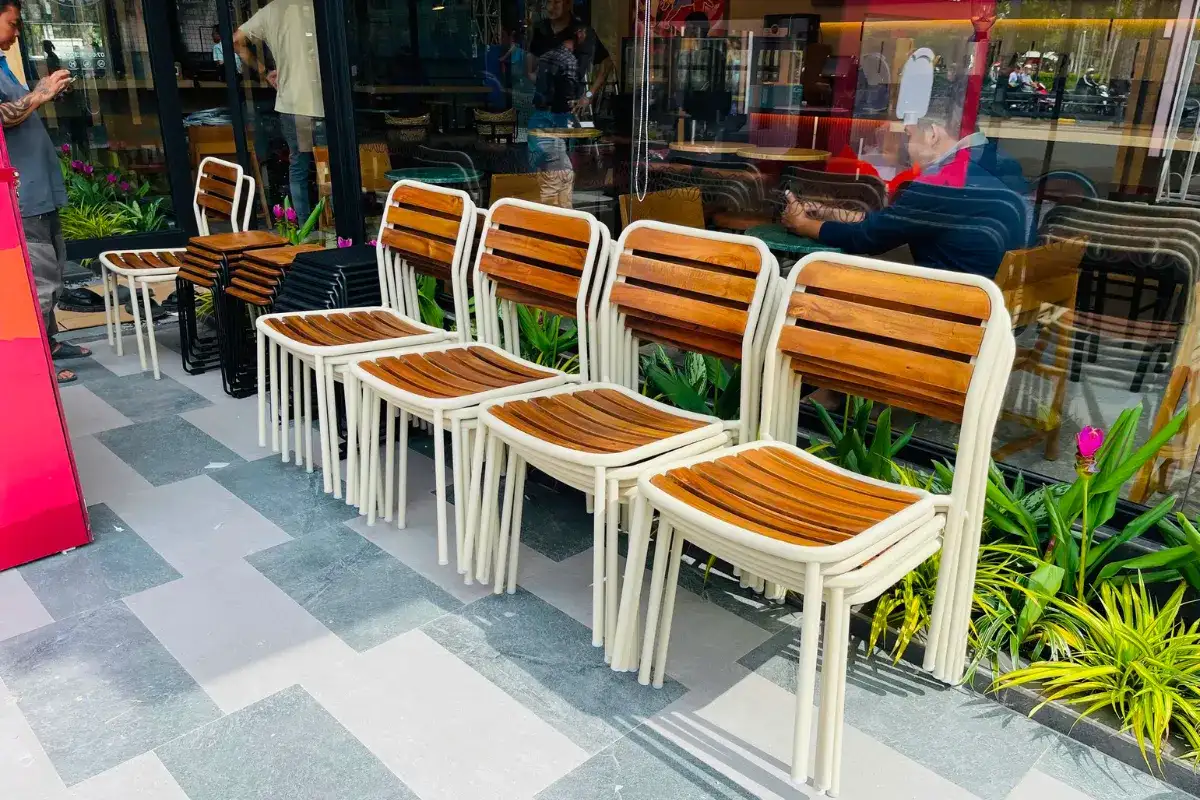
Choosing between stackable and non-stackable chairs should reflect how often the space needs to be cleared or rearranged.
3.2 Chair Weight, Comfort and Construction
A cafe chair should balance stability, comfort, and ease of handling. Heavy chairs can make cleaning and layout changes more difficult, while very lightweight models may need extra consideration in windy or exposed areas. The right choice also depends on the customer experience: quick-service cafes may prefer compact seating, while resort cafes often require deeper seats, armrests, cushions, and a more relaxed sitting position.
Buyers should check seat height and depth, backrest angle, armrest position, frame stability, floor glides, woven areas, cushion fit, and overall proportions. For larger orders, consistency is equally important, so chairs placed together should have similar dimensions, alignment, weaving, and finish.
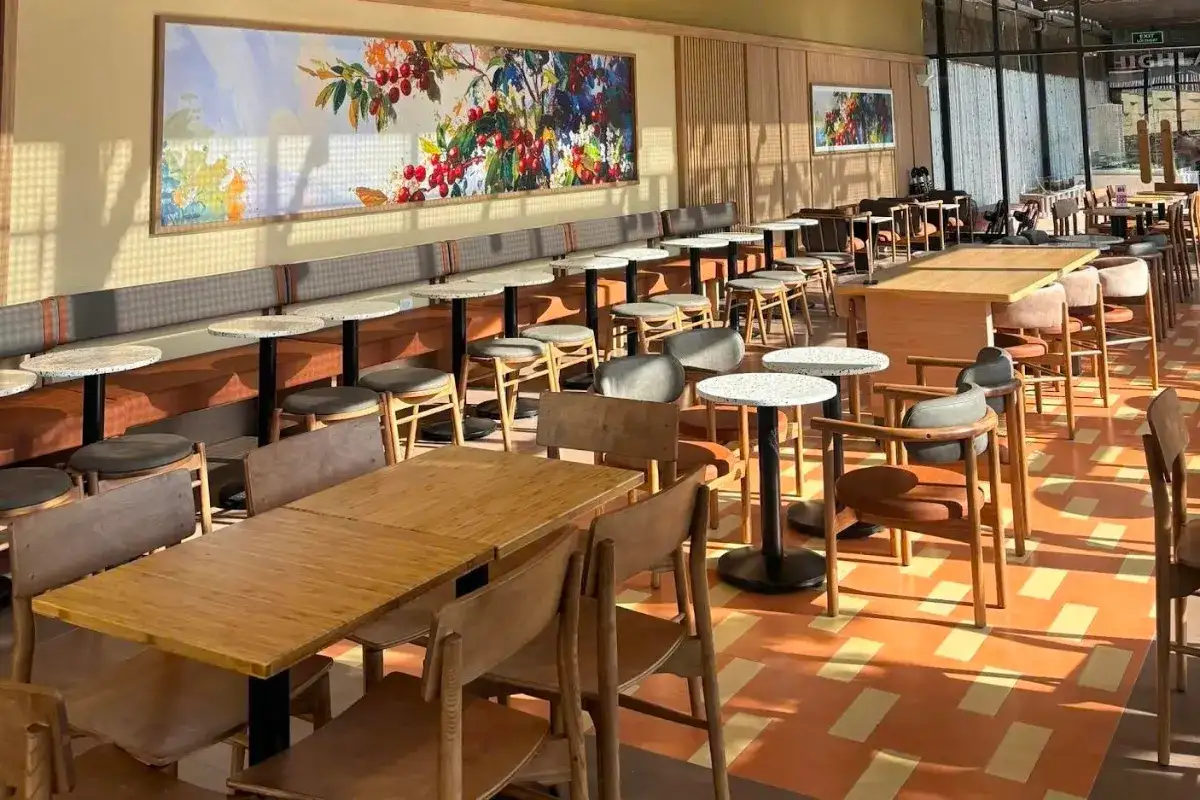
Seat dimensions, backrests, armrests, frames, and feet all influence comfort and practical daily use.
3.3 Choosing the Right Table Size and Shape
Table shape directly affects seating capacity and layout flexibility.
Small square tables are common in cafes because they are easy to arrange individually or combine when larger groups arrive. Round tables create a softer visual layout and can work well for two-person or four-person seating.
Rectangular tables may be better suited to larger groups or specific terrace layouts.
Before confirming dimensions, buyers should consider the size of plates, beverages, table accessories, laptops, menus, and other items customers are expected to use.
A visually compact table may become impractical if the tabletop is too small for the service concept.
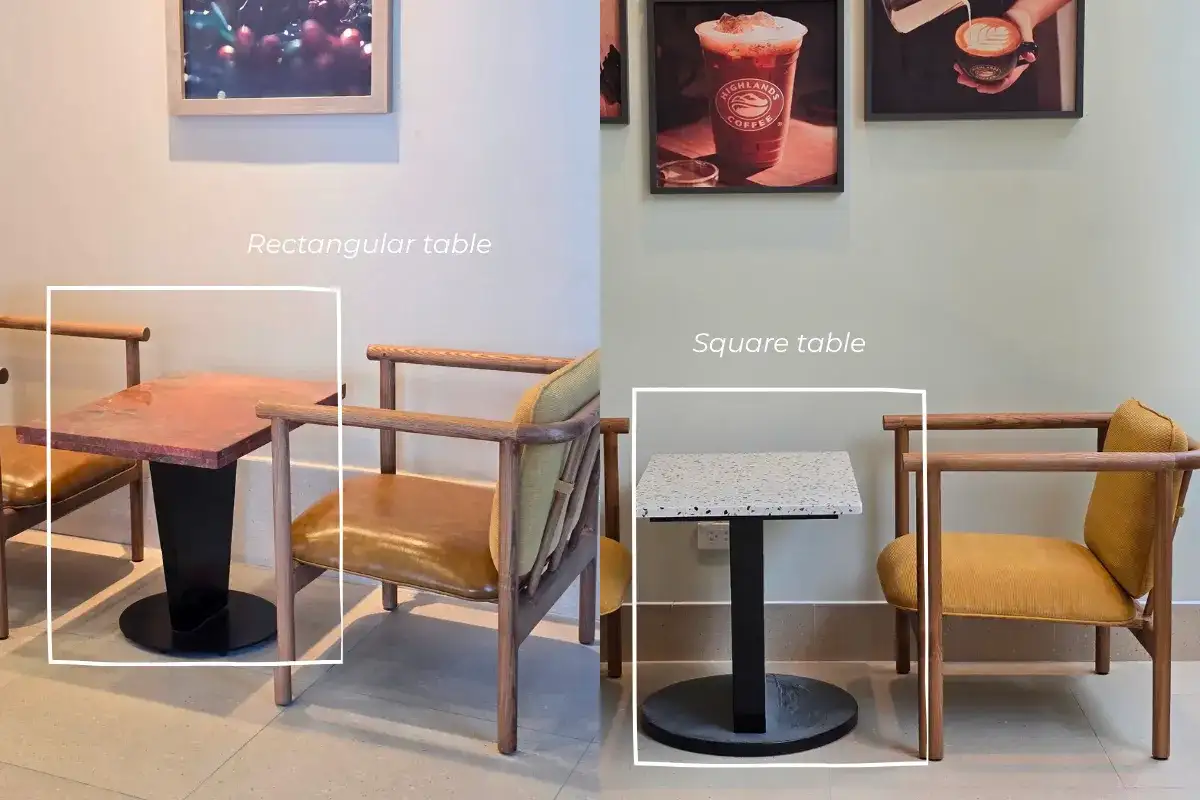
Table shape affects seating capacity, layout flexibility, and how efficiently a cafe uses its available space.
3.4 Tabletop and Base Configuration
Table stability is especially important in commercial environments. Buyers should consider tabletop size and weight, base footprint, column position, and floor condition, as these factors directly affect how stable the table feels during use. Pedestal tables should provide enough legroom while maintaining proper support, while four-leg tables should sit evenly on the floor.
Adjustable feet can help on slightly uneven terraces. Buyers should also check whether the tabletop is easy to clean and whether the edge construction can withstand repeated commercial use.
3.5 Folding, Fixed or Knock-Down Tables
Different table constructions support different operational needs. Folding tables are useful for flexible layouts and storage, while fixed tables suit spaces where products rarely move. Knock-down (KD) tables can reduce shipping volume and improve container loading efficiency, especially for imported projects.
However, buyers should confirm assembly requirements before ordering, as space-saving KD designs may require additional installation time at the destination.
4. Planning Outdoor Cafe Layouts for Daily Operation
A well-selected product can still perform poorly if the layout does not fit the cafe's daily operation.
Before confirming quantities, buyers should review usable floor area, guest circulation, service routes, storage, weather exposure, and the ability to adjust seating during different periods of the day.
4.1 Calculate Seating Capacity and Customer Flow
Maximizing seating capacity does not always improve operational efficiency. Tables placed too closely can restrict guest and staff movement, so buyers should map entrances, service paths, doors, planters, columns, umbrellas, and other fixed elements before finalizing the layout.
Local accessibility, fire, and circulation requirements should also be considered. For larger hospitality projects, testing the arrangement on a floor plan before purchasing can help avoid unsuitable quantities or spacing.
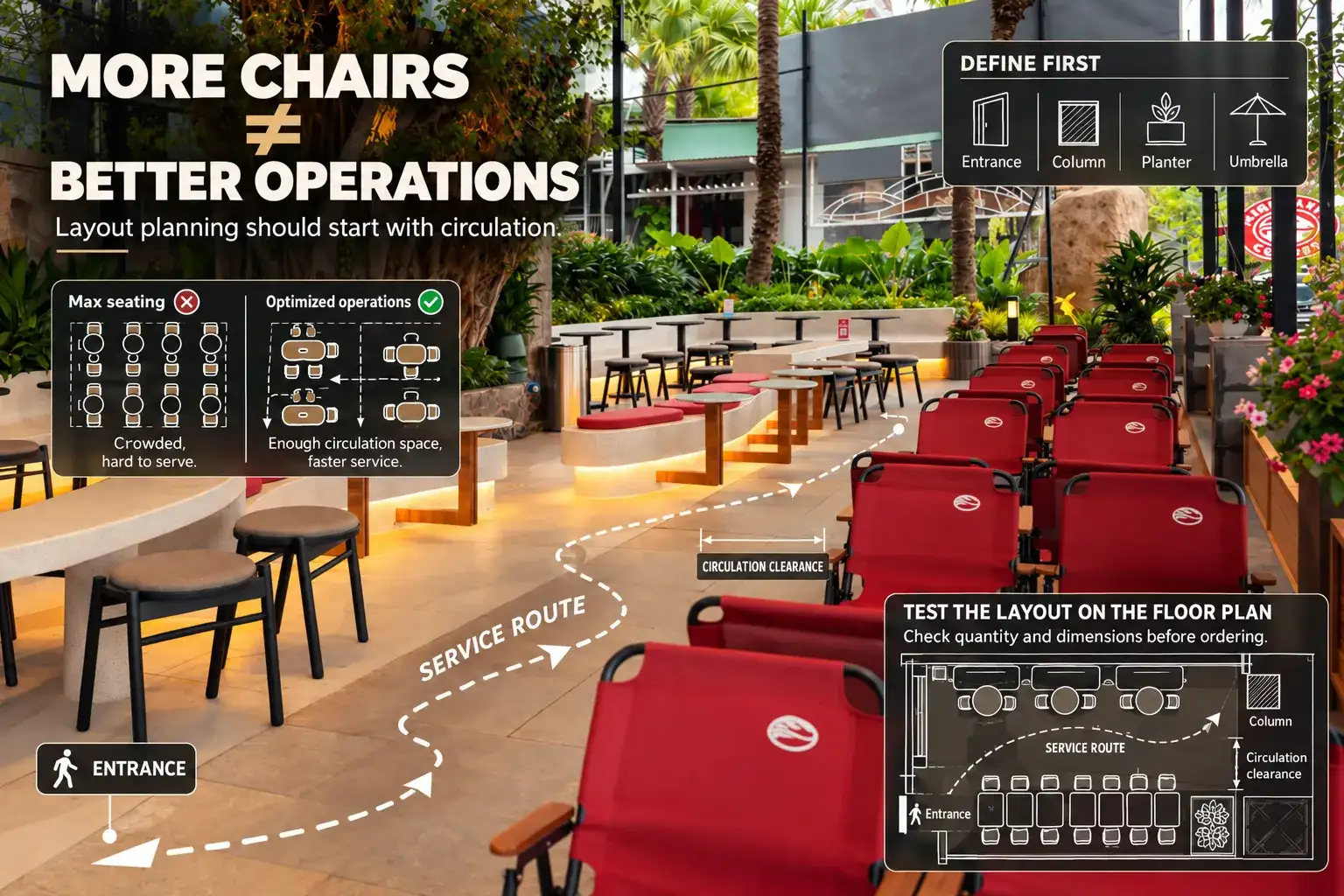
Testing the floor plan helps buyers confirm seating quantities, spacing, and service routes before ordering.
4.2 Combine Different Table Configurations
Many cafes benefit from a combination of two-person and four-person tables.
Two-top tables can serve individual customers or couples while also being combined for larger groups. Larger tables can be positioned where they do not interfere with circulation.
This modular approach can make the same seating area more adaptable during quiet periods, lunch service, weekend traffic, or private events.
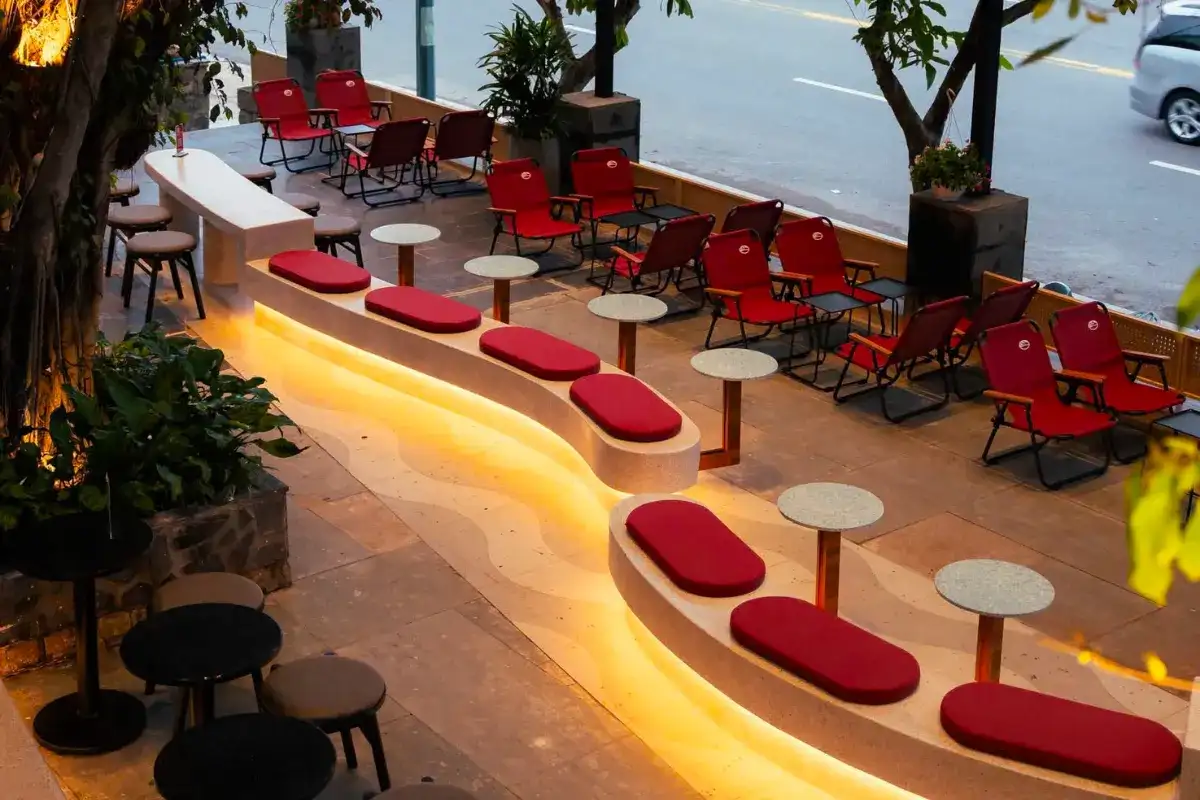
Combining different table sizes creates a more flexible seating layout
for varying group sizes.
4.3 Consider Storage and Daily Rearrangement
Storage should be considered before selecting outdoor cafe tables and chairs. If chairs are moved indoors every evening, stackability and weight become more important. If products remain outside, buyers should focus more on weather protection, cleaning, and security.
Removable cushions also require suitable storage and a clear routine for collection, drying, and cleaning. These practical details can strongly affect daily operation.
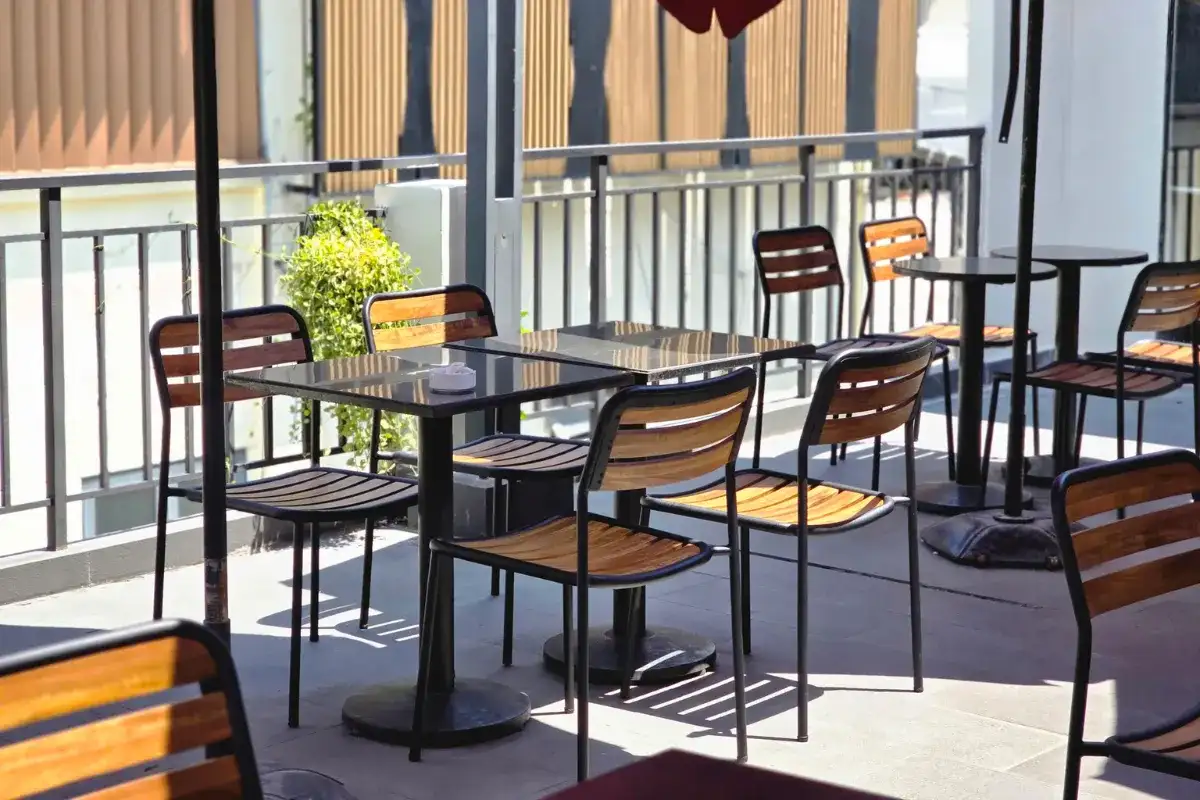
Daily storage and rearrangement should be considered when choosing the weight and stackability of cafe furniture.
4.4 Match the Products to Weather Exposure
A covered terrace may face limited sun and moisture, while fully exposed patios must handle stronger UV, rain, dust, and temperature changes. Coastal cafes also require extra attention to salt-air exposure, especially for metal parts, hardware, and finishes.
Rooftop locations may need more stable products because of wind. Buyers should therefore match product specifications to each area’s exposure level rather than using the same specification everywhere.
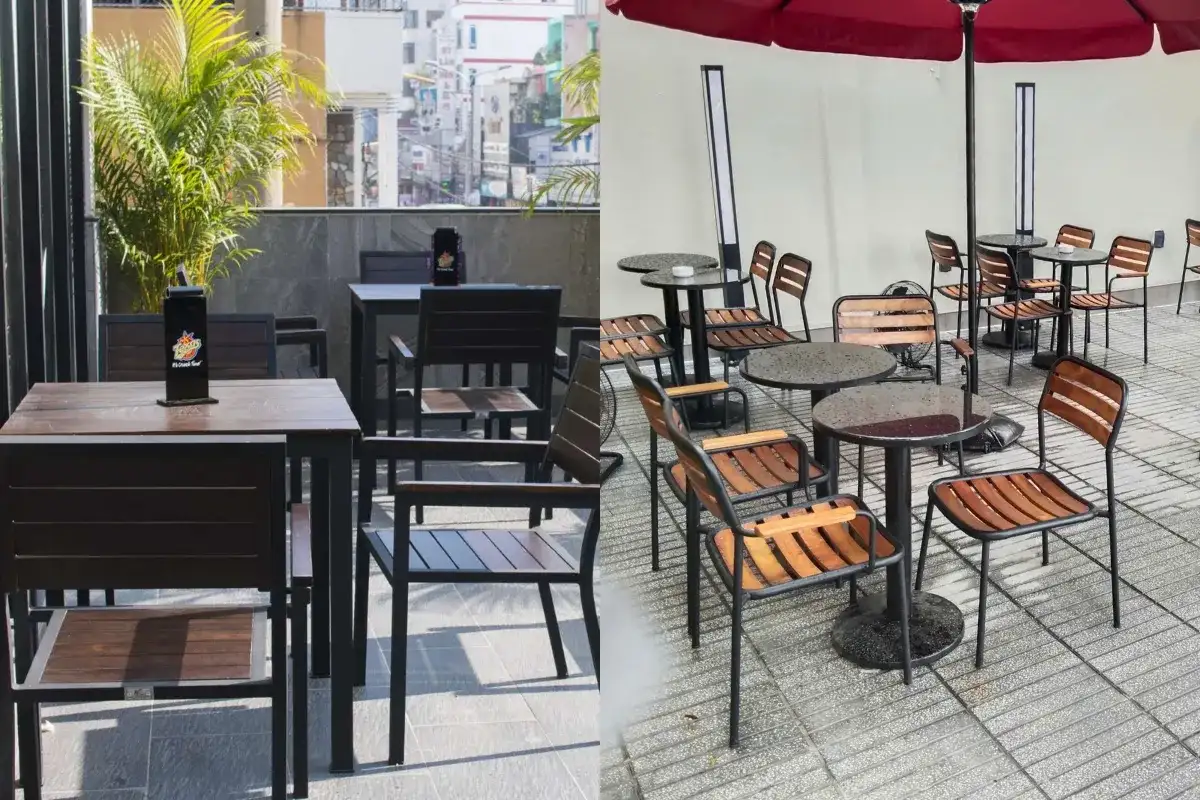
Selecting outdoor furniture starts with understanding the climate and exposure conditions of each area.
5. Wholesale Sourcing Checklist for Outdoor Cafe Tables and Chairs
Product selection is only part of a successful wholesale project. Buyers sourcing cafe outdoor furniture wholesale also need to evaluate the supplier's ability to reproduce approved specifications consistently across the full order.
This becomes increasingly important for hotels, resorts, restaurant groups, distributors, and larger commercial developments.
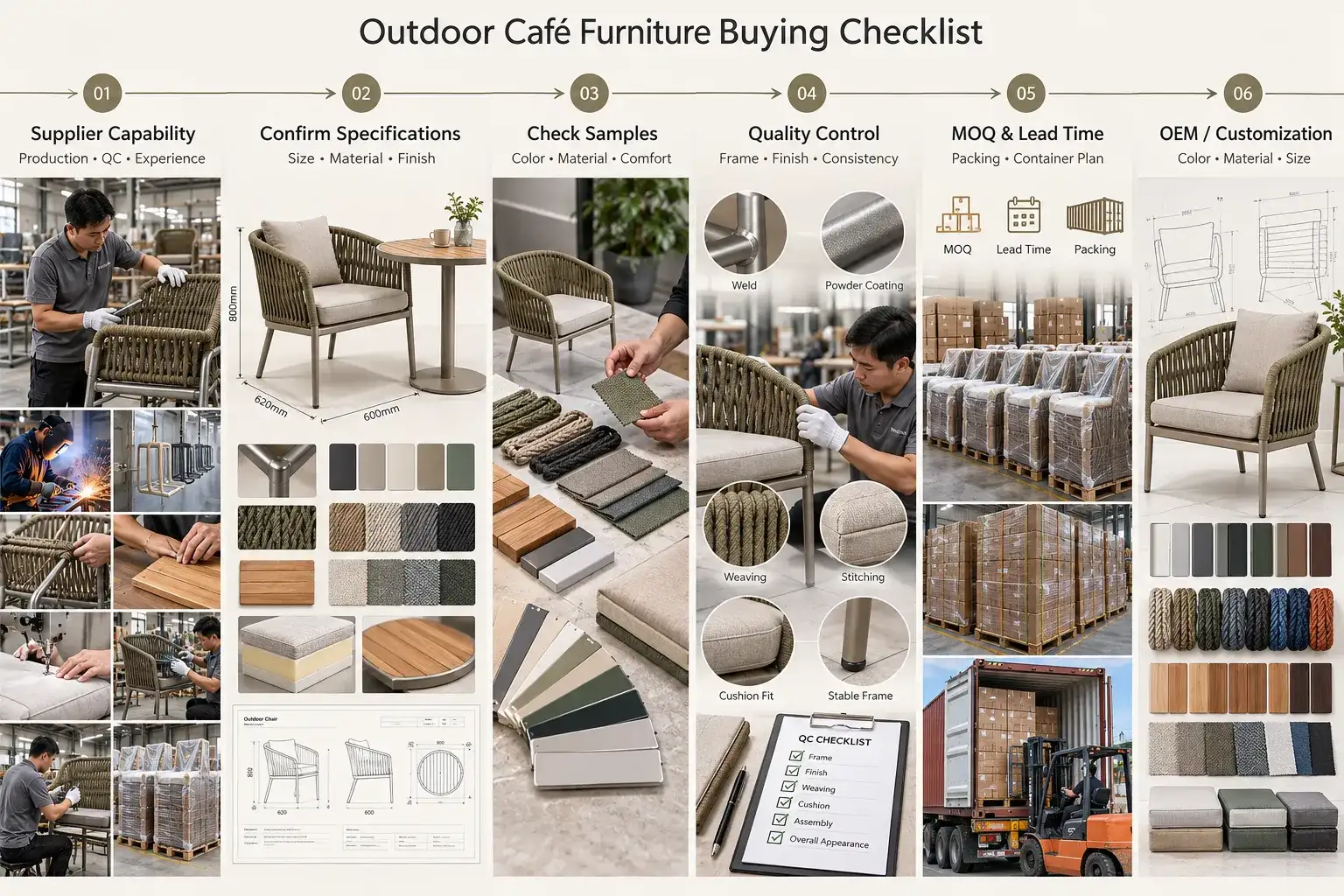
Wholesale sourcing requires more than product selection, supplier capability and quality consistency also matter.
5.1 Evaluate the Manufacturer's Production Capability
Factory size alone does not determine whether a supplier is suitable. For buyers sourcing outdoor furniture in Vietnam, it is more important to evaluate whether the manufacturer has experience with the materials and production processes required for the project.
For collections combining aluminum, rope, teak, and cushions, the supplier should be able to control key stages such as welding, powder coating, woodworking, weaving, sewing, assembly, QC, and packing. Factory photos, samples, previous projects, videos, or audits can help verify whether actual production capability matches the proposed products.
5.2 Confirm Specifications Before Production
Before production begins, both buyer and supplier should agree on the specifications that will be used as the production reference.
These can include:
- Overall dimensions and tolerances
- Frame material and construction
- Surface finish and color
- Wicker or rope specification
- Wood specification
- Fabric and cushion configuration
- Tabletop material
- Table-base configuration
- Hardware
- Packing method
For customized projects, approved drawings are particularly useful because they reduce ambiguity between the buyer's expectations and the factory's interpretation.
Changes made after approval should also be documented rather than communicated only informally.
5.3 Request Samples and Material Swatches
Samples can help buyers verify dimensions, comfort, proportions, construction, finish, and visual appearance before mass production.
Not every project requires a complete physical sample. In some cases, material swatches for powder coating, wicker, rope, wood, or fabric may be sufficient.
For custom designs or large orders, however, a pre-production sample can become an important reference for both the buyer and the QC team.
The approved sample should reflect the materials and construction expected in the final production whenever possible.
5.4 Check Quality Control Before Shipment
Quality control should cover more than the final appearance of the product.
Inspection may include dimensions, frame alignment, welds, grinding, coating, weaving, hardware, table stability, chair stability, cushion dimensions, sewing, accessories, labeling, and packing.
For an order containing many identical units, consistency is just as important as the quality of an individual sample.
A practical QC sequence can include:
Frame → Finish → Weaving or woodwork → Assembly → Stability → Cushion and sewing → Appearance → Packing
Buyers may request inspection photos, reports, or third-party inspection depending on the value and requirements of the order.
5.5 Confirm MOQ, Lead Time, Packaging and Container Loading
Commercial buyers should clarify logistics before confirming the purchase order.
MOQ can vary according to manufacturer, model, material, color, and customization requirements. Some suppliers allow multiple models within a container, while others may require a minimum quantity for individual finishes or materials.
Lead time should also be confirmed based on the final specification rather than a general estimate.
Customized materials may require additional preparation.
Packing is particularly important for export orders. Buyers should discuss protection for frames, table corners, woven surfaces, glass or tabletops, cushions, and removable components.
Container planning can also influence product configuration. Stackable seating and knock-down tables may use container space differently from fully assembled products.
When evaluating a coffee shop outdoor furniture supplier, buyers should therefore compare not only the product price but also how efficiently the supplier manages production and export preparation.
5.6 Check OEM and Customization Capabilities
Commercial projects often require customization in finish, dimensions, materials, or colors. Common options include powder-coating colors, wicker or rope colors, wood finishes, outdoor fabrics, cushion thickness, and product dimensions.
For larger changes, buyers should confirm whether the manufacturer supports OEM or ODM development and whether new drawings, prototypes, molds, or samples are needed. Clear specifications from the beginning can reduce unnecessary revisions later.
6. How to Compare Outdoor Cafe Furniture Suppliers Before Ordering
The lowest quotation does not always represent the lowest overall sourcing cost.
Commercial buyers should compare suppliers using the same specification and evaluate production capability, quality control, packaging, lead time, communication, and after-sales support together.
6.1 Compare Like-for-Like Product Specifications
Two products that look similar in photographs can have different materials and construction.
A supplier comparison table can make these differences easier to identify. This approach prevents buyers from comparing prices for products that are not actually equivalent.
6.2 Look Beyond the Lowest Unit Price
Purchase price is only one part of the sourcing decision. Maintenance, staff handling, storage, replacement parts, packaging quality, product consistency, and delivery reliability can also affect overall project cost.
A lower-priced chair may offer less value if dimensions, finishes, or weaving are inconsistent, while an attractive table can still create problems if it is difficult to move or unstable. Buyers should therefore consider how the product will perform from installation through daily use.
6.3 Common Supplier Red Flags
Several warning signs should be reviewed before confirming a bulk order. Buyers should be cautious if specifications remain unclear, material descriptions keep changing, dimensions are not confirmed, sample approval is avoided, or the supplier cannot explain its QC procedure.
Packaging and container loading also need proper planning, as even well-made products can be damaged during transport. Lead time, customization, and any material substitutions should be clearly confirmed before production begins.
6.4 Final Checklist Before Placing a Bulk Order
Before confirming outdoor cafe tables and chairs, buyers should be able to answer ten basic questions:
- Where will the products be installed?
- What level of sun, rain, humidity, wind, or salt exposure is expected?
- Which material specification has been approved?
- Are chair and table dimensions suitable for the layout?
- Is stackability required?
- Has the sample, drawing, or material swatch been approved?
- What QC checks will be completed?
- What are the MOQ and production lead time?
- How will the products be packed and loaded?
- What information must be confirmed before shipment?
If several of these points remain unclear, the project may not yet be ready for mass production.
7. Frequently Asked Questions
7.1 What is the best material for outdoor cafe tables and chairs?
There is no single material that is best for every project. Powder-coated aluminum is useful when lightweight handling and corrosion resistance are priorities. Teak creates a warmer natural appearance, while HDPE wicker and outdoor rope offer woven design options. Buyers should select materials according to climate, maintenance requirements, design concept, and expected usage.
7.2 Are stackable outdoor cafe chairs better for commercial use?
Stackable chairs can be especially practical when a cafe regularly changes layouts, cleans the terrace, stores seating overnight, or hosts different types of events. However, non-stackable chairs may be suitable for fixed layouts or designs that prioritize larger proportions and comfort.
7.3 What should buyers check before ordering cafe outdoor furniture wholesale?
Buyers should confirm product dimensions, materials, construction, finish, colors, samples or swatches, QC requirements, MOQ, lead time, packaging, loading method, and customization requirements before mass production.
7.4 How do I choose outdoor cafe products for coastal locations?
Coastal projects require additional attention to corrosion, hardware, finishes, cleaning, drainage, and salt exposure. Buyers should discuss the exact installation conditions with the supplier so that suitable materials and maintenance expectations can be reviewed.