Hotel Veranda Furniture: Sourcing Classic Porch Rockers, Loungers & Deep Seating Sets
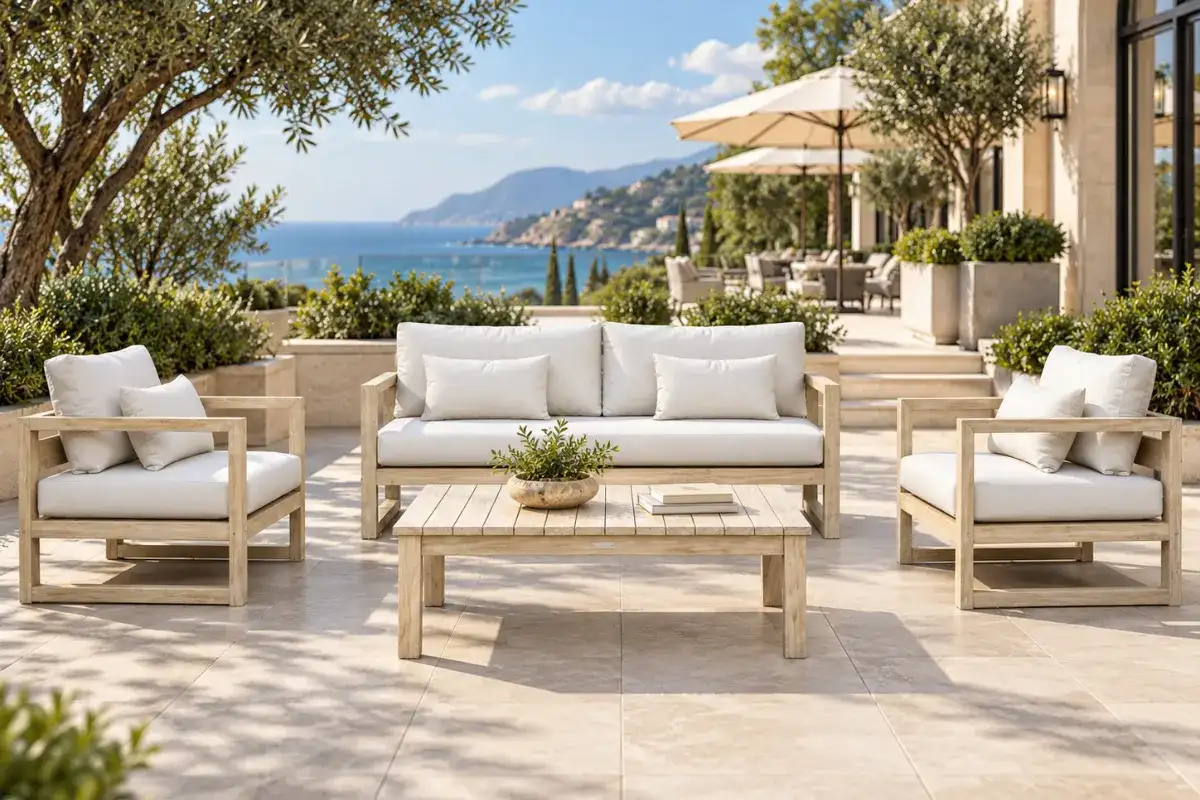
Covered verandas are an important part of the guest experience at heritage hotels, boutique inns and resorts, providing a comfortable transition between indoor spaces and the surrounding outdoor environment. Selecting hotel veranda furniture therefore involves more than matching a traditional architectural style. Buyers also need to consider how guests use the space, how much room is available and how protected the veranda is from sun, moisture and wind-driven rain.
From classic porch rockers to lounge chairs and deep seating sofas, each product type supports a different level of comfort and activity. For commercial projects, dimensions, materials, maintenance and layout should be reviewed together so the veranda remains inviting, practical and easy to navigate throughout daily hotel operations for every guest.
1. What Is Hotel Veranda Furniture?
Hotel veranda furniture refers to chairs, sofas and tables designed for covered or semi-covered outdoor spaces connected to hotel buildings. These areas often combine the comfort and styling of an indoor lounge with the environmental demands of an outdoor setting. Product selection should therefore respond to both the architecture and the way guests use the veranda.
Hotel verandas can serve many functions, from quiet individual seating to shared social areas. The appropriate furniture depends on location, available space and expected guest activity.
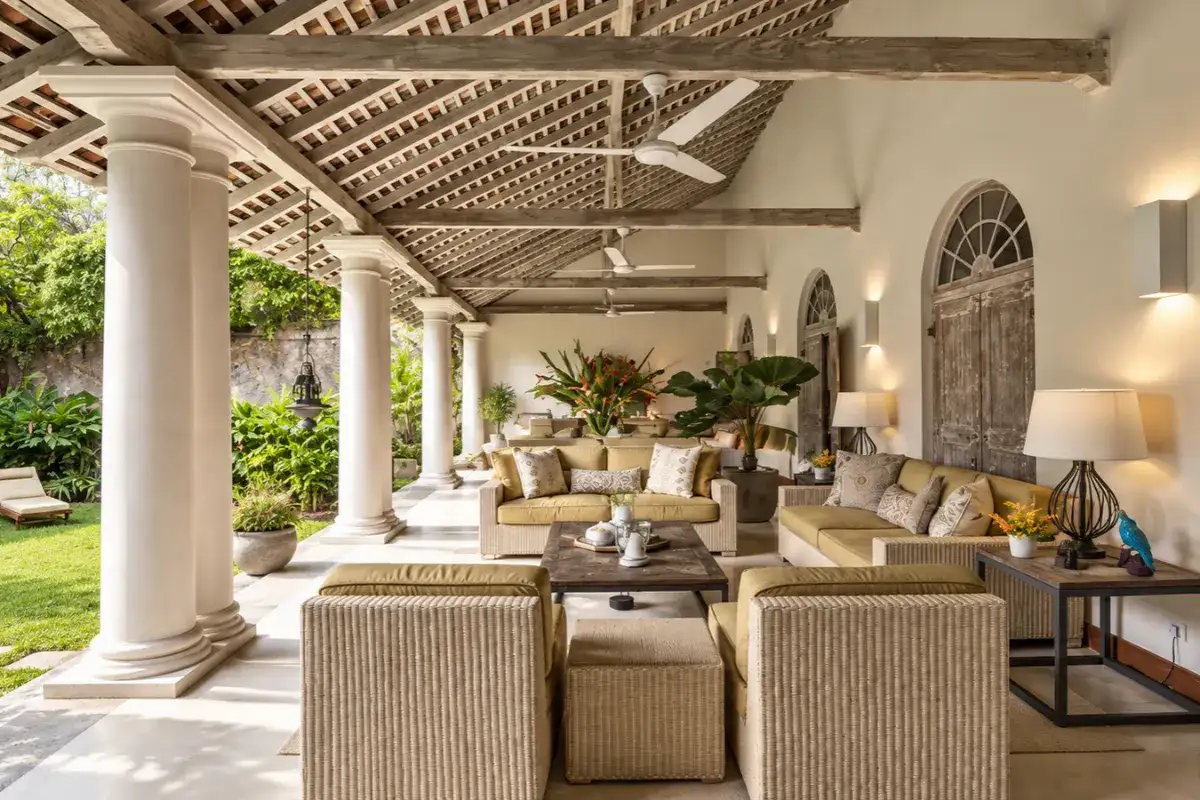
A coordinated veranda combines comfortable seating with open circulation and a strong connection between indoor and outdoor hotel spaces. (Source: Internet)
1.1 Where Veranda Furniture Is Used in Hotels and Resorts
Hotel veranda furniture may be used on front porches, covered reception verandas, guest-room verandas and long wrap-around porches. A small guest-room veranda may only need two chairs and a side table, while a larger shared veranda can accommodate lounge chairs, sofas and coffee tables.
Location also influences how long guests are likely to stay. Seating near an entrance may support shorter pauses, while a veranda overlooking a garden or landscape can function as a more relaxed lounge for reading or conversation.
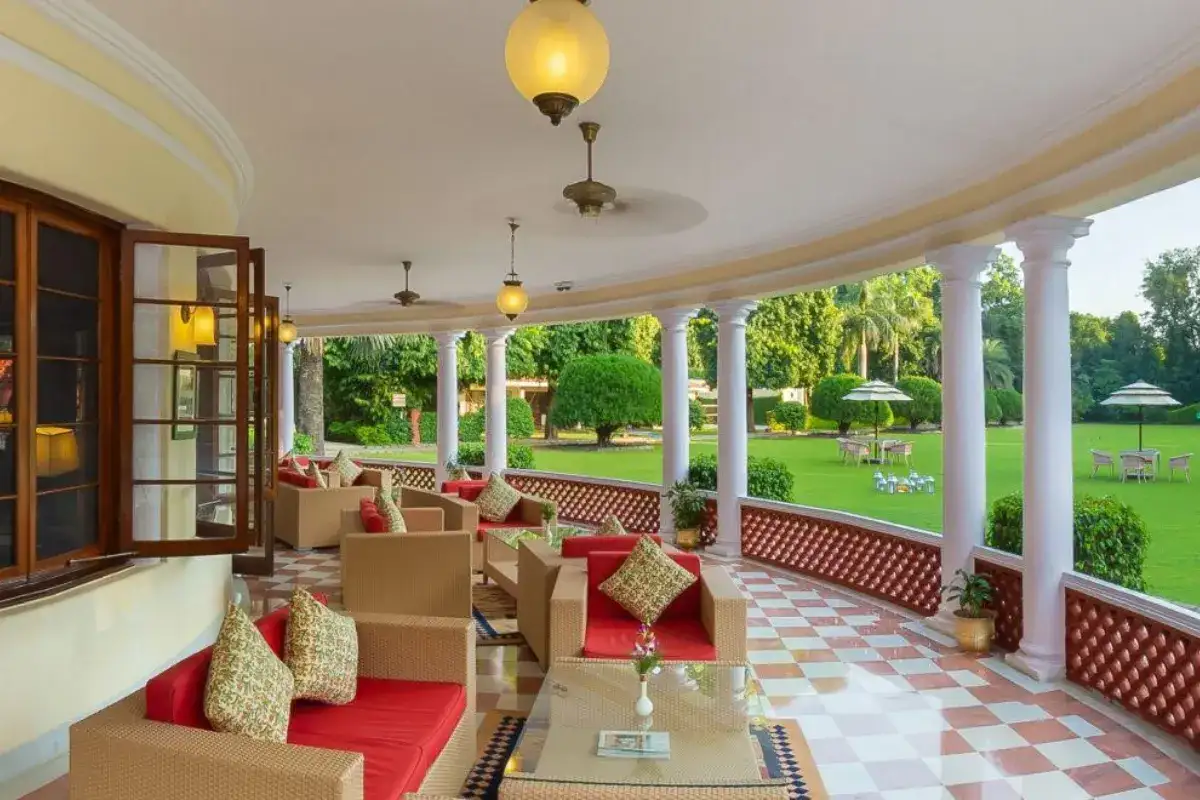
Veranda seating can support quiet individual use or shared lounge areas depending on the available space and location.
1.2 How Veranda Seating Differs From Fully Exposed Outdoor Furniture
A veranda is more protected than an exposed terrace, pool deck or garden lounge, but it is not completely indoors. Furniture may still encounter humidity, dust, angled sunlight and wind-driven rain depending on the building orientation and roof coverage.
This transitional condition affects material and layout decisions. Buyers should consider outdoor exposure alongside cleaning, maintenance and commercial use rather than assuming that a covered roof provides complete protection.
2. Choosing Seating for Different Hotel Veranda Uses
Different veranda activities require different seating types. Buyers should consider whether guests are expected to pause briefly, relax individually or gather in groups before selecting products. Furniture dimensions should also correspond with the depth and circulation requirements of the veranda.
2.1 Classic Porch Rockers for Relaxed Seating
Classic porch rockers can reinforce the relaxed character associated with heritage hotels, boutique inns and traditional verandas. Their movement makes them suitable for slower activities such as reading, enjoying a view or sitting outside a guest room.
When selecting porch rockers for hotel use, check the full movement footprint rather than the chair’s stationary dimensions alone. Allow sufficient clearance in front and behind so the rocking motion does not interfere with doors, walkways, or adjacent furniture. Test the sample on the intended floor surface and assess how easily guests can sit down and stand up.
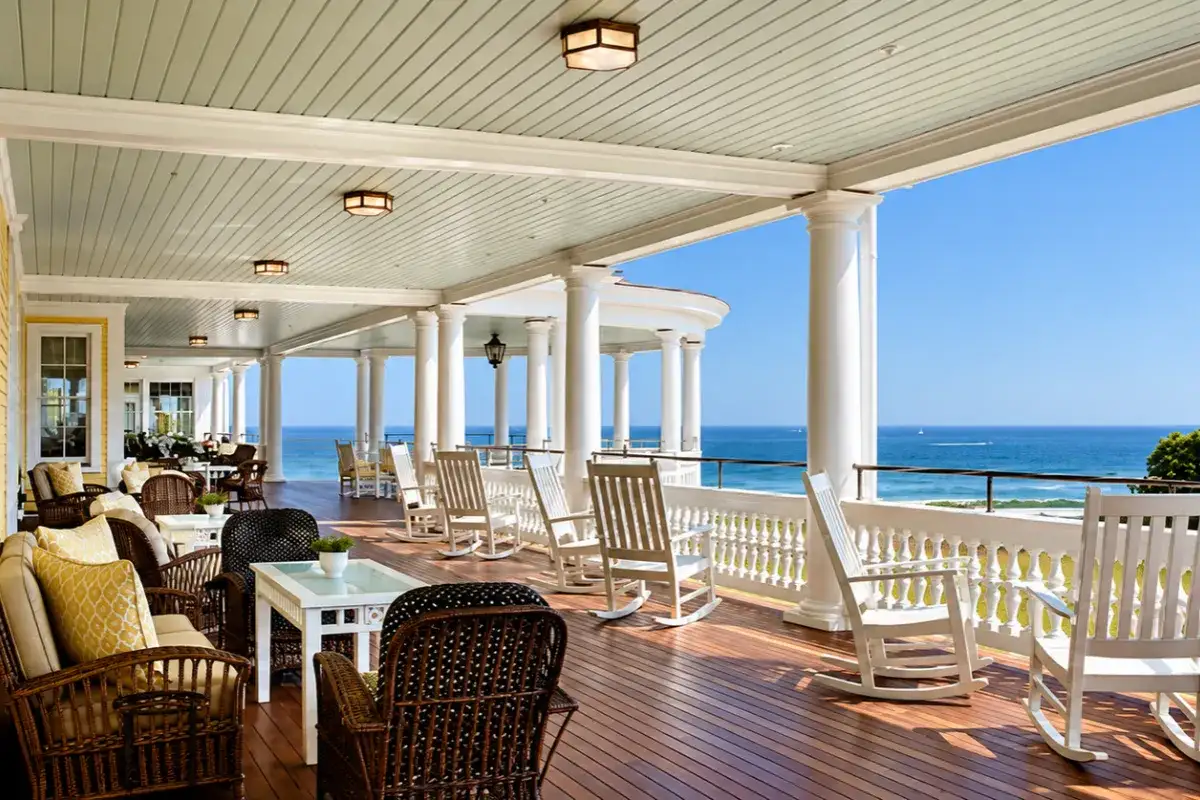
Porch rockers create relaxed individual seating while requiring sufficient clearance for safe movement. (Source: Internet)
2.2 Resort Veranda Lounge Chairs for Individual Comfort
Resort veranda lounge chairs provide a more stationary option for individual comfort. Supportive backrests, armrests and cushions can suit guests who may remain seated for longer periods. A pair of lounge chairs with a side table can work well on guest-room verandas or smaller shared porches.
Buyers should compare seat dimensions with the available floor area and maintain sufficient circulation around each arrangement. On longer verandas, repeating coordinated lounge-chair groups can create several seating zones without requiring large sofa configurations.
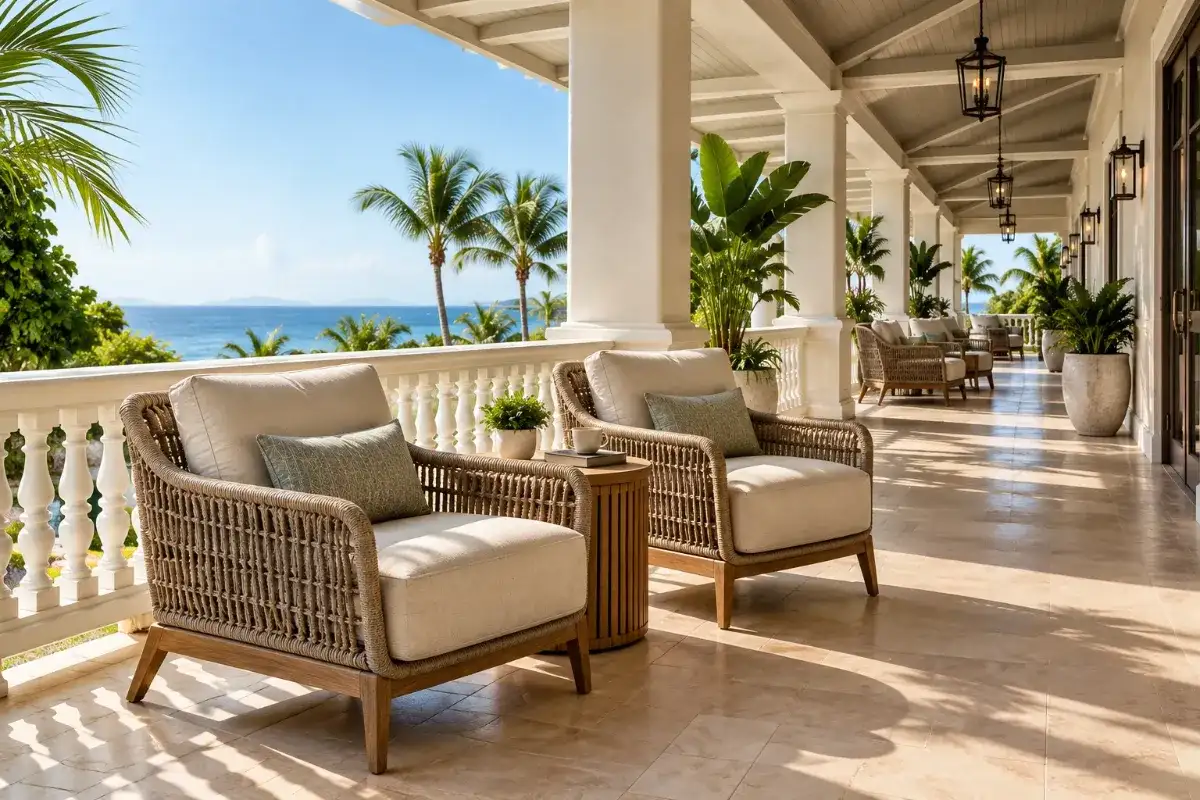
Lounge chairs provide comfortable individual seating for guest-room verandas and shared covered porches. (Source: Internet)
2.3 Deep Seating Sofas for Social Areas
Deep seating sofas are better suited to wider verandas and shared social areas where families or groups may gather. Sofas can be combined with lounge chairs and coffee tables to create defined conversation areas.
Seat depth, cushion comfort and overall product proportions should match the intended use. Larger pieces should not dominate narrow verandas or reduce important walking routes. For spacious hotel porches, several coordinated deep seating groups can provide comfortable capacity while preserving open areas between each arrangement.
This arrangement is useful for covered patio furniture for resorts, where a veranda may serve several guest groups at once. Coordinating sofa widths, chair proportions and table placement helps the space remain consistent and operationally practical.
|
Seating Type |
Suitable Veranda Area |
Typical Use |
Layout Consideration |
|
Porch rocker |
Heritage porch / guest-room veranda |
Relaxing & viewing |
Allow rocking clearance |
|
Lounge chair |
Guest-room / shared veranda |
Individual longer seating |
Maintain circulation |
|
Deep seating sofa |
Wide shared veranda |
Groups & conversation |
Check overall footprint |
|
Sofa + lounge chairs |
Large covered veranda |
Social lounge |
Keep open space between groups |
3. Materials for Covered Hotel Verandas
Materials for covered hotel verandas should be selected according to exposure, cleaning requirements and expected commercial use. Although a roof reduces direct weather exposure, furniture near open edges may still encounter humidity, sunlight, dust and wind-driven rain. For covered patio furniture for resorts, buyers should therefore evaluate the complete material specification rather than assuming that every covered area has the same conditions.
3.1 Aluminum Frames for Commercial Veranda Seating
Aluminum frames are practical for commercial veranda seating because they can support different chair and sofa forms without excessive visual weight. Buyers should review tube dimensions, frame construction, welding and surface finishing according to the product specification. Powder-coated finishes also need consistent coverage, particularly around joints and other construction details.
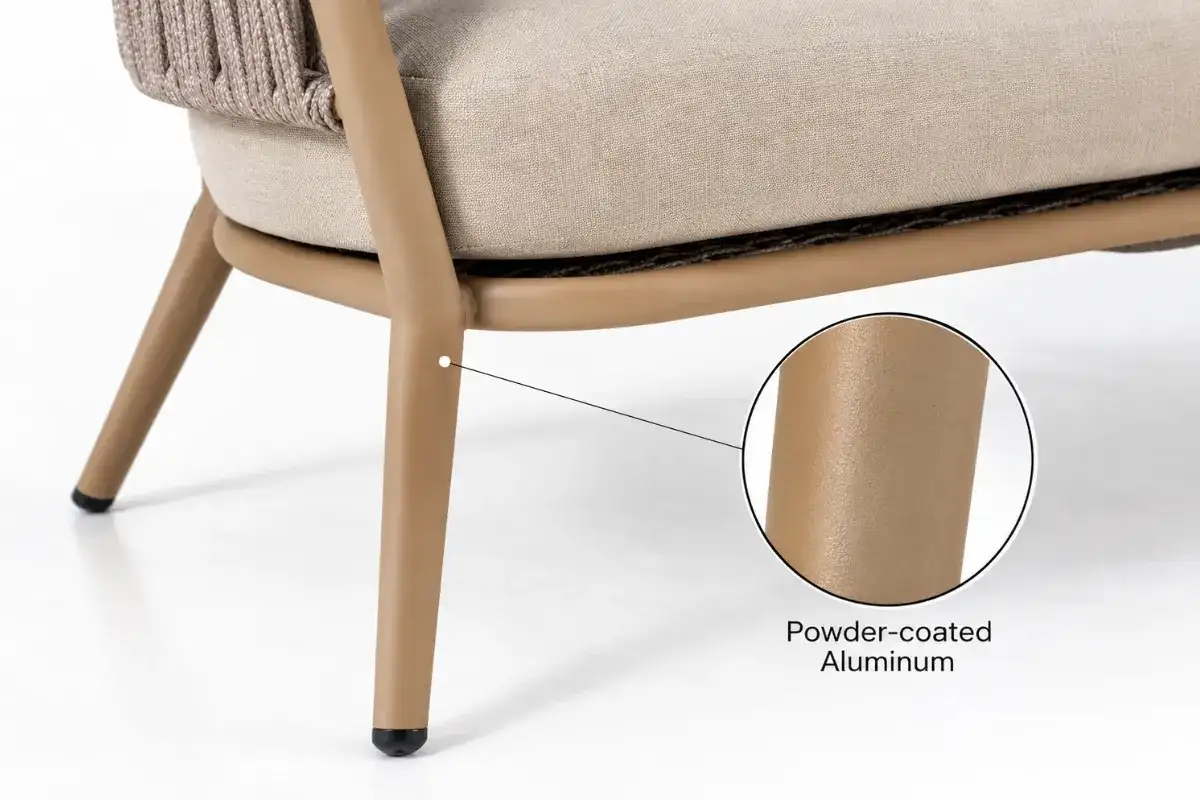
Powder-coated aluminum frames provide a clean finish for commercial veranda seating, while buyers should review frame construction and coating consistency.
3.2 HDPE Wicker and Outdoor Rope
HDPE wicker and outdoor rope can introduce woven texture that works well in transitional indoor-outdoor settings. When specifying these materials, buyers should review the weave, attachment points, color consistency and cleaning requirements. Woven seating can be combined with aluminum frames to create lounge chairs, sofas and other coordinated pieces for hotel verandas.
For projects using woven seating, buyers can explore ATC’s wicker furniture collections when comparing product types for covered veranda areas. Material selection should still be checked against the conditions and maintenance plan of the individual project.
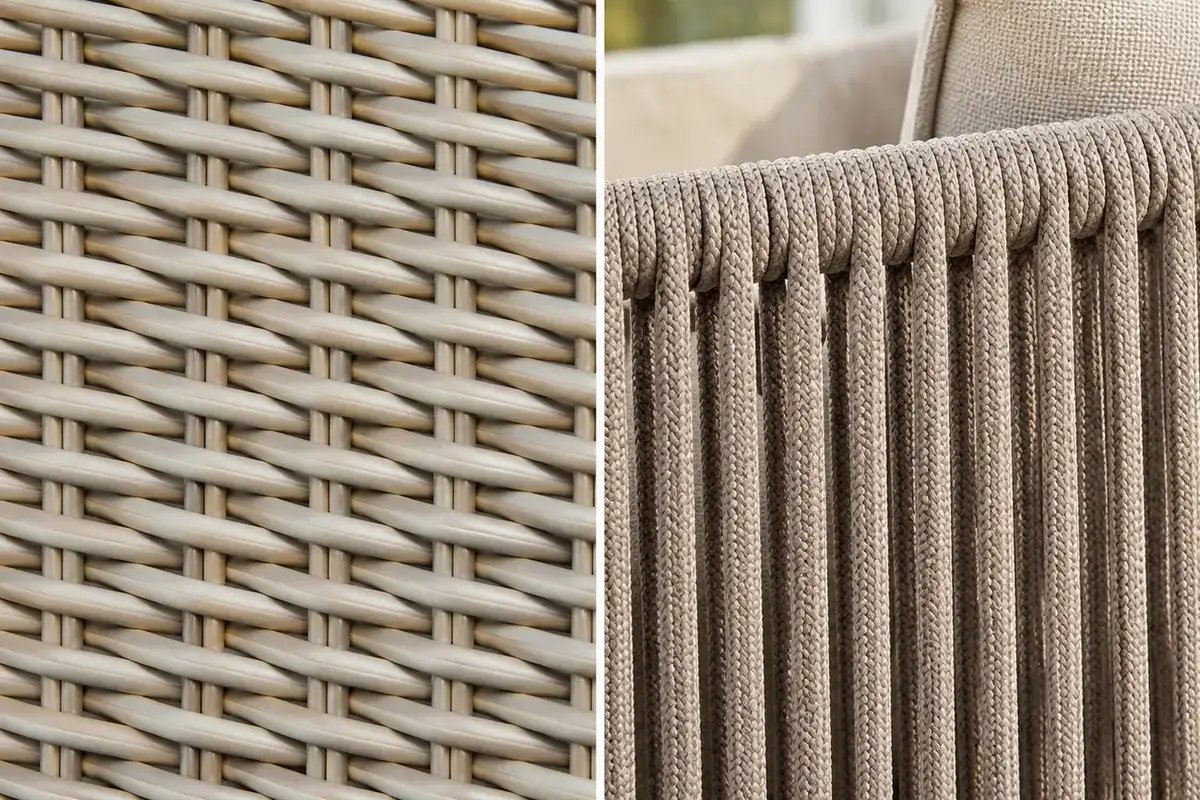
HDPE wicker and outdoor rope add woven texture to veranda seating, with weave consistency and maintenance important for commercial projects.
3.3 Teak, Cushions and Outdoor Fabrics
Teak can be used for chair details, legs, tables or complete seating designs where a natural wood appearance supports the architectural concept. Cushions and outdoor fabrics should also be reviewed carefully because they directly affect comfort and routine maintenance.
Buyers should confirm cushion dimensions, fabric specifications and construction details before ordering. Even on a covered veranda, textiles may be exposed to humidity, dust or occasional rain. Removable or accessible cushion components can also simplify regular cleaning and handling during hotel operations.
Material choices should ultimately balance appearance with veranda exposure. Consistent specifications across repeated seating groups can also simplify purchasing, inspection and ongoing maintenance for larger hotel and resort projects.
|
Material |
Common Application |
Buyer Consideration |
|
Powder-coated aluminum |
Chair & sofa frames |
Frame construction & finish |
|
HDPE wicker |
Chairs, sofas & lounge seating |
Weave, cleaning & exposure |
|
Outdoor rope |
Lounge chairs & sofas |
Attachment & maintenance |
|
Teak |
Frames, legs & tables |
Maintenance requirements |
|
Outdoor fabric |
Cushions |
Exposure, cleaning & specifications |
4. Planning Hotel Veranda and Wrap-Around Porch Seating
A veranda layout should provide seating without turning a porch into a narrow corridor. Buyers should plan furniture around doors, columns, steps and other architectural elements, then confirm that guests and hotel staff can move between seating groups. The depth and length of the veranda will determine which product types and arrangements are practical.
4.1 Maintain Clear Walking Routes Along the Veranda
Walking routes should remain clear along the veranda, especially where the space connects guest rooms, reception areas or other hotel facilities. Chairs, tables and sofas should not project into door openings or reduce circulation paths.
Before confirming quantities, buyers can mark the footprint of each product on a floor plan. This helps identify whether chairs can be pulled out comfortably, whether tables remain accessible and whether guests can pass occupied seating without disrupting other users.
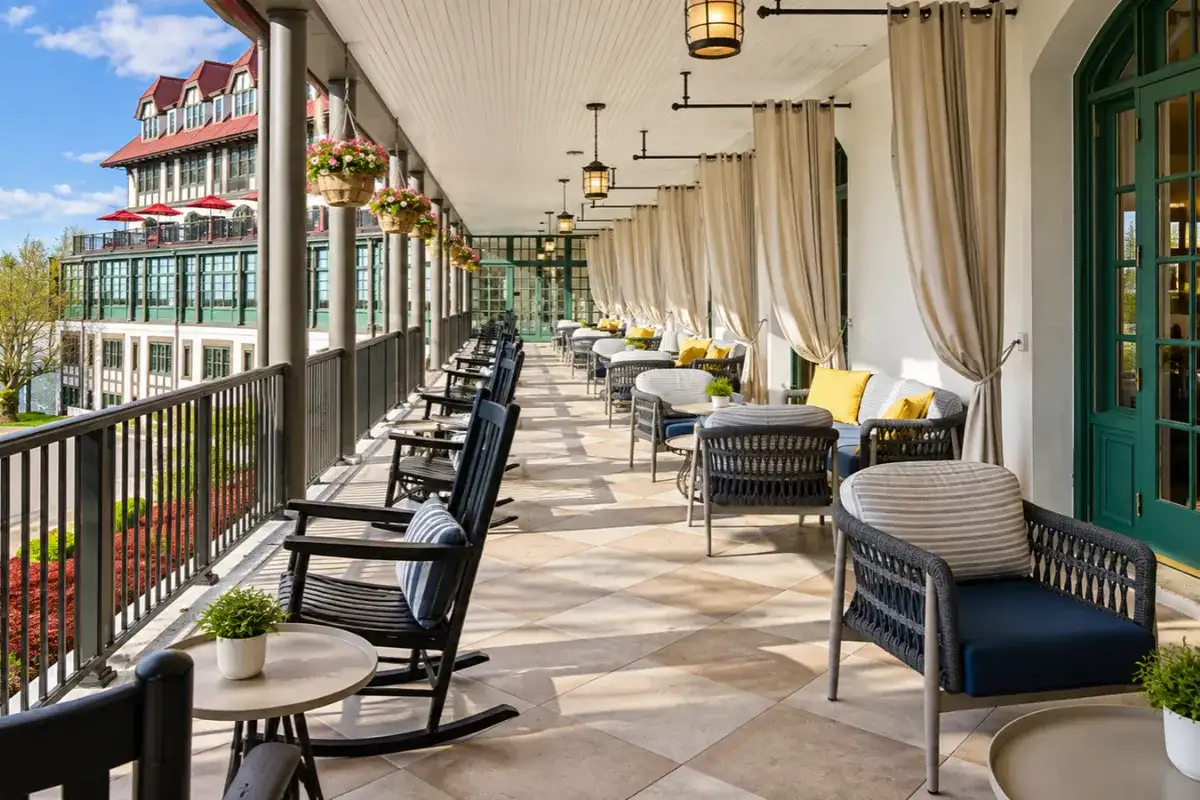
Maintaining open walking routes helps guests and staff move comfortably between veranda seating, entrances and hotel facilities. (Source: Internet)
4.2 Hotel Wrap-Around Porch Seating Layouts
Hotel wrap around porch seating requires additional planning because the veranda may extend across several sides of the building. Instead of treating the entire porch as one continuous seating area, buyers can divide it into smaller zones according to views, entrances and guest activities.
For example, pairs of lounge chairs can create quiet areas, while sofa groups can support conversation in wider sections. Repeating related materials and proportions across these zones helps maintain visual continuity without requiring every arrangement to be identical.
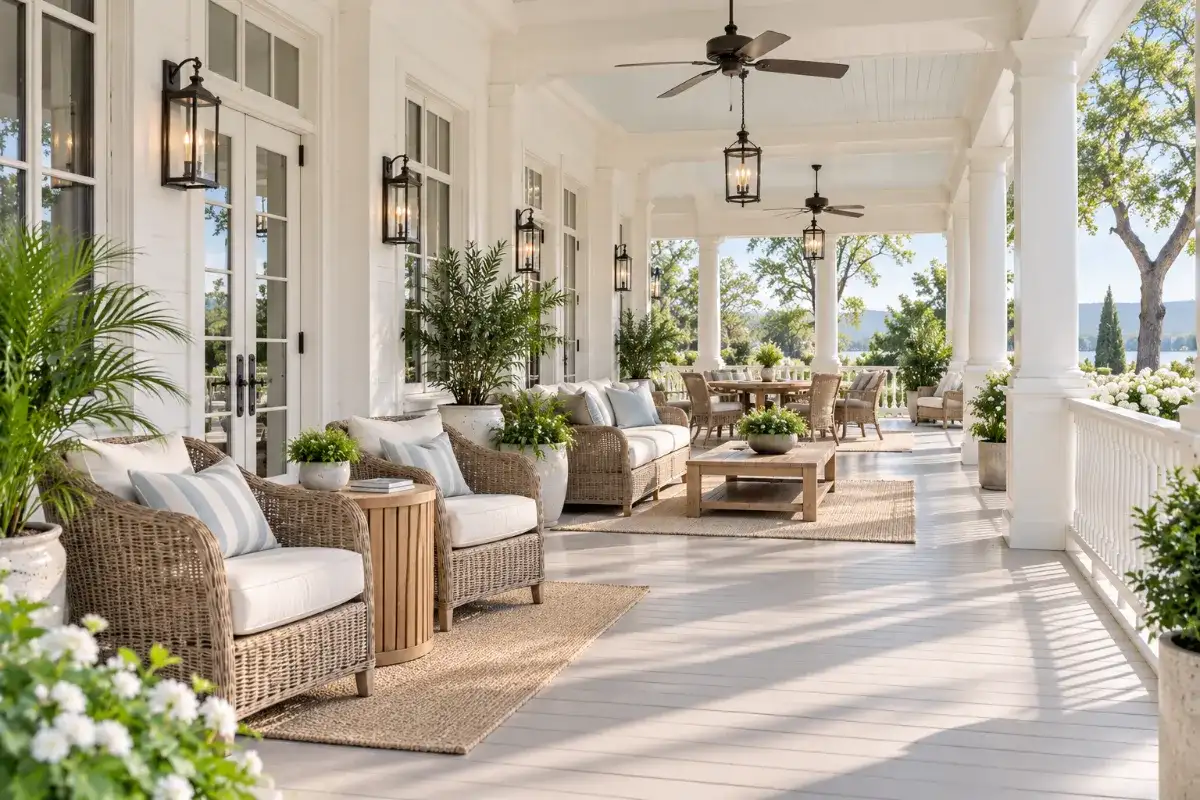
Smaller seating zones can organize a long wrap-around porch while preserving circulation and visual continuity.
4.3 Match Furniture Scale With Veranda Depth
Furniture scale should correspond with veranda depth. Narrow porches often call for compact stationary chairs and side tables. Include rockers only where their full movement remains clear of doors, circulation routes, and adjacent furniture. Deeper verandas may accommodate lounge chairs, sofas, and coffee tables, provided access remains unobstructed.
Buyers should evaluate the full usable footprint rather than product width alone. Rockers require movement clearance, lounge chairs need space for comfortable access, and deep seating sofas can quickly reduce a narrow walkway. Selecting products according to actual veranda dimensions helps preserve both comfort and circulation.
For colonial or heritage properties, the layout should also respect architectural features such as columns, railings and repeated doorways. Keeping appropriate open space around these elements allows the veranda architecture to remain visible while providing practical seating for guests.
5. Creating a Classic Hotel Veranda Style
A classic hotel veranda should feel connected to the architecture rather than designed as a separate outdoor area. Furniture proportions, woven textures, wood details and cushions can help create this connection. For heritage hotels and traditional resorts, buyers should coordinate these elements across the veranda while keeping commercial use and maintenance requirements in mind.
5.1 Furniture for Heritage and Colonial-Style Hotels
For colonial-style hotels, porch furniture should complement the building’s proportions, columns, railings, and covered walkways. Rockers, woven lounge chairs, deep seating sofas, and wood tables can support this setting when their lines, textures, and finishes relate to the architecture. Review these details together rather than relying on a traditional appearance alone.
Compact chairs may suit narrower porches with repeated doors or columns, while deeper verandas can accommodate sofa groups. Maintaining open space around architectural details also prevents furniture from visually overwhelming the veranda.
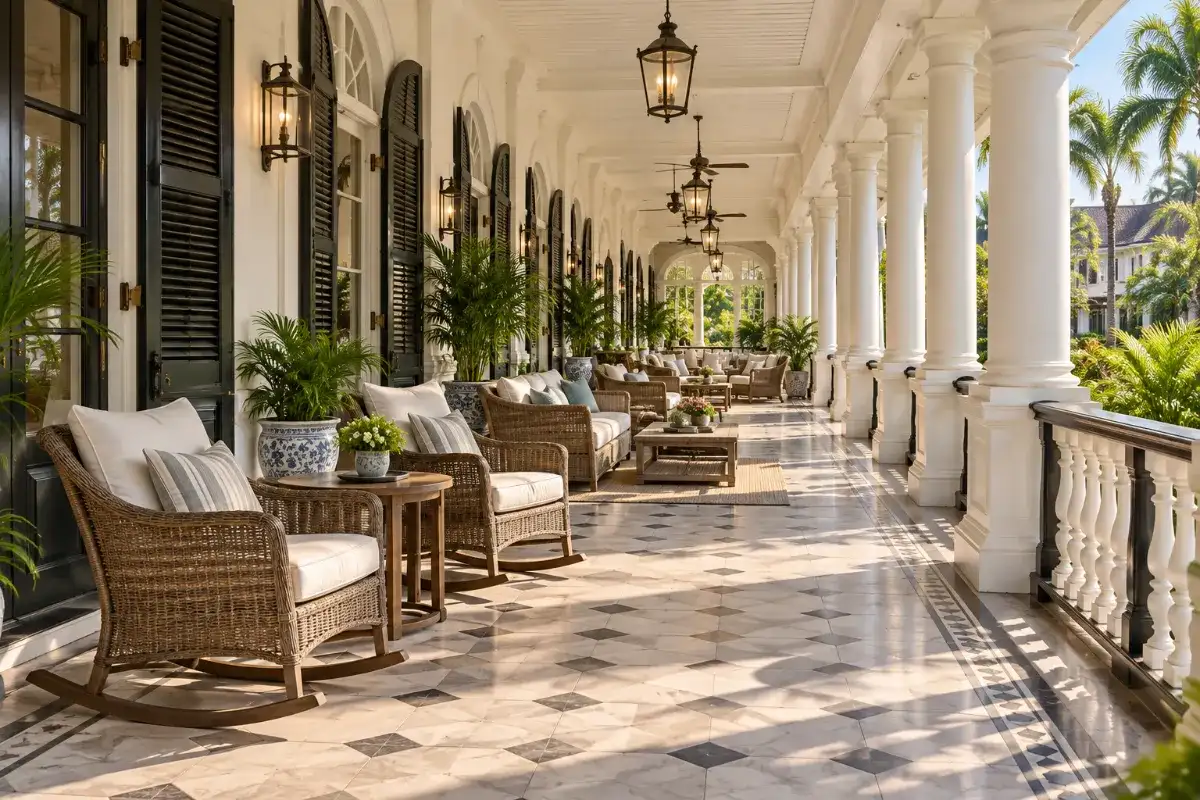
Woven seating, wood details and neutral cushions can complement the architectural character of a traditional hotel veranda.
5.2 Coordinate Seating, Tables and Cushions
A coordinated veranda does not require every product to be identical. Lounge chairs, sofas, rockers and tables can serve different functions while sharing related materials, proportions or finishes.
Cushions can also help connect separate seating groups. Buyers should review cushion thickness, fabric specifications and overall proportions together so individual pieces feel appropriate when arranged within the same veranda. For long porches, repeating selected design elements can create continuity between multiple seating zones.
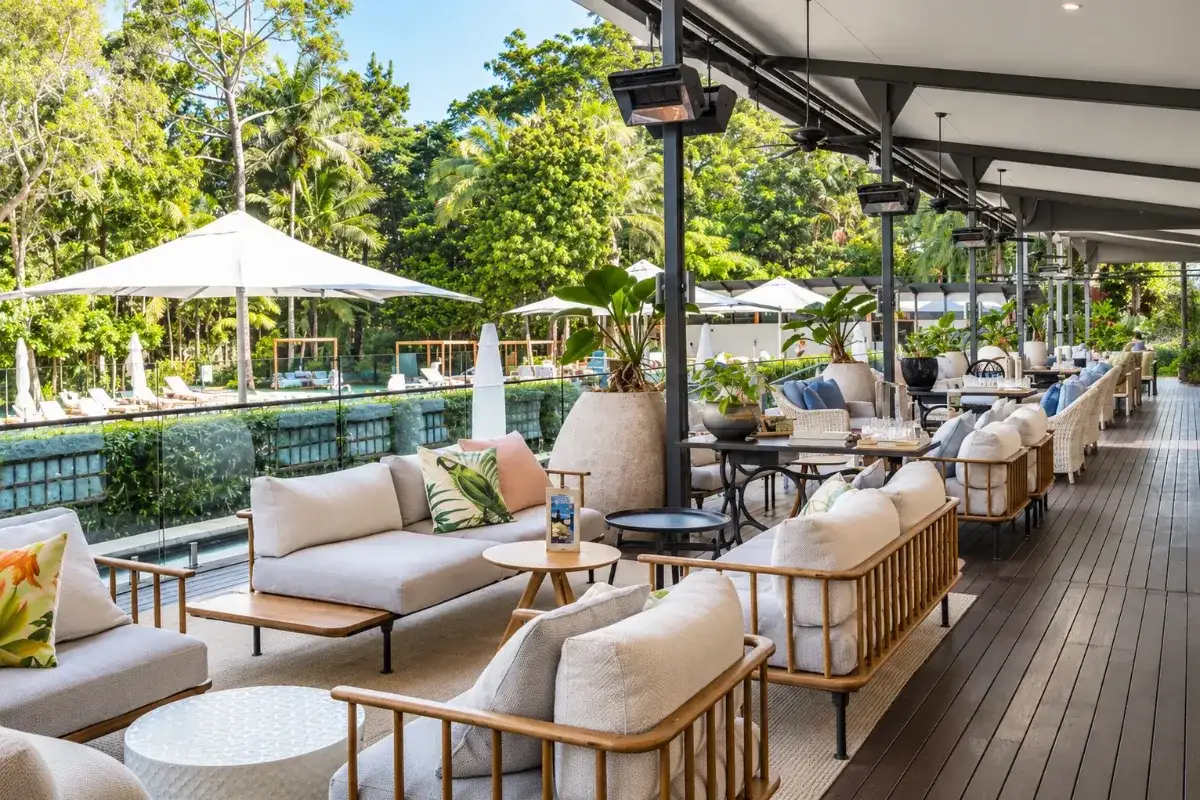
Coordinated materials, cushion tones and furniture proportions create visual continuity across different seating groups.
5.3 Balance Classic Appearance With Commercial Use
Appearance should be considered alongside daily hotel operations. Products may require frequent cleaning, repositioning and regular maintenance, especially in shared veranda areas with continuous guest use.
Buyers should therefore evaluate frame construction, seating comfort, stability, material care and access for cleaning before finalizing a collection. A visually appropriate product that is difficult to maintain may create unnecessary operational challenges.
The objective is to preserve the character of the veranda while selecting products that support repeated commercial use. This balance helps heritage hotels, boutique inns and resorts create welcoming outdoor spaces without treating traditional appearance as the only purchasing criterion.
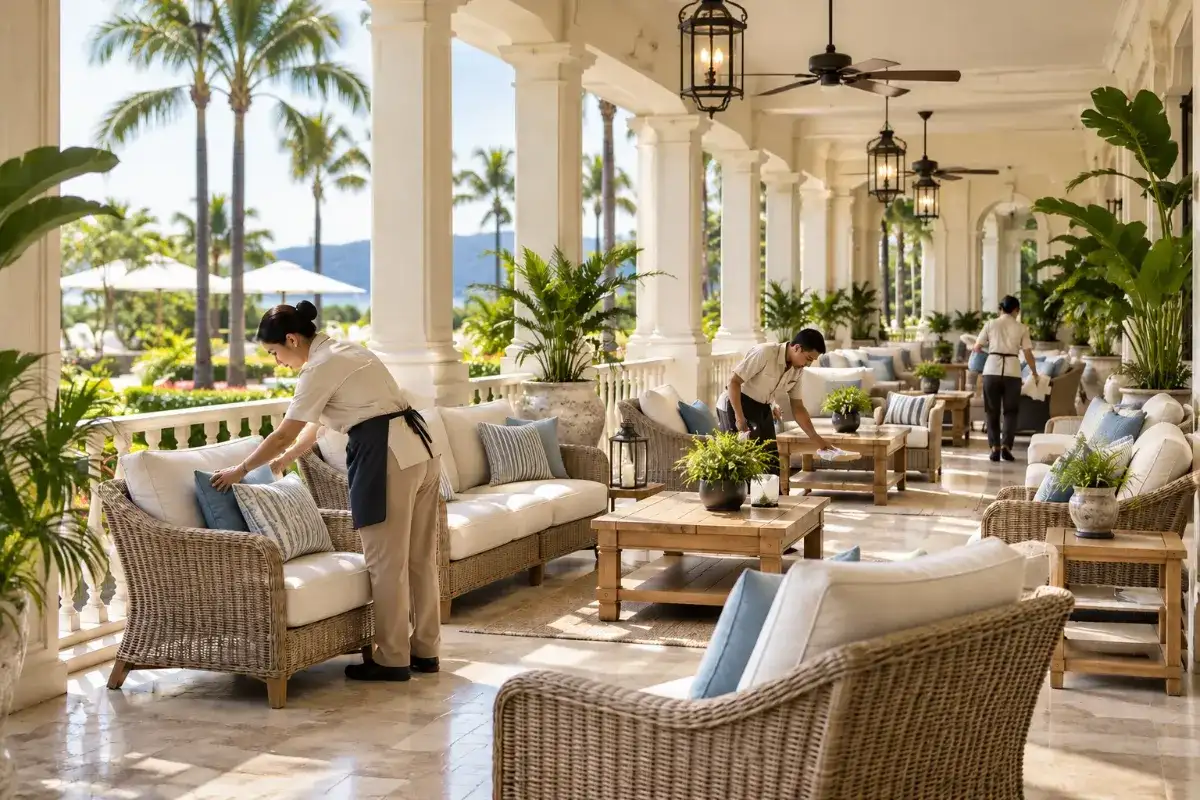
Regular cleaning and furniture care help hotel verandas maintain a classic appearance while supporting continuous commercial use.
6. How to Source Hotel Veranda Furniture for Commercial Projects
Sourcing hotel veranda furniture for a commercial project requires buyers to connect design requirements with specifications, quantities and project schedules. A collection may include rockers, lounge chairs, deep seating sofas and tables for several veranda zones, so requirements should be documented before quotations and production are confirmed.
For commercial porch furniture for hotels, this process also helps buyers compare products using consistent specifications rather than appearance or price alone.
6.1 Confirm Product Dimensions, Materials and Quantities
Buyers should first confirm product dimensions, frame materials, woven materials, finishes, cushions, fabrics and required quantities. Dimensions should be reviewed against veranda depth, door locations, columns and circulation routes to ensure that selected products fit the approved layout.
Quantities can then be organized by location, such as guest-room verandas, reception porches or shared wrap-around areas. This makes it easier to coordinate different seating types while maintaining a consistent overall collection.
6.2 Samples and Product Review
For larger projects, product samples can help buyers review proportions, seating comfort, construction, weaving, cushions and finishing before confirming a bulk order. Technical drawings and material samples can provide additional references for checking agreed specifications.
Sample review should focus on project requirements rather than appearance alone. Buyers can compare dimensions, frame details, cushion specifications and materials with the approved information. Keeping clear product references can also support later quality reviews when multiple pieces are produced for the same hotel project.
Product samples and specifications help buyers review dimensions, construction and materials before confirming a bulk order.
6.3 MOQ, Production, Packaging and Shipping
Before order confirmation, buyers should clarify MOQ (minimum order quantity), production time, packaging requirements and shipping arrangements. For export orders, packed volume in cubic meters (CBM) and the proposed container loading plan can influence transportation costs and shipment planning.
Packaging should be considered according to product construction and shipping method. Buyers should also coordinate the production and delivery schedule with the hotel project timeline, particularly when products are required for several veranda areas.
Confirming these details before production helps align purchasing requirements with site planning and delivery. For projects involving several product types, a clear quantity list by veranda area can also simplify packing, shipment planning and final allocation after arrival.
7. FAQs About Hotel Veranda Furniture
7.1 What Furniture Is Suitable for a Hotel Veranda?
Hotel verandas can use porch rockers, lounge chairs, deep seating sofas, coffee tables and side tables depending on the available space and intended use. Compact chairs may suit narrower porches, while larger verandas can accommodate complete sofa groups.
Buyers should consider furniture dimensions, guest comfort, circulation and outdoor exposure before selecting products for each area.
7.2 Are Rocking Chairs Suitable for Commercial Hotel Porches?
Rocking chairs can suit heritage hotels, boutique inns and traditional covered porches where guests may sit, relax or enjoy surrounding views. However, they require more clearance than stationary chairs because of their rocking movement.
Buyers should ensure sufficient space around each rocker so it does not interfere with doors, walkways or adjacent seating.
7.3 What Materials Are Suitable for Covered Hotel Verandas?
Powder-coated aluminum, HDPE wicker, outdoor rope, teak and outdoor fabrics are common options for covered veranda seating. Suitable materials depend on the level of protection from sunlight, humidity and wind-driven rain.
Buyers should also review frame construction, finishes, weaving, cushion specifications and maintenance requirements according to actual site conditions.
7.4 How Should Furniture Be Arranged on a Wrap-Around Hotel Porch?
For hotel wrap around porch seating, buyers can divide a long veranda into smaller zones using lounge chairs, rockers or sofa groups. Each arrangement should maintain clear walking routes between entrances and other hotel areas.
Furniture scale should also correspond with veranda depth so seating does not restrict circulation or conceal important architectural features.
7.5 What Should Buyers Check Before Ordering Hotel Veranda Furniture in Bulk?
Before ordering, buyers should confirm dimensions, materials, finishes, cushions, fabrics and quantities for each veranda area. Product samples, material references and technical drawings can also help verify specifications before bulk production.
Commercial requirements such as MOQ, production time, packaging, packed CBM, container planning and delivery schedules should also be confirmed before finalizing the order.