Hotel Outdoor Wedding Furniture: Sourcing Stackable Chairs and Reception Seating
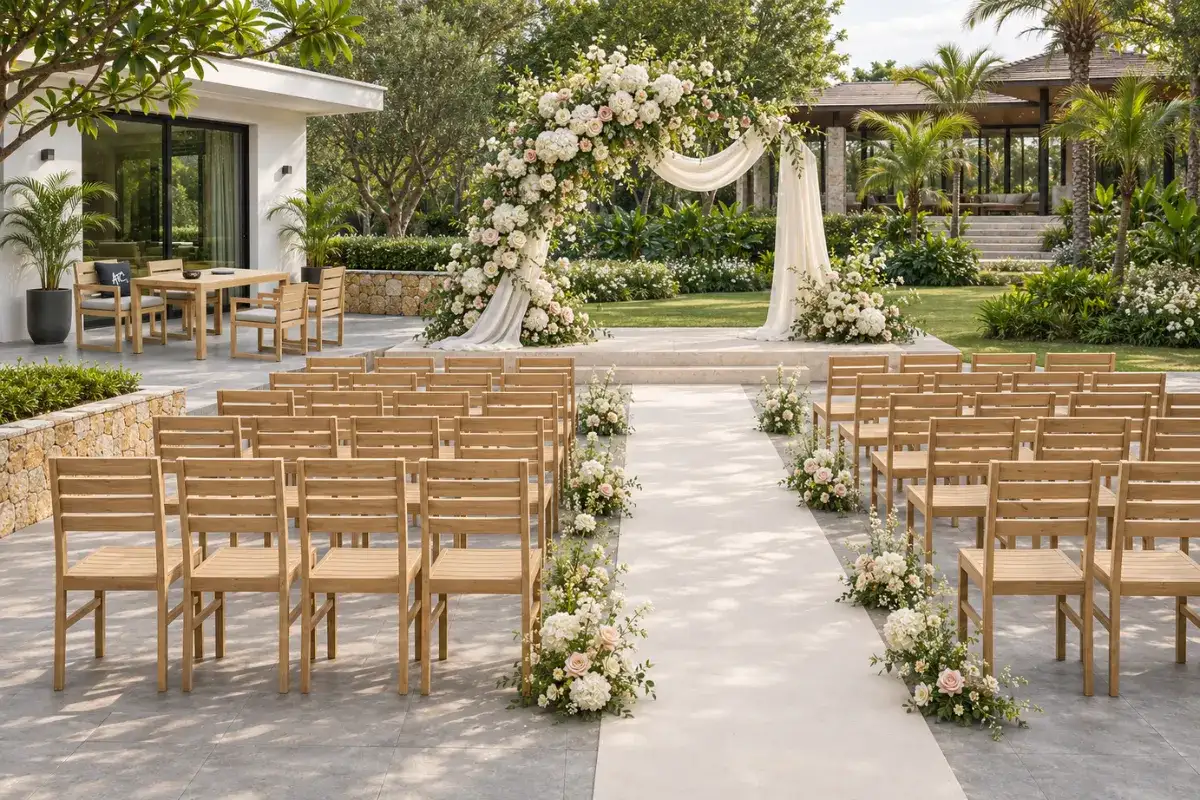
Hotel outdoor wedding furniture needs to perform throughout an event, from the first ceremony setup to the final collection after dinner. Chairs must look appropriate in photographs, feel comfortable during extended use, and remain practical for the team responsible for moving, cleaning, and storing them. For venues hosting several functions each week, those operational details are central to the purchasing decision.
A coordinated collection also needs to support different settings. A garden ceremony, terrace cocktail reception, and outdoor banquet may require different arrangements, even when they share the same visual identity. Selecting furniture only for its appearance can leave a property with attractive pieces that are difficult to handle or unsuitable for the intended surfaces.
This guide explains how to specify stackable seating, plan event turnover, evaluate outdoor materials, and compare suppliers. It focuses on building a usable inventory for hotel event teams rather than treating each wedding as an isolated furniture installation.
1. Define the Wedding Programme Before Selecting Furniture
1.1 Map the Ceremony, Reception, and Dining Requirements
Start with the event programme and the maximum planned attendance for each stage. Identify where guests will sit during the ceremony, gather for drinks, dine, and relax afterward. These activities may happen sequentially, but the furniture cannot always be transferred between them. If dinner tables must be ready while the ceremony is underway, the venue may need separate seating inventories.
Prepare a schedule showing quantities, locations, and the period during which each item is required. Include service areas, accessible seating arrangements, and the weather contingency location. This gives procurement teams a more reliable basis for ordering than a single guest-capacity figure.
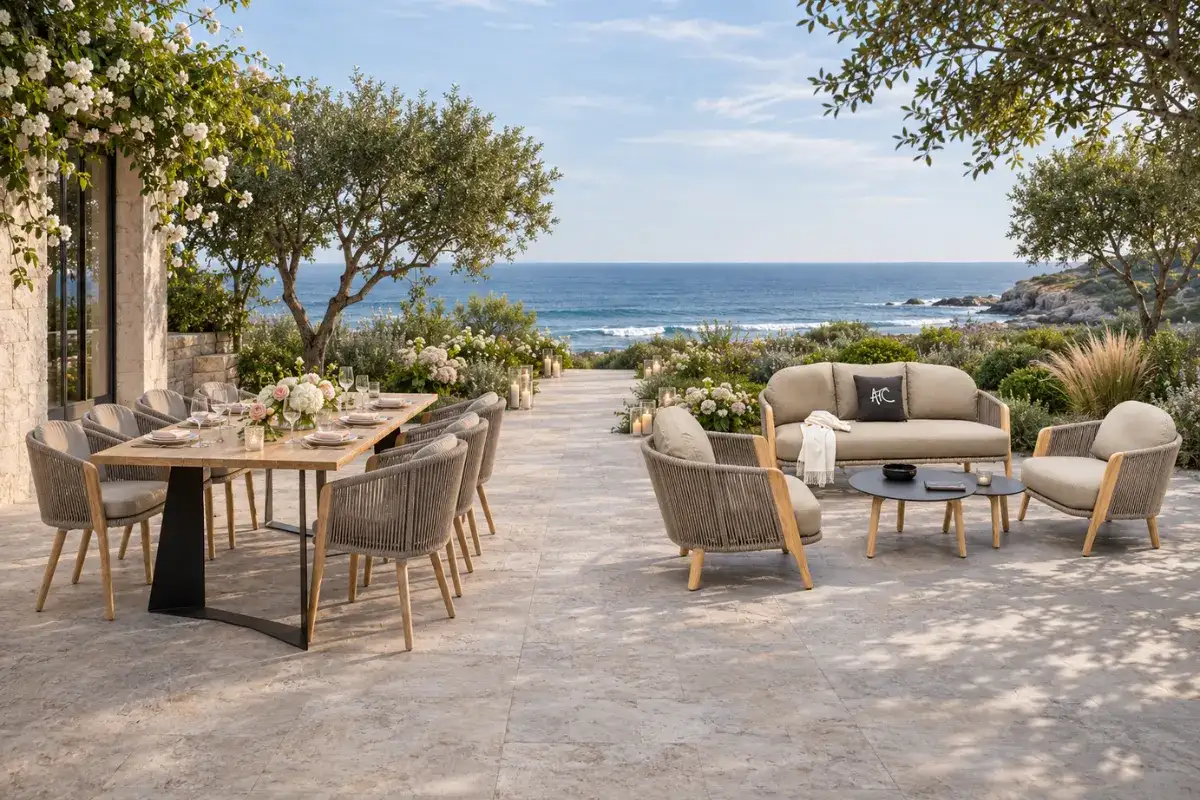
Separate dining and lounge areas help accommodate different activities throughout the wedding celebration.
1.2 Distinguish Everyday Use from Peak Event Demand
Resort wedding venue outdoor chairs may also serve breakfasts, conferences, private dinners, or seasonal functions. Decide whether the collection will be dedicated to weddings or shared with other departments. Shared use can improve utilization, but it also creates scheduling and appearance requirements: chairs borrowed for a ceremony must be available, clean, and consistent with the approved presentation.
Review the expected frequency of events and the shortest turnaround between bookings. A venue hosting occasional weddings may prioritize a different balance of storage, handling, and finish options from a property resetting the same terrace several times each week. Record these demands before discussing quantities or customization with suppliers.
2. Specify Stackable Chairs Around Actual Handling Needs
2.1 Verify Stacking Performance on the Proposed Model
Stackability should be demonstrated on the exact chair being purchased. Ask the supplier for the permitted stack quantity, stacked dimensions, recommended handling method, and compatible trolley details. Clarify whether the stated limit applies to stationary storage, trolley movement, or both. Do not assume that chairs with similar silhouettes can be stacked together or handled in the same way.
Inspect a sample stack for contact points, alignment, and access when removing the top chair. Check whether stacking affects the finish, woven surfaces, glides, or upholstery. If protective buffers are part of the design, include them in the specification and ask whether replacements are available. These details matter when chairs will be stacked repeatedly throughout their service life.
2.2 Evaluate Weight, Grip, and Transport Together
When sourcing stackable wedding chairs for commercial use, compare more than the weight of one chair. The operational task may involve moving a loaded trolley, passing through doors, crossing thresholds, and unloading close to the event area. Ask staff to trial the proposed equipment along a representative route before approving a large order.
Check where a chair can be gripped without pulling on decorative elements or removable cushions. Review trolley loading and restraint instructions, and confirm that the route and storage location suit the equipment. A lighter chair may be easier to handle individually, but purchasing decisions should also consider stability, durability, and the venue’s procedures for managing exposed outdoor areas.
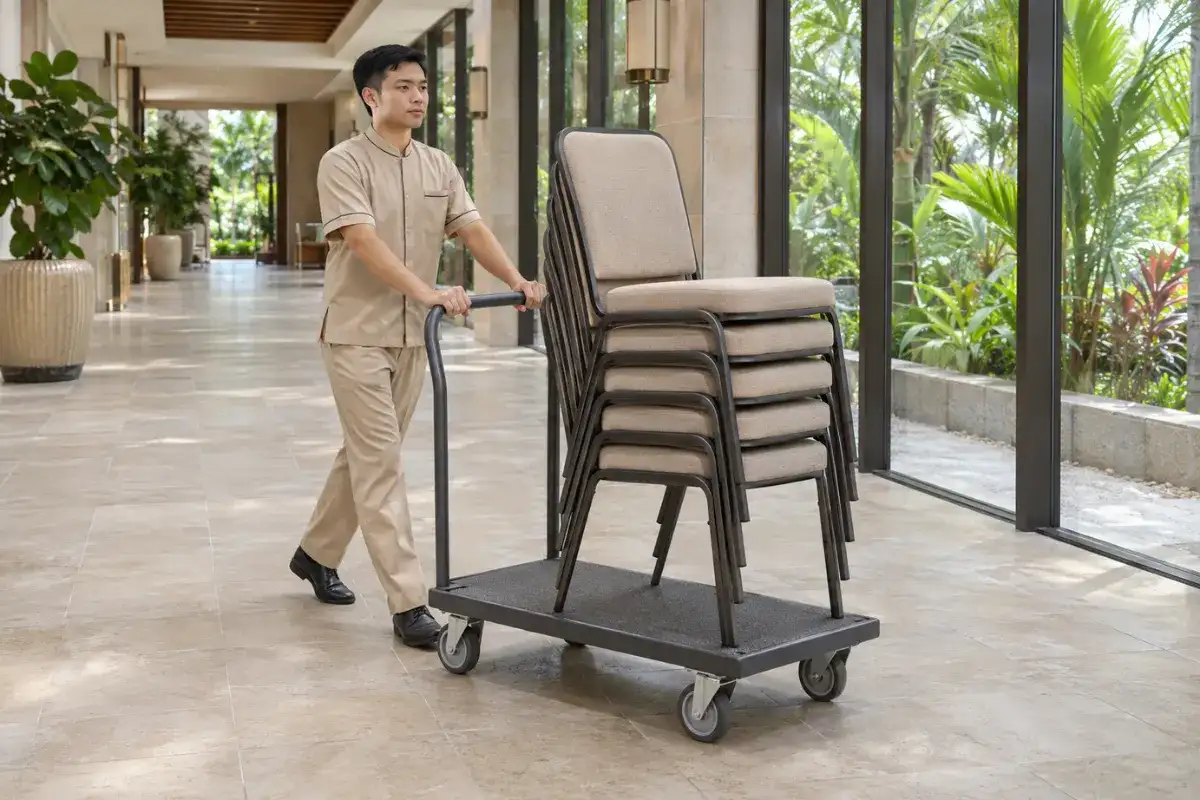
Using a suitable trolley helps staff move stacked chairs efficiently while reducing physical strain and handling risks.
2.3 Test Comfort and Appearance in Event Conditions
A brief showroom inspection may not reveal how a chair feels through a ceremony and dinner. Evaluate seat height, depth, back support, and any pressure points during a realistic trial. Check the chair with the proposed dining table, including clearance for guests’ legs and the ability to sit down without awkward movement.
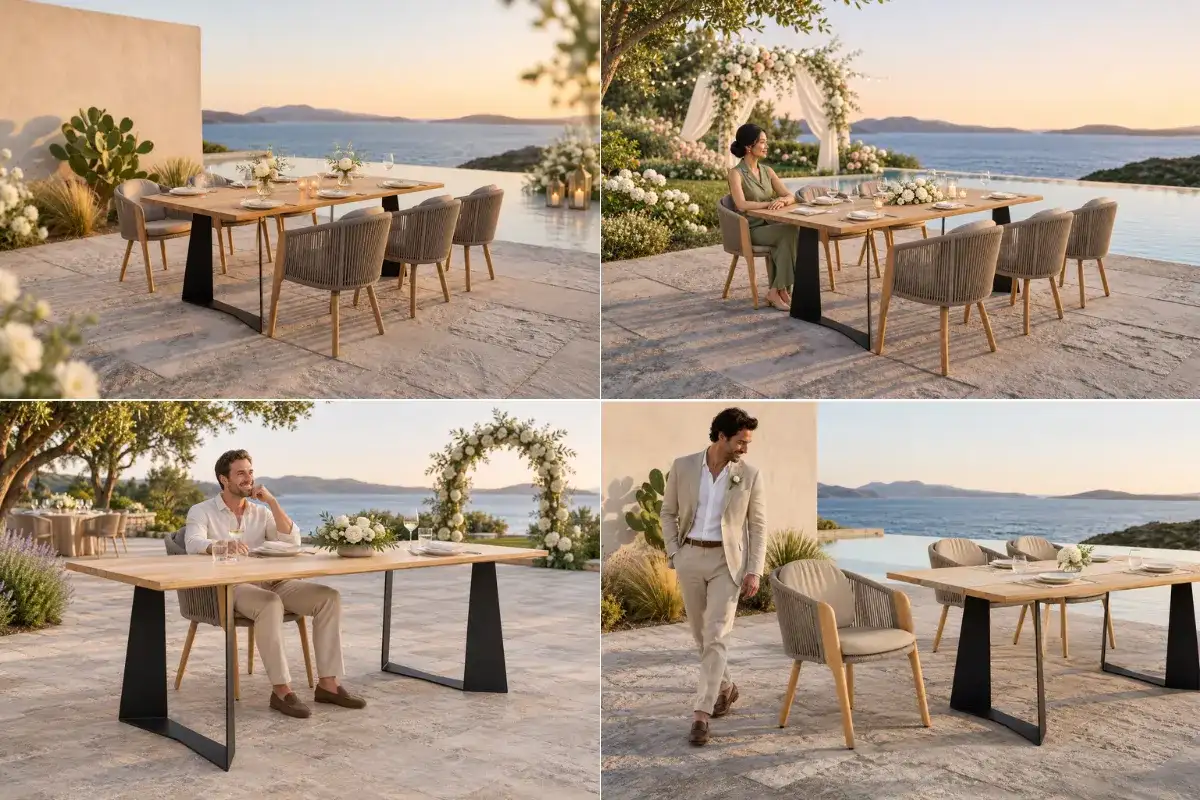
Testing chairs in a realistic wedding setup helps assess seating comfort, back support, and space beneath the table.
Assess appearance in rows and around tables as well as individually. Small differences in finish, back profile, or cushion fit become more visible when many chairs are arranged together. Review samples under daylight and evening lighting, and confirm whether decorative attachments are permitted without damaging the furniture or interfering with its intended use.
3. Match Materials and Construction to the Venue
3.1 Review Exposure and Floor Contact
Commercial event patio furniture may move between lawns, paved courtyards, timber decks, and indoor contingency spaces. Identify the surfaces on which each product will actually be used. Inspect foot design and glides on representative surfaces, checking for instability, marking, or interaction with joints and gaps. Where a temporary event floor is planned, coordinate furniture selection with the floor provider.
Record exposure to sunlight, rain, humidity, and coastal deposits. Distinguish furniture that remains outdoors from items brought out only for events. An outdoor-use description should be supported by product information and maintenance instructions appropriate to the application; it should not be interpreted as permission to ignore storage or weather limitations.
3.2 Compare Complete Material Systems
Ask suppliers to specify the frame, finish, connections, seat construction, and floor-contact components. For metal furniture, inspect joints and coating coverage, including less visible underside areas. For wood, confirm species, finish, care requirements, and acceptable natural variation. For woven products, identify the weave material and examine tension, attachment points, and exposed ends.
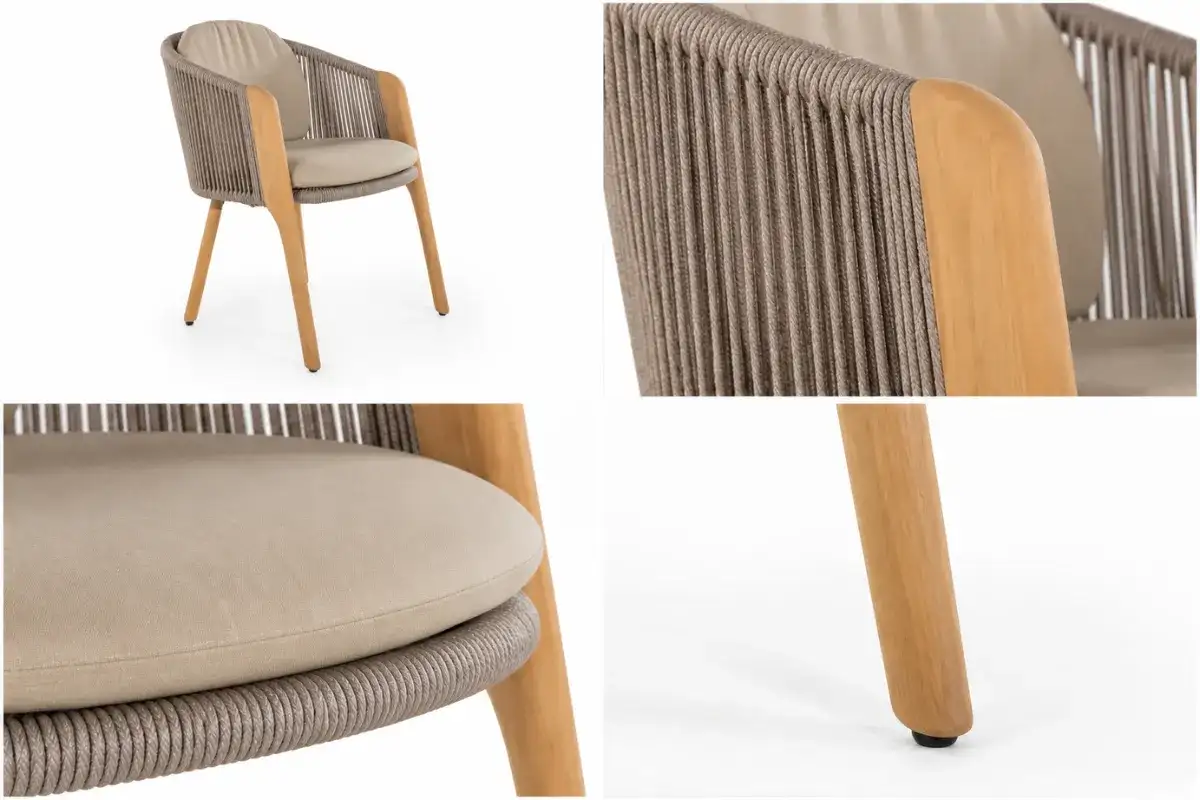
Examining the frame, woven details, seat cushion, and foot caps helps assess material quality and suitability for daily use.
The most suitable material system is the one that meets the project’s design and operating requirements with a maintenance plan the hotel can follow. Avoid choosing solely on terms such as “premium,” “heavy-duty,” or “all-weather.” Convert those descriptions into documented specifications and questions about the proposed model.
|
Component |
What buyers should confirm |
|
Frame |
Material, construction, connections, finish, relevant test evidence |
|
Seat and back |
Dimensions, support, attachment, cleaning access |
|
Woven details |
Material identity, tension, edge finishing, repair options |
|
Glides and buffers |
Suitability for intended surfaces and replacement availability |
|
Cushions |
Fabric, filling, closures, securing method, care instructions |
|
Stacking system |
Contact points, permitted quantities, trolley compatibility |
3.3 Decide Whether Cushions Are Operationally Practical
Cushions can improve comfort and soften the presentation, but they add separate tasks to every event. Staff may need to distribute, secure, collect, clean, dry, and store them. Confirm whether chairs can be stacked with cushions fitted or whether removal is required. Include that handling time when comparing cushioned and uncushioned options.
Specify the fabric, filling, seams, closures, and attachment method. Request care instructions for the complete cushion, not just the fabric surface. Ask whether covers and inserts can be ordered separately, and establish clear codes for replacements. Where several chair types use cushions, standardize only when fit and comfort remain appropriate.
4. Plan Layouts for Guests and Service Teams
4.1 Assess the Occupied Layout
Use scaled plans and actual furniture dimensions to develop ceremony rows, dining arrangements, and reception groups. Check the space with chairs occupied and pulled back, rather than relying on a neat layout of empty furniture. Include entrances, service routes, architectural obstacles, and any temporary equipment that will be present.
Coordinate capacity, aisle arrangements, exits, and accessibility requirements with the responsible venue and event professionals. Do not use one generic spacing figure for every configuration. Table shape, chair depth, service style, and the characteristics of the site all influence how the arrangement works. A full-size trial of a representative section can reveal problems before the entire inventory is ordered.
4.2 Coordinate Tables, Chairs, and Service Equipment
Chairs should be assessed with the actual tables or approved equivalents. Check how table legs and bases interact with seating positions, and whether chair arms fit beneath the tabletop where required. Confirm the arrangement with table settings in place so that decorative choices do not conceal practical limitations.
Review the movement of service staff carrying trays or using approved service equipment. Identify where spare chairs, clearing stations, and replacement items will be held during the event. These support areas should be planned alongside the guest layout, rather than added wherever space remains after installation.
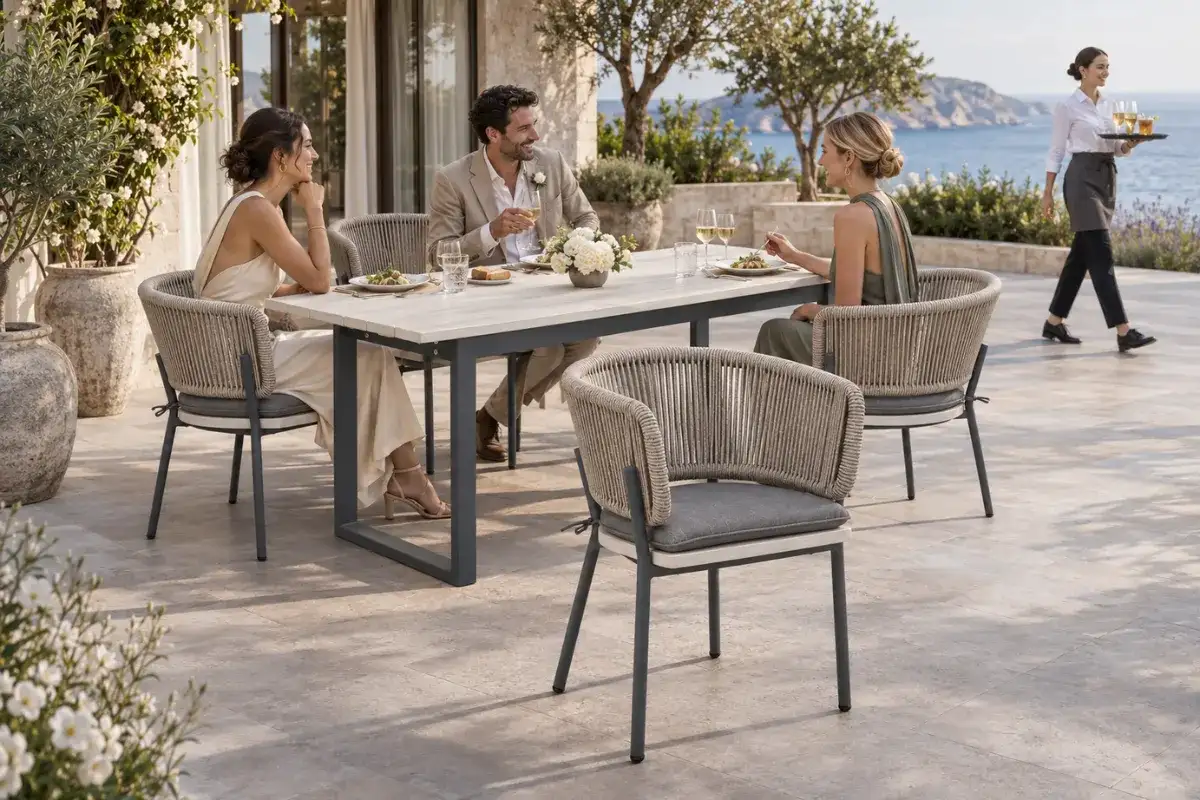
Testing tables and chairs together helps ensure comfortable seating, sufficient legroom, and smooth service during the event.
5. Add Reception Lounges Without Complicating the Inventory
5.1 Give Lounge Furniture a Defined Role
Outdoor reception lounge furniture can provide a quieter setting for conversation during the cocktail period or after dinner. Select it according to the intended use and duration. A compact sofa group may suit a terrace edge, while separate lounge chairs can accommodate smaller groups and offer more flexibility in positioning.
Check seat height, back support, and the availability of suitable surfaces for drinks. Keep lounge groups outside routes required for circulation and service. Their capacity should be recorded separately from ceremony and dining seating unless the event plan explicitly treats those seats as part of the required arrangement.
5.2 Coordinate Finishes and Replacement Needs
A wedding collection can remain visually coherent without using identical products everywhere. Relate frame colors, woven textures, cushion tones, and table finishes across ceremony chairs and reception seating. Compare physical samples together under the lighting conditions expected at the venue.
Limit unnecessary variations that make replacement and storage difficult. Record product codes and finish references so staff can identify where each item belongs. For larger lounge pieces, check handling and delivery routes early: a sofa that looks appropriate on the terrace may still be difficult to move through the hotel’s service access.
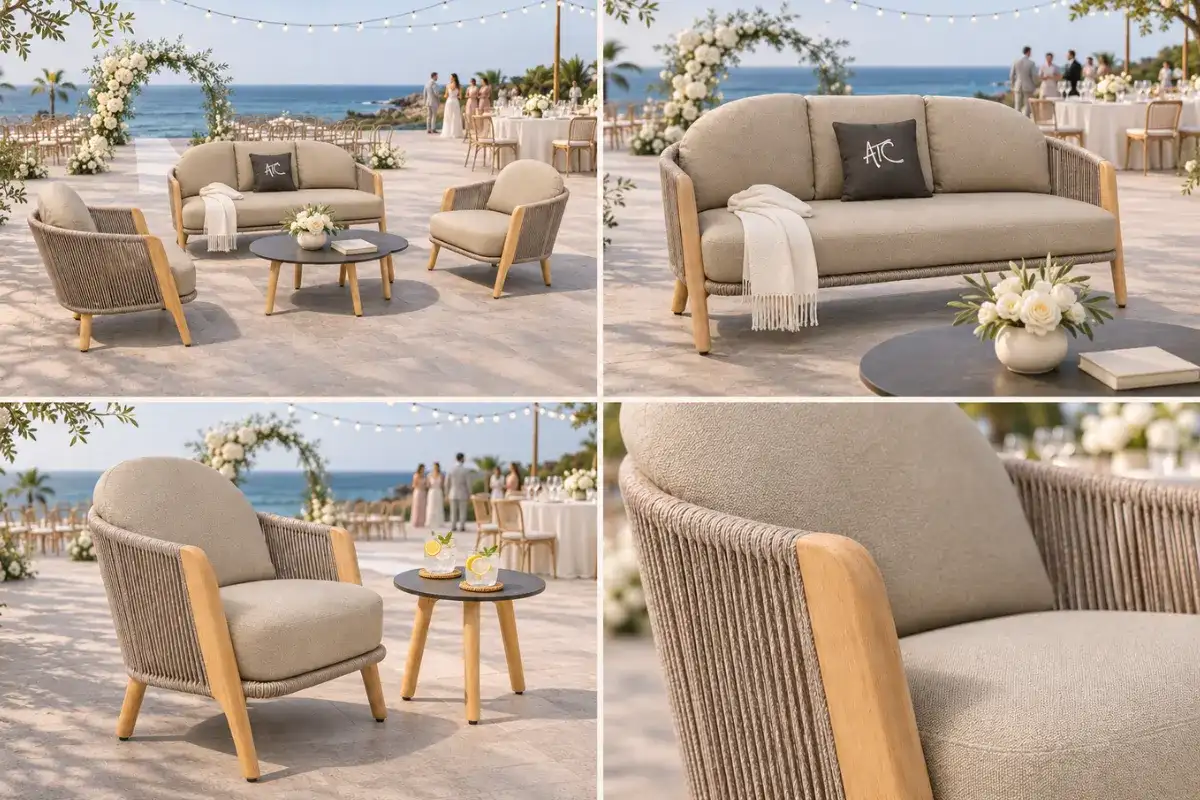
Consistent frame finishes, woven materials, and cushion colors help create a cohesive look across different seating areas.
6. Design the Turnover and Storage Process
6.1 Rehearse the Changeover Between Event Stages
Map the sequence from storage to ceremony, reception, dinner, and final collection. Identify which items move, who moves them, and where temporary staging is possible. The event schedule should account for furniture that cannot be transferred until guests have left a particular area.
Rehearse a representative changeover with samples or comparable equipment. Record the time and staffing required for unloading, placing, checking, and clearing furniture. Include cushions, decorative items, and trolleys in the exercise. This provides a practical basis for deciding whether one shared chair inventory is workable or whether separate sets are needed.
6.2 Size Storage for the Full Working Inventory
Calculate storage using the supplier’s approved stack configuration and the dimensions of loaded trolleys. Allow access to retrieve items, inspect them, and separate damaged products. A room that holds tightly packed stacks may still be inefficient if staff must move several stacks to reach the required chairs.
Plan locations for cushions, spare parts, cleaning materials, and furniture awaiting repair. Use a simple labeling system by model and finish, supported by an inventory record. Confirm the conditions required for storage and drying. Furniture should return to the ready-for-use inventory only after the appropriate checks and care procedures have been completed.
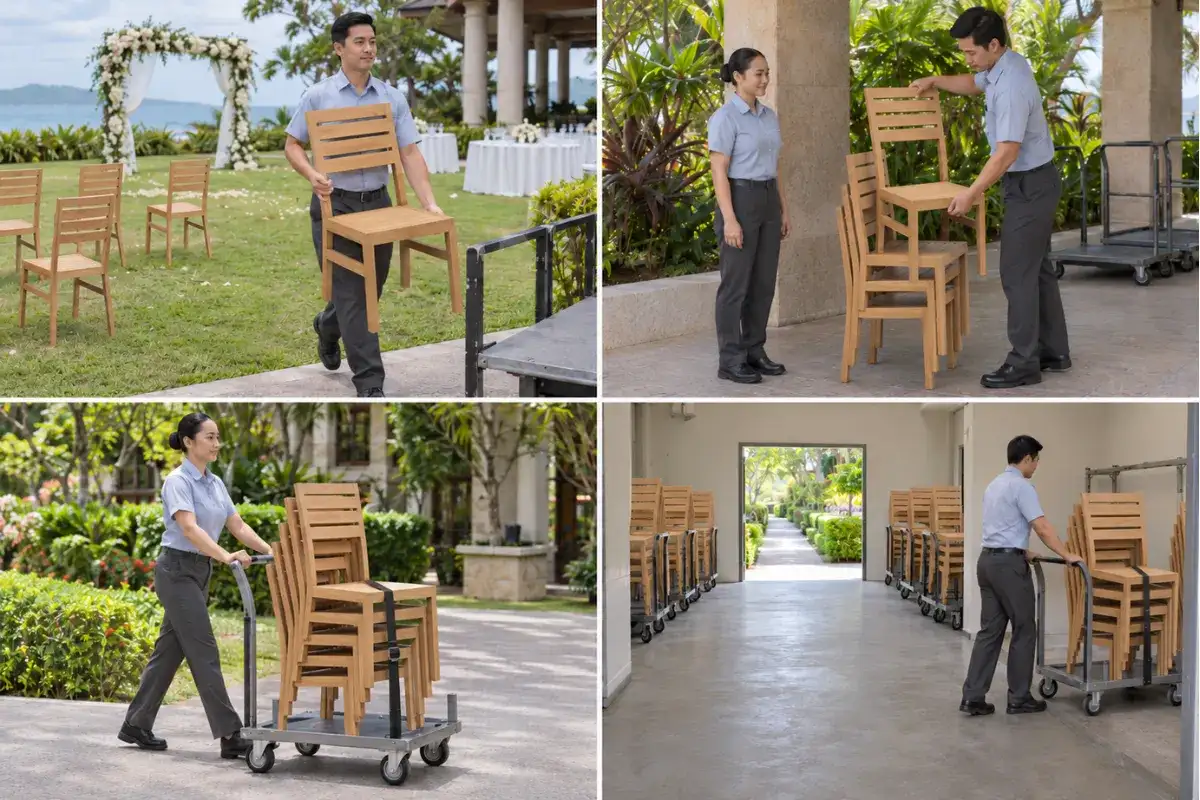
Planning storage around chair stacks, trolley dimensions, and access routes helps staff manage event seating efficiently.
6.3 Prepare a Weather Contingency Arrangement
Develop the alternative layout before the event, including where guests will move and which furniture will be needed. Check that chairs and tables are suitable for the contingency location and can reach it through the available route. A last-minute relocation should not depend on untested assumptions about door widths or trolley access.
Agree on who makes the operational decision and how the team implements it. Follow product and venue procedures for weather restrictions, handling, and storage. Keep contingency stock identifiable so it is not unintentionally committed to another function.
7. Verify Suppliers and Prepare the Wholesale Order
7.1 Build a Shortlist from the Actual Event Requirements
Buyers sourcing hotel outdoor banquet chairs wholesale should provide suppliers with the intended surfaces, event frequency, handling route, storage conditions, and design requirements. This encourages proposals based on the hotel’s working needs rather than a general recommendation for event seating.
The ATC event furniture collection can serve as a starting point for a supplier discussion. Ask for confirmation of each proposed model’s outdoor suitability, stacking arrangement, dimensions, and available accessories before adding it to the purchasing schedule. Do not assume that every product in an event category has the same construction or handling characteristics.
7.2 Approve Samples Against a Written Specification
Create a specification covering dimensions, materials, finishes, glides, stacking buffers, cushions, and packaging. Include trolley requirements where relevant. Inspect samples against the document and record any approved changes, rather than relying on informal messages or catalog descriptions.
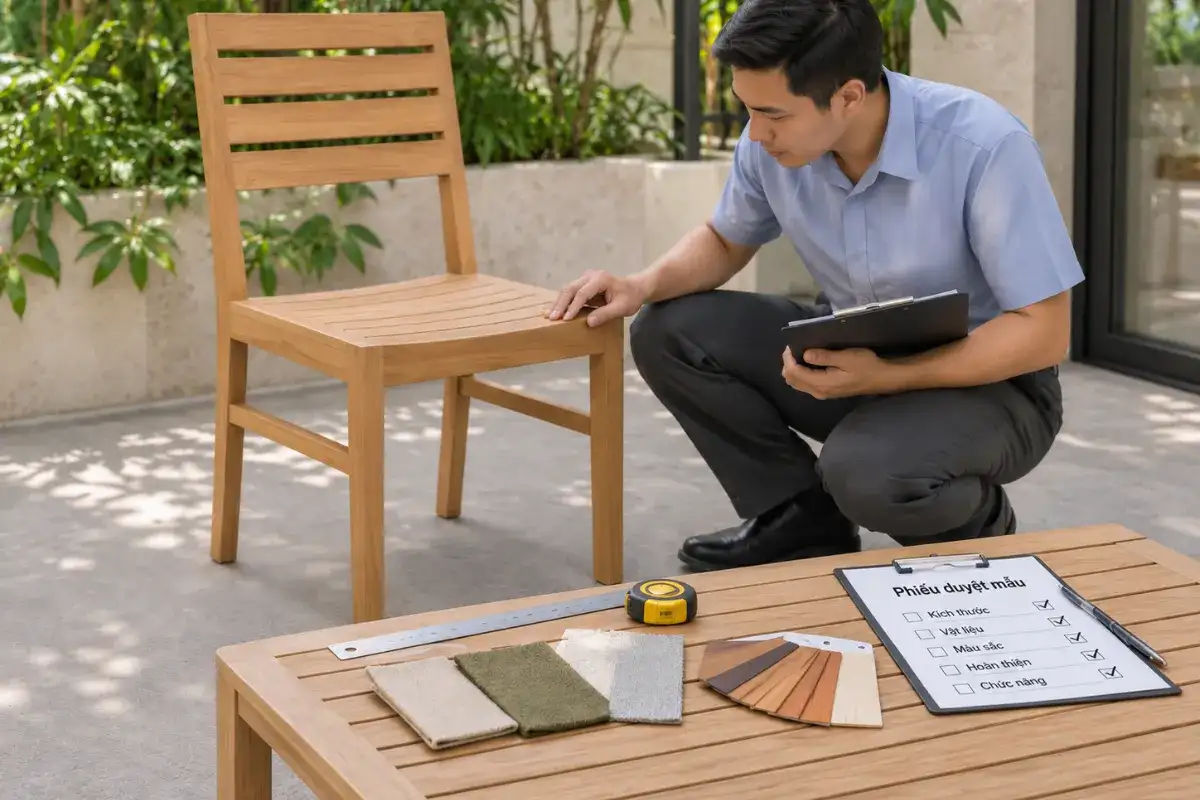
Reviewing dimensions, materials, finishes, and construction details helps ensure the approved sample meets project specifications.
Request relevant test reports and confirm their scope, model identification, and relationship to the proposed construction. A general company credential does not replace product-specific evidence. Before production, agree on inspection criteria, acceptable variation, and the process for nonconforming items. Keep the approved sample and specification available as references for bulk production and later orders.
7.3 Compare Quotations on a Consistent Basis
Issue the same request for quotation to shortlisted suppliers. Ask them to identify exclusions, substitutions, and additional costs, including accessories needed to achieve the proposed handling method. Compare the delivered scope rather than the chair price alone.
|
Commercial item |
Information to request |
|
Minimum quantities |
MOQ by model, color, fabric, or finish |
|
Samples |
Fees, preparation time, approval procedure |
|
Handling accessories |
Compatible trolleys, buffers, restraints where specified |
|
Packaging |
Protection method, carton dimensions, packed volume |
|
Production and delivery |
Milestones, destination, handling responsibilities |
|
After-sales support |
Warranty terms, claims process, spare parts |
Review the implications for maintenance and repeat purchasing alongside the initial cost. Confirm how replacement chairs will be matched and how finish changes or discontinued components will be communicated.
7.4 Plan Receiving Before the First Event
Work backward from the date when the inventory must be ready for service. Include sample approval, production, inspection, transport, receiving checks, and staff familiarization. Avoid treating the delivery date as the date the furniture automatically becomes event-ready.
Agree on carton labels and the method for recording shortages or damage. Check delivered furniture against the approved specification and trial the stacking and trolley arrangement before distributing it throughout the property. For phased orders, retain the same reference documents so later deliveries can be assessed consistently.
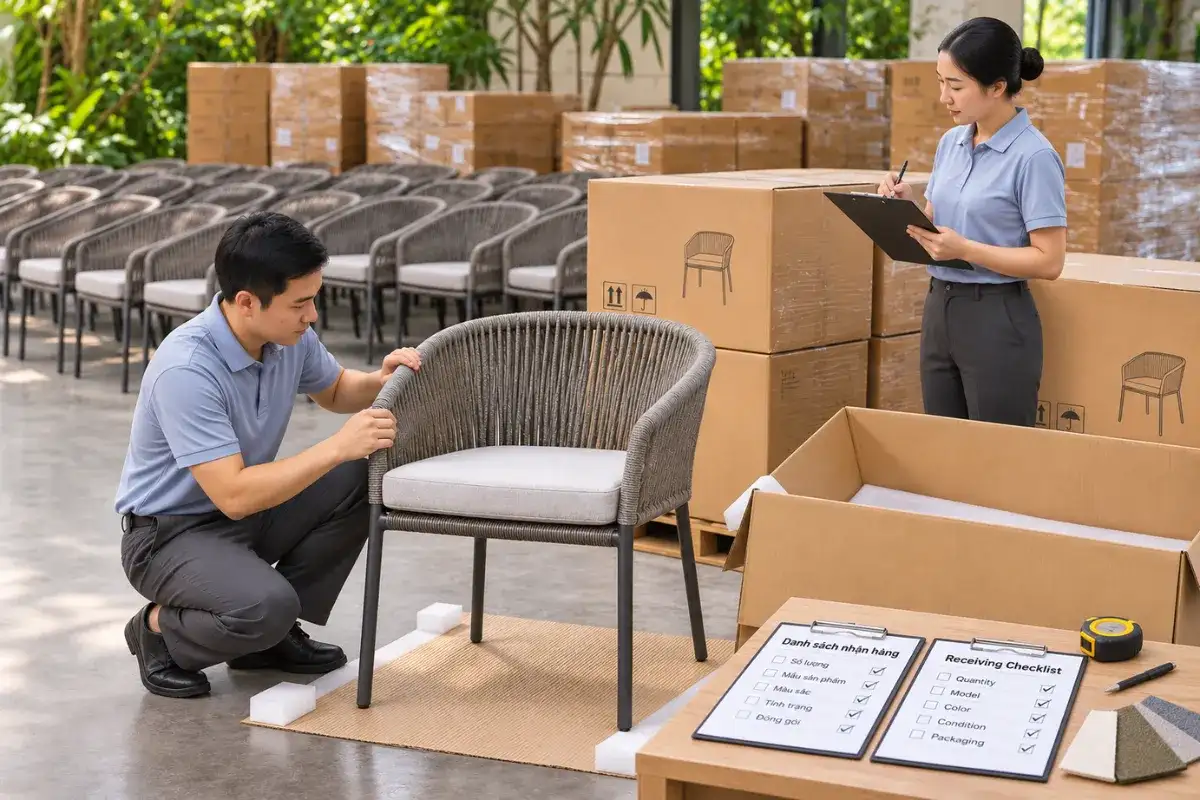
Inspecting delivered chairs and checking quantities against the order helps identify damage or missing items before event setup.
8. Frequently Asked Questions
What Should Hotels Check When Buying Stackable Wedding Chairs?
Check the permitted stack quantity, stacked dimensions, contact points, and trolley compatibility for the exact model. Test loading and unloading along the intended route. Also evaluate comfort, stability, finish consistency, and replacement parts. Stackability is useful only when the complete handling and storage process works for the venue.
Can One Chair Collection Serve Both Ceremonies and Banquets?
Possibly, provided the chairs suit both activities and the event schedule allows transfer. Test them with the dining tables and review the time available for movement and resetting. If the banquet must be prepared during the ceremony, separate inventories may be necessary despite using the same chair design.
How Should Hotels Choose Outdoor Reception Lounge Furniture?
Define its role, capacity, and location before selecting products. Assess comfort, drink-table access, cleaning, and handling. Coordinate finishes with the main event collection while keeping replacement references manageable. Confirm that sofas and chairs can pass through the delivery and storage routes.
How Many Spare Chairs Should a Wedding Venue Order?
Base the allowance on expected event demand, simultaneous functions, maintenance downtime, and replacement lead times. Review the venue’s operating history where available. A fixed percentage may not suit every property, especially when furniture is shared between departments or additional matching chairs take time to obtain.