Glamping Outdoor Furniture: Weather Resistance and Responsible Sourcing for Luxury Eco-Resorts
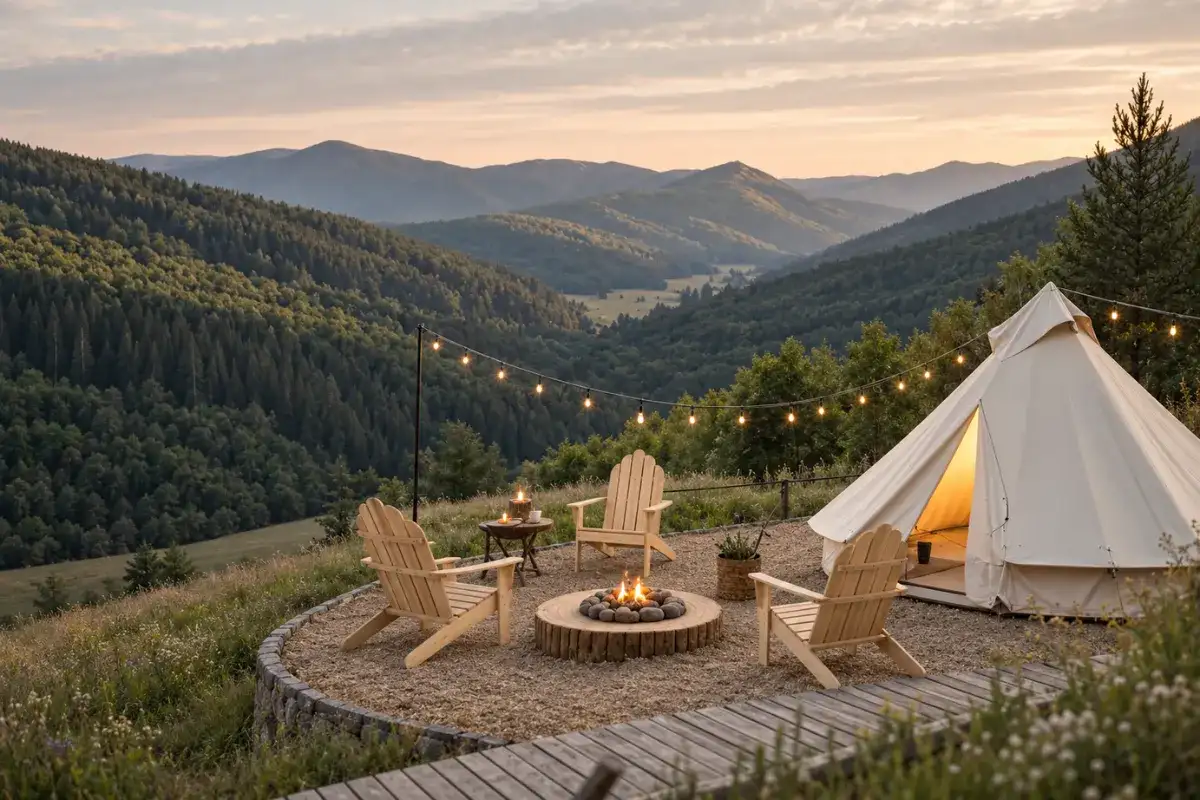
Glamping outdoor furniture helps turn a tent deck into a comfortable extension of the guest room. A pair of lounge chairs can create a quiet place for morning coffee, while a shared dining terrace gives guests somewhere to gather after a day outdoors. These settings need to feel connected to the landscape while supporting the practical demands of hospitality use.
For owners and procurement teams, appearance is only one part of the decision. Furniture must fit the available deck space, suit local exposure, and remain manageable for the staff responsible for cleaning, moving, and maintaining it. Remote locations also make packaging, replacement parts, and delivery planning important considerations.
This guide explains how to select furniture for glamping sites, safari tent patios, and eco-lodges. It focuses on matching products to actual operating conditions, checking environmental claims, and preparing a sourcing brief that manufacturers can quote accurately.
1. Start with the Glamping Site and Guest Experience
1.1 Define Private and Shared Outdoor Spaces
Begin with a furniture schedule organized by location. Private tent decks, communal lounges, dining areas, and scenic viewing points may share a design language, but they serve different purposes. A private deck might need two comfortable chairs and a table large enough for breakfast. A family tent may require additional seating without blocking the entrance. Shared areas need layouts that accommodate groups and allow staff to clean between bookings. Describe what guests should be able to do in each space: read, eat, socialize, rest, or enjoy the view. This helps determine seat height, back support, table size, and whether cushions are necessary.
For example, a low lounge chair may work well for relaxed seating but feel awkward beside a standard dining table. Evaluate the furniture as a usable arrangement rather than as individual pieces selected from a catalog.
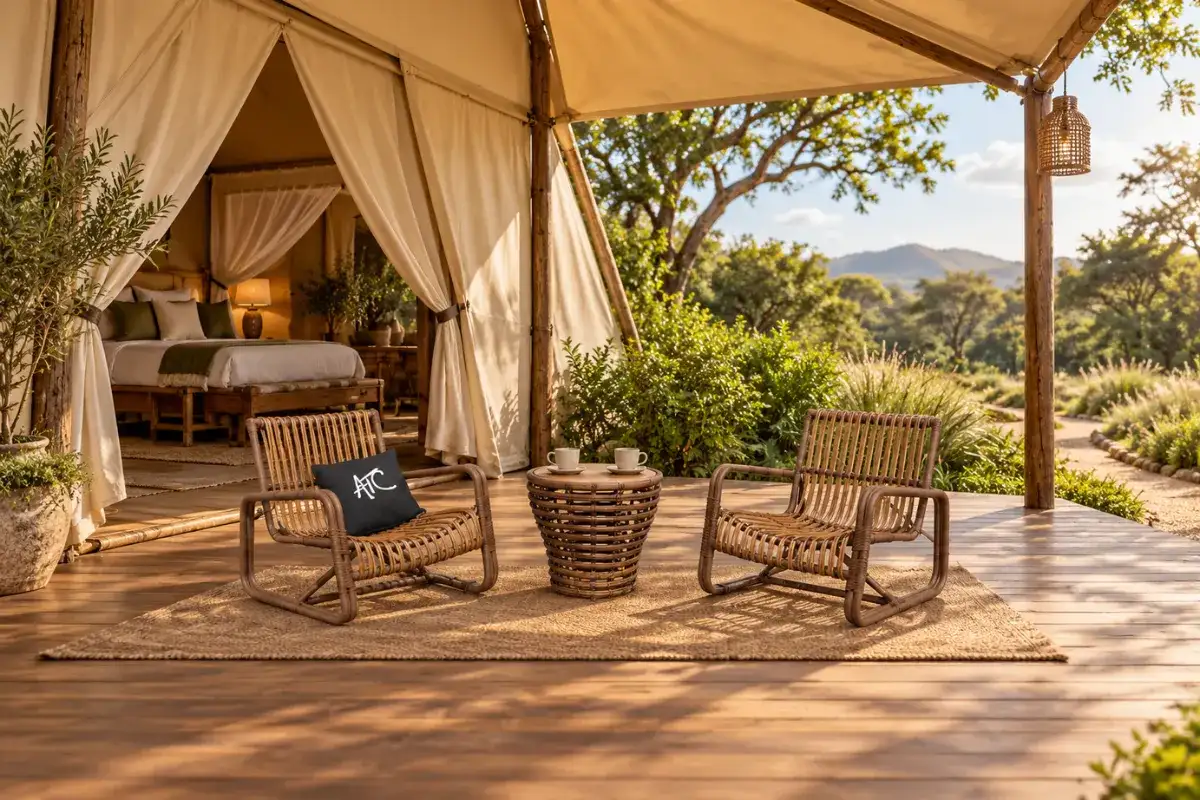
A pair of lounge chairs and a small table give guests a private spot for morning coffee outside their tent.
1.2 Record Exposure and Operating Constraints
A covered tent veranda and an open viewing deck should not automatically receive identical specifications. Record direct sunlight, wind-driven rain, humidity, airborne salt, and seasonal storage requirements for each area. Also consider everyday deposits such as dust, leaves, pollen, or sand. Ask the operations team how often furniture can realistically be cleaned and where wet cushions can dry.
Access matters too. A product that arrives easily at the main reception building may still need to travel along narrow paths or up steps before reaching a tent. Include these restrictions in the purchasing brief.
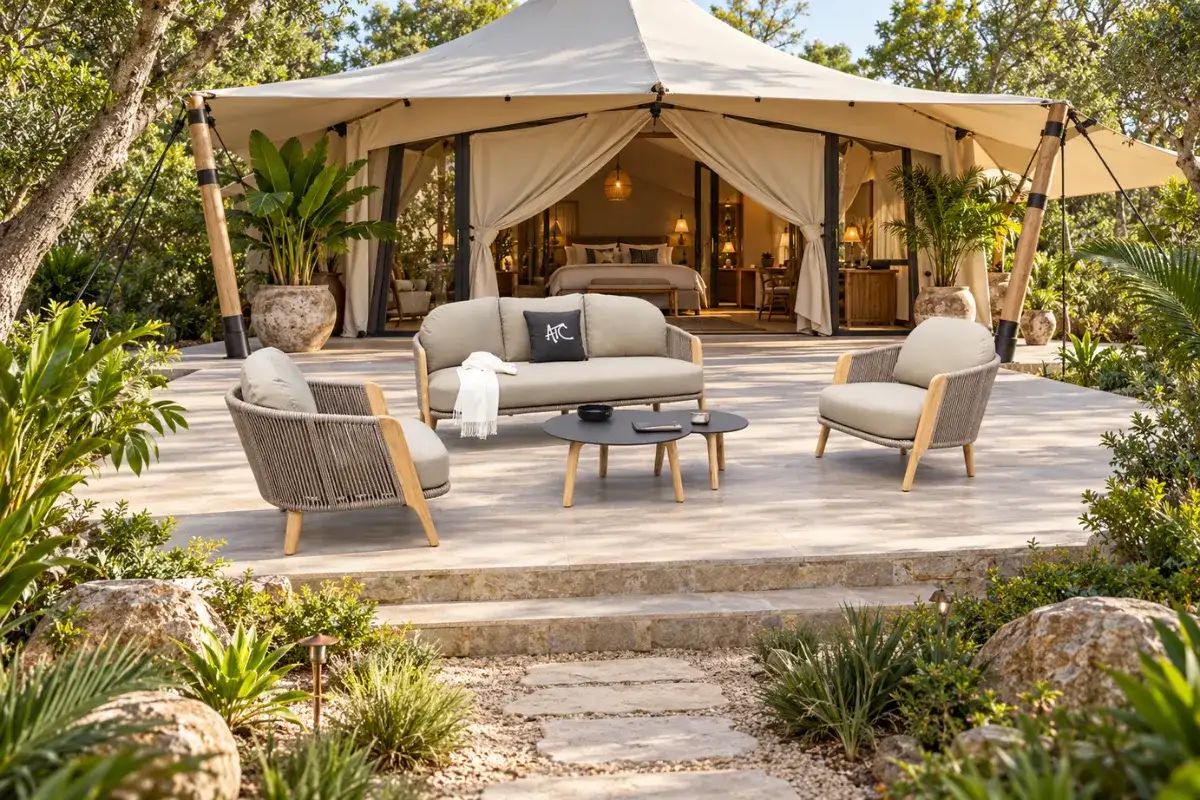
Check the path and steps before ordering to make sure each piece can be carried to the tent deck.
A useful site assessment connects every exposure condition with a response: a suitable finish, a cleaning routine, protected storage, or a procedure for moving furniture before severe weather.
2. Select Furniture That Fits Tent Decks and Safari Patios
2.1 Check the Full Footprint of Use
Glamping tent deck furniture should be assessed on a scaled layout using the dimensions of the proposed products. Include space for guests to pull out chairs, walk around tables, and enter the accommodation while carrying luggage. For reclining furniture, check the footprint with the backrest fully lowered. For rockers or swivel chairs, consider the entire range of movement. Keep furniture clear of tent closures, door swings, steps, and access routes. Avoid relying on a universal spacing figure without reviewing the layout and applicable accessibility requirements. The appropriate clearance depends on the furniture, route, and intended users.
Before approving a large order, mark the arrangement on an actual deck or create a full-size mock-up. Test it with people seated, tables in use, and staff performing routine cleaning.
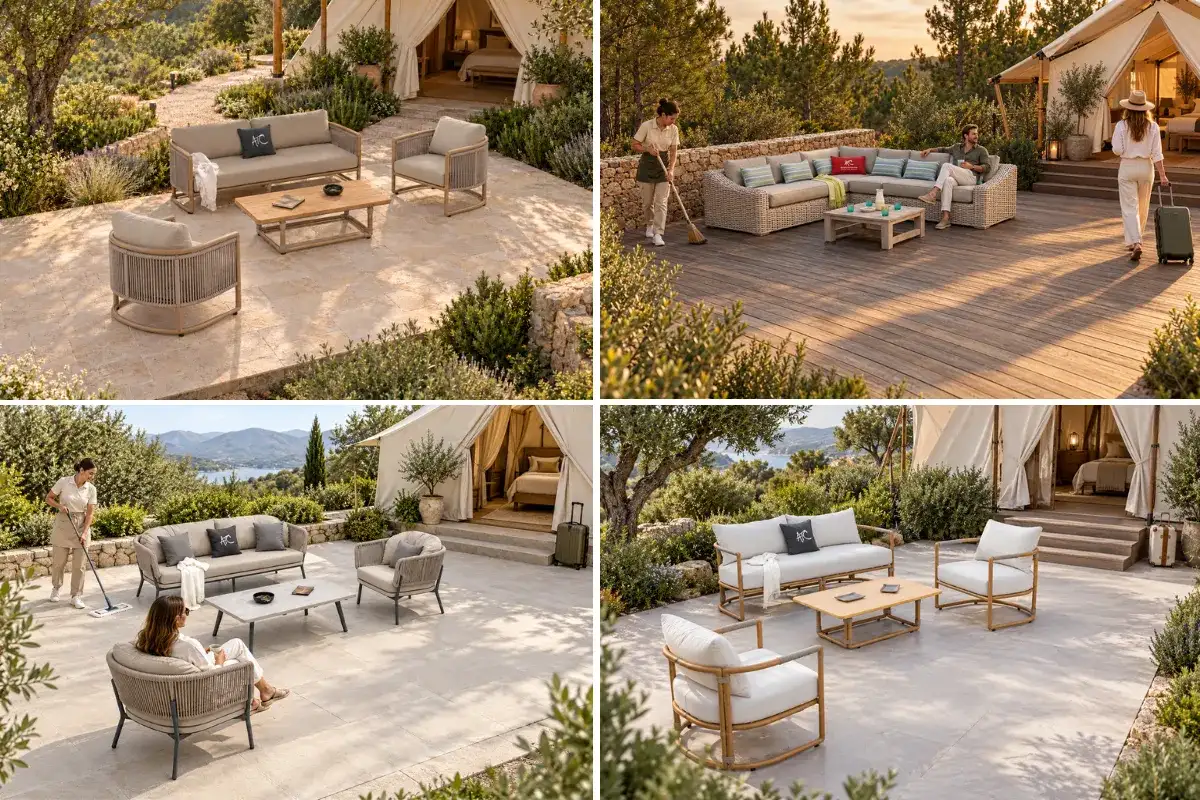
Test the layout with guests seated and someone rolling a suitcase to check that the route to the tent stays clear.
2.2 Evaluate Floor Contact and Handling
Inspect how chair and table feet meet the intended surface. Narrow feet, small glides, or an unsuitable base may interact poorly with deck-board gaps or uneven finishes. Test the actual product on a representative surface. Ask whether glides are replaceable and how staff should check them. Consider whether tables can be leveled without improvised packing underneath their feet. Furniture weight also needs context. Lightweight pieces may be easier to move between tents, but exposed sites need a clear wind-management procedure. Heavier furniture can complicate housekeeping and seasonal storage.
When sourcing safari tent patio furniture for commercial use, ask staff to trial the handling process. Verify stacking claims, lifting requirements, and storage dimensions on samples rather than assuming that similar-looking products operate in the same way.
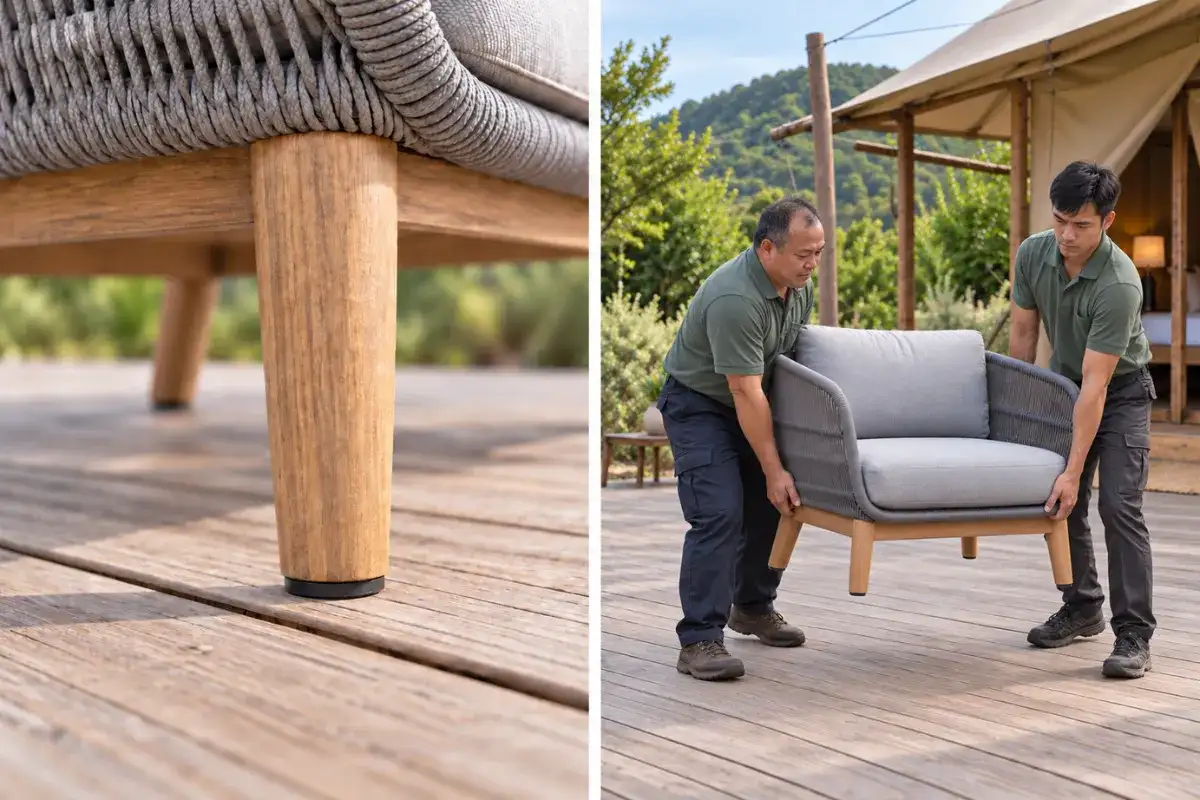
Test a sample on the actual deck to see whether the chair feet sit firmly near gaps between boards.
3. Match Materials to Exposure and Maintenance Capacity
Material selection should cover the complete product: frame, surface, finish, connections, cushions, and floor-contact components. A convincing material description does not establish how the assembled furniture will perform.
Use the following comparison to organize supplier questions.
|
Material system |
Design contribution |
Information to confirm |
Teak and other specified woods |
Natural grain and visual connection with decks and landscape |
Species, sourcing documentation, joints, finish, and maintenance instructions |
Synthetic wicker |
Woven texture for lounge and dining collections |
Polymer, strand profile, supporting frame, weave attachment, and relevant test evidence |
Powder-coated aluminum |
Slim profiles and coordinated frame colors |
Frame sections, welds, surface preparation, coating specification, and hardware |
Outdoor cushions |
Comfort and visual continuity across seating groups |
Fabric code, filling, cover construction, drainage, drying, and storage requirements |
3.1 Specify Wood Beyond Its Appearance
Wood can complement canvas tents, planting, and timber decks. However, buyers should identify the species and agree on the intended finish rather than accepting a broad description such as “natural hardwood.” For teak, discuss the appearance expected over time and the care required to support it. Request written guidance for the supplied finish, including suitable cleaning methods and any recommended maintenance products.
Inspect joints, edges, underside surfaces, and the points where hardware enters the wood. Ask how repairs and replacement components would be handled. Approve a physical sample that represents the agreed quality and finish. Where natural variation is expected, establish an acceptable range so that later deliveries are not judged against an unrealistically uniform photograph.
3.2 Distinguish Synthetic Wicker from Natural Rattan
A woven appearance does not identify the material. Natural rattan and synthetic wicker should not be treated as interchangeable when specifying furniture for outdoor exposure. Ask the supplier to identify the weave material, its intended application, and the frame beneath it. Review strand consistency, tension, attachment points, and how exposed ends are finished. Inspect areas around arms and seat edges that guests frequently touch.
Buyers can explore ATC’s rattan and wicker furniture collections when building a shortlist for tent decks and shared lounges. Confirm the construction and exposure suitability of each selected model before including it in the project specification.
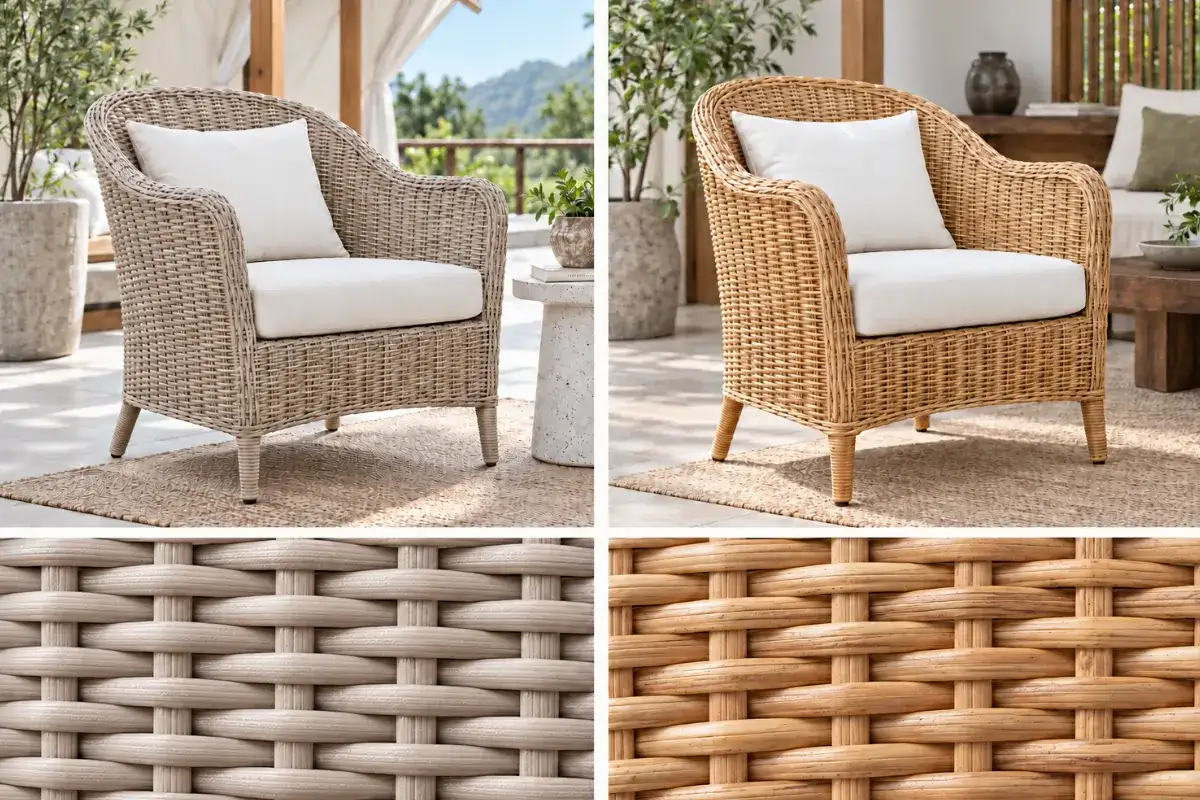
Synthetic wicker and natural rattan can look alike. Confirm the weave material before choosing chairs for an exposed deck.
For UV or weathering claims, request evidence relevant to the proposed material and finish. Clarify what was tested and avoid treating a component test as proof of every aspect of the finished chair.
3.3 Review Aluminum Frames, Finishes, and Connections
For aluminum furniture, compare more than weight and color. Request details of the frame sections, joint construction, coating system, and hardware used on the proposed model. Inspect sample welds and finished edges. Check the underside of seats and tables, where coating coverage and connections may be less visible in product photography.
At coastal sites, ask the supplier to explain the protection and maintenance measures for the complete assembly. If terms such as “marine-grade” appear in a quotation, clarify which component or specification they describe. Assess stability through sample testing appropriate to the intended use. A slim frame may support the desired appearance, but its suitability must be evaluated alongside construction, balance, and the supplier’s supporting documentation.
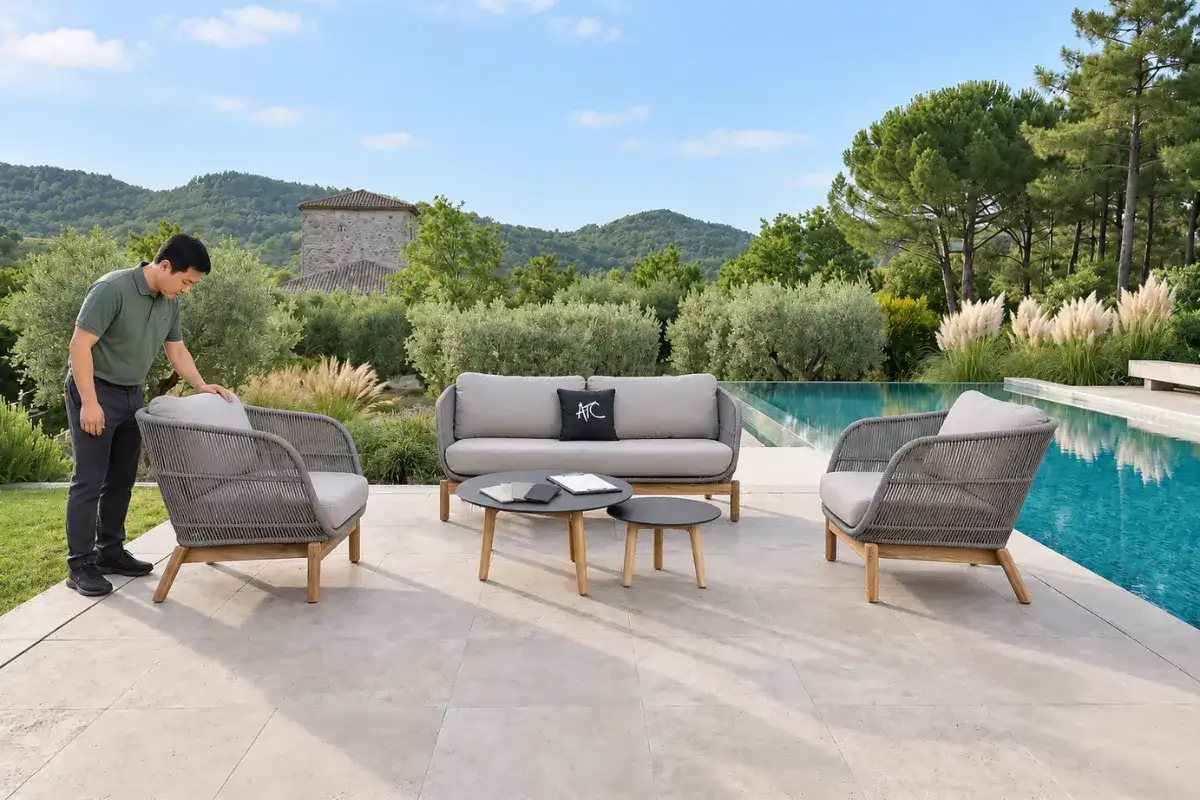
Test a sample chair on the intended surface to check its stability
before placing a bulk order.
3.4 Treat Cushions as a Complete System
Specify the fabric reference, filling, cover construction, seams, closures, and attachment method. Ask how water leaves the cushion and how the assembly should be dried after rain. Water resistance at the fabric surface does not, by itself, establish the drying behavior of the cushion underneath. Evaluate the complete sample and ask for care instructions covering both the cover and filling.
Check whether replacement covers and inserts can be ordered separately. Use consistent codes so staff can identify the right part without relying on photographs. Cleaning instructions should match the specified fabric. For example, Sunbrella publishes separate guidance for its upholstery and other applications; those instructions should not automatically be applied to a different textile. Refer to the relevant fabric manufacturer’s care guidance when preparing the operating manual.
4. Evaluate Sustainability Claims with Evidence
4.1 Separate Natural Styling from Environmental Claims
Earth tones, woven textures, and timber finishes can create a landscape-sensitive setting. They do not, on their own, demonstrate responsible sourcing or a lower environmental impact. When comparing sustainable outdoor furniture for eco lodges, turn broad claims into specific questions. What material is being described? Which part contains recycled content? What documentation supports the stated percentage or origin?
Apply the same approach when reviewing an eco resort furniture manufacturer. Ask for evidence relevant to the proposed products, rather than relying only on general statements about the company. For certified wood, confirm the applicable product and supply-chain documentation. FSC explains the role of chain-of-custody certification in furniture sourcing, but buyers should still check the claim attached to their particular purchase. See FSC’s furniture sourcing information.

Ask for sourcing records that match the specific products proposed for the lodge.
4.2 Include Repairability and Replacement Planning
A purchasing assessment should examine whether a damaged component can be replaced without discarding the entire item. Ask about spare glides, cushion covers, inserts, hardware, and other serviceable parts. Clarify which repairs can be performed by site staff and which require specialist work. A repair option is more useful when tools, instructions, and replacement components are available at the destination.
Request information on how long parts are expected to remain available and how repeat orders are matched. Record model numbers and finish references in the project file. For a remote property, a small, carefully selected spare-parts stock may reduce disruption. Choose its contents around likely service needs and supplier advice rather than ordering miscellaneous extras without a maintenance plan.
4.3 Examine Packaging and End-of-Use Options
Packaging needs to protect furniture through the actual journey, including transfers between vehicles and handling at the site. Ask the supplier to explain the proposed protection and identify packaging materials. Discuss opportunities to reduce unnecessary packaging without increasing transit damage. Request clear carton labels that help the receiving team distribute items by tent or public area.
If recyclability is claimed, consider whether suitable collection and processing are available locally. A theoretical recycling route may not be accessible to a remote lodge. For products made from several materials, ask how components can be separated for repair or disposal. Keep environmental wording specific to documented features instead of describing the entire collection as universally “eco-friendly.”
5. Create a Cohesive Outdoor Collection
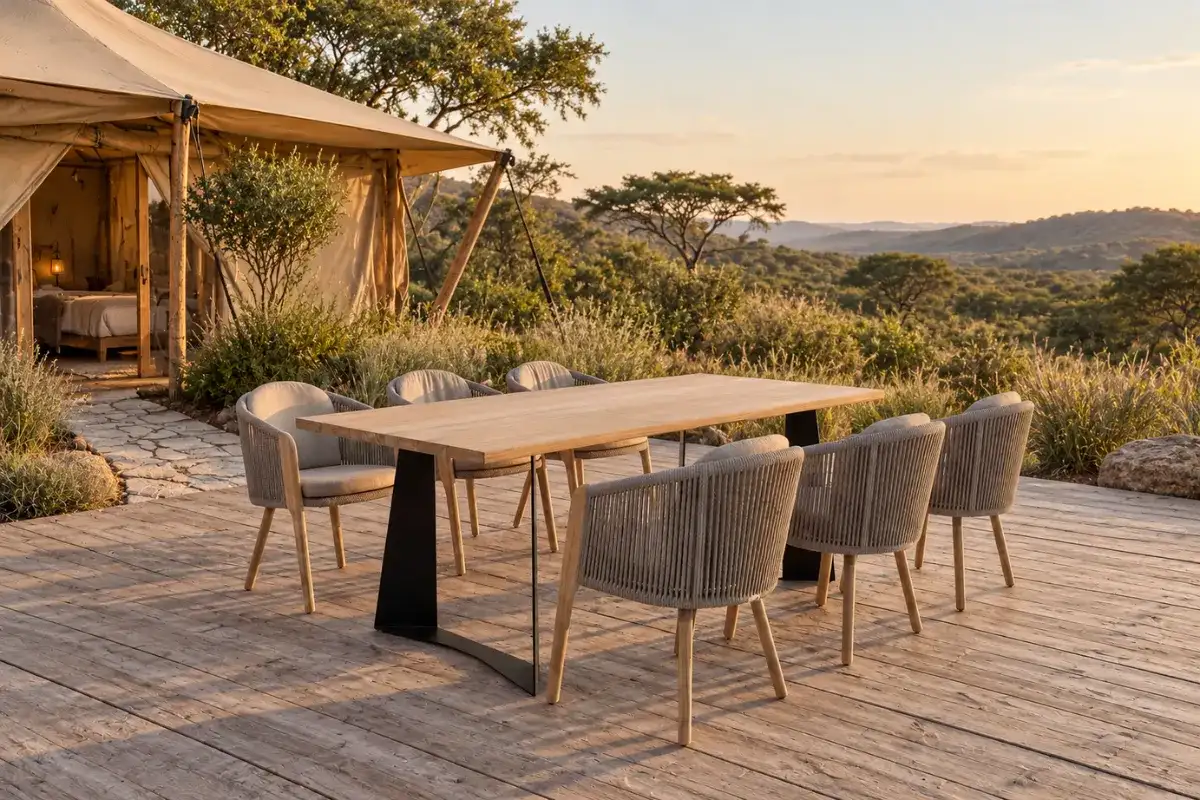
Repeat warm wood tones across the dining and lounge areas to give the glamping site a cohesive look.
5.1 Relate Furniture to the Tent and Landscape
Organic modern resort outdoor seating combines simple forms, tactile surfaces, and colors that complement the setting. Compare furniture samples with the actual tent fabric, decking, and stone under daylight and evening lighting. Check views from inside the tent and along the approach. Chair backs and furniture groupings should preserve important landscape views. Use a consistent palette across private decks and shared spaces, adapting each arrangement to its function.
5.2 Balance Comfort with Operational Consistency
Standardize cushion sizes, finishes, and hardware where practical to simplify replacements. A coordinated collection can accommodate different activities through suitable chair and table combinations. Test seat height, back support, and ease of standing on samples. Involve housekeeping in approval: ask staff to remove cushions, clean beneath seats, and move furniture through the intended access route. Resolve handling difficulties before confirming the order.
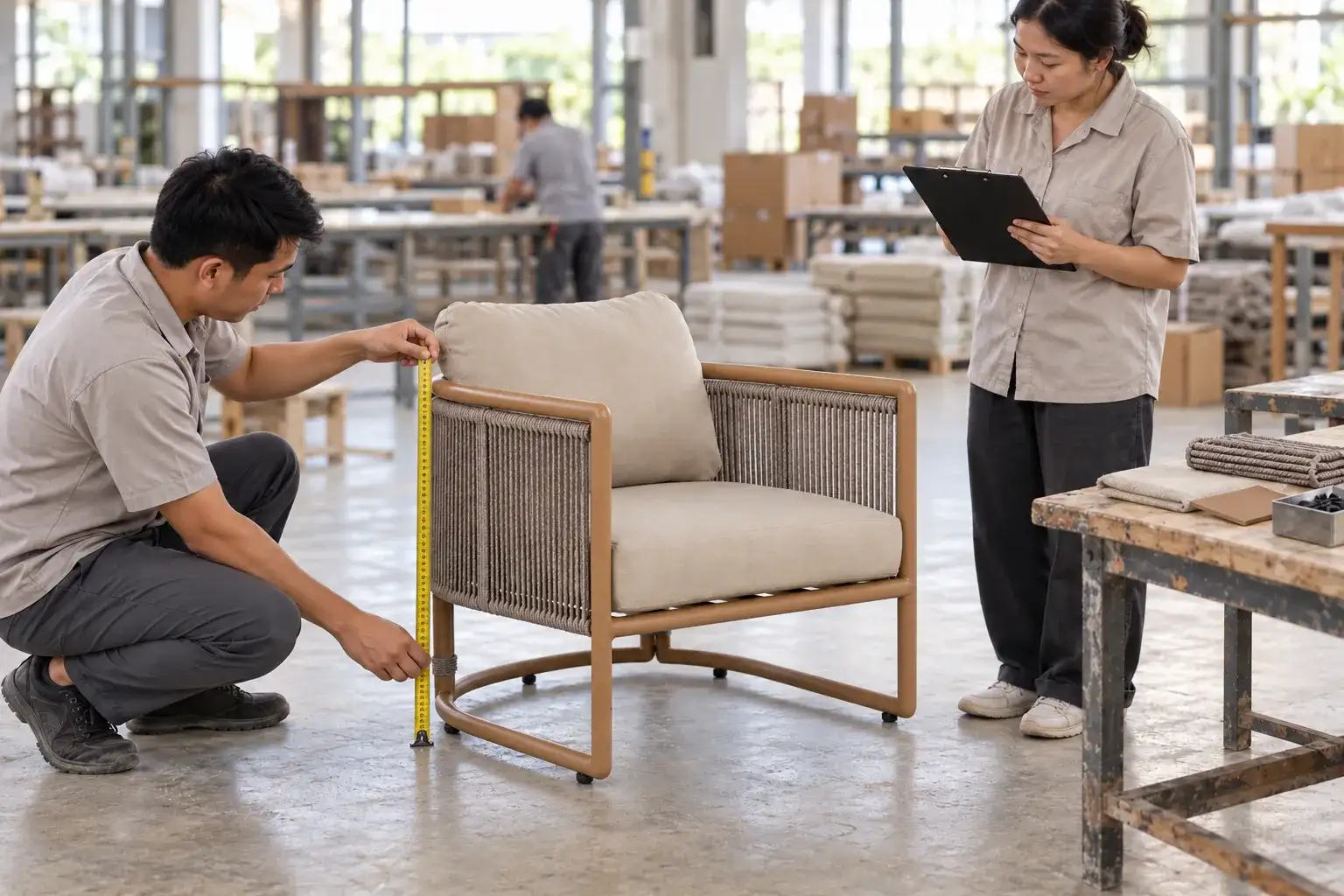
Check seat height and back support on a sample to see how comfortably guests can sit down and stand up.
6. Verify the Manufacturer and Plan the Order
6.1 Confirm Production Responsibility and Approve Samples
Establish who manufactures the furniture and which processes are subcontracted. Ask where frames, weaving, finishing, and upholstery work take place, and who is responsible for final inspection. A factory visit or live walkthrough can help clarify the production process. Request relevant project or export references where available, while recognizing that photographs alone do not verify every manufacturing claim.
Approve a sample against a written specification. Record dimensions, materials, finishes, cushion details, hardware, and packaging requirements. Document acceptable variations and any agreed changes. Before placing the bulk order, define inspection criteria and how nonconforming items will be handled. Ask for applicable test reports and confirm that they relate to the proposed model or construction.
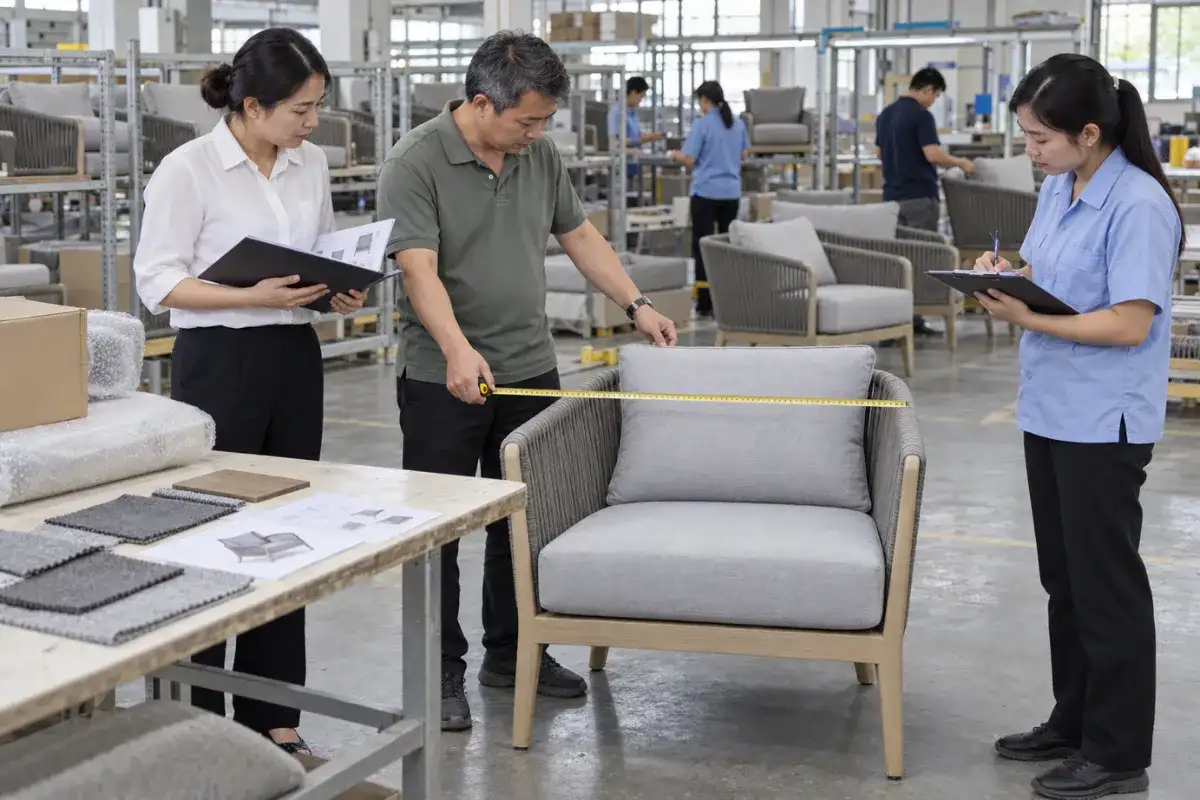
Before approving the sample, check its dimensions and materials against
the written specifications.
6.2 Compare Quotations on the Same Basis
A lower unit price is difficult to interpret when quotations include different materials, cushion systems, packaging, or delivery responsibilities.
Issue the same request for quotation to each shortlisted supplier. Ask them to identify exclusions and proposed substitutions clearly.
|
Quotation item |
What buyers should clarify |
|
Product specification |
Model, dimensions, materials, finish, and included cushions |
|
Order minimums |
MOQ by model, color, fabric, or finish |
|
Samples |
Cost, preparation time, and approval process |
|
Packaging |
Protection method, carton dimensions, and packed volume |
|
Delivery |
Named delivery point, transport assumptions, and responsibilities |
|
After-sales support |
Warranty terms, claim procedure, and replacement-part arrangements |
Compare maintenance and replacement implications alongside the initial price. Avoid assuming that a higher price proves durability or that a low price necessarily represents better overall value.
6.3 Plan the Final Delivery Stage
Confirm the route from the receiving point to each installation area. Record vehicle restrictions, unloading arrangements, temporary storage, narrow paths, and any need for manual handling. Check packaged dimensions as well as assembled dimensions. A sofa that fits the deck may be difficult to move through the route leading to it.
Work backward from the date when furniture must be installed and ready for guests. Include sample approval, production, inspection, transport, receiving checks, and placement. Allow for uncertainty according to the route and project schedule.
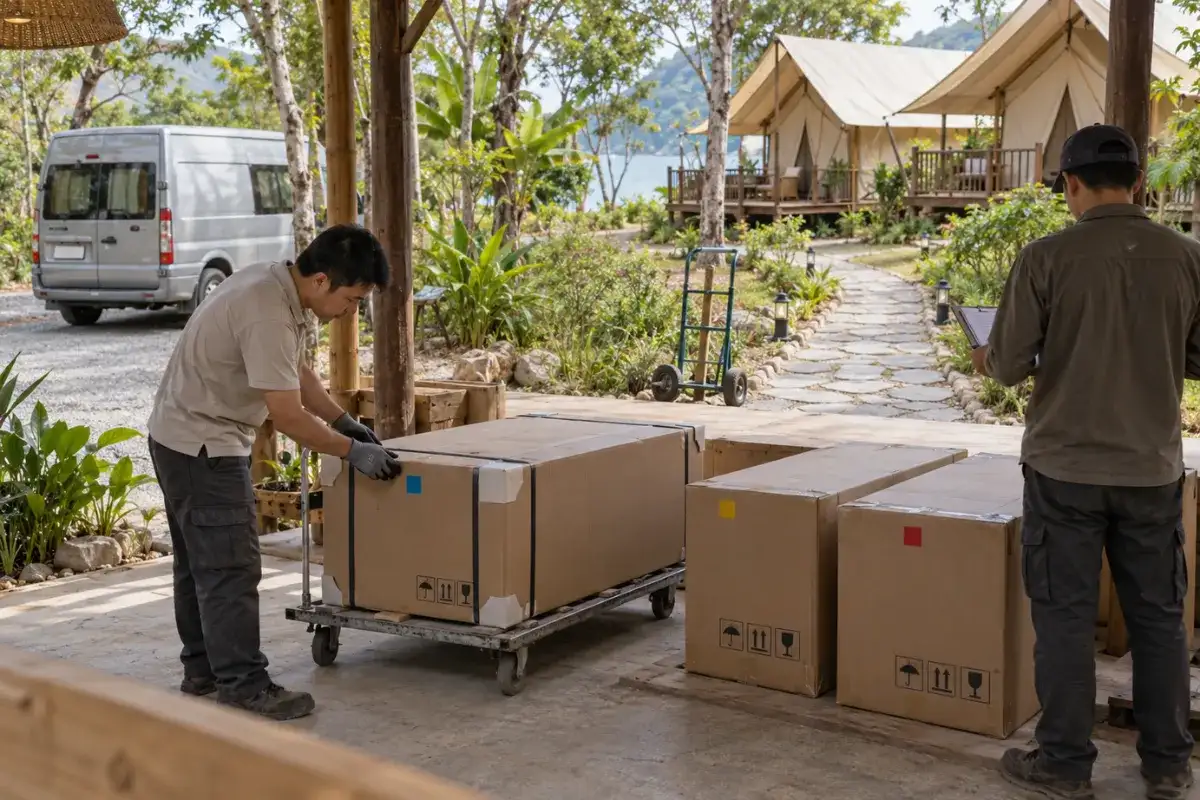
Check carton dimensions against the narrowest point on the route
from unloading to installation.
Agree on how cartons will be labeled and how damage or shortages will be recorded on arrival. For phased openings, identify which items belong to each delivery stage and confirm that later batches will follow the approved specifications.
7. Prepare a Clear Glamping Furniture Brief
Before requesting final quotations, consolidate the project requirements into one document. This reduces assumptions and gives suppliers a consistent basis for proposing products.
Include:
- Site location and exposure conditions for each furniture zone.
- Scaled layouts, access restrictions, and floor-surface information.
- Product categories, quantities, dimensions, and comfort requirements.
- Material, finish, fabric, and cushion specifications.
- Evidence required for sourcing or environmental claims.
- Sample approval, inspection, packaging, and delivery requirements.
- Replacement-part needs and the intended maintenance routine.
Use the brief to assess every shortlisted supplier, including ATC. Select glamping outdoor furniture that supports the guest experience and can be maintained within the property’s actual resources. Confirm the details in writing before production begins.
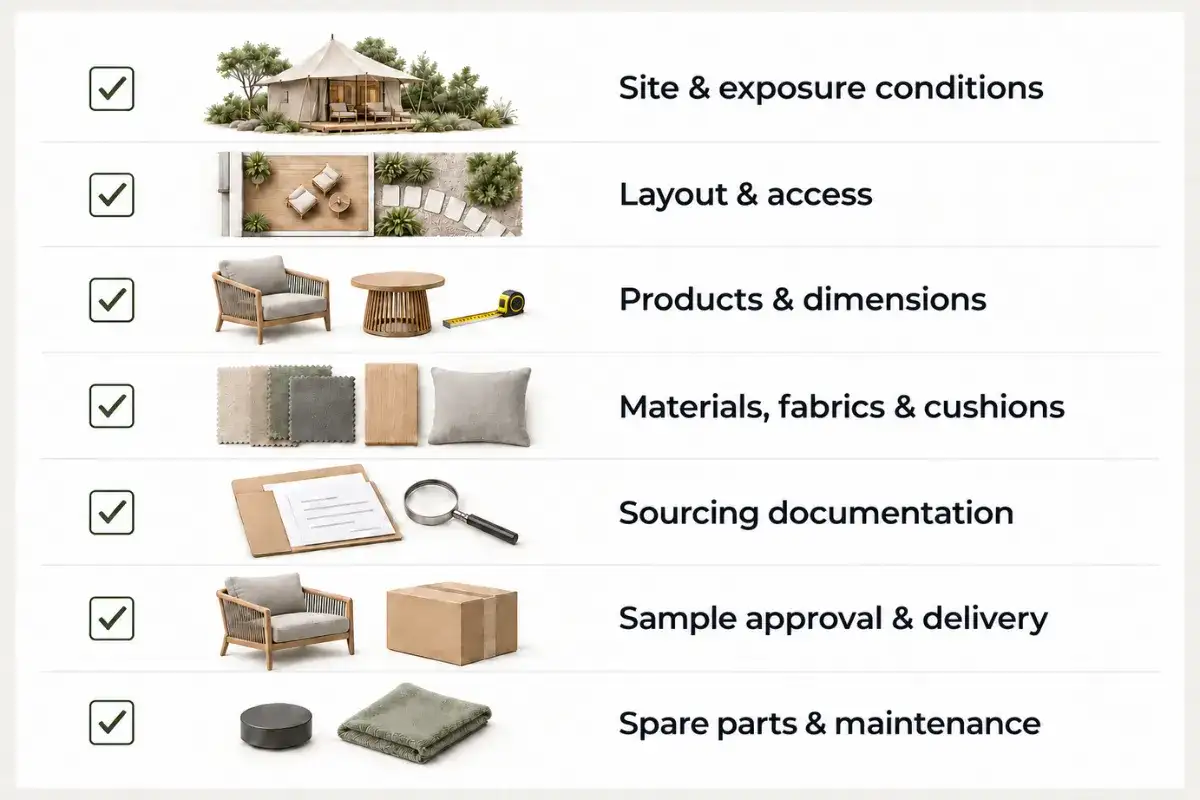
Send the same project brief to each shortlisted supplier so you can compare quotes against the same requirements.
8. Frequently Asked Questions
8.1 What Furniture Works Best on a Private Glamping Deck?
Start with the activities the deck needs to support. Two lounge chairs and a practical table may suit a couple’s tent, while larger accommodation may need additional seating or dining furniture. Check the full arrangement with guests seated and chairs moved away from the table. Preserve access to the tent and select products that suit the deck surface and exposure.
8.2 Is Synthetic Wicker Suitable for Glamping Outdoor Furniture?
It can be considered, but suitability depends on the specified weave, supporting frame, finish, and intended conditions. Confirm whether the material is synthetic wicker or natural rattan, and request relevant product information. Inspect a sample for weave tension, finished edges, stability, and cleaning access. Evaluate cushions separately rather than assuming the whole assembly has identical weather resistance.
8.3 How Can Buyers Assess Sustainable Outdoor Furniture for Eco Lodges?
Ask for specific evidence covering material origin, certified claims where applicable, recycled content, repairability, and replacement parts. Review the requirements for maintaining the product at the site. Consider packaging and locally available end-of-use options as well. Natural colors and woven surfaces may suit an eco-lodge visually, but environmental claims need support beyond the product’s appearance.
8.4 What Should a Glamping Furniture RFQ Include?
Include quantities, intended locations, dimensions, materials, finishes, cushion details, and the required arrival date. Add deck plans, exposure conditions, delivery-access restrictions, and packaging expectations. Request MOQ, sample costs, inspection arrangements, warranty terms, and spare-part information. Ask suppliers to list exclusions and substitutions so quotations can be compared on the same commercial and technical basis.