Commercial Pool Furniture: Sourcing Durable Chaise Lounges, Daybeds & Umbrellas for Hotels
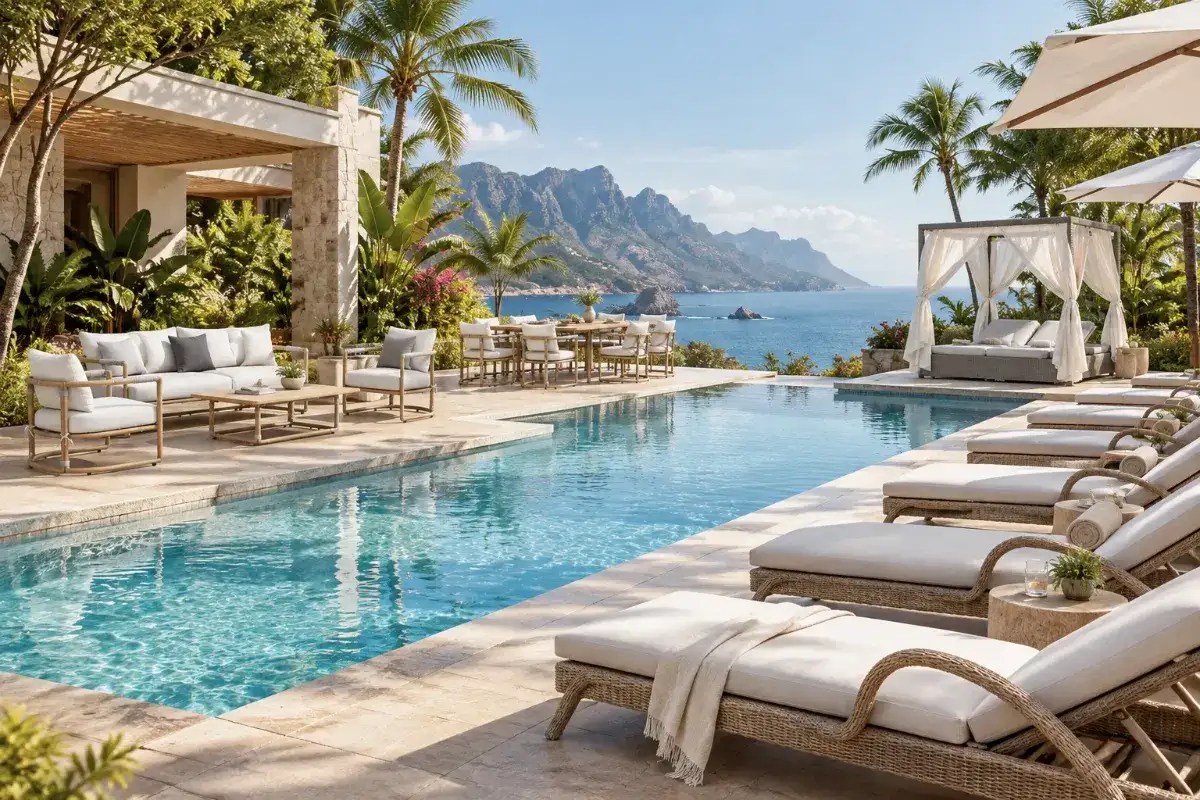
A pool lounger can look suitable in a catalogue and still create problems during daily hotel operation. Its cushion may be awkward to store, its reclining mechanism difficult to operate, or its packed dimensions larger than expected. Across a substantial order, these details affect purchasing costs, staff workload, and the guest experience.
Choosing commercial pool furniture requires a clear connection between the site, the product specification, and the sourcing process. Buyers need to understand where each piece will be used, how staff will maintain it, and what evidence supports the proposed construction.
This guide explains how to plan a coordinated poolside collection, compare wholesale quotations, evaluate loungers, chairs, daybeds, and umbrellas, and move from sample approval to production and delivery.
1. Choosing Commercial Pool Furniture for Hotels and Resorts
The right commercial pool furniture starts with understanding the pool environment and how guests will use it. Exposure, layout and operating routines should be considered before individual models are selected.
1.1. Start with the Poolside Environment
Record which areas are covered, partially sheltered, or fully exposed. Consider sunlight, rainfall, humidity, wind, coastal exposure, and the cleaning products used by the hotel.
Furniture beneath a terrace roof may face different conditions from pieces beside an uncovered pool. However, a sheltered location should not automatically be treated as dry: wind-driven rain, wet guests, and cleaning routines can still affect the furniture.
Review the whole product, including the frame, woven surfaces, coatings, hardware, cushions, and feet. Ask suppliers to explain the intended use and maintenance requirements of the proposed configuration. Avoid relying on broad descriptions such as “weatherproof” without supporting details.
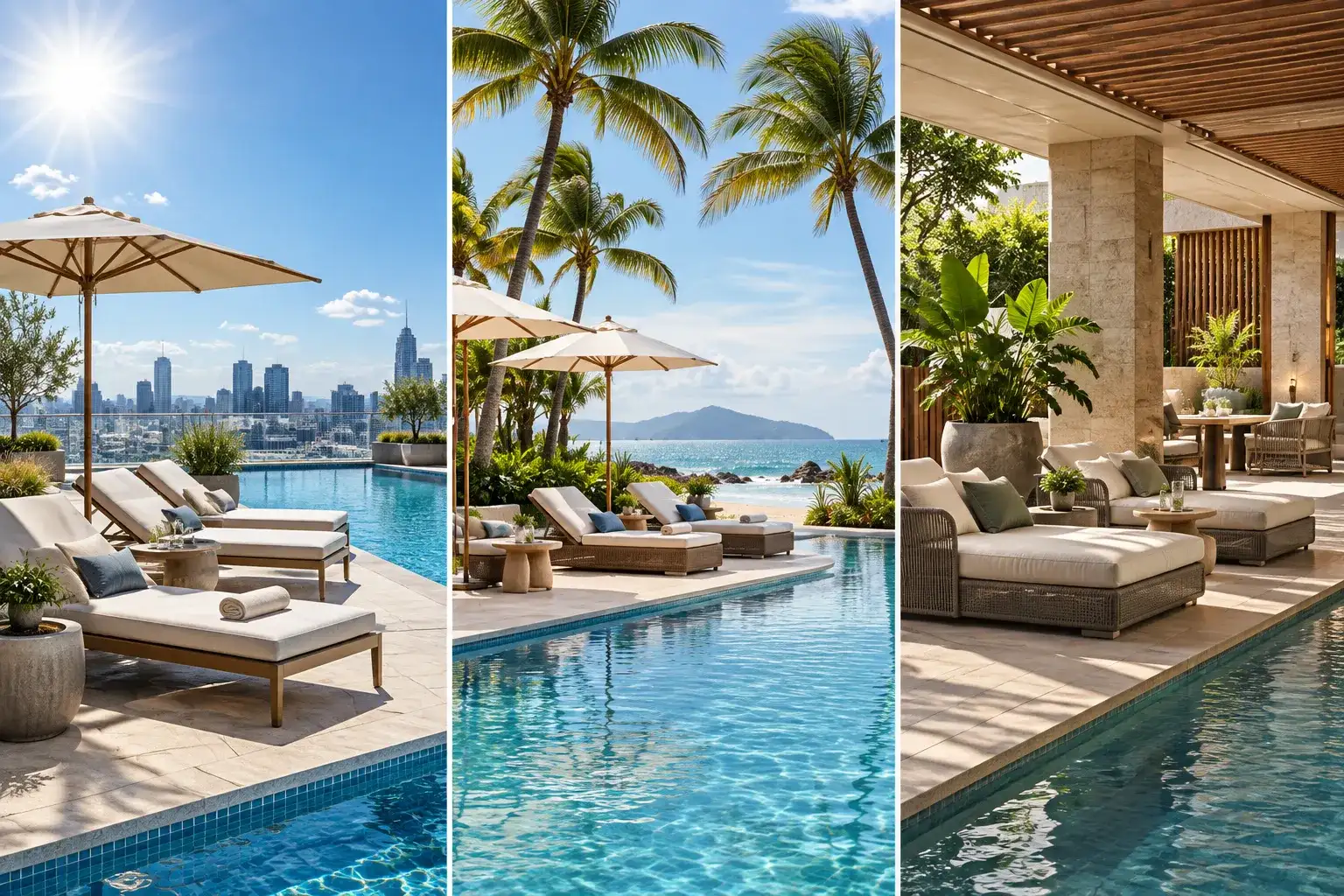
Different pool environments create different levels of sun, wind, humidity and weather exposure. (Illustrative image)
1.2. Match Furniture to Guest Activities and Staff Routines
Identify the activities each area needs to support. Sunbathing requires reclining furniture; poolside dining needs upright seating and suitable table heights; shaded relaxation may call for lounge chairs or daybeds.
Discuss the proposed selection with the hotel’s operating team. Staff may need to move furniture for cleaning, remove cushions before rain, or reconfigure seating for events. Those tasks should inform decisions about weight, access, storage, and replaceable components.
The resulting brief should describe both the guest experience and the work required to maintain it.
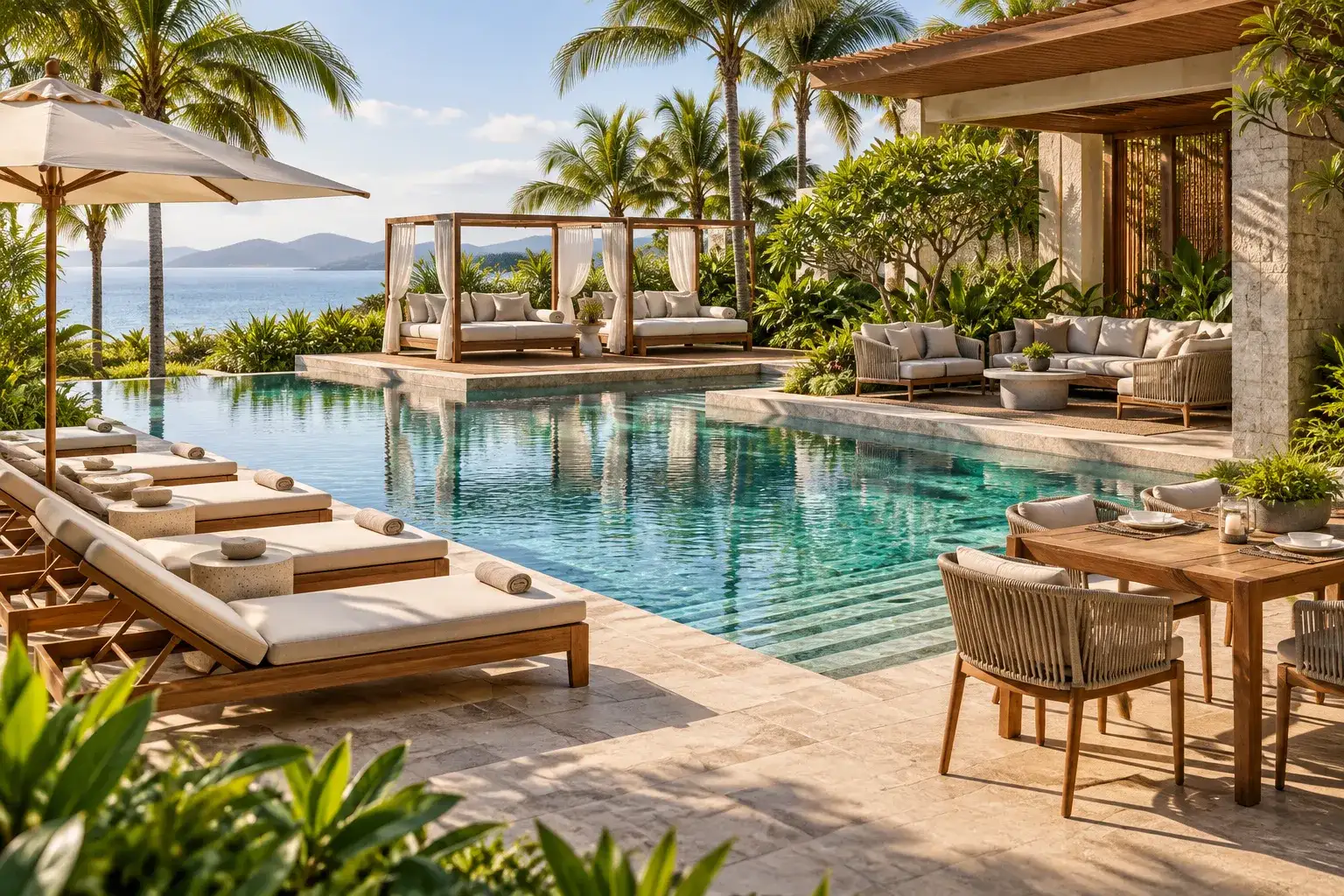
Different guest activities require different furniture types even within the same pool area. (Illustrative image)
1.3. Build the Specification Before Comparing Suppliers
Create a schedule listing product codes, quantities, dimensions, materials, finishes, cushions, functions, and packaging requirements. Include the intended location of each item and the required delivery date.
Identify requirements that are fixed and options that remain open. For example, the overall lounger width may be constrained by the layout, while the cushion color can remain subject to sample approval.
This distinction allows suppliers to propose alternatives without changing essential requirements. It also makes price comparisons more meaningful, because products with similar appearances may have different frames, cushions, mechanisms, or packing arrangements.
2. What to Consider When Buying Commercial Pool Loungers Wholesale
Purchasing commercial pool loungers wholesale involves more than multiplying a sample price by the required quantity. Buyers must compare the complete configuration, commercial terms, and delivery assumptions.
2.1. Compare Quotations on the Same Basis
Before requesting quotations, shortlist commercial sun loungers and sunbeds that match your pool layout and intended guest use. Send each supplier the same requirements for dimensions, materials, cushions, reclining functions, and packaging. Ask them to identify deviations and price optional upgrades separately so you can compare equivalent configurations.
A comparison sheet should cover the following:
|
Item |
What to confirm |
|
Product configuration |
Dimensions, materials, finishes, cushions, mechanisms, and accessories |
|
Minimum order quantity |
Requirements by model, color, fabric, or material |
|
Samples |
Sample charges, revision costs, approval process, and any agreed credits |
|
Packaging |
Carton dimensions, packed weight, protection, and assembly requirements |
|
Delivery basis |
Named delivery point, responsibilities, and excluded charges |
|
Payment |
Deposit, balance, and agreed payment milestones |
|
Warranty and claims |
Coverage, exclusions, evidence requirements, and remedies |
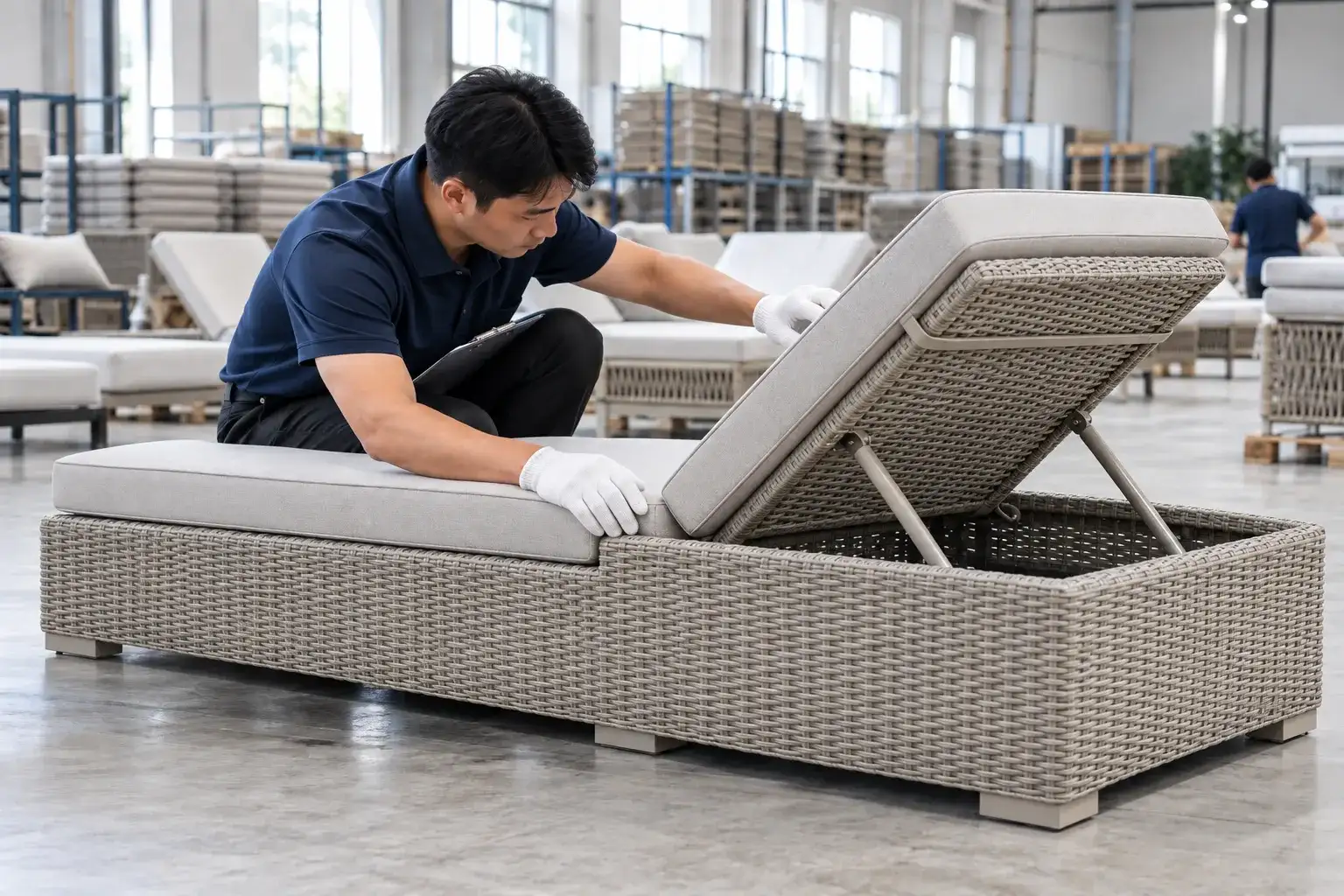
Construction details such as joints, weaving and moving parts should be checked before wholesale quantities are approved. (Illustrative image)
2.2. Consider Operating and Replacement Costs
The purchase price is only part of the cost of using furniture. Staff handling, cleaning, storage, replacement cushions, and repair arrangements also influence the value of a collection.
Ask whether selected components can be ordered separately and how they are identified. Confirm minimum quantities and availability rather than assuming that a replacement part shown on a sample will remain available indefinitely.
Packed volume also matters. Request packaging dimensions for the actual configuration and have the logistics provider review the proposed shipment. A lower unit price may offer limited savings if the product requires substantially more transport or handling.
2.3. Plan Quantities and Delivery Around the Project
Calculate quantities from a scaled layout, then review them against expected demand and operating needs. Include side tables, umbrella bases, landscaping, and the space occupied by fully reclined backrests.
Confirm circulation and access requirements with the project team and applicable local requirements. Do not use a generic spacing figure as a substitute for reviewing the actual site.
Work backward from the required arrival date. Allow for sample approval, material preparation, production, inspection, corrective work, transport, and receiving. Distinguish production completion from shipment departure and arrival at the property.
If installation is phased, agree on product identification and shipment sequencing so the receiving team can locate the furniture required for each area.
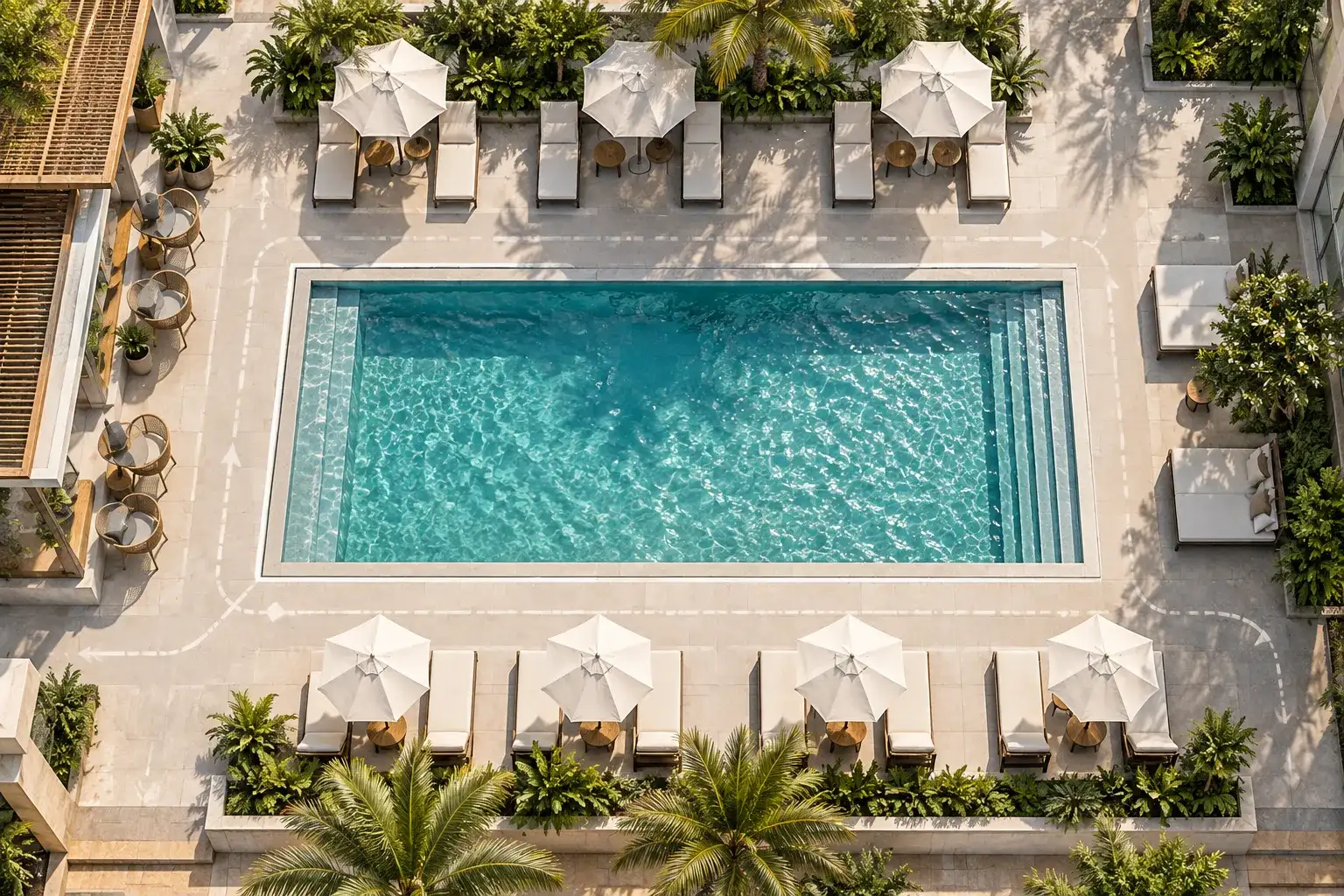
Pool furniture quantities should be based on usable space and circulation rather than simply maximizing seat count. (Source: Internet)
3. Choosing Commercial Hotel Pool Chairs
Pool chairs support different activities from sun loungers. Their proportions, handling characteristics, and relationship with tables deserve separate evaluation.
3.1. Select the Chair for Its Intended Use
Dining chairs should be assessed with the proposed table. Check seat height, arm clearance, and the space available when guests sit down or move away.
For lounge seating, review seat depth, back angle, cushion support, and ease of getting up. Bar-height chairs require a compatible counter or table and a practical footrest arrangement.
Compact chairs may suit smaller terraces, but reduced dimensions should still be evaluated through a physical sample. A photograph cannot establish comfort or confirm that a chair works with the intended table.
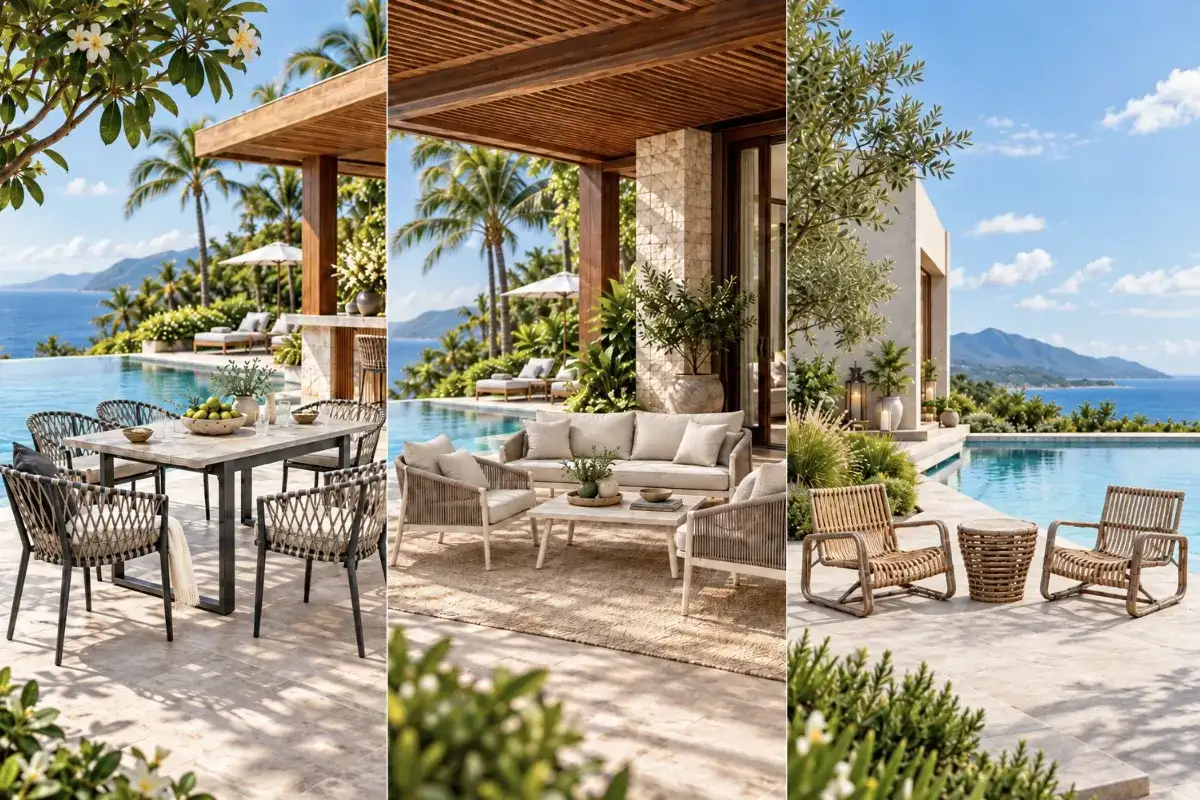
Chair selection should follow the activity and available space within each hotel pool zone. (Illustrative image)
3.2. Check Handling, Stacking, and Cleaning
Have staff try moving the sample using the intended handling method. Ask for the product weight and consider whether its shape provides convenient lifting points.
Where stacking is required, confirm that the model is designed for it. Test the approved stacking arrangement and review how surfaces are protected from damage. Include the resulting stack dimensions in storage planning.
Inspect the underside, joints, and cushion attachments for cleaning access. Removable cushions should be straightforward to handle while remaining secure during normal use.
3.3. Keep Maintenance Practical Across the Collection
Standardizing selected fabrics, finishes, or components may simplify maintenance, provided those choices suit each location.
Record the codes for cushions, feet, glides, and other replaceable items. Ask how finish samples and specifications are retained for future orders, and require approval before substitutions.
Visual consistency can come from a shared palette without making every chair identical. The collection should support different guest activities while giving the operating team a manageable set of maintenance requirements.
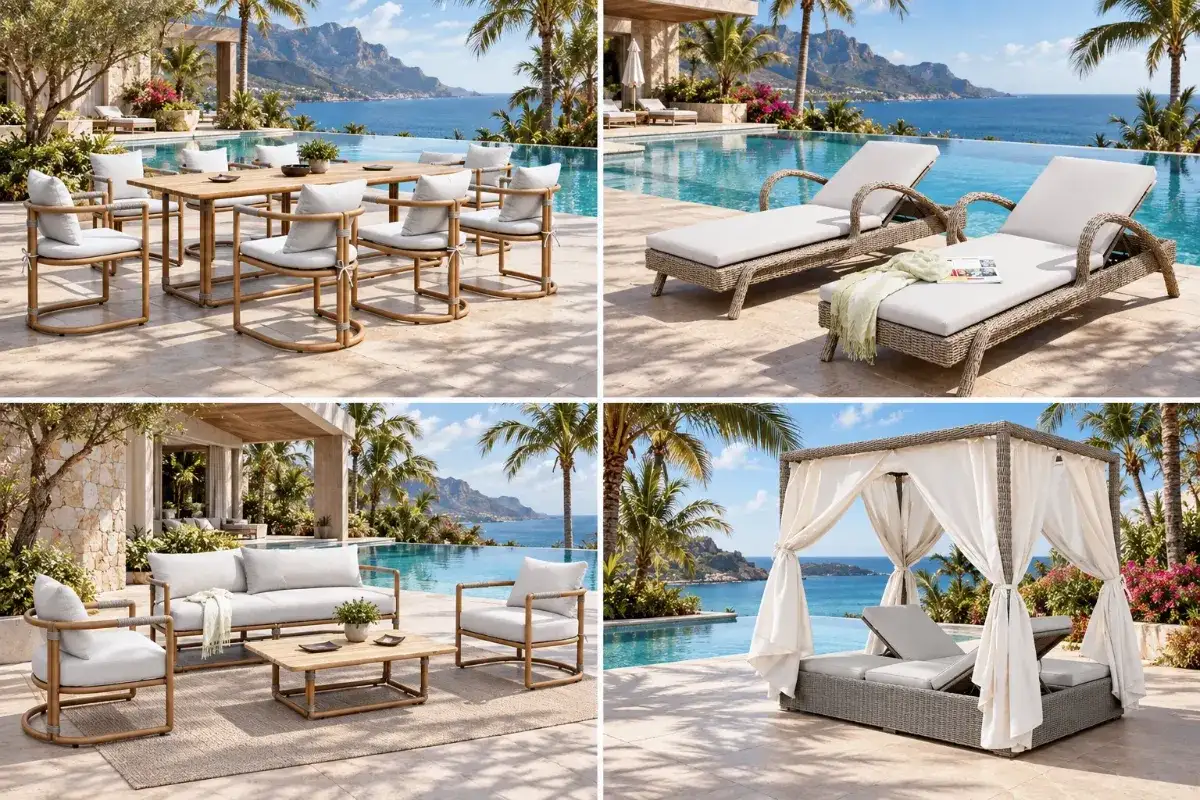
Shared finishes and materials can visually connect different furniture types throughout a resort. (Illustrative image)
4. Planning Resort Swimming Pool Furniture, Daybeds, and Shade
Resort swimming pool furniture should form a usable layout rather than a collection of individual products. Planning seating and shade together helps reveal conflicts before ordering.
4.1. Establish Clear Guest Zones
Locate sunbathing, dining, group seating, and quieter relaxation areas according to the actual pool layout. Consider the relationship with entrances, service points, planting, and routes used by guests and staff.
Review the furniture at its full operating footprint. A lounger with its backrest lowered, a chair pulled away from a table, or an umbrella being closed may occupy more space than its static presentation suggests.
A consistent material palette can connect the zones while allowing each area to use appropriate furniture.
Dividing the pool deck into functional zones helps each furniture type support a specific guest activity. (Illustrative image)
4.2. Evaluate Daybeds as Complete Assemblies
Daybeds offer a larger relaxation surface, but their size creates additional handling and maintenance questions.
Check the overall frame footprint, access from the sides, and space underneath for cleaning. Confirm the intended occupancy and any relevant manufacturer documentation rather than inferring capacity from cushion size.
Examine how the cushion system is divided. A single large cushion may require different storage and handling arrangements from several smaller sections. Ask staff to test removal and replacement, and confirm where cushions will be kept when not in use.
For daybeds with canopies, inspect the complete assembly. Review adjustment, locking positions, movement clearance, fabric removal, and the manufacturer’s operating instructions. Confirm which canopy components can be replaced and whether the configuration suits the intended exposure.
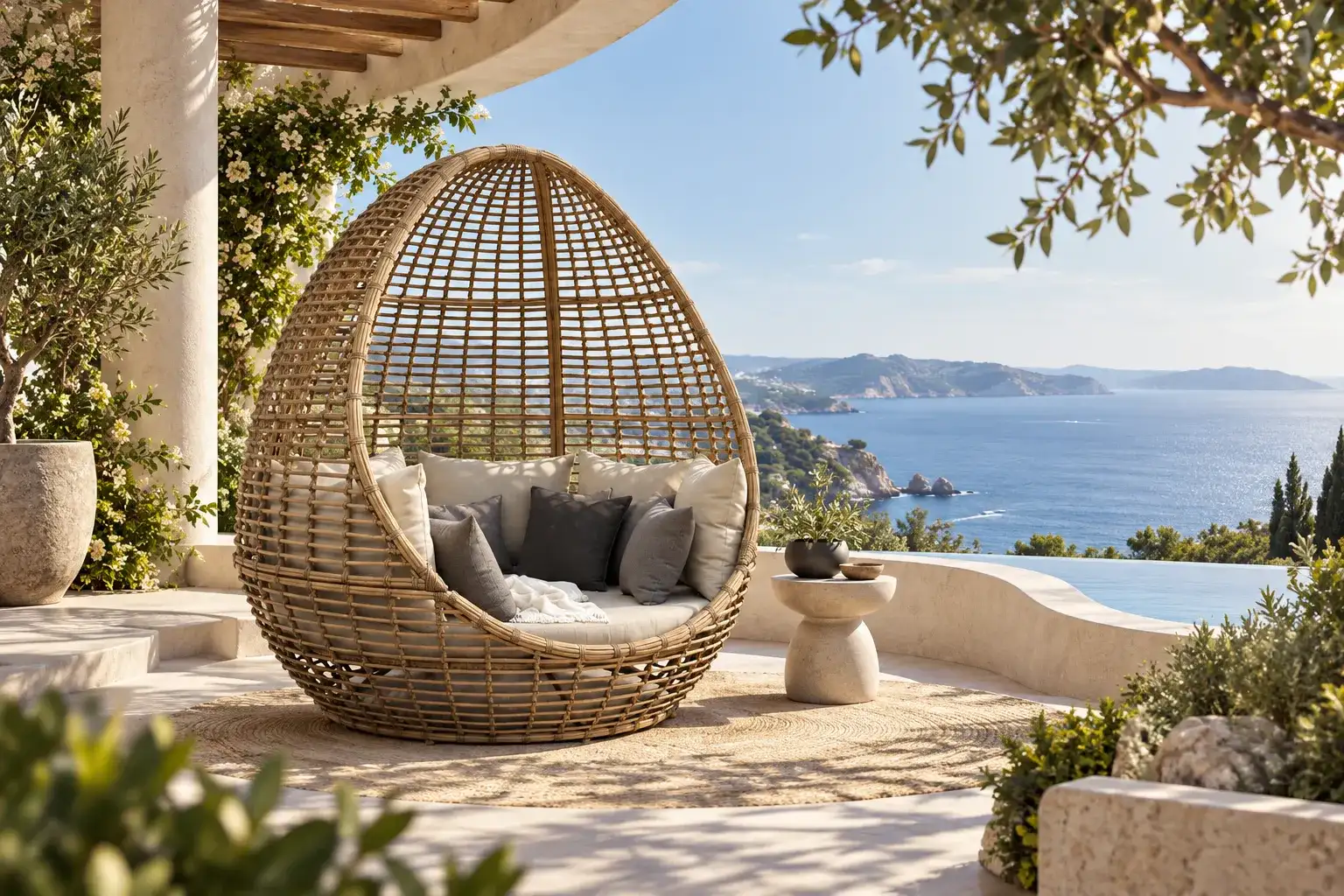
Daybeds need enough surrounding space for comfortable guest access and routine hotel cleaning.
4.3. Specify Umbrellas Together with Their Bases
An umbrella specification should identify the canopy, frame, operating mechanism, and compatible base or anchoring arrangement.
A center-pole model places its support within the shaded area. A cantilever model moves the support to one side, but its base and moving components still occupy space. Shade coverage depends on canopy size, geometry, sun position, and placement.
Ask the supplier to confirm the appropriate base or anchoring configuration for the exact umbrella model. Review floor conditions and any fixed installation with the project team.
For exposed locations, request the applicable operating guidance, including when the umbrella should be closed or removed from service. Any stated wind performance should be understood in relation to the tested configuration and conditions.
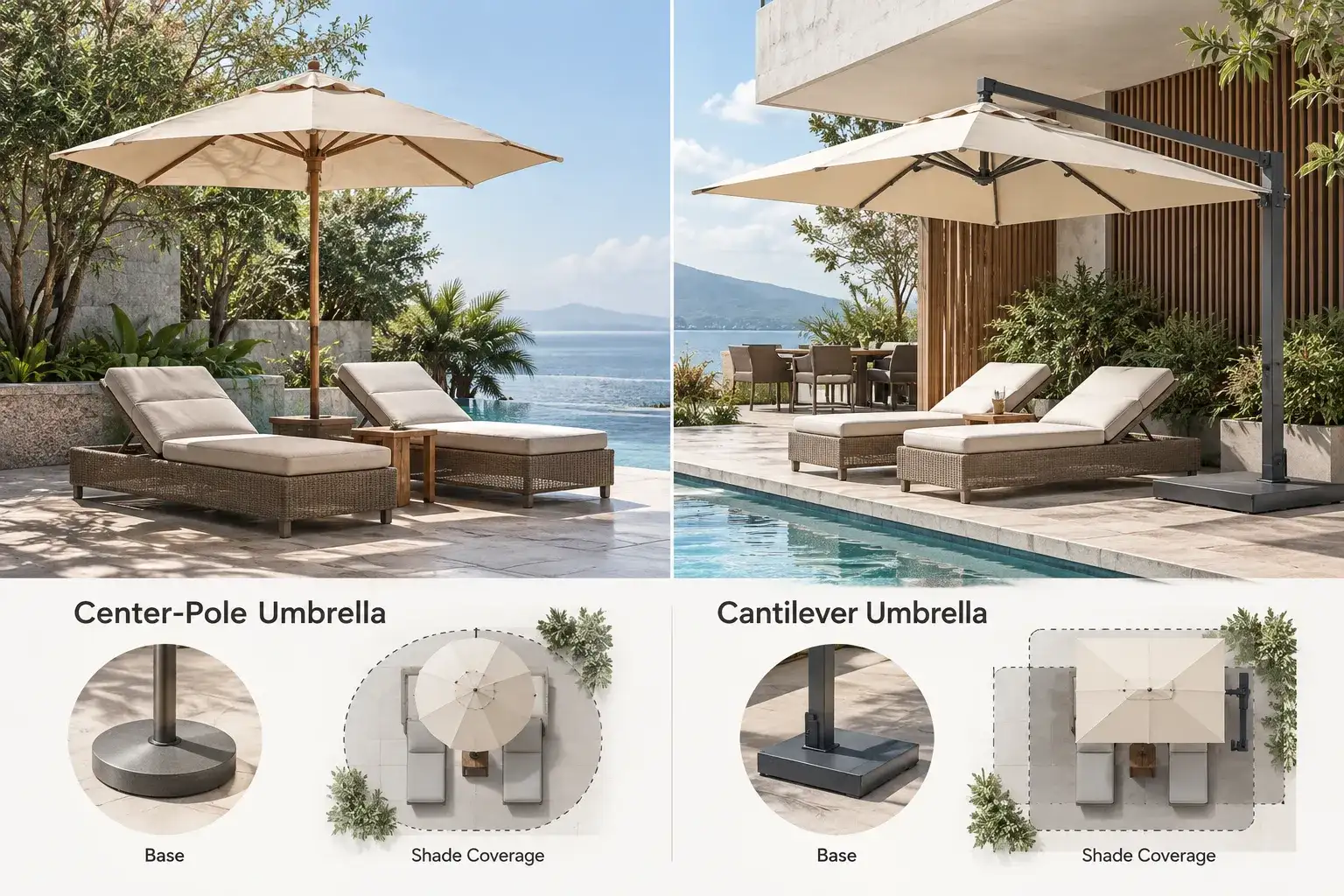
Umbrella bases and shade coverage should be planned together with the surrounding pool furniture. (Source: Internet)
4.4. Test Shade Coverage and Daily Operation
Review shade at the times guests are expected to use the area. A layout that provides shade in the morning may perform differently later in the day.
Allow room for opening, closing, rotating, or tilting where those functions are provided. Check that the canopy and mechanism do not conflict with furniture, planting, or circulation.
Include daily operation in staff planning. Confirm who closes umbrellas, where removable items are stored, and how worn or damaged components are reported. These procedures should follow the manufacturer’s instructions for the selected products.
5. Evaluating Commercial Poolside Chaise Lounges and Materials
A commercial poolside chaise lounge should be assessed through its complete construction and daily use. Appearance alone cannot establish comfort, stability, or suitability for a hotel environment.
5.1. Test Reclining, Comfort, and Handling
Try the sample in each intended reclining position. Check whether adjustment is understandable, the mechanism engages securely, and the lounger remains stable during normal use.
Review seat height, usable reclining length, cushion support, and ease of getting on and off. Check moving areas for awkward hand placement or interference, following the supplier’s instructions.
Where wheels are included, test movement on a representative surface. Confirm lifting or handling points and check whether staff can reach beneath the frame for cleaning.
Inspect cushion fit and attachments. Cushions should remain in their intended position during use while being practical to remove for cleaning and storage.
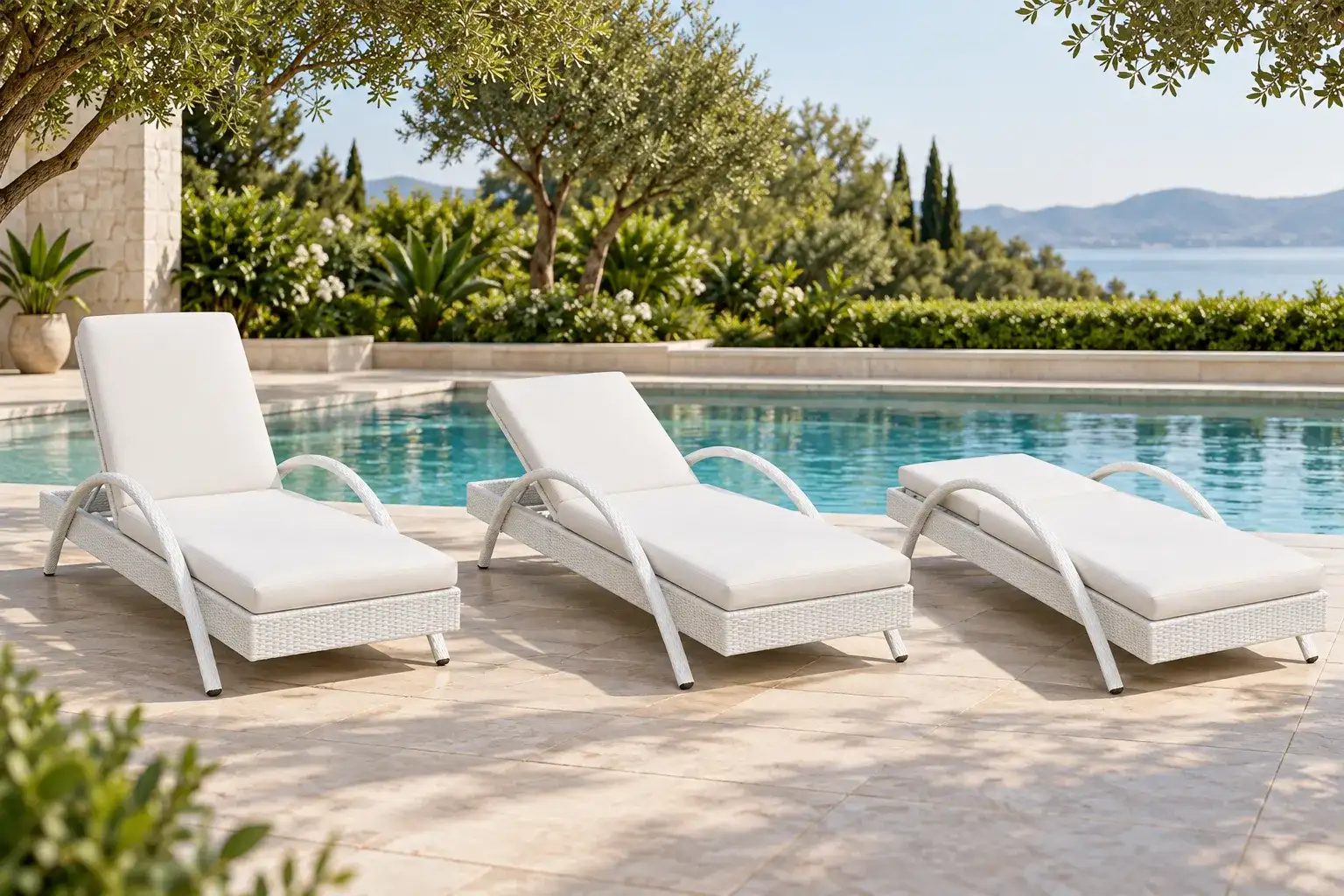
A chaise lounge should remain comfortable, stable and easy to operate across different reclining positions. (Illustrative image)
5.2. Look for Evidence Behind Heavy-Duty Claims
The phrase heavy-duty pool furniture for hotels should lead to questions about construction and documented performance.
Review the frame, joints, reinforcement, hardware, and moving components. Ask which tests or assessments support the proposed use and whether reports apply to the model and configuration being purchased.
A heavier product is not automatically a better commercial choice. Likewise, a sample that feels stable during a brief inspection does not establish long-term durability.
Where testing is required, agree on the relevant requirements and supporting documentation before production. Distinguish a hands-on sample review from formal testing.
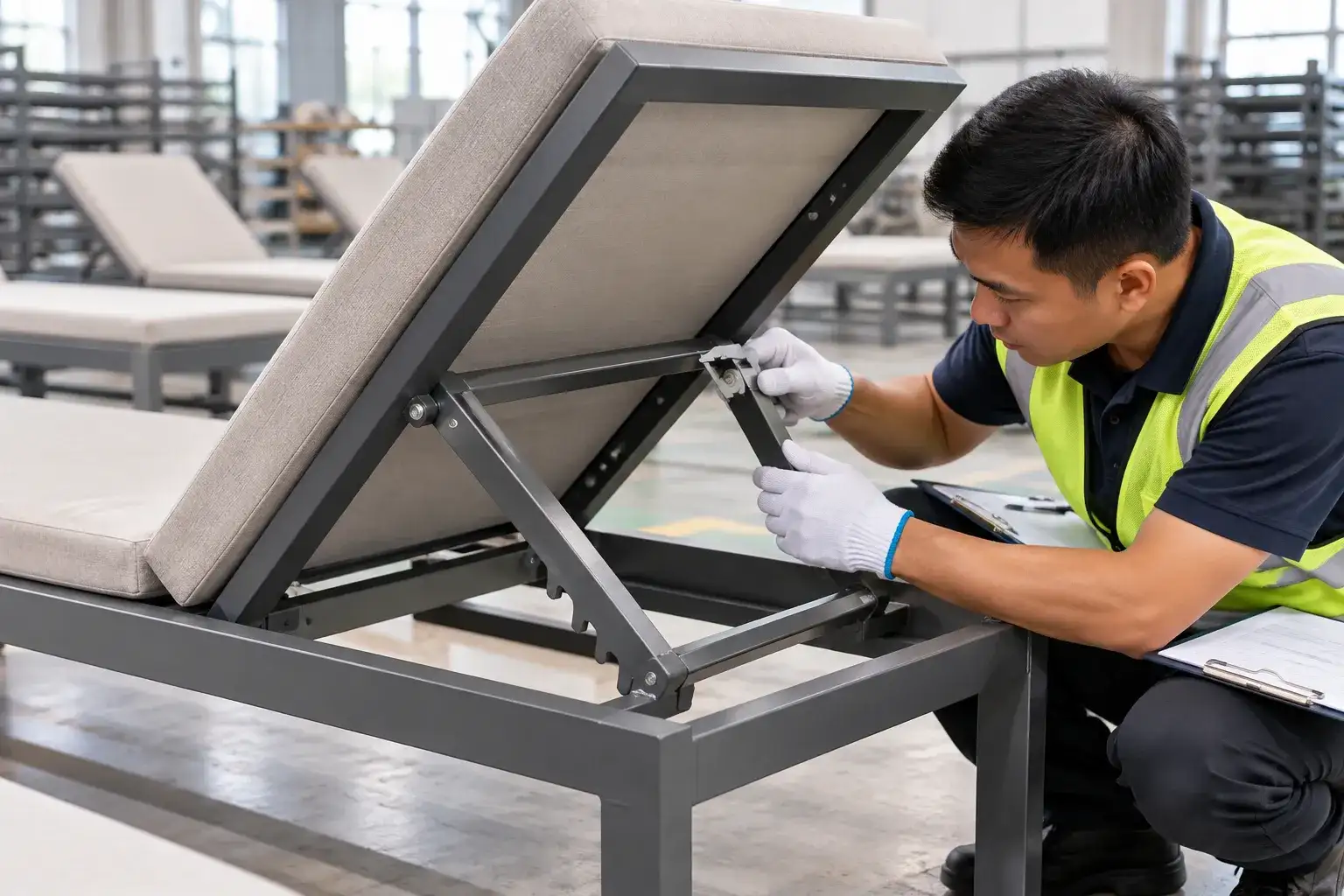
Frame construction and moving components provide more useful information than relying on a general “heavy duty” claim. (Source: Internet)
5.3. Match Materials to Exposure and Maintenance
Commercial pool sun loungers may combine metal, timber, woven materials, and upholstery. Evaluate how those components work together.
|
Material or component |
Information to confirm |
|
Powder-coated aluminum |
Frame profile, joints, surface preparation, coating system, and care |
|
HDPE wicker |
Material specification, strand profile, fixing method, and supporting evidence |
|
Outdoor rope |
Fiber specification, construction, attachment, and cleaning requirements |
|
Teak |
Timber specification, joinery, finish, and agreed maintenance approach |
|
Hardware and feet |
Material, protective treatment, compatibility, access, and replacement |
|
Cushions |
Fabric, filling, cover construction, underside, attachments, and drying instructions |
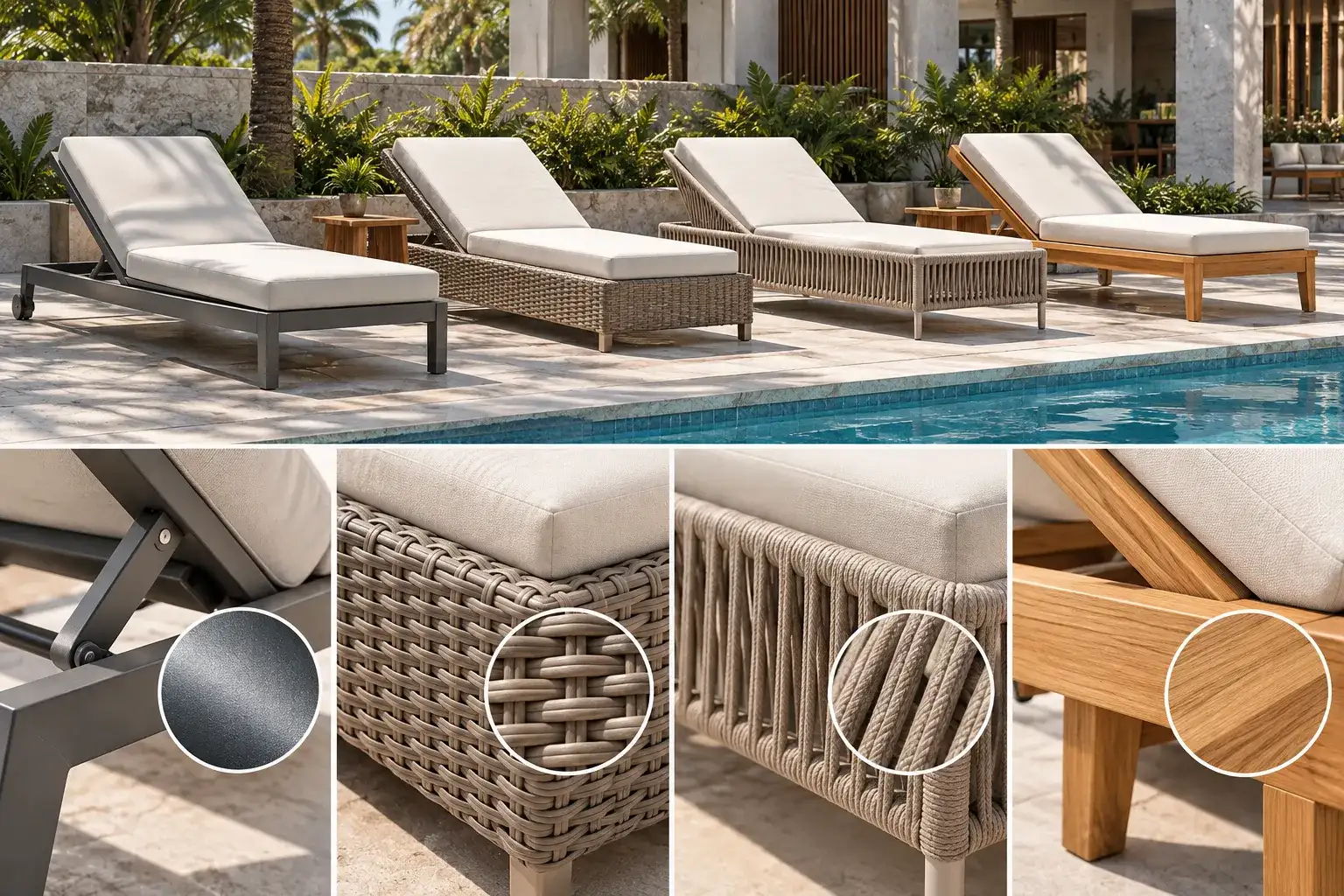
Material selection should follow the pool environment, project design and expected maintenance routine. (Illustrative image)
Teak can support a natural architectural palette, but buyers should agree on the desired appearance over time and the maintenance associated with it.
For wicker and rope, inspect tension, terminations, and access to the supporting frame. Request evidence relevant to the proposed material rather than relying on a general outdoor-use claim.
For aluminum frames, consider the complete construction and finish. Include hardware and contact points in the review, especially where the furniture will be exposed to coastal conditions.
5.4. Check Cushions, Drainage, and Coastal Details
Water-resistant fabric alone does not explain how quickly a complete cushion will dry. Ask how moisture exits the assembly, what the filling requires, and how cushions should be stored.
Inspect zippers, seams, underside materials, attachments, and contact with the frame. Look for areas that may retain water or be difficult to clean. Any practical wetting or drying assessment should follow an agreed method and the supplier’s care instructions.
For coastal projects, request specific information about fasteners, moving mechanisms, protective finishes, and maintenance. If “marine-grade” is used, ask which component or material it describes and what documentation supports the claim.
These checks help translate environmental exposure into a usable product specification.
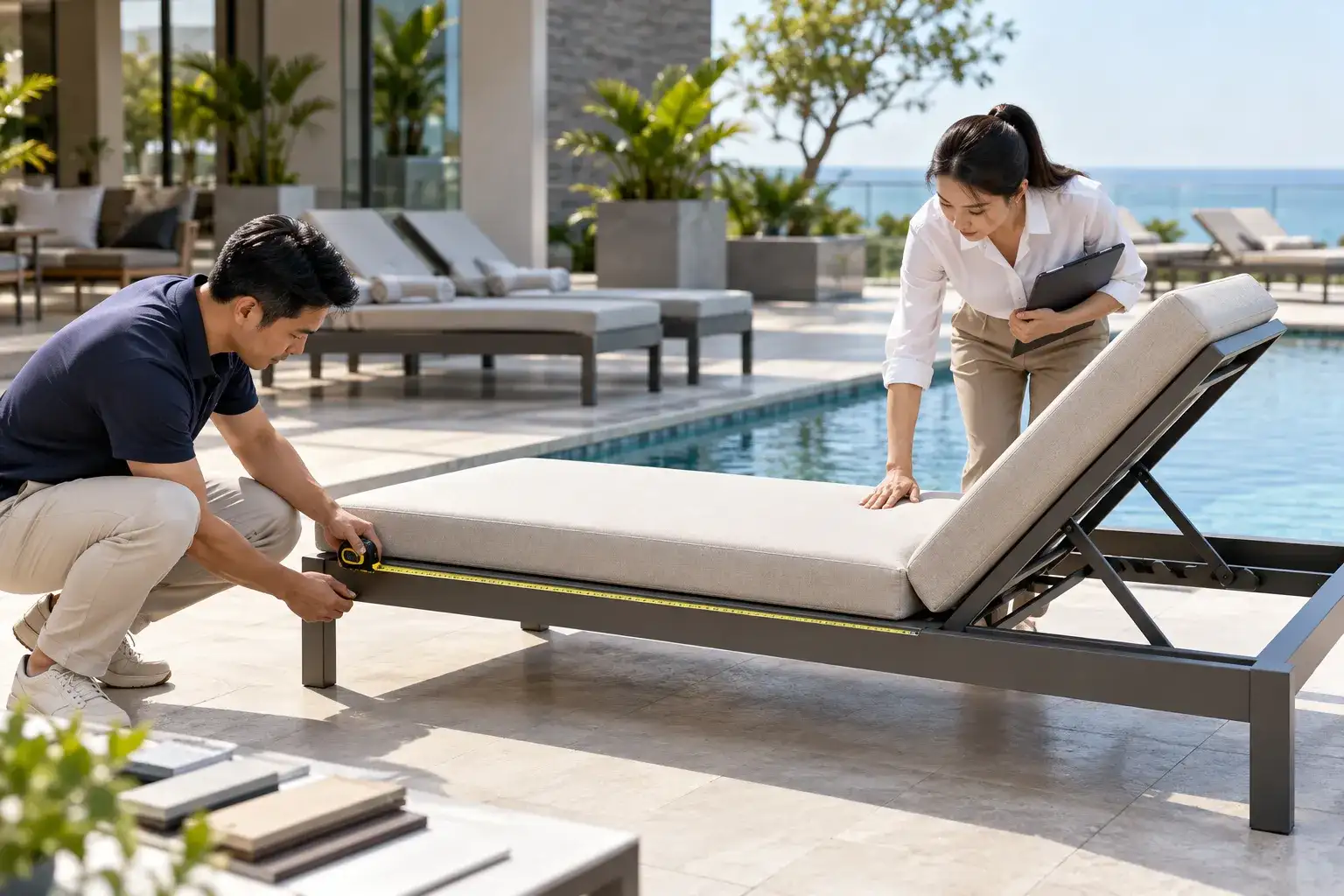
Sample approval should confirm dimensions, function, comfort and finish before bulk production begins. (Illustrative image)
5.5. Record Sample Approval Before Bulk Production
Use a written checklist and record the outcome of each inspection.
|
Check |
Approval record |
|
Dimensions |
Measurements against the agreed drawing and tolerances |
|
Function |
Reclining, wheels, attachments, and other specified features |
|
Construction |
Frame, joints, weaving, hardware, and accessible surfaces |
|
Comfort and handling |
Observations from guest-use and staff-handling trials |
|
Appearance |
Approved color, finish, fabric, and workmanship references |
|
Packaging |
Protection, accessories, identification, and assembly information |
Photograph approved details and list required corrections. Assign the sample and specification a revision reference so both parties know which version governs production.
Clarify whether a revised sample or additional evidence is needed before approval. Informal comments should not replace a documented decision.
6. Working with ATC Furniture on Commercial Pool Furniture Projects
A coordinated brief helps buyers discuss suitable products with ATC and evaluate the response against project requirements.
6.1. Prepare a Project-Specific Product Schedule
Start by reviewing ATC’s outdoor furniture collection and identifying models that may fit the project.
Send the pool layout, installation conditions, product categories, quantities, preferred materials, and required arrival date. Include reference images where useful, while distinguishing visual preferences from mandatory technical requirements.
Ask ATC to confirm available configurations for each selected model. Do not assume that every product shares the same customization, replacement, or packaging options.
6.2. Confirm Details Through Samples and Written Specifications
Discuss frame finishes, woven materials, cushion specifications, dimensions, and functional requirements as applicable to the selected products.
Request confirmation of reclining mechanisms, wheels, attachments, and replacement components where relevant. If umbrellas are included in the project, clarify the scope of supply and compatibility requirements separately.
Use approved samples and written specifications as the production reference. Record any agreed exclusions, limitations, or buyer-supplied items before the order is finalized.
6.3. Connect Approval with QC, Packing, and Delivery
Agree on inspection stages and the process for handling deviations. Production checks should refer to the approved configuration rather than catalogue photographs alone.
Review packing and loading information for mixed-product shipments. Product codes, carton identification, and packing lists should support receiving, installation, and later maintenance.
Before shipment, confirm outstanding inspection actions and required documents. A clear handover helps the hotel identify what arrived, place it correctly, and retain the information needed for care and replacement requests.
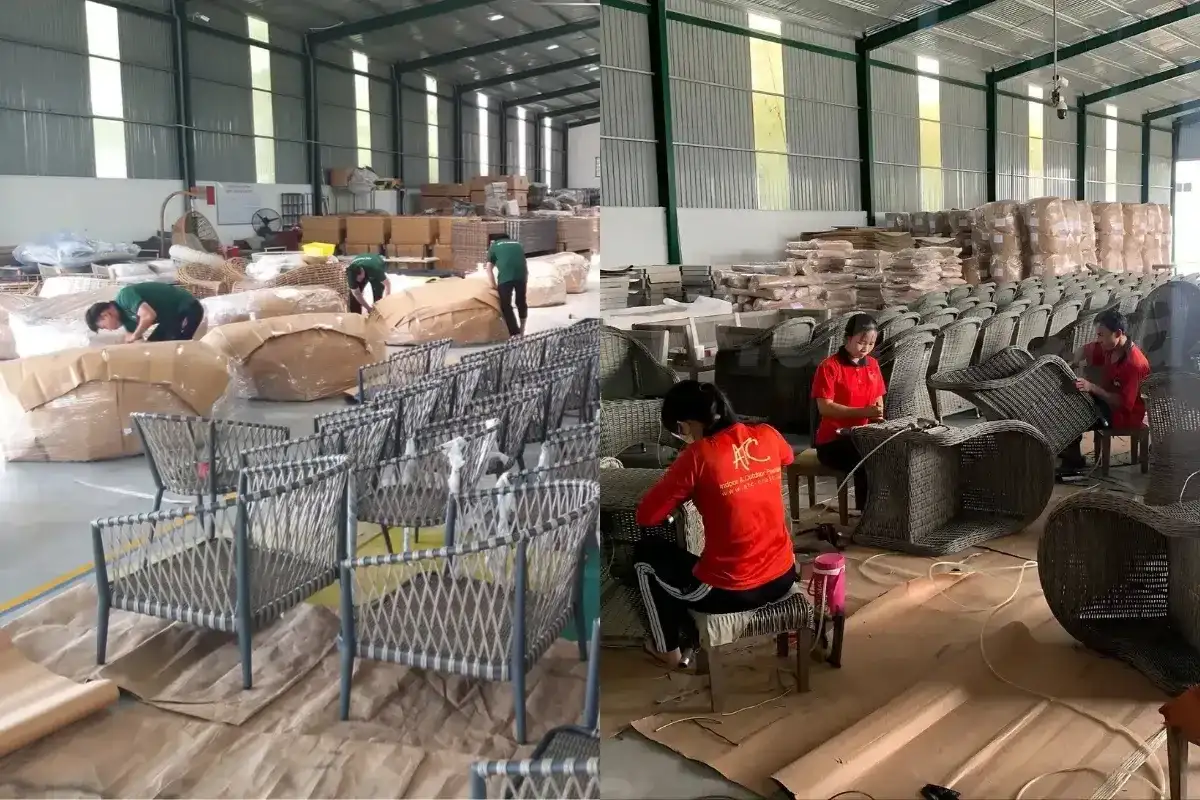
A structured sourcing process connects sample approval with production, QC, packing and shipment planning.
7. FAQs About Commercial Pool Furniture
7.1. What Materials Are Commonly Used for Commercial Pool Furniture?
Common options include powder-coated aluminum, synthetic wicker, outdoor rope, teak, and upholstered cushions. Suitability depends on the complete product, exposure, and maintenance arrangements. Ask for specifications and supporting information for the proposed configuration.
7.2. What Should Buyers Check When Sourcing Commercial Pool Loungers Wholesale?
Compare equivalent products, then review MOQ, samples, packaging, delivery assumptions, payment, warranty, and claims procedures. Confirm the required warehouse or site arrival date separately from production completion.
7.3. How Do Commercial Pool Sun Loungers Differ from Residential Models?
Commercial projects typically require closer consideration of repeated use, staff handling, cleaning, inspection, and replacement support. The word “commercial” alone does not prove performance; review the actual specification and relevant documentation.
7.4. How Much Space Should Remain Around Hotel Pool Furniture?
Use the full operating dimensions of furniture, umbrellas, and bases. Review circulation, access, and service needs with the project team against applicable requirements. A universal spacing figure cannot account for every pool layout.
7.5. What Should Buyers Check Before Approving a Lounger Sample?
Check dimensions, construction, finish, function, comfort, handling, cushions, and packaging. Record corrections and approval status against a controlled specification. Sample inspection complements, rather than replaces, any required formal testing.
7.6. Can Commercial Pool Furniture Be Customized?
Options may include finishes, fabrics, woven colors, cushions, or dimensions, depending on the model and production requirements. Confirm feasibility, minimum quantities, costs, sample requirements, and schedule changes before approving customization.
Selecting commercial pool furniture works best when design, operation, and procurement are reviewed together. Prepare a product schedule, evaluate complete assemblies, and approve samples against written requirements. Before requesting a final quotation, bring together the layout, quantities, specifications, destination, and arrival date. Those inputs give both buyer and supplier a clearer basis for delivering a collection that fits the property’s daily needs.