Commercial Outdoor Bar Stools & Tables: B2B Sourcing Guide
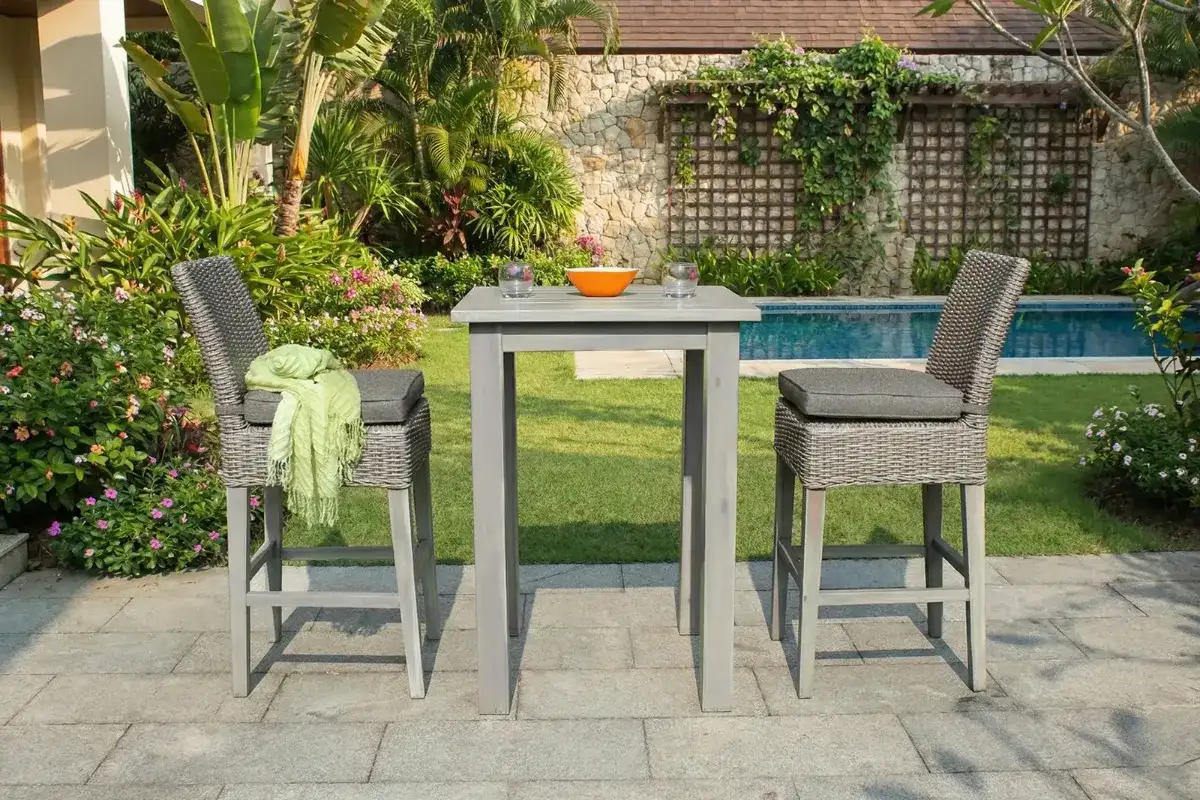
Commercial outdoor bar stools and tables are widely used in hospitality spaces such as hotel rooftops, restaurant patios, outdoor pubs, resorts, and pool bars. Unlike residential furniture, these high-top sets need to support frequent use while maintaining stability, comfort, and reliable performance in outdoor conditions.
For commercial buyers, selecting outdoor bar furniture involves more than choosing an attractive design. Table and stool height, structural strength, weather resistance, materials, maintenance, and suitability for the venue can all affect long-term performance and operating costs.
This guide explains how to choose and source commercial outdoor bar stools and tables for hospitality and B2B projects, covering height selection, weatherproof materials, key product features, venue-specific requirements, and important factors to review before placing a bulk order.
1. What Are Commercial Outdoor Bar Stools and Tables?
Commercial outdoor bar stools and tables are high-top furniture designed for hospitality and business environments such as hotels, rooftop bars, restaurants, pubs, resorts, and poolside areas. Compared with residential furniture, commercial pieces are typically selected with greater attention to durability, stability, maintenance, and frequent daily use.
A complete high-top setting usually combines appropriately sized stools with bar-height or counter-height tables. For B2B buyers, matching the right dimensions, materials, and construction helps create a more comfortable guest experience while supporting reliable long-term use.
1.1 Commercial Outdoor Bar Stools
Commercial outdoor bar stools are elevated seats designed to pair with bar-height or counter-height tables. They are commonly used in hospitality spaces where operators want to create a casual, social, and space-efficient seating arrangement.
Important features include frame stability, seat height, footrest position, back support, and outdoor material performance. Depending on the project, stools may include cushions, armrests, woven rope, HDPE wicker, teak details, or powder-coated aluminum frames.
For commercial use, buyers should also consider how easily the stools can be cleaned, moved, or rearranged during daily operation.
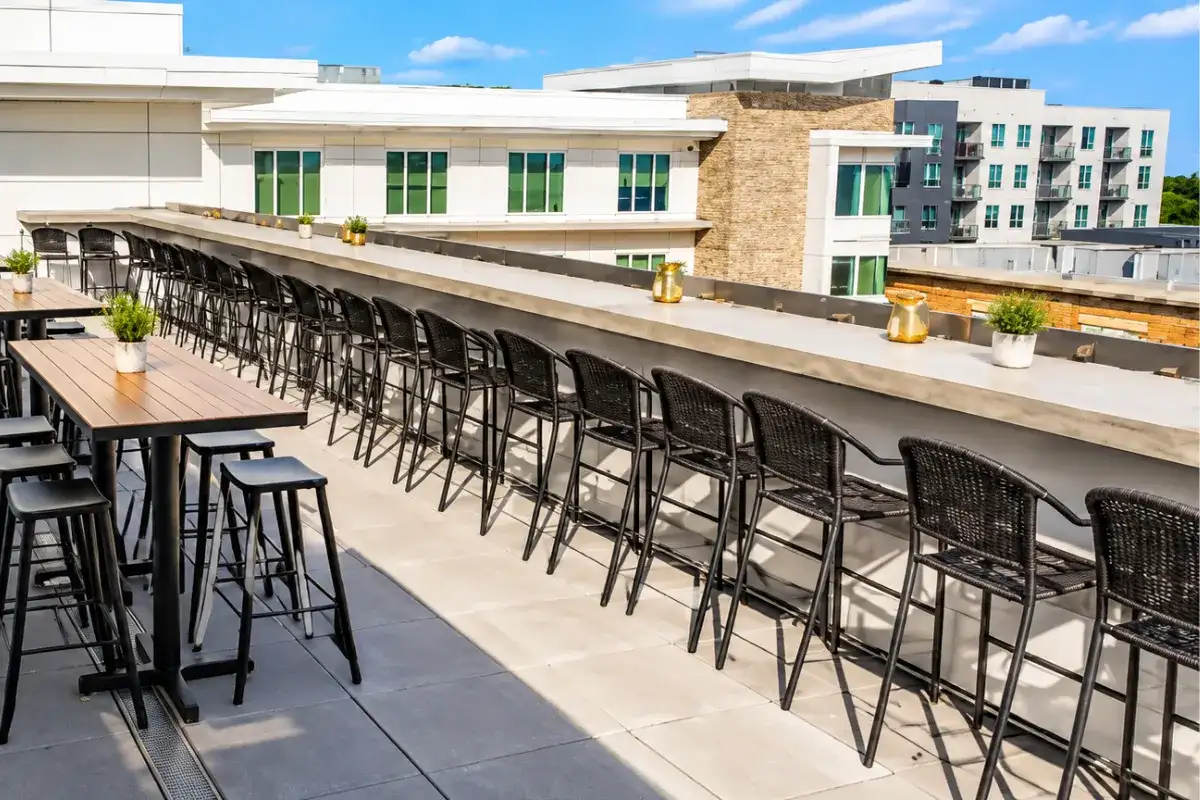
Outdoor bar stools provide elevated seating
for commercial hospitality spaces. (Source: Internet)
1.2 Commercial Outdoor Bar Tables
Commercial outdoor bar tables are elevated tables designed for use with high stools or standing guests. They are widely used in rooftop bars, restaurant patios, pubs, resort terraces, and pool bars.
For commercial buyers, key factors include table height, tabletop dimensions, base stability, surface durability, maintenance requirements, and consistency across larger orders. For larger projects, consistent dimensions and finishes are also important because multiple tables may need to be arranged within the same venue.
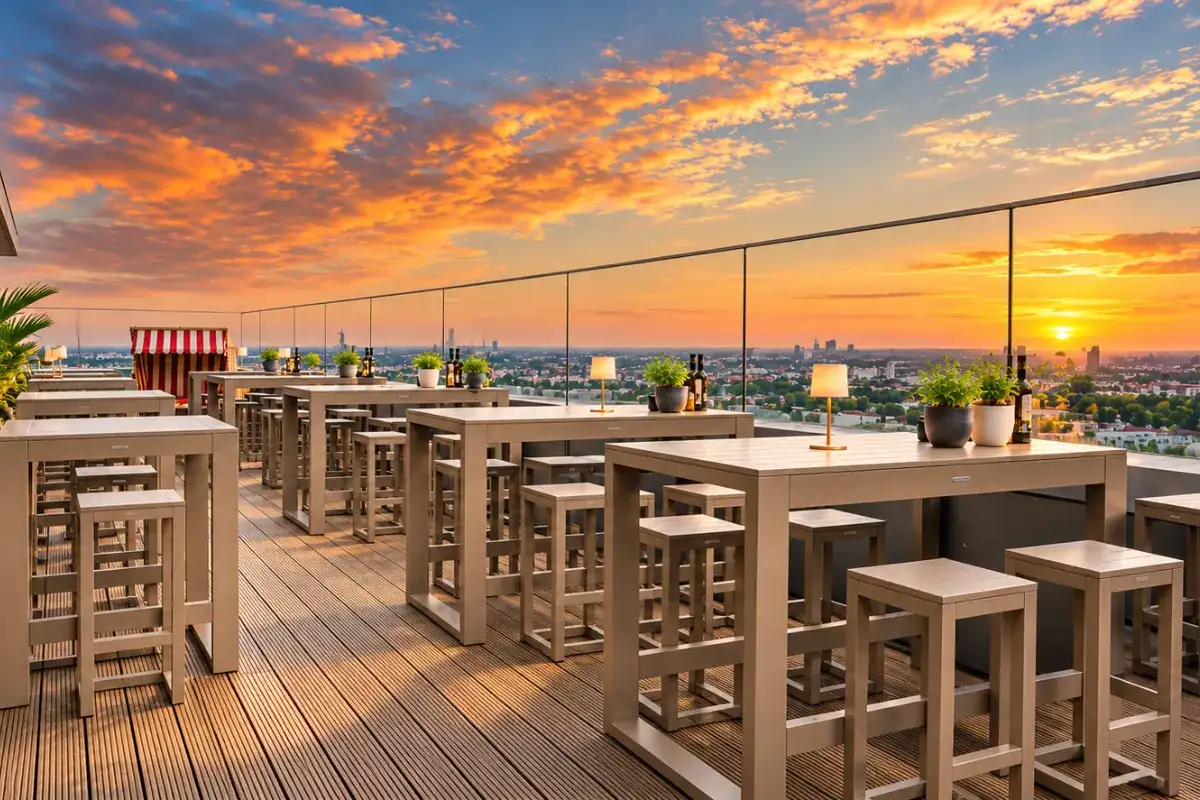
Commercial outdoor bar tables can be arranged consistently across larger hospitality spaces. (Source Internet)
1.3 Where Commercial Outdoor Bar Furniture Is Commonly Used
Commercial outdoor bar furniture can be used in:
- Hotel rooftop bars
- Restaurant patios
- Outdoor pubs and beer gardens
- Resort terraces
- Pool bars
- Beach clubs
- Outdoor cafés
Each environment has different priorities. Rooftop bars may require greater attention to stability and wind exposure, while poolside areas need materials that perform well around moisture. Restaurant patios often focus on efficient layouts and guest comfort, while hotels and resorts may place more emphasis on design consistency.
Understanding the venue first makes it easier to choose the right commercial outdoor bar stools and tables for the project.
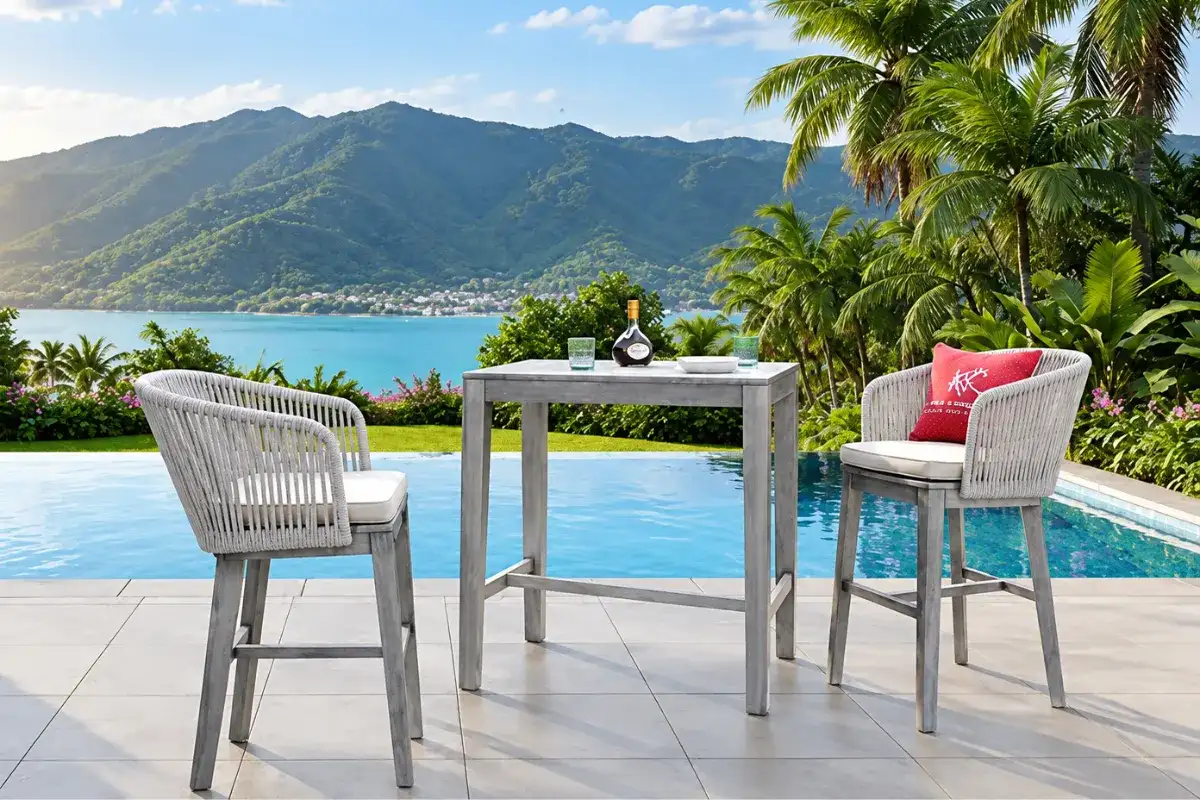
Commercial outdoor bar stools and tables can be used across rooftop bars, patios, resorts, pubs, and poolside hospitality spaces.
2. Bar Height vs Counter Height: Choosing the Right High-Top Furniture
Bar-height and counter-height furniture are designed for different seating positions. For commercial buyers, choosing the correct combination is important because mismatched table and stool heights can reduce comfort, limit legroom, and make the overall setup less practical.
As a general reference, counter-height tables are usually around 34-36 inches (86-91 cm) high, while bar-height tables are typically around 40-42 inches (102-107 cm).
2.1 Standard Bar-Height Tables and Stools
Bar-height furniture is commonly used in rooftop bars, pubs, cocktail areas, and other hospitality spaces where a taller and more social seating arrangement is preferred.
A standard bar-height table is generally around 40-42 inches (102-107 cm) high and is usually paired with a stool with a seat height of approximately 28-30 inches (71-76 cm).
Because this furniture has a higher center of gravity than standard dining furniture, buyers should also evaluate frame stability, base design, product weight, and footrest construction, especially for open-air or rooftop locations.
2.2 Standard Counter-Height Tables and Stools
Counter-height furniture is slightly lower and can provide a more relaxed seating experience while maintaining the appearance of a high-top setting.
Counter-height tables are generally around 34-36 inches (86-91 cm) high and are commonly paired with stools with a seat height of approximately 24-26 inches (61-66 cm).
This configuration can work well for restaurant patios, resort terraces, outdoor kitchens, and pool bar areas where guests may remain seated for longer periods.
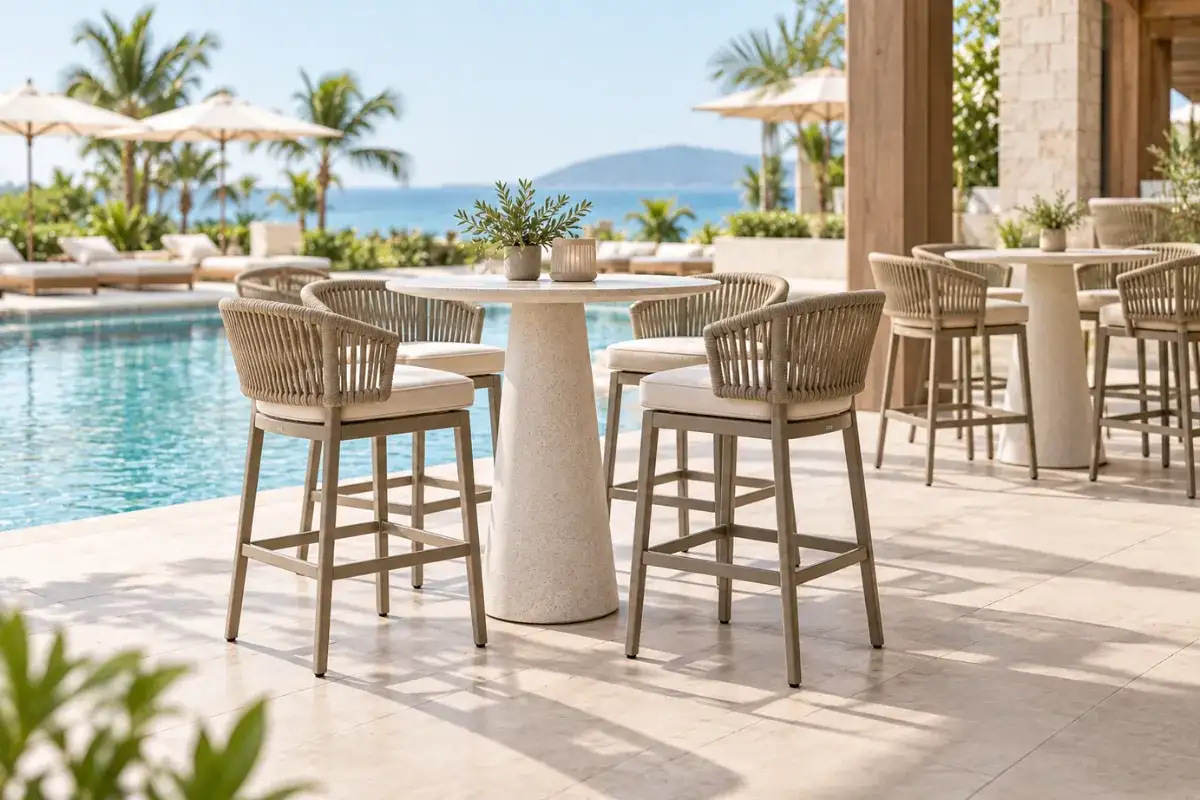
Counter-height seating creates a relaxed high-top setting for resort terraces and poolside hospitality areas.
2.3 How to Match Stool Height With Table Height
A practical way to match stools and tables is to check the vertical clearance between the stool seat and the tabletop. In most cases, approximately 10-12 inches (25-30 cm) of space provides comfortable legroom.
|
Furniture Type |
Table Height |
Recommended Stool Seat Height |
Recommended Clearance |
|
Counter Height |
34-36 in (86-91 cm) |
24-26 in (61-66 cm) |
10-12 in (25-30 cm) |
|
Bar Height |
40-42 in (102-107 cm) |
28-30 in (71-76 cm) |
10-12 in (25-30 cm) |
These measurements should be treated as general guidelines. Tabletop thickness, cushions, frame construction, and footrest position can affect the final seating experience.
For B2B buyers, confirming actual dimensions through technical specifications or samples before placing a bulk order can help prevent mistakes when sourcing commercial outdoor bar stools and tables.
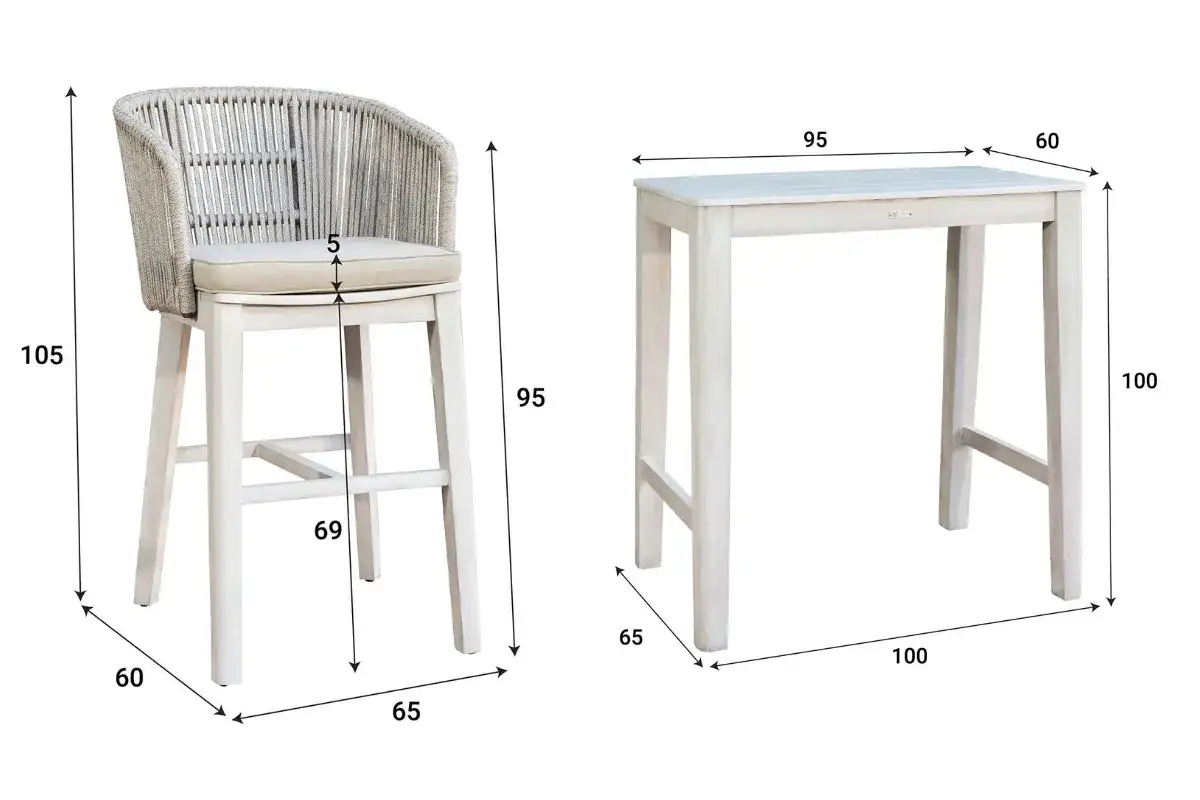
Actual product dimensions provide a practical reference for matching bar stool height with table height.
3. Best Weatherproof Materials for Commercial Outdoor Bar Furniture
Material selection has a major impact on the durability, appearance, and maintenance requirements of commercial outdoor bar stools and tables. In hospitality environments, furniture may be exposed to sunlight, humidity, rain, frequent cleaning, and continuous use.
Buyers should also consider consistency across larger quantities, replacement requirements, and how material choices affect long-term operating costs. Teak wood, outdoor rope, powder-coated aluminum, and HDPE wicker are among the most common materials used for commercial outdoor bar furniture.
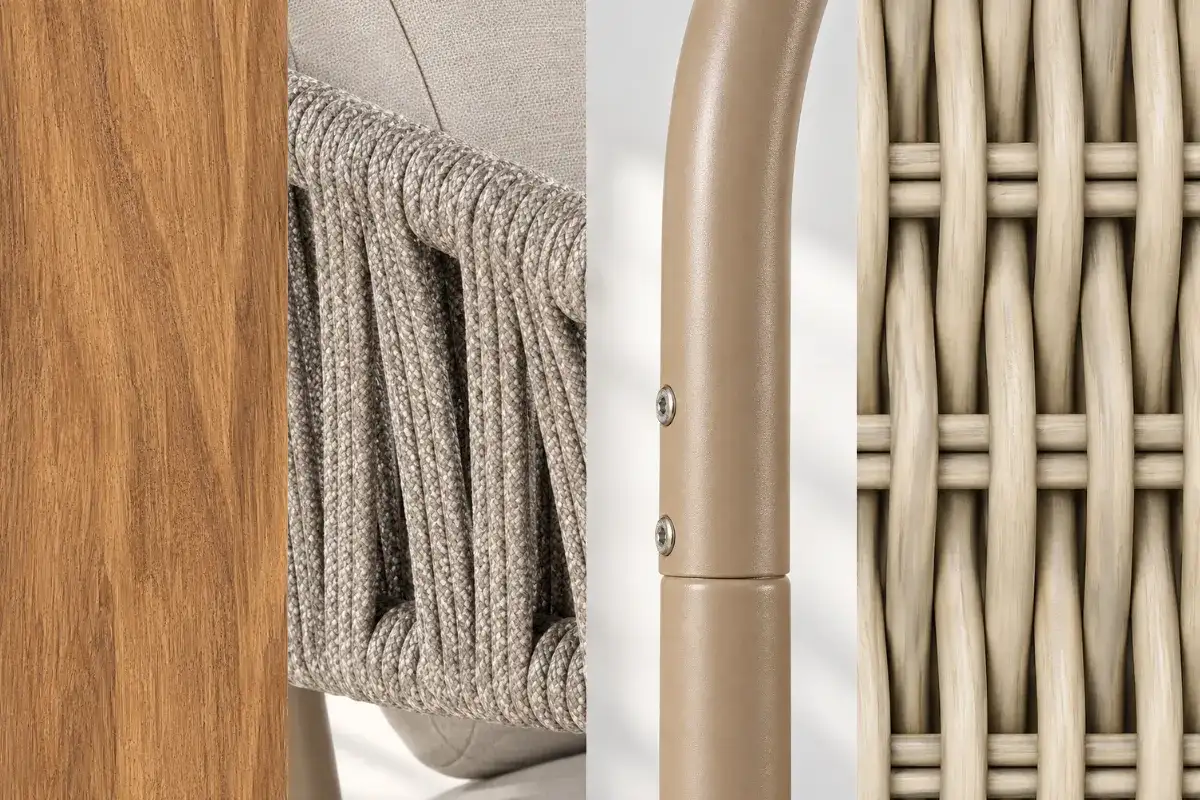
Close-up views of teak wood, outdoor rope, powder-coated aluminum, and HDPE wicker.
3.1 Teak Wood
Teak wood is commonly used in premium outdoor furniture for tabletops, armrests, legs, and decorative details. Its natural wood tone can add warmth and a more refined appearance to hotels, resorts, rooftop bars, and restaurant patios.
Teak performs well outdoors, but buyers should also consider maintenance expectations. When exposed to weather over time, the wood naturally changes in appearance, so projects that want to maintain the original tone may require periodic care.
For commercial buyers, teak is often selected when both outdoor performance and a premium natural appearance are important.
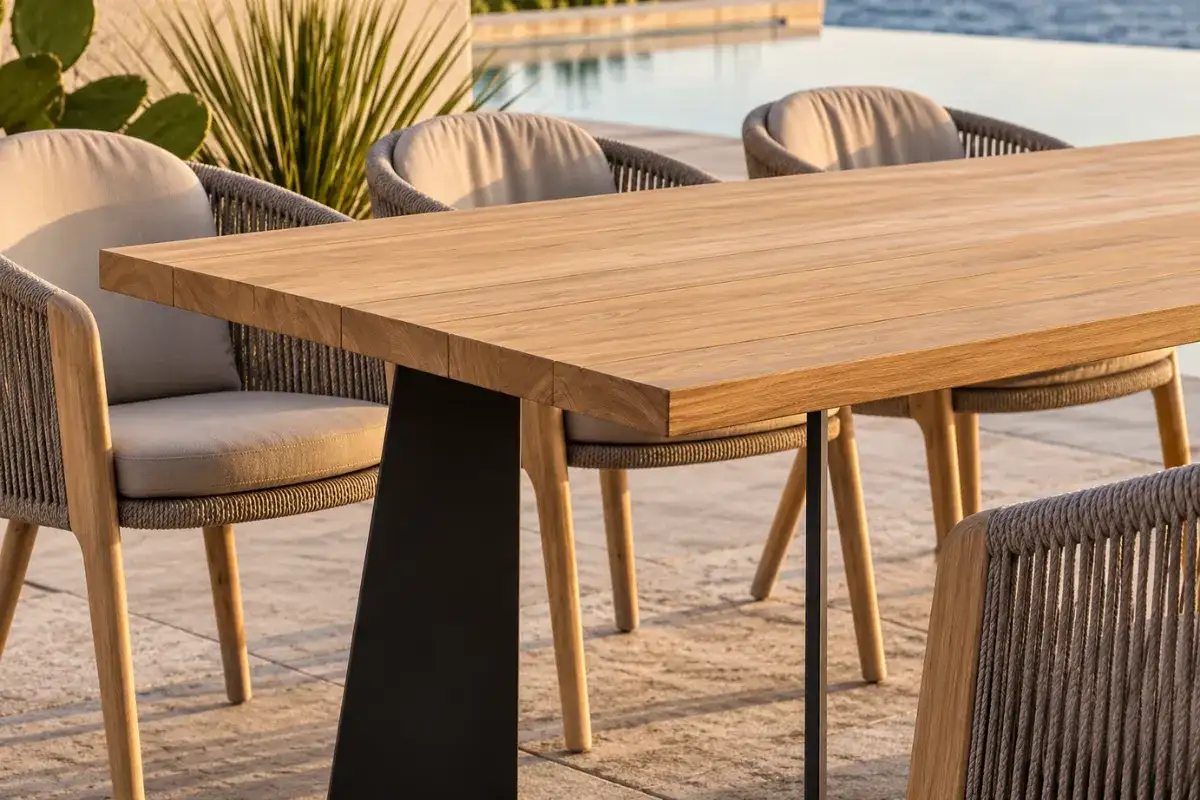
Teak wood brings natural warmth and a premium finish to commercial outdoor dining spaces. (Source Internet)
3.2 Outdoor Rope
Outdoor rope is often used in contemporary commercial furniture because it creates a modern woven look and can be combined effectively with powder-coated aluminum frames.
High-quality outdoor rope should be selected with attention to UV resistance, moisture resistance, weaving tension, and cleaning requirements. These factors are especially important when sourcing weatherproof commercial bar stools for rooftop bars, resorts, and poolside environments.
Different rope colors and weaving patterns can also help buyers create a more distinctive design for hospitality projects.
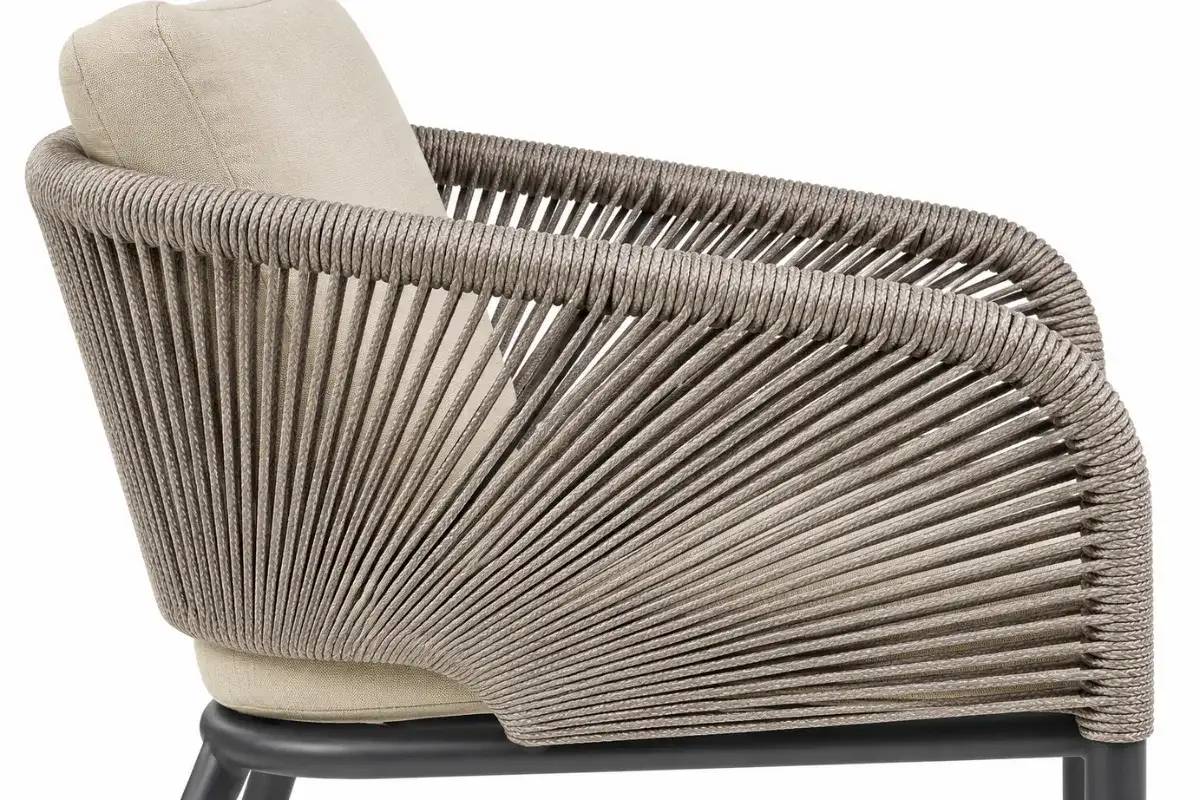
High-quality outdoor rope combines modern aesthetics with practical performance for resorts, rooftop bars, and poolside settings.
3.3 Powder-Coated Aluminum
Powder-coated aluminum is widely used for outdoor commercial furniture because it is lightweight, corrosion-resistant, and relatively easy to maintain.
It is suitable for rooftop bars, restaurant patios, resorts, and poolside areas where furniture may be exposed to humidity and changing weather conditions. The powder-coated finish adds a protective layer while allowing different frame colors to match the overall project design.
Buyers should review frame thickness, welding quality, coating consistency, and overall construction rather than evaluating the surface finish alone.
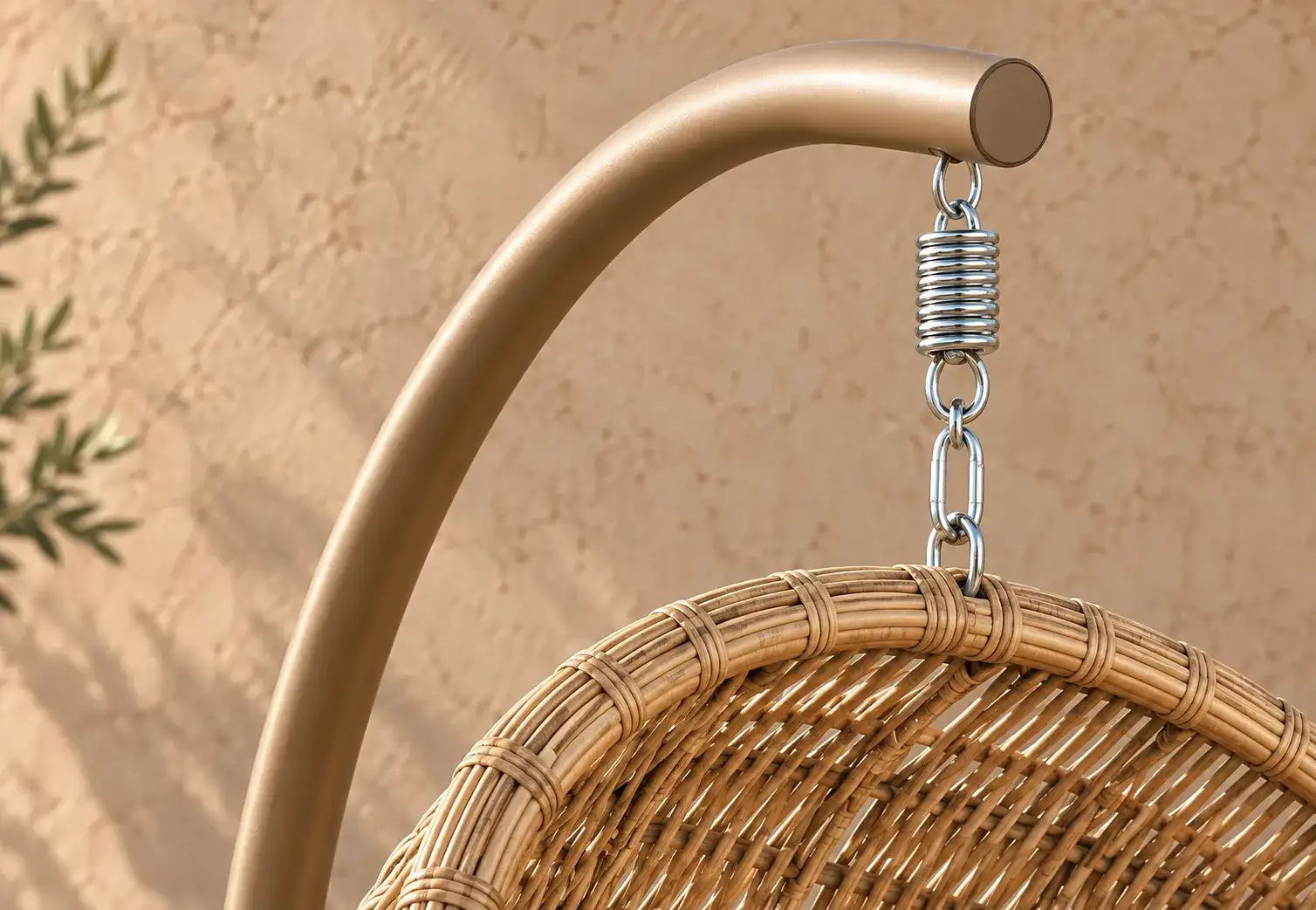
Powder-coated aluminum provides a lightweight, corrosion-resistant frame solution for demanding commercial outdoor environments.
3.4 HDPE Wicker
HDPE wicker is a synthetic weaving material commonly used for outdoor stools and seating. It provides the woven appearance of natural rattan while offering better suitability for exterior environments.
For commercial use, buyers should check weaving tension, color consistency, material quality, and the structure of the frame underneath. HDPE wicker can be a practical choice for resorts, pool bars, restaurant patios, and other hospitality spaces that require a relaxed outdoor appearance.
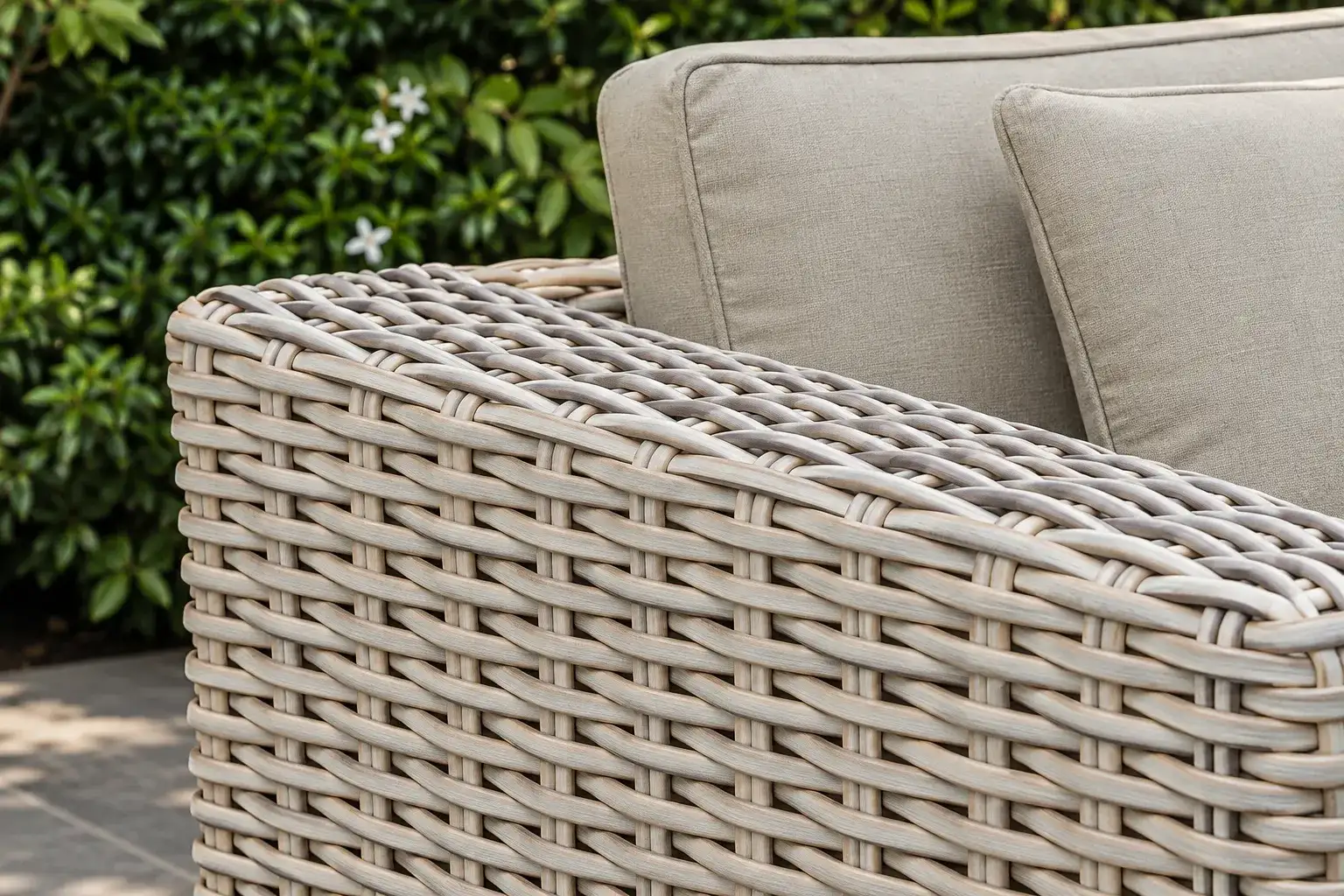
HDPE wicker combines a natural woven appearance with practical outdoor performance for commercial hospitality spaces.
4. Key Features to Look for in Commercial Outdoor Bar Stools and Tables
When evaluating commercial outdoor bar stools and tables, buyers should look beyond design and price. Furniture used in hospitality environments must remain stable, comfortable, weather-resistant, and easy to maintain under frequent daily use.
The table below summarizes the main features that should be reviewed before selecting outdoor bar furniture for a commercial project.
|
Key Feature |
What Buyers Should Check |
Why It Matters |
Stability and Structural Strength |
Frame construction, welding points, leg structure, table base, footrests, joints, and overall balance |
Helps reduce wobbling, tipping, and premature structural failure during frequent commercial use |
Weather and UV Resistance |
Powder coating, outdoor-rated weaving materials, fabrics, exposed hardware, and surface finishes |
Helps furniture withstand sunlight, humidity, rain, fading, and corrosion in outdoor environments |
Comfort and Ergonomics |
Seat height, seat depth, backrest support, footrest position, cushions, and seat-to-table clearance |
Improves comfort for guests using the furniture for dining, drinking, and socializing |
Easy Cleaning and Maintenance |
Washable surfaces, removable cushion covers, accessible joints, and replaceable components |
Reduces maintenance time and supports efficient daily operation in hospitality venues |
For high-top furniture, stability is especially important because bar stools and tables have a higher center of gravity than standard dining furniture. Buyers should check whether stools remain balanced when guests sit down or shift their weight, and whether tables stay stable during normal use.
Weather and UV resistance should also match the installation environment. Rooftop bars may face stronger sun and wind exposure, while poolside areas require greater attention to moisture and frequent cleaning.
Comfort remains important even in high-traffic venues. Proper seat height, footrest placement, back support, and legroom can make commercial outdoor bar stools more practical for longer periods of use.
For B2B buyers, choosing furniture that combines structural strength, outdoor performance, comfort, and easy maintenance can help reduce operating effort and long-term replacement costs.
5. Choosing Outdoor Bar Furniture for Different Commercial Venues
Outdoor bar furniture should be selected according to the conditions and operating needs of each venue. Rooftop bars, restaurant patios, outdoor pubs, resorts, and poolside areas may all use high-top seating, but they face different challenges related to wind, moisture, customer traffic, maintenance, and comfort.
For commercial buyers, understanding the installation environment first can help narrow down the most suitable commercial outdoor bar stools and tables.
5.1 Select Stable and Weather-Resistant Furniture for Hotel Rooftop Bars
When selecting hotel rooftop bar furniture, stability and weather exposure should be key considerations. Rooftop spaces are often more exposed to wind, direct sunlight, and changing weather conditions than ground-level patios.
Bar stools and tables should have stable frames, balanced construction, and suitable weight for the location. Furniture that is too light may be easy to move but less practical in windy conditions.
Materials such as powder-coated aluminum, outdoor rope, HDPE wicker, and teak can be considered depending on the design concept and maintenance requirements. Since rooftop bars are often signature hospitality spaces, furniture should also support the hotel’s overall visual identity.
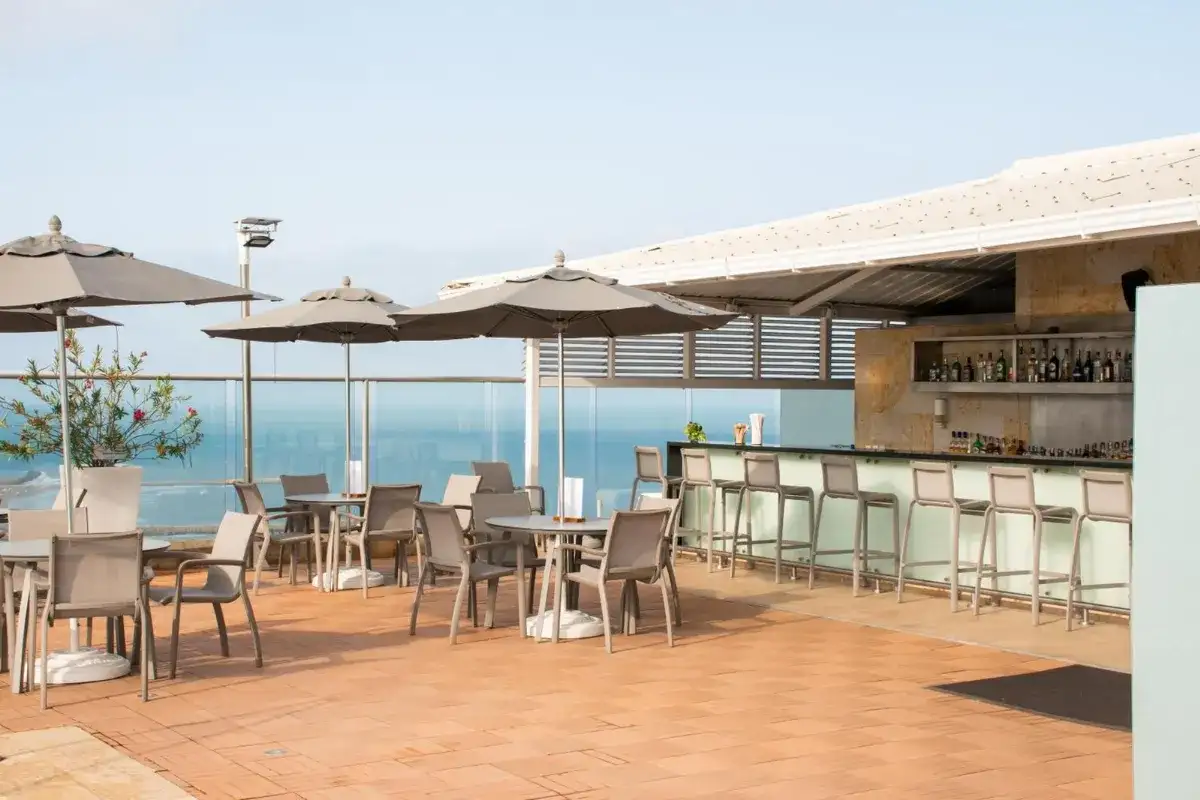
Rooftop bar seating should combine stable construction with materials suited to exposed outdoor hospitality spaces. (Source Internet)
5.2 Choose Durable and Flexible Furniture for Restaurant Patios and Outdoor Pubs
For restaurant patio bar furniture, buyers usually need a balance between comfort, durability, and efficient use of floor space. High-top tables can create additional seating zones while maintaining a casual environment for dining, drinking, and socializing.
Outdoor pubs and beer gardens often experience high customer turnover, so furniture should be easy to clean, durable, and practical to rearrange. Stable stools, strong footrests, and hard-wearing tabletops can support frequent daily use.
For outdoor high top tables and chairs commercial projects, buyers should also consider table spacing, customer circulation, and staff service paths before finalizing the layout.
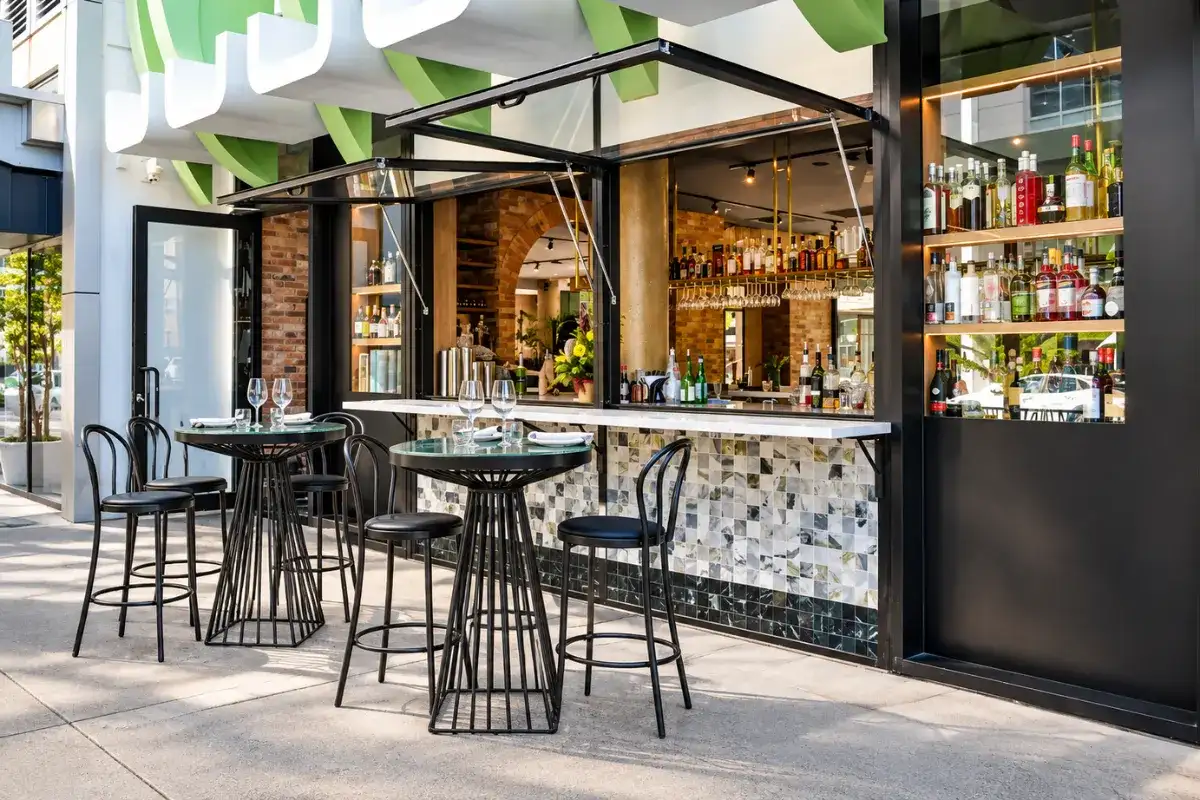
Well-spaced high-top seating supports flexible layouts,
customer circulation. (Source Internet)
5.3 Prioritize Moisture Resistance and Comfort for Resort and Pool Bar Areas
Resort and pool bar furniture is frequently exposed to moisture, splashes, sunlight, and regular cleaning. Buyers should therefore prioritize materials and finishes suitable for humid outdoor environments.
Powder-coated aluminum, HDPE wicker, and outdoor rope are commonly used in these applications. Cushions and fabrics should also be easy to remove, clean, and dry.
Comfort is particularly important in resorts, where guests may stay seated for longer periods. Seat height, back support, footrest position, and cushion quality should therefore be considered together with the overall design.
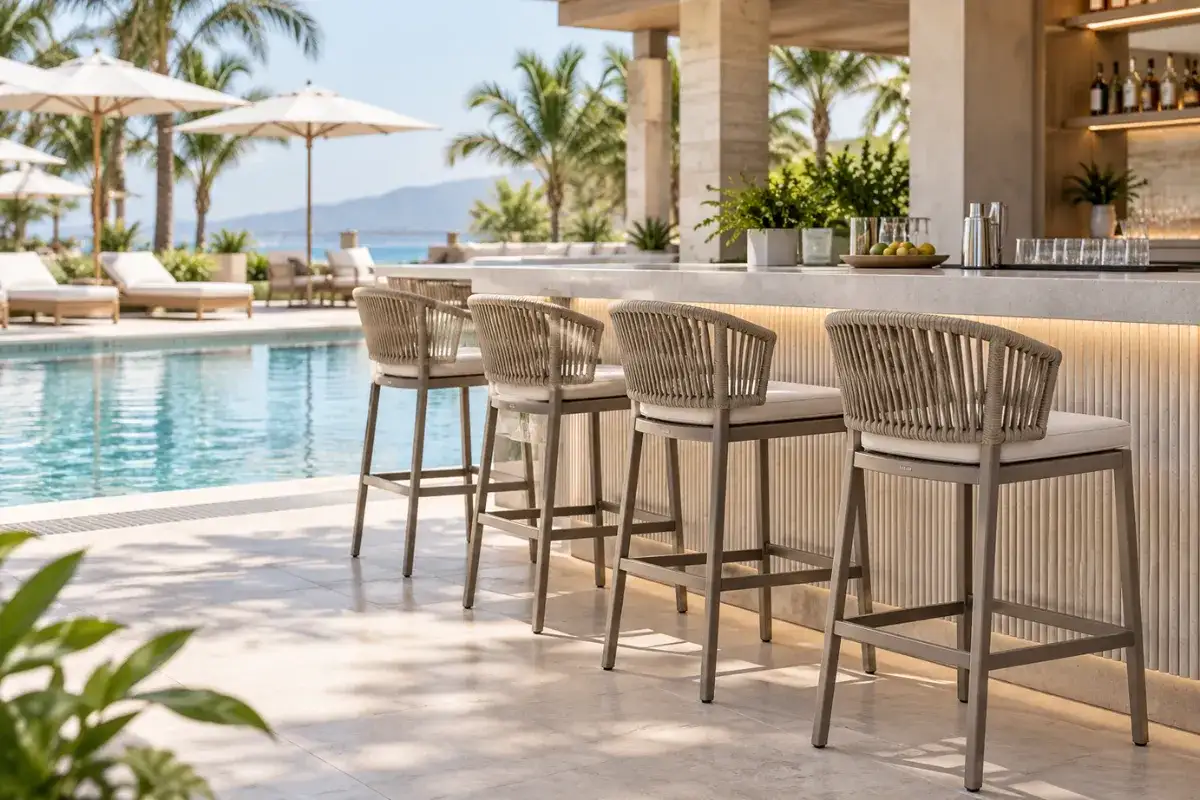
Pool bar seating should combine moisture-resistant materials with supportive backrests, footrests, and comfortable cushions. (Illustration Image)
6. How to Source Commercial Outdoor Bar Furniture for B2B Projects
For B2B buyers, sourcing commercial outdoor bar stools and tables involves more than comparing product prices. Clear specifications, samples, customization requirements, production terms, and quality control should be confirmed before mass production to reduce purchasing risks.
6.1 Product Specifications and Samples
Before requesting a quotation, buyers should prepare key product requirements such as dimensions, table and stool height, frame material, finishes, weaving materials, cushions, fabrics, colors, and estimated order quantity.
For custom or large-volume projects, a sample can help verify proportions, comfort, stability, materials, and finishing before production. Approved samples and technical drawings can also provide useful references during quality inspections.
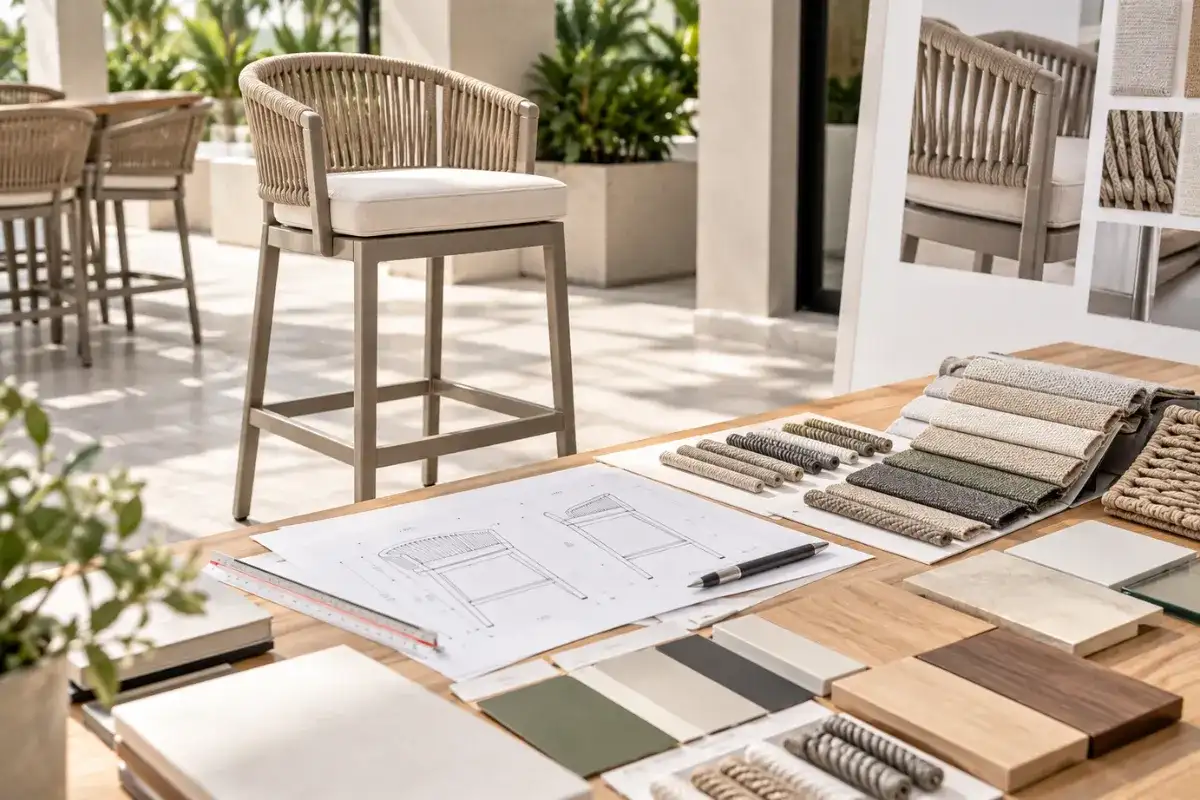
Product samples and specifications help buyers review dimensions, materials, comfort. (Illustration Image)
6.2 Customization Options
Hospitality projects often require furniture to match a specific design concept. Buyers should confirm which elements can be customized, including frame colors, rope or wicker colors, fabrics, cushions, tabletop materials, dimensions, and packaging.
Working with a manufacturer that offers flexible customization can make it easier to maintain a consistent appearance across hotels, restaurants, resorts, and other commercial spaces.
6.3 MOQ, Lead Time and Packaging
Before placing a bulk order, buyers should confirm the MOQ (minimum quantity required for an order), production time, packing method, CBM (the total volume of the packed goods), and how many products can fit into one container.
Packaging is also important because bar stools and bar tables can take up considerable shipping space. When possible, stackable stools or tables that can be disassembled for shipping can help save space and make better use of the container.
6.4 Quality Control and Supplier Capability
Quality control should cover frame stability, welding, weaving tension, footrests, table balance, surface finishing, cushions, hardware, and packaging.
Buyers should also review the supplier’s manufacturing capacity, export experience, communication, customization capability, and ability to maintain consistent specifications across larger orders.
For buyers looking for different high-top configurations, ATC Furniture’s Bistro & Bar Sets include outdoor bar, high-bar, and counter-height options that can serve as references when planning commercial projects.
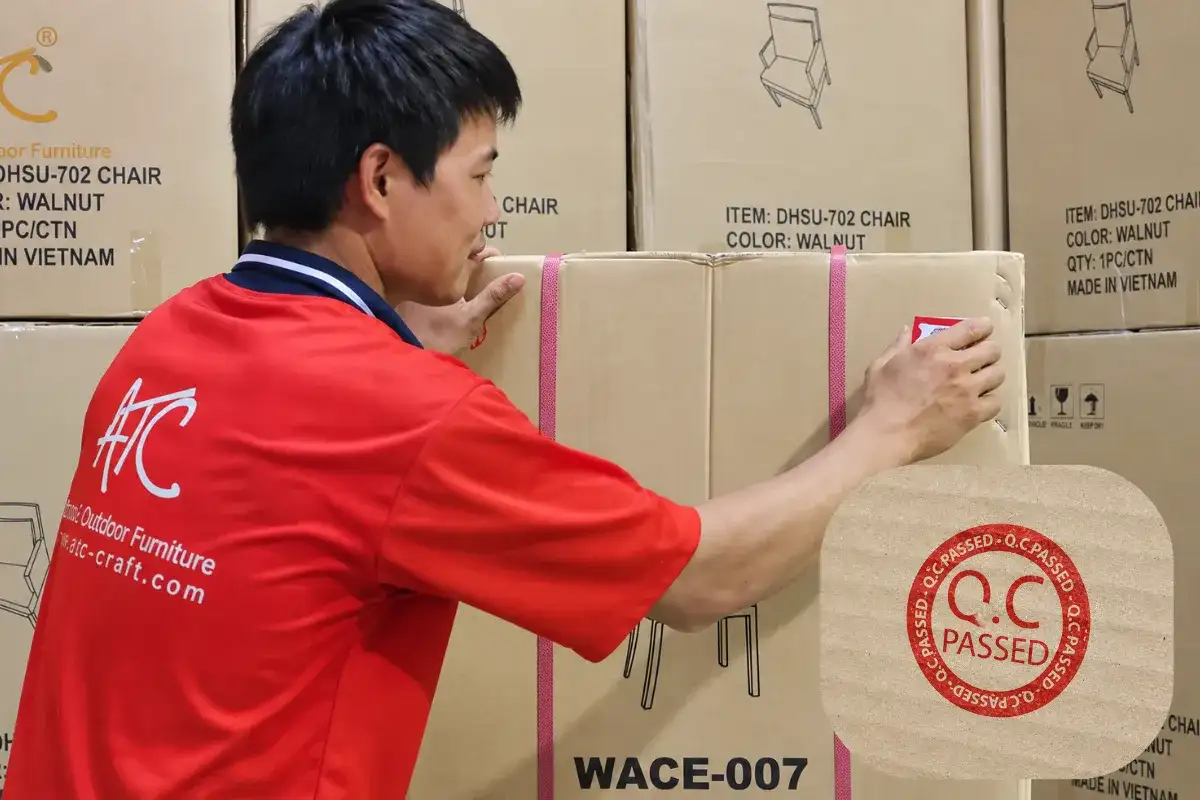
Final QC checks help confirm that commercial outdoor products meet required quality standards before shipment.
7. FAQs About Commercial Outdoor Bar Stools and Tables
7.1 What Is the Standard Height of a Commercial Outdoor Bar Table?
A commercial outdoor bar table is typically around 40-42 inches (102-107 cm) high. Counter-height tables are usually lower, at approximately 34-36 inches (86-91 cm). Buyers should still confirm the exact product dimensions before ordering because tabletop thickness and frame design may affect the final seating position.
7.2 What Stool Height Is Best for a 42-Inch Bar Table?
A stool with a seat height of approximately 28-30 inches (71-76 cm) is generally suitable for a 42 inch bar table. Around 10-12 inches (25-30 cm) of clearance between the seat and tabletop can provide comfortable legroom.
7.3 What Are the Best Materials for Weatherproof Commercial Bar Stools?
Common materials for weatherproof commercial bar stools include powder-coated aluminum, HDPE wicker, outdoor rope, and teak. The best choice depends on the venue, climate, maintenance expectations, and level of outdoor exposure.
Poolside areas may prioritize moisture resistance, while rooftop spaces may require greater attention to UV exposure, stability, and weather performance.
7.4 What Furniture Works Best for Hotel Rooftop Bars?
The most suitable hotel rooftop bar furniture should combine stable construction, outdoor durability, comfortable seating, and a design that fits the hotel environment.
Buyers should consider product weight, frame stability, wind exposure, weather-resistant materials, and how easily the furniture can be rearranged for different layouts.
7.5 What Should Buyers Check Before Ordering Commercial Outdoor Bar Furniture in Bulk?
Before ordering commercial outdoor bar stools and tables in bulk, buyers should confirm product dimensions, materials, finishes, customization options, samples, MOQ, lead time, packaging, quality control procedures, and container loading information.
Clear specifications and approved samples can help reduce misunderstandings and improve consistency during mass production.