How to Choose and Arrange Garden Gravel Beautifully for an Outdoor Space
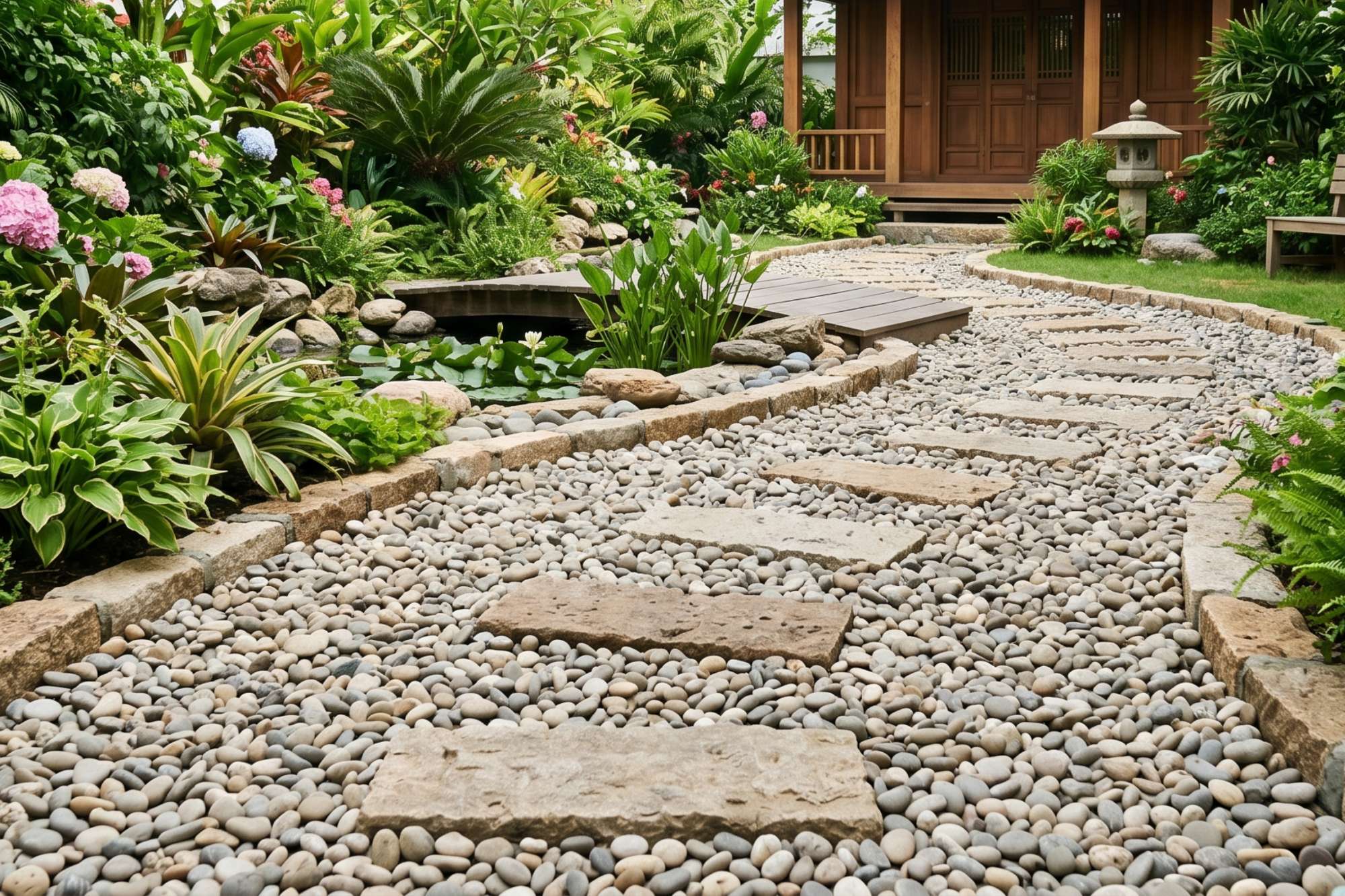
Garden gravel is one of the decorative materials widely used by families, villas, garden cafés, and resorts thanks to its natural beauty, high durability, and flexible application. It not only helps make the garden surface look neater but also adds visual depth, highlighting greenery, pathways, water features, or outdoor relaxation areas. When arranged properly, small gravel stones can transform a simple yard into a harmonious, clean, and emotionally inviting green space.
1. Why Is Garden Gravel So Popular?
With its soft texture and neutral tones, gravel helps garden paths feel calm, natural, and easy to match with different landscape styles
Gravel brings a sense of closeness to nature and suits many garden design styles, from Japanese gardens and tropical landscapes to dry gardens and modern villa spaces. Gravel also comes in a wide range of colors, including white, gray, yellow, brown, black, and naturally mixed tones. This allows homeowners to easily choose a gravel type that matches the wall color, ground surface, greenery, and decorative elements in the garden.
Besides its aesthetic value, garden gravel is also appreciated for its ease of maintenance. Compared with surfaces that easily collect dirt or deteriorate quickly, gravel can maintain a stable appearance for a long time when installed and cared for properly. Cleaning is also quite simple, as you only need to sweep away dry leaves, remove small debris, or lightly rinse the surface with water.
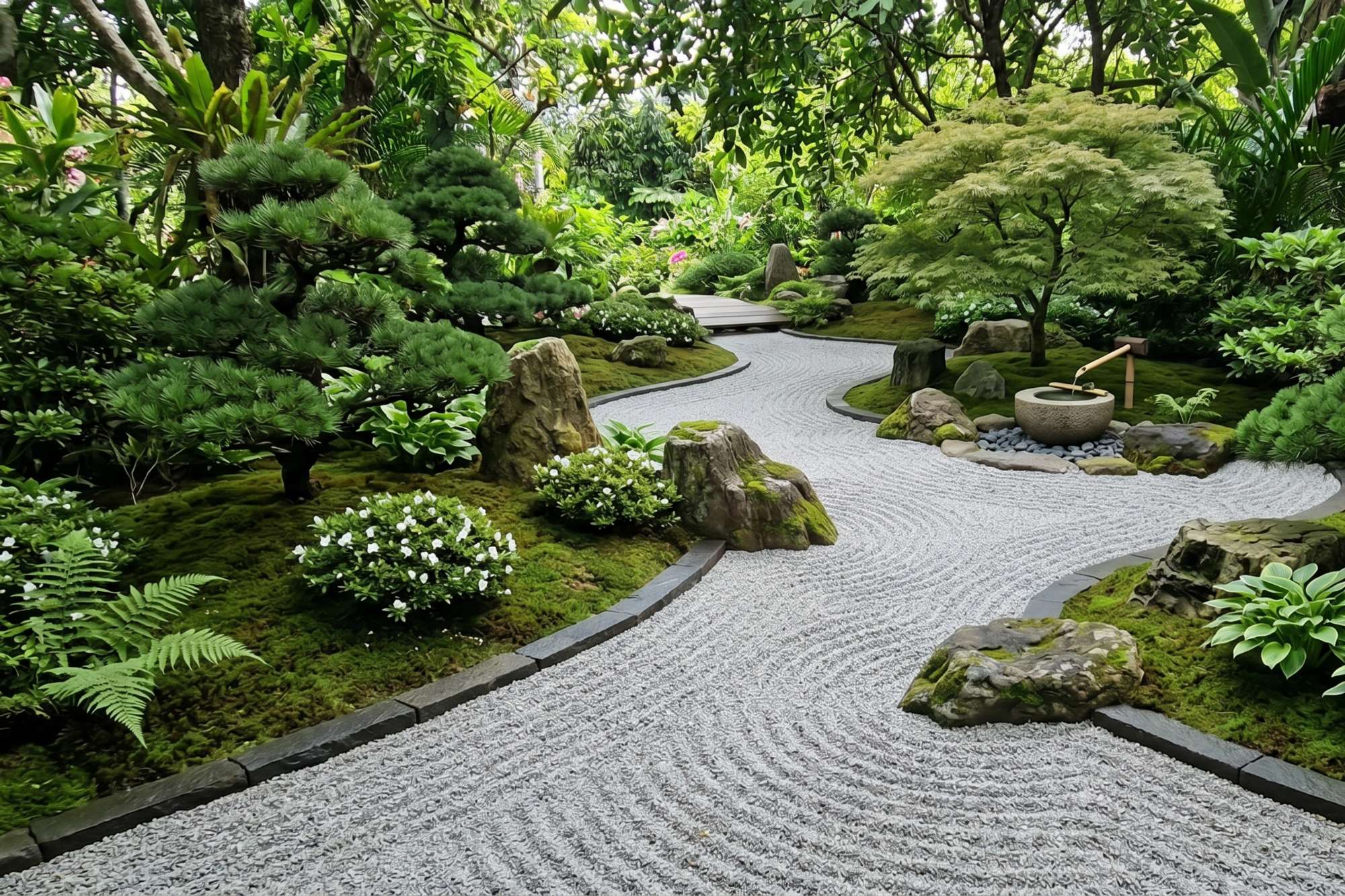
With small gaps between the stones, garden gravel allows rainwater to drain more easily while keeping the landscape neat and natural
Another important benefit of landscape gravel is its ability to support drainage. The gaps between gravel stones allow rainwater to seep into the ground more quickly, helping reduce water accumulation on the surface. This is especially suitable for Vietnam’s rainy climate, particularly in garden areas that need to remain dry, clean, and well-ventilated.
2. Common Types of Gravel and Stones for Garden Landscaping
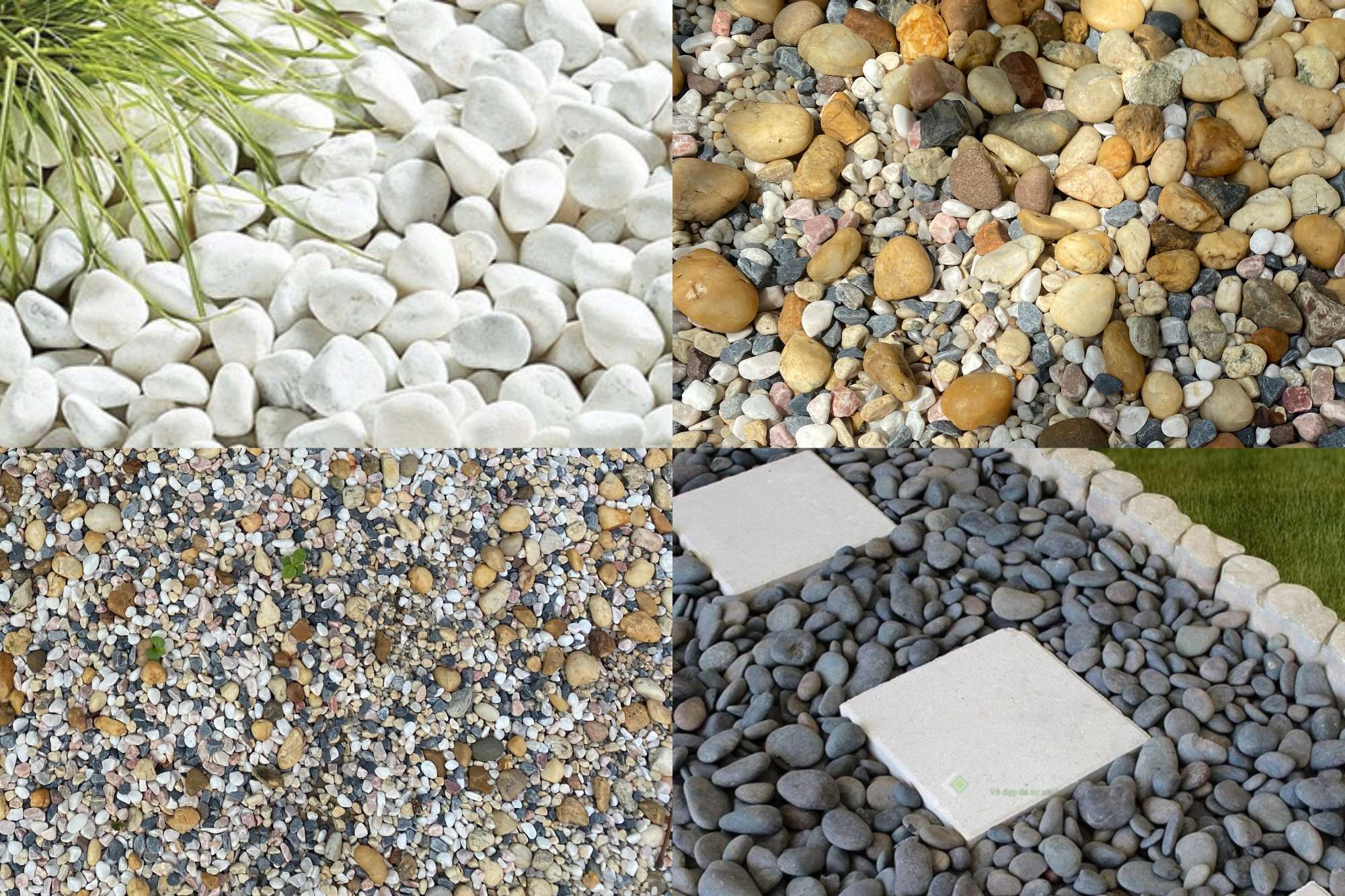
Different gravel and stone types bring their own color, texture, and character, helping each garden area feel more natural and well-balanced
Natural river gravel is a familiar choice in many garden projects thanks to its soft shape, natural color, and organic appearance. Each stone has its own size, texture, and shade, creating a lively surface that does not feel too rigid. This type of gravel is often suitable for pathways, water features, tree bases, or areas designed to create a relaxing atmosphere.
Artificial gravel, on the other hand, offers better consistency. Its size, color, and shape are usually more controlled, helping the space look cleaner and more modern. This option is suitable for minimalist gardens, commercial areas, or designs that require a more uniform color palette.
3. Beautiful Garden Gravel Design Ideas
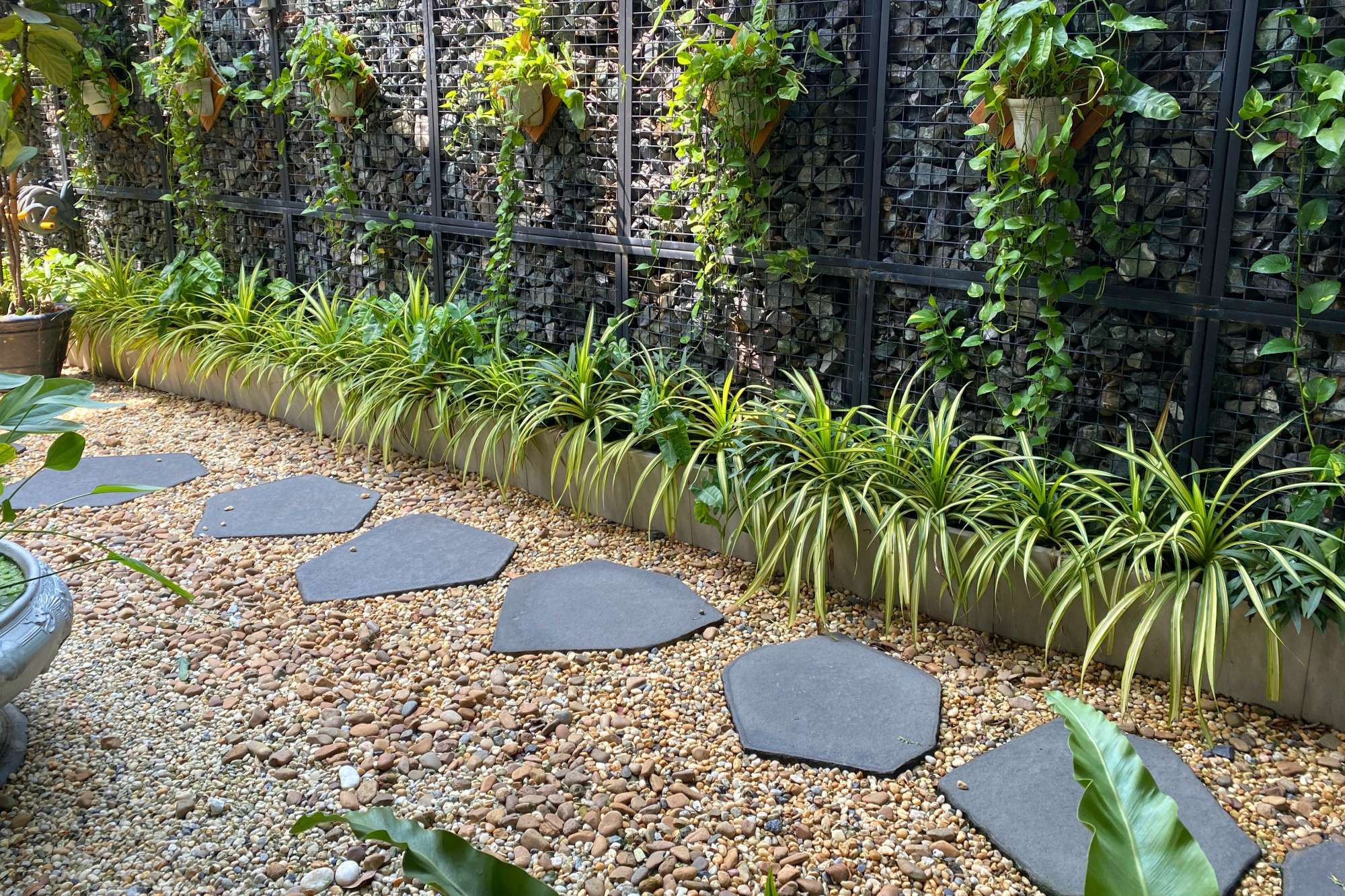
Gravel and stepping stones bring structure to the garden while keeping the walkway light, natural, and visually balanced
A gravel pathway is one of the most popular applications. When combined with stepping stones, low shrubs, or garden lighting, the pathway becomes softer and more visually appealing. Instead of using an entirely concrete surface, adding gravel helps reduce the hard feeling of the space and creates a more natural transition between architecture and greenery.
Gravel is also highly suitable as a base for outdoor seating areas. A neatly prepared gravel surface can become a place for garden sofas, lounge chairs, coffee tables, or swing chairs. When paired with products made from synthetic rattan, woven rope, teak wood, or powder-coated aluminum frames, the gravel base helps the overall space feel lighter, more elegant, and closer to nature. This arrangement is suitable for villa gardens, spacious balconies, homestays, resorts, or outdoor relaxation areas.
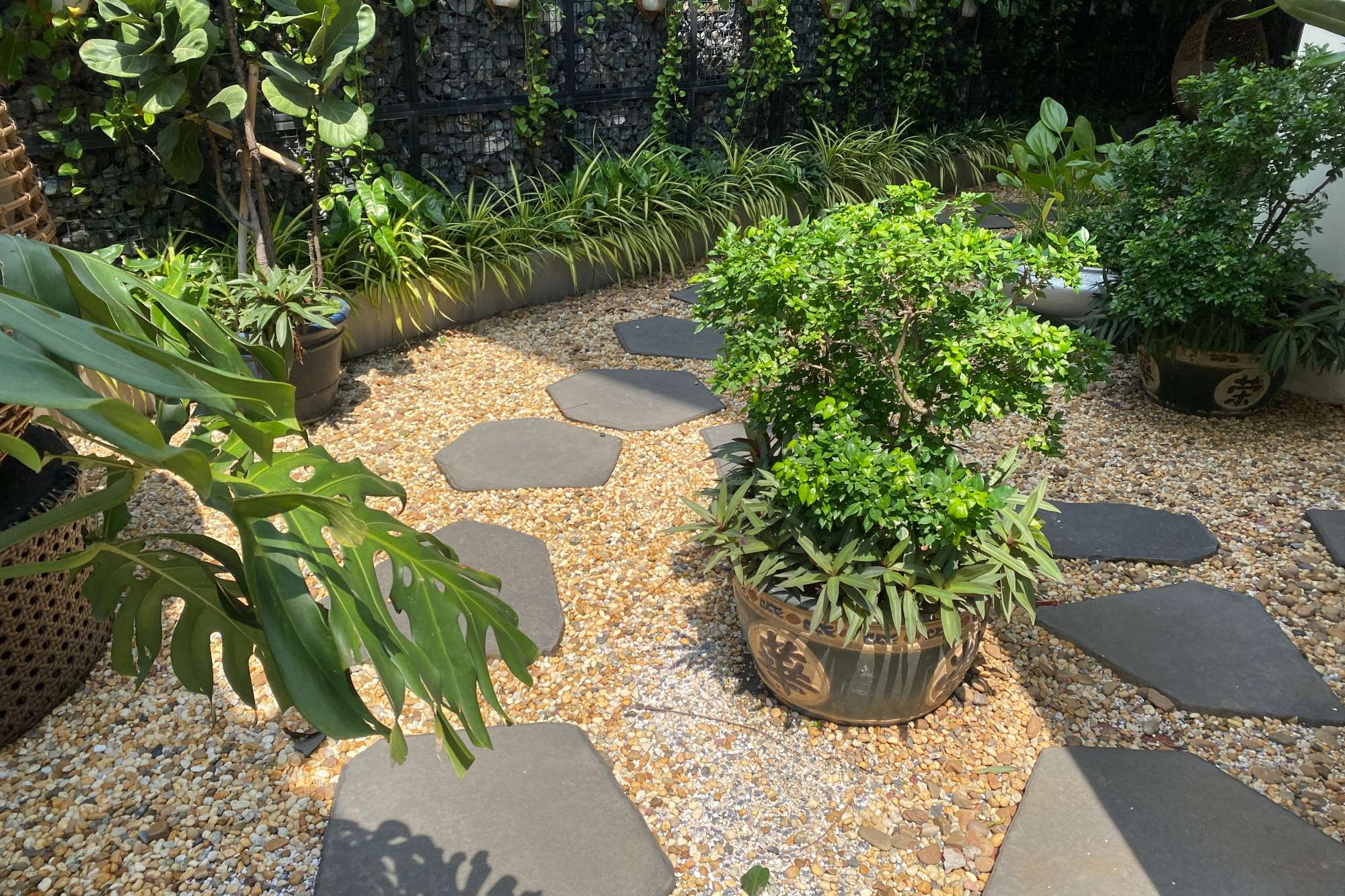
Gravel works beautifully in dry garden designs, creating a clean surface that feels natural, calm, and easy to maintain
For those who love dry garden styles, gravel is almost an essential material. By simply combining white gravel, large stones, low-profile plants, and a few intentionally placed green elements, the garden can create a quiet, minimalist, and visually deep atmosphere. This style is especially suitable for spaces that require low maintenance while still maintaining a refined appearance.
In addition, gravel can be combined with many other materials such as bricks, natural stone, wood, polished cement, or greenery. This combination prevents the garden from looking monotonous. For example, white gravel can highlight green plants and dark stone walls, while yellow or brown gravel creates a warmer and more natural feeling when paired with wooden and woven products.
4. How to Lay Garden Gravel Properly
To make a garden gravel area both attractive and durable during use, you should follow a clear step-by-step process instead of spreading gravel directly onto the soil. Proper preparation from the beginning will help the gravel surface stay more stable, reduce weed growth, and maintain a neat appearance for a long time.
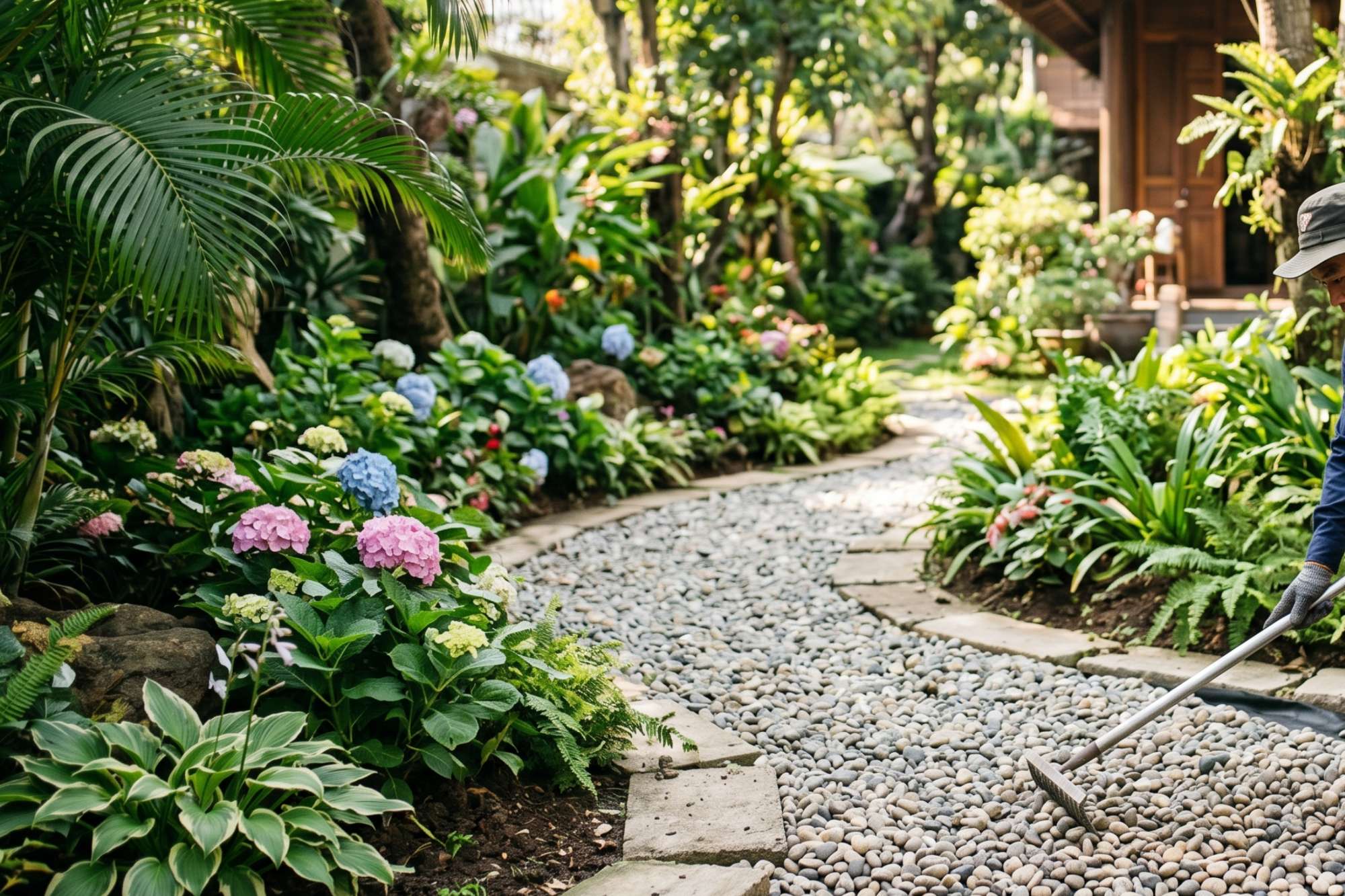
Proper gravel installation begins with careful preparation, helping the pathway stay neat, stable, and easier to maintain over time
Step 1: Identify the Area for Gravel Installation
First, clearly determine where the gravel will be laid, such as a garden pathway, tree base area, decorative feature, seating base, or outdoor relaxation corner. Each area will require a different gravel type and gravel layer thickness. For pathways, you should prioritize a firm surface that is easy to walk on. For decorative areas, you can focus more on gravel color and visual layout.
Step 2: Clean and Prepare the Ground Surface
After identifying the installation area, remove weeds, roots, broken stones, dry leaves, and any obstacles from the ground. If the surface is uneven, it should be leveled first so that the gravel layer does not become too thick in some spots and too thin in others. This is an important step that helps the gravel base stay stable, attractive, and easier to maintain during use.
Step 3: Create a Slight Drainage Slope
For outdoor areas that are frequently exposed to rain, you should create a slight slope on the ground surface before laying the gravel. This slope allows rainwater to drain more quickly and helps prevent water from collecting underneath the gravel layer. For villa gardens, cafés, or resorts, this step helps keep the space cleaner and more breathable after rainy days.
Step 4: Lay Geotextile Fabric to Prevent Weeds
After preparing the ground, lay a layer of geotextile fabric over the entire area where the gravel will be installed. This fabric helps prevent weeds from growing through the surface and also keeps the gravel from sinking too deeply into the soil over time. When laying the fabric, make sure it covers all corners and edges. You can secure it with pins or border stones to prevent it from shifting.
Step 5: Choose the Right Gravel Size and Color
Before spreading the gravel, choose a type that suits the intended use. For pathways, medium-sized gravel is recommended, and the stones should not be too round to reduce slipping when walking. For decorative landscape features, white, yellow, gray gravel, or a combination of several colors can be used to create visual interest. For areas where garden tables and chairs will be placed, choose gravel that is easy to level, creates a stable surface, and does not shift too much during use.
Step 6: Spread the Gravel at a Suitable Thickness
When laying the gravel, pour it in moderate layers instead of adding too much at once. Then use a rake or trowel to spread the surface evenly. The gravel layer should not be too thin, as the ground underneath may become visible, but it should also not be too thick, as this can make walking or placing furniture more difficult. Decorative areas can use a thinner layer, while pathways or frequently used areas should have a thicker and more even layer for better stability.
Step 7: Create a Fixed Border for the Gravel Area
To prevent gravel from spreading out after a period of use, you should use stone edging, brick borders, metal edging, or planter beds to define the gravel area. The border not only keeps the gravel neat but also creates clearer lines for the garden design. Although this is a small detail, it makes the overall outdoor space look more polished and professional.
Step 8: Level and Finish the Surface
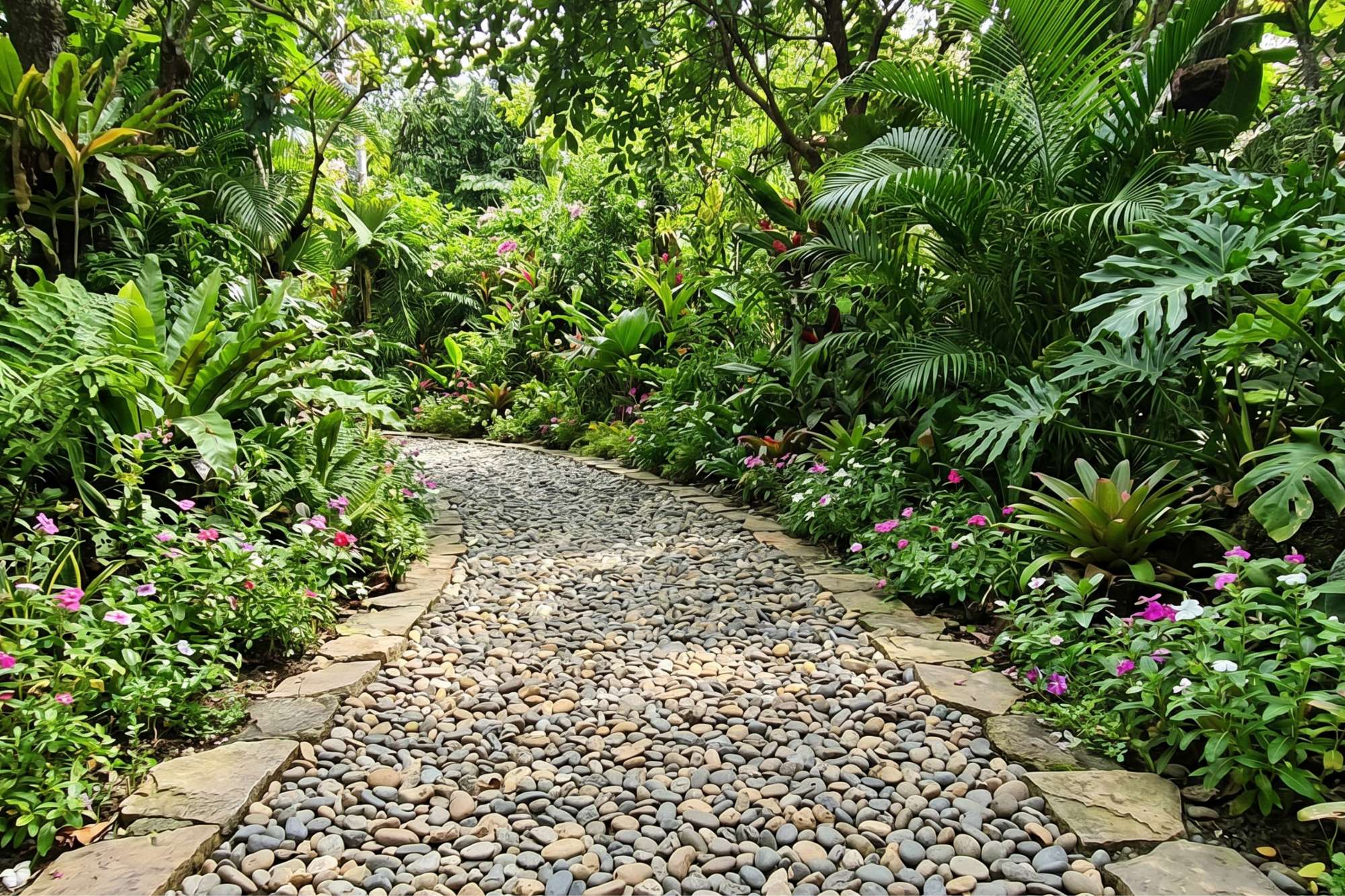
After leveling and finishing, the gravel path becomes a simple yet harmonious highlight within the green garden space
After the gravel has been spread, check the entire surface to make sure the stones are evenly distributed. Areas with too little gravel should be filled in, while overly thick areas should be raked again for balance. Finally, you can lightly rinse the surface with water to remove dust and help the gravel layer settle. When finished properly, the gravel base will become a natural, clean, and harmonious highlight for the entire garden.
5. Frequently Asked Questions About Garden Gravel
5.1. Does Garden Gravel Affect Plant Health?
When used properly, gravel does not harm plants. On the contrary, it can help keep the soil surface cleaner and improve drainage. However, gravel should not be laid too thickly around young plant bases, as this may affect air circulation and soil moisture retention.
5.2. Can Gravel Be Laid Directly on Grass?
Yes, but it is not recommended if you want a long-lasting result. Before laying gravel, you should remove the grass, level the ground, and install geotextile fabric to prevent grass from growing back. This method helps keep the gravel surface cleaner and reduces maintenance work later.
5.3. Is Gravel Suitable for Outdoor Weather Conditions in Vietnam?
Gravel is a durable material and is suitable for outdoor conditions. However, for areas that experience frequent heavy rain, you should still ensure that the ground has a slight slope or a proper drainage system to avoid water accumulation.
5.4. How Can Weed Growth Be Limited in Gravel Areas?
The most effective method is to prepare the ground carefully before laying the gravel, use geotextile fabric, and maintain regular cleaning. If the area receives many weed seeds from surrounding plants, you should check it frequently and remove young weeds as soon as they appear.
5.5 How Should I Prepare A Gravel Area For Garden Furniture?
Level and compact the ground first, then add a stable base layer before spreading the gravel evenly. Choose gravel that is firm enough for furniture legs, and use pavers or flat supports under chairs and tables if extra stability is needed.