Best Material for Commercial Outdoor Furniture: What B2B Buyers Should Know
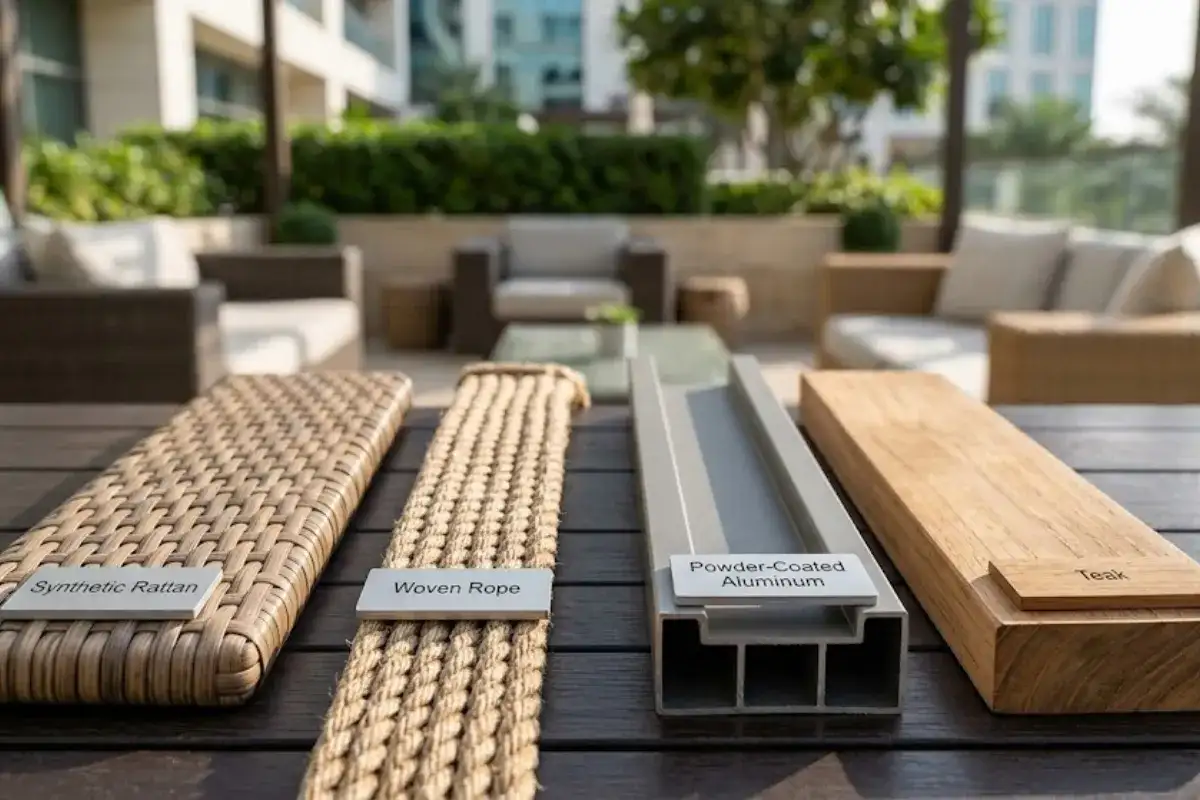
Choosing the right materials is essential for hotels, resorts, restaurants, and other high-traffic commercial spaces. The best material for commercial outdoor furniture depends on climate, usage, maintenance requirements, design expectations, and project budget.
Rather than selecting one material for every application, B2B buyers should compare how different options perform in real outdoor conditions. This guide covers synthetic rattan, rope, powder-coated aluminum, teak, and outdoor fabrics to help buyers make more informed sourcing decisions.
Quick Material Comparison:
|
Material |
Durability |
Maintenance |
Best Applications |
|
Powder-coated aluminum |
High |
Low |
Hotels, restaurants, poolside |
|
HDPE synthetic rattan |
High |
Low |
Resorts, lounges, poolside |
|
Outdoor rope |
High |
Low |
Hotels, resorts, modern hospitality |
|
Teak |
Very High |
Medium |
Luxury hotels, premium dining |
|
Performance fabric |
High |
Low |
Cushions and upholstered seating |
1. How Material Choice Affects Outdoor Furniture Performance
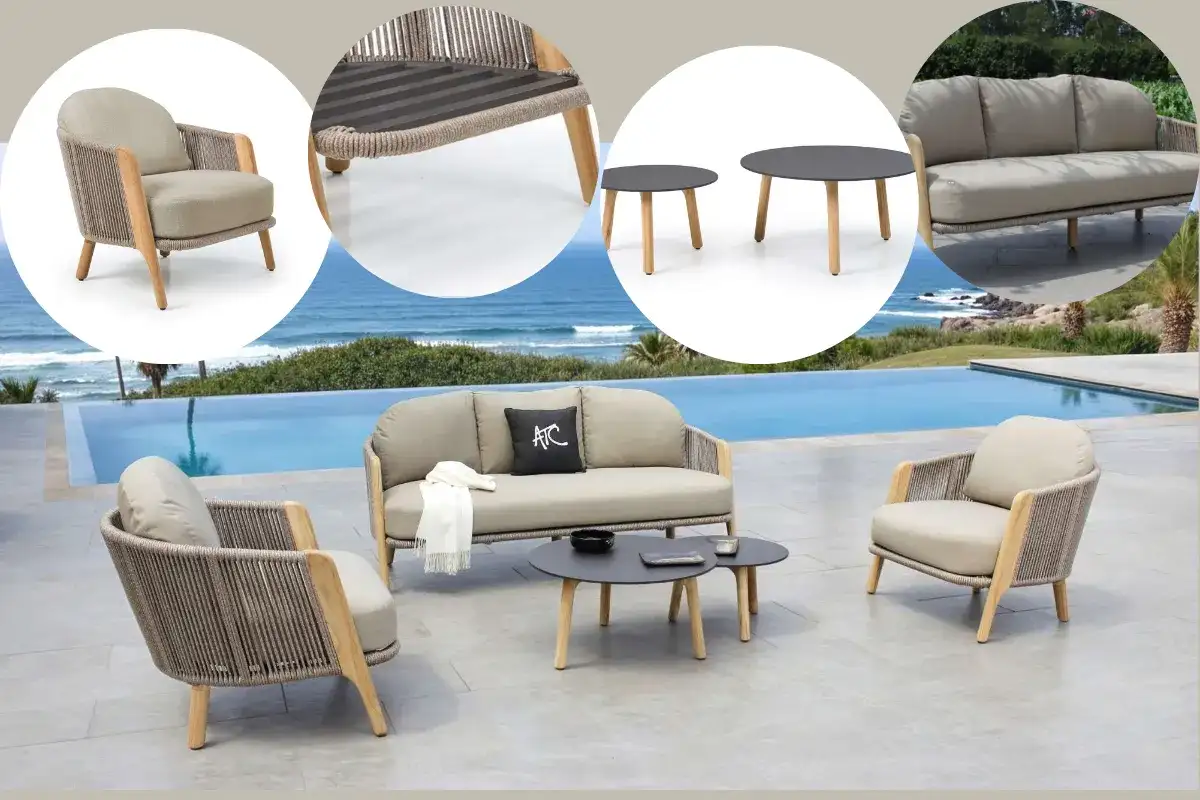
Every detail, from the wooden frame to the rope weaving and HPL tabletop, is built for outdoor durability.
Material selection directly affects durability, maintenance, appearance, and long-term cost. This is especially important when selecting furniture for hotel projects, where products face frequent use, changing weather, cleaning, and regular movement.
Commercial grade furniture should therefore be evaluated based on:
- Weather and UV resistance.
- Structural durability.
- Cleaning and maintenance requirements.
- Expected frequency of use.
- Local climate and exposure.
- Total cost of ownership.
For example, a lightweight commercial outdoor table may be practical for a restaurant that frequently rearranges seating, while a luxury resort may prioritize teak or mixed-material furniture for appearance and long-term durability.
Choosing materials according to actual operating conditions helps outdoor commercial furniture maintain its performance while reducing unnecessary maintenance and replacement costs.
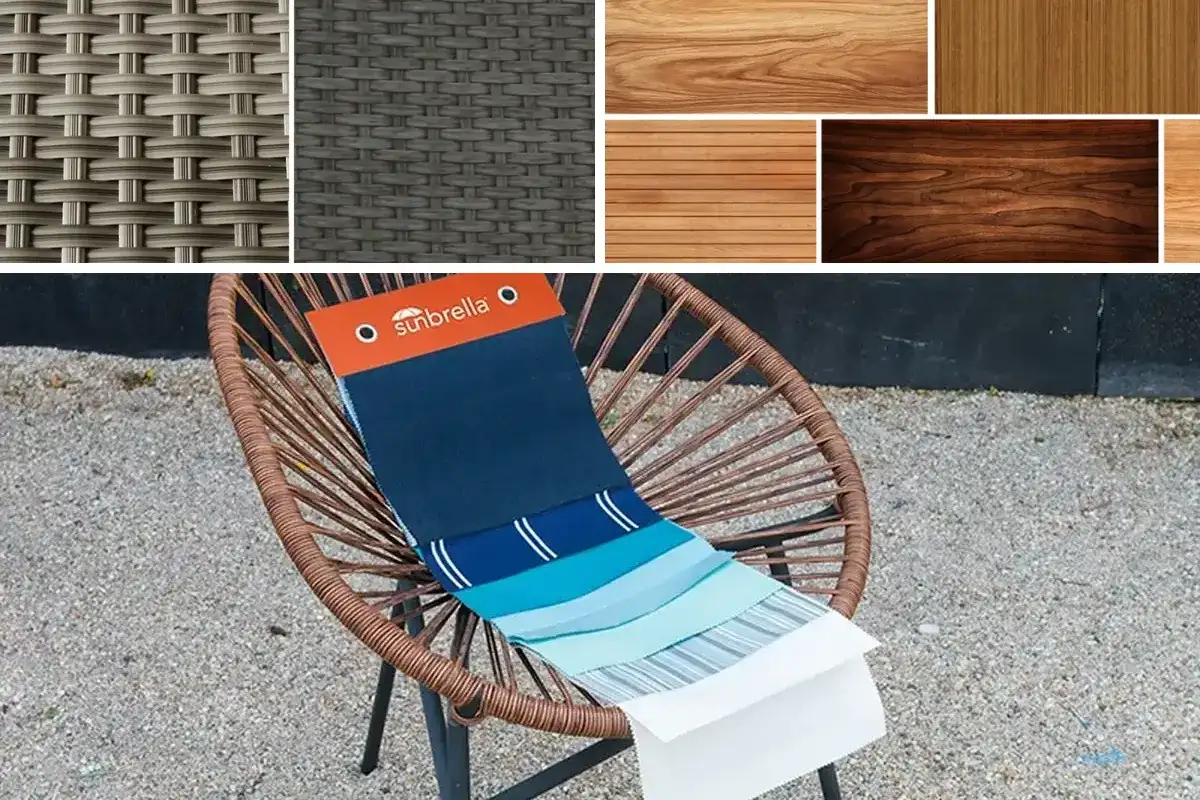
Material options for durable, functional, and customizable outdoor furniture.
2. Comprehensive Comparison: Synthetic Rattan, Wicker, Rope, Aluminum, Teak, and Fabric
Each outdoor material offers different advantages. B2B buyers should compare weather resistance, maintenance, durability, and intended application rather than selecting materials based on appearance alone.
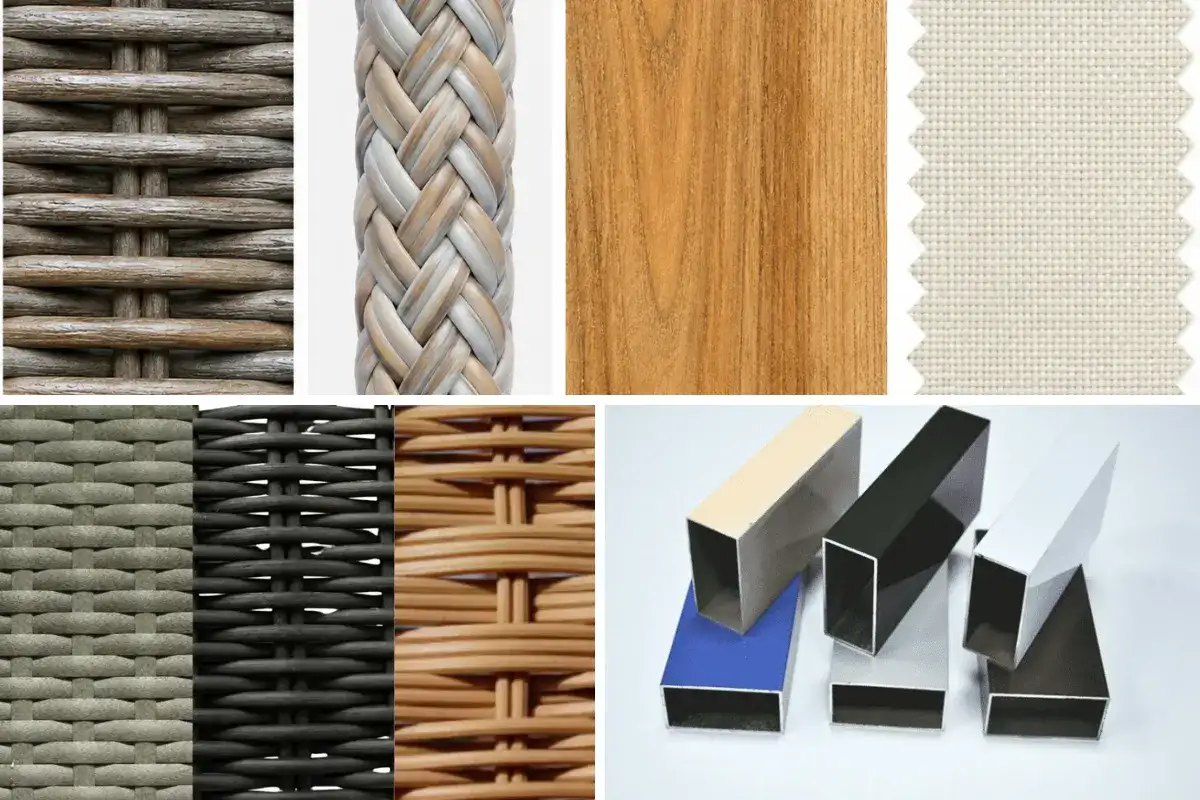
Common materials selected for durability and reliable outdoor performance.
2.1 Powder-Coated Aluminum
Powder-coated aluminum is lightweight, corrosion-resistant, and easy to maintain. These characteristics make it suitable for commercial outdoor furniture chairs, dining sets, poolside furniture, and other products that need to be moved frequently.
For outdoor tables commercial projects, aluminum also provides a practical balance between structural durability, maintenance, and cost.
2.2 HDPE Synthetic Rattan and Wicker
HDPE synthetic rattan provides the woven appearance of traditional wicker with better resistance to moisture and outdoor exposure. Quality HDPE wicker with UV stabilization can help reduce fading and brittleness caused by prolonged sunlight.
It works particularly well for hotel outdoor furniture, resort lounges, poolside sofas, and other applications where comfort and a woven aesthetic are required.
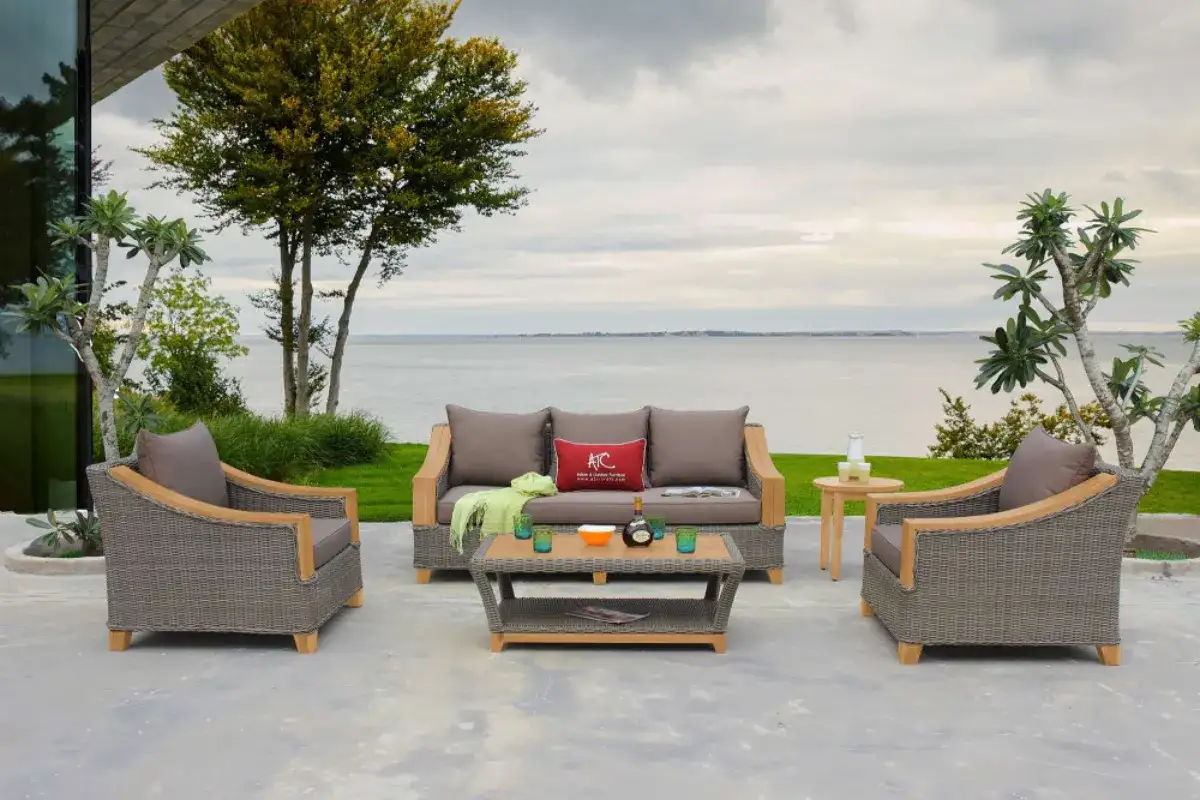
A synthetic rattan sofa combined with teak wood creates a comfortable outdoor relaxation space.
2.3 Outdoor Rope
Outdoor rope, including suitable synthetic fibers such as polyolefin, combines a contemporary appearance with resistance to moisture and outdoor conditions. It is commonly woven over aluminum frames to create lightweight seating with a softer visual character.
Rope is particularly suitable for modern outdoor hotel furniture, lounge areas, balconies, and resort spaces.
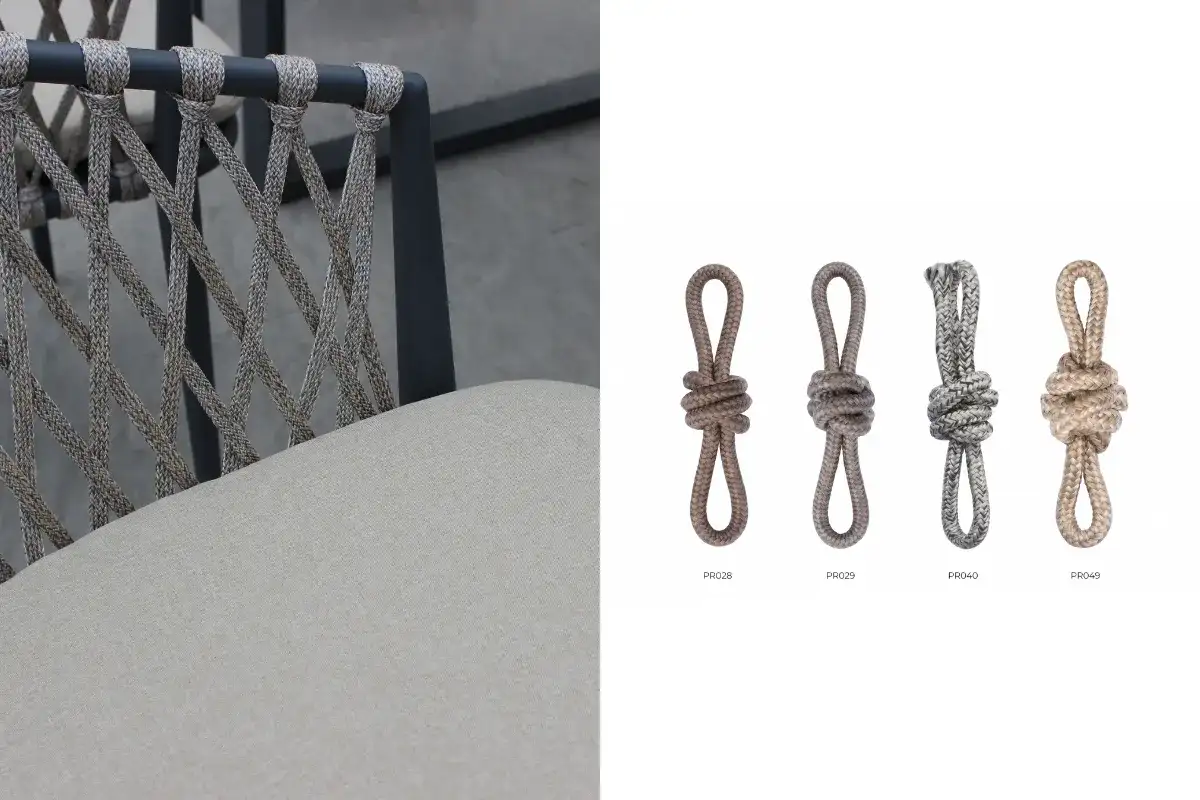
Outdoor rope combines modern design with durability and moisture resistance.
2.4 Teak
Teak contains natural oils that contribute to its resistance to moisture and outdoor conditions. Its warm appearance makes it a popular choice for premium hotels, resorts, dining spaces, and luxury outdoor projects.
Compared with aluminum or HDPE wicker, teak generally requires more maintenance if the project needs to preserve its original color. Without periodic treatment, teak naturally develops a silver-grey patina over time.
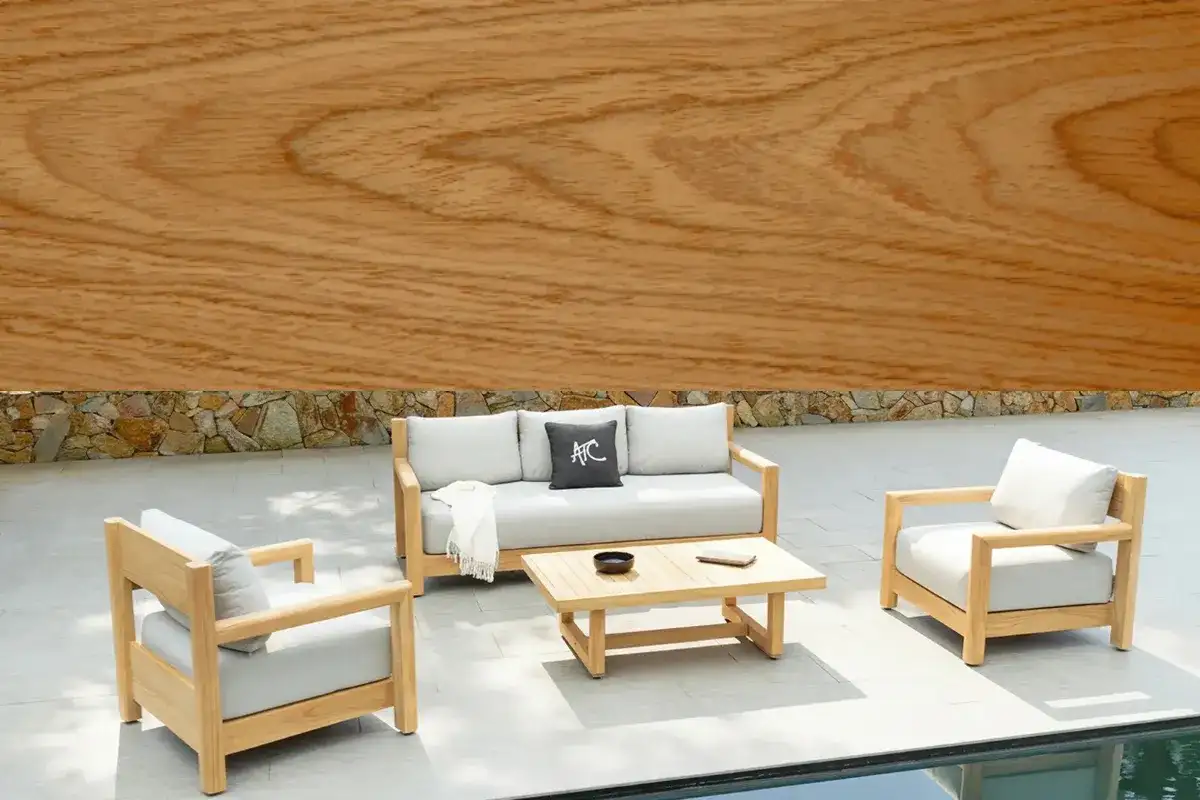
Teak combines natural warmth, durability, and premium outdoor appeal.
Premium teak wood can also be combined with aluminum, rope, or other materials to balance natural aesthetics with practical performance.
2.5 Performance Outdoor Fabrics
Outdoor cushions and upholstered seating require fabrics designed to resist UV exposure, moisture, stains, and frequent cleaning. Solution-dyed acrylic and other performance outdoor fabrics are commonly used for hospitality applications.
Fabric performance should be considered together with cushion construction, drainage, and ease of cleaning, especially for poolside and high-humidity environments.
Material Selection by Environment
|
Environment |
Recommended Materials |
Why? |
|
Coastal resort |
Powder-coated aluminum, HDPE wicker, rope |
Strong moisture and corrosion resistance |
|
Poolside |
Aluminum, HDPE wicker, performance fabric |
Low maintenance and quick cleaning |
|
Luxury hotel |
Teak, aluminum + rope |
Premium appearance and durability |
|
Restaurant terrace |
Aluminum, performance fabric |
Lightweight and easy to maintain |
|
Covered outdoor area |
Teak, rope, selected natural materials |
Greater flexibility with lower direct weather exposure |
Smart material combinations can also improve performance. Aluminum frames paired with HDPE wicker or rope create lightweight furniture, while teak accents add natural warmth. Quick-dry cushions with performance covers can further improve usability after rain.
Matching materials to the environment is more effective than searching for one universal material that works for every commercial application.
3. Durability Factors for Hotels, Resorts, and Commercial Spaces
Commercial furniture is exposed to more demanding conditions than residential products. UV exposure, rain, humidity, salt air, frequent cleaning, and daily use can all affect material performance and product lifespan.
3.1 UV Exposure, Rain, Humidity, Salt Air, Cleaning, and Daily Use
|
Environmental Factor |
Main Risk |
Material Consideration |
|
UV exposure |
Fading and material degradation |
UV-stabilized wicker, rope, and performance fabrics |
|
Rain & humidity |
Moisture, mildew, swelling |
Aluminum, HDPE wicker, quick-dry materials |
|
Salt air |
Accelerated corrosion |
Properly coated aluminum and corrosion-resistant hardware |
|
Frequent cleaning |
Surface and finish wear |
Easy-clean fabrics and durable finishes |
|
Daily commercial use |
Joint, frame, and surface wear |
Reinforced construction and commercial grade furniture |
For furniture for hotel, resort, and restaurant projects, material selection should reflect the actual operating environment. Coastal locations require greater attention to corrosion resistance, while poolside areas benefit from materials that resist moisture and dry quickly.
High-traffic areas also require stable commercial outdoor furniture chairs and tables that can withstand frequent movement, cleaning, and guest use.
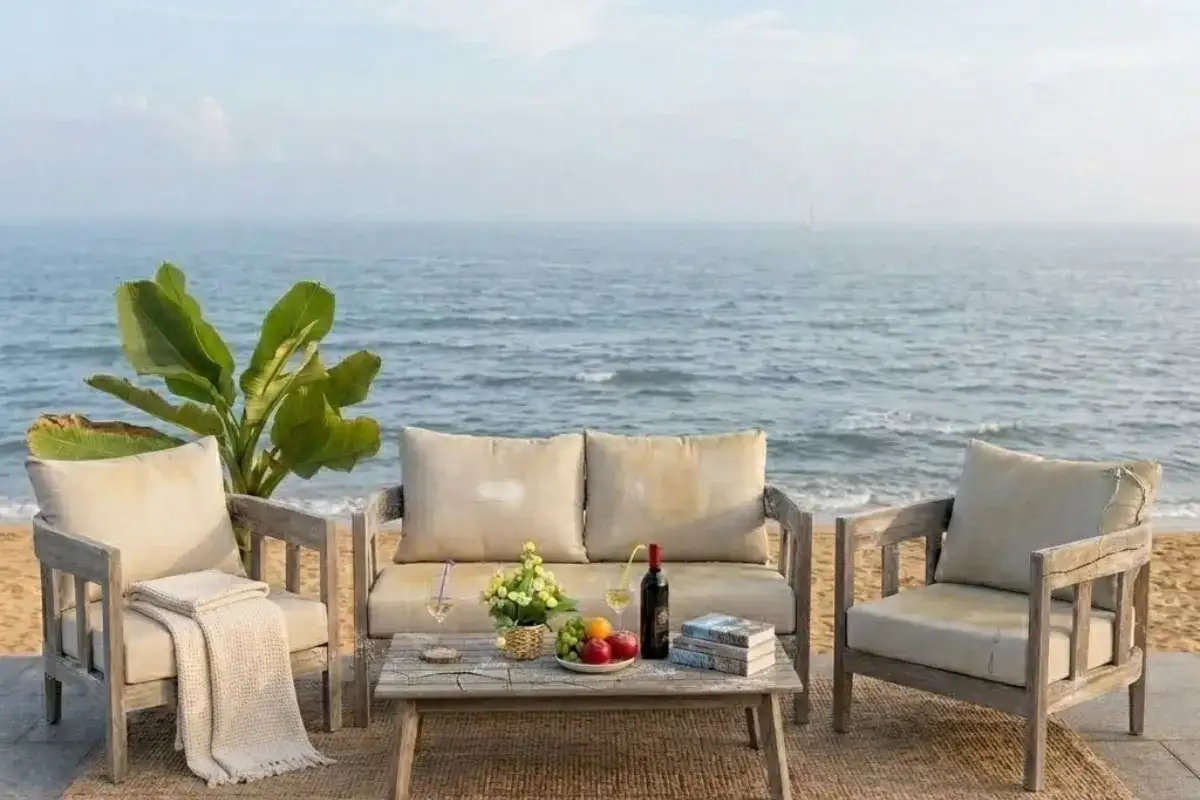
Outdoor environments put materials to the test. UV rays, humidity, and temperature can accelerate fading and deterioration. (Illustrative image)
4. Quality Signals Buyers Can Check Before Ordering
Material type alone does not determine furniture quality. Before placing a bulk order, B2B buyers should also evaluate construction, finishing, material specifications, and consistency between samples and mass production.
4.1 Material and Construction Quality
Important quality signals include:
- Frame material and wall thickness.
- Strong and consistent welding.
- Even powder-coated surfaces without peeling or exposed areas.
- UV-stabilized wicker and outdoor rope.
- Consistent weaving tension and clean finishing.
- Outdoor fabrics suitable for the intended environment.
- Stable tables and chairs without excessive movement.
For a commercial outdoor table, buyers should pay particular attention to frame stability, tabletop construction, hardware, and surface finishing. Seating should also be checked for structural stability and consistent dimensions.
These physical checkpoints provide more useful information than relying only on product photos or general claims such as "outdoor grade".
4.2 Sample and Specification Review
Before mass production, buyers should approve a sample and confirm the agreed specifications, including:
- Dimensions.
- Frame material and thickness.
- Wicker or rope type and color.
- Powder-coating finish.
- Fabric and cushion specifications.
- Hardware and accessories.
The approved sample can then serve as a reference during production and final inspection.
4.3 Manufacturing and Quality Control
A reliable supplier should be able to explain how quality is controlled from incoming materials through production and final inspection.
Buyers can ask about:
- Incoming material inspection.
- In-process quality checks.
- Final product inspection.
- Load or stability testing when required.
- Pre-shipment inspection.
- Handling of defective products.
For large outdoor commercial furniture orders, buyers may also request inspection reports or third-party testing when specific project or market requirements apply.
Clear specifications, approved samples, and documented quality checks make it easier to maintain consistency across larger production batches.
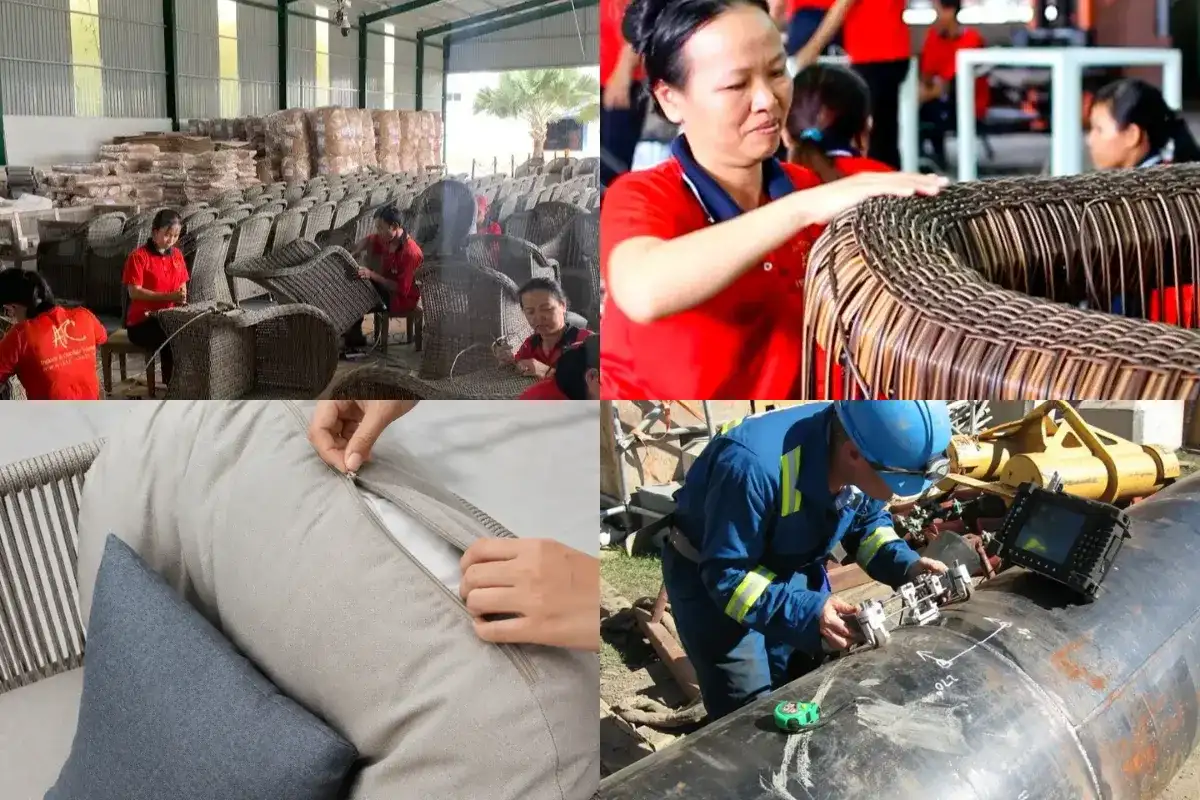
Quality control at every production stage helps ensure product durability.
5. How to Match Materials to Project Type and Budget
The best material for commercial outdoor furniture depends on project type, climate, maintenance, and budget. Buyers should consider long-term performance rather than initial price alone.
|
Project Type |
Recommended Materials |
|
Luxury hotels |
Teak, aluminum + rope |
|
Beachfront resorts |
Aluminum, HDPE wicker |
|
Poolside areas |
Aluminum, HDPE wicker, performance fabric |
|
Restaurants & cafés |
Powder-coated aluminum |
|
Resort lounges |
Aluminum + rope or HDPE wicker |
|
Covered areas |
Teak, rope, selected natural materials |
For commercial outdoor tables and chairs, combining materials can balance cost, appearance, and performance. Aluminum frames, for example, can be paired with wicker, rope, or teak accents.
When comparing options, consider purchase price, maintenance, exposure, expected usage, and replacement requirements. High quality outdoor furniture with suitable materials can provide better long-term value for high-traffic commercial projects.
6. Material Options and Manufacturing Solutions at ATC Craft
ATC Craft manufactures furniture for hotel, resort, retail, and commercial projects using HDPE synthetic rattan, outdoor rope, powder-coated aluminum, teak, and outdoor fabrics.
Natural rattan, bamboo, and water hyacinth are better suited to indoor, covered, or semi-outdoor areas where they are protected from prolonged weather exposure.
6.1 OEM/ODM and Project Support
ATC Craft supports OEM/ODM customization of dimensions, materials, colors, finishes, and fabrics. Sample development also allows buyers to confirm specifications before mass production.
These options support outdoor hotel furniture for poolside, dining, lounge, balcony, and other hospitality applications.
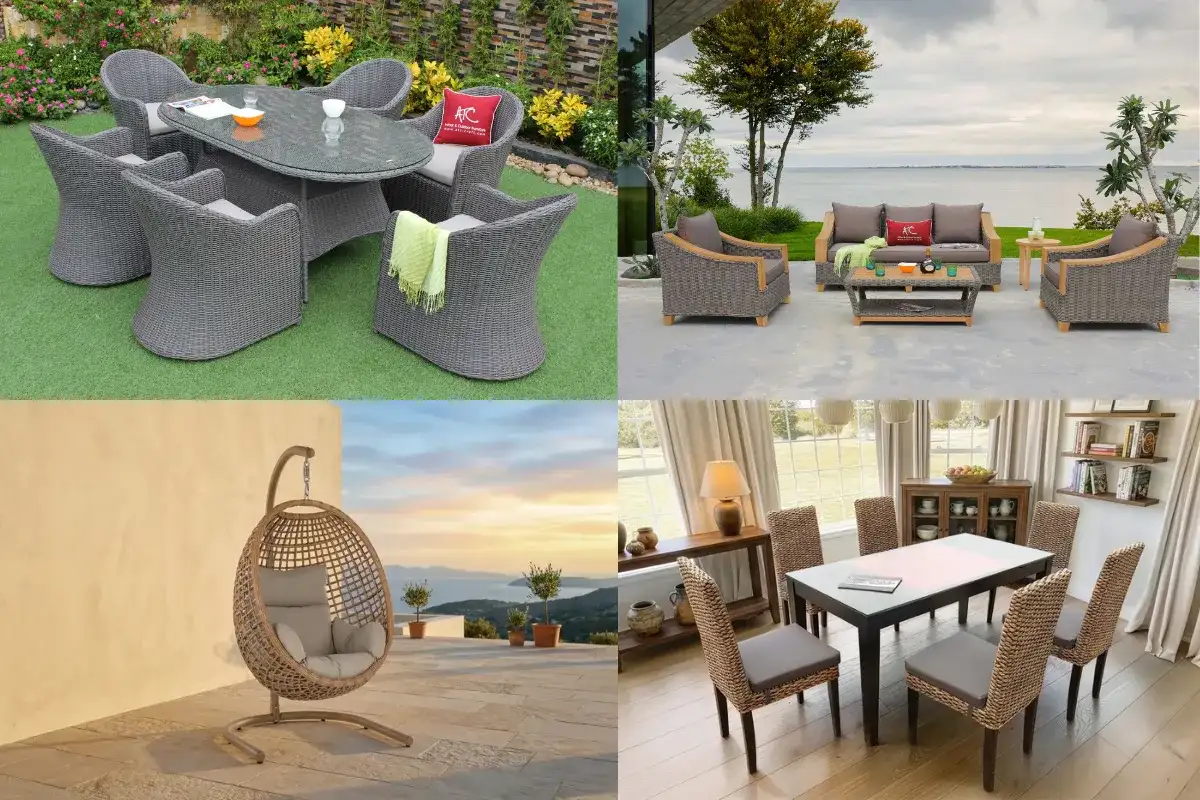
Woven rattan can be applied flexibly across a wide range of products and spaces.
7. Frequently Asked Questions (FAQs)
7.1 What Is the Best Material for Commercial Outdoor Furniture?
There is no single best option for every project. Powder-coated aluminum, HDPE wicker, rope, and teak are common choices depending on climate, usage, maintenance, and budget.
7.2 Are Natural Materials Suitable for Outdoor Commercial Furniture?
Teak performs well outdoors, while natural rattan, bamboo, and water hyacinth are better suited to covered or semi-outdoor areas protected from prolonged rain and sunlight.
7.3 What Should Buyers Check for Outdoor Fabrics and Rope?
Check UV resistance, moisture resistance, tensile strength, cleaning requirements, and available test specifications. For cushions, consider performance fabrics and quick-dry foam where appropriate.
7.4 Which Material Is Best for Coastal Hotels and Resorts?
Powder-coated aluminum, HDPE wicker, and outdoor rope are practical choices because they offer strong resistance to moisture and demanding coastal conditions.