Beautiful Garden Fence Designs for Villas
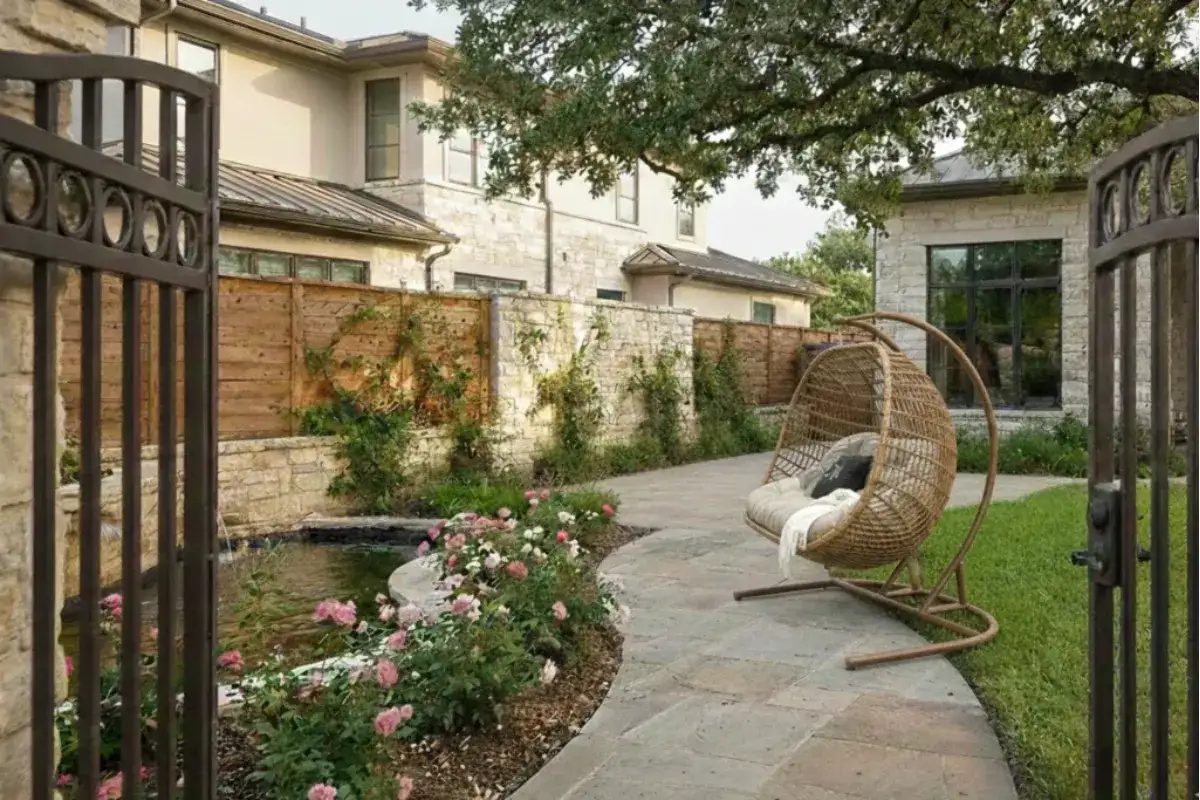
A beautiful garden fence does not only define the boundary of a property. It also shapes the first emotional impression when entering a living space. For garden homes, villa landscapes, or private resort-style residences, the fence acts as a transition layer between architecture, landscape, and the lifestyle inside. When the right style, material, and proportion are selected, a fence can make the garden feel more organized, secure, private, and elegant.
A beautiful garden fence design should harmonize with the main architectural style while matching the greenery, pathway, seating area, and overall outdoor landscape. In this article, ATC Furniture suggests popular garden fence designs, commonly used materials, and important criteria to help you choose the right fence for a garden home, villa, or upscale living space.
1. What Is a Beautiful Garden Fence?
A beautiful garden fence is a surrounding or dividing system within an outdoor area, designed to combine protective function with aesthetic value. Unlike basic fences that only serve as simple barriers, fences in garden homes and villas need to harmonize with the architecture, greenery, entrance gate, pathways, and outdoor living areas.
A well-designed fence helps the space become more orderly. It creates a sense of safety, increases privacy, and highlights the homeowner’s lifestyle. For spacious properties, the fence also guides the eye, adds depth to the landscape, and gives the garden a clearer layout.
A well-designed garden fence creates privacy, structure, and a refined visual connection between architecture and landscape (Source: Internet)
2. The Role of Garden Fences in Living Spaces
2.1. Creating Boundaries and Protecting Privacy
The most basic role of a garden fence is to define the boundary between the inside and outside. For townhouses, villas, or garden homes, the fence helps control access and creates a safer feeling for the family.
In addition, the openness or privacy level of the fence directly affects how private the space feels. Tall fences combined with solid walls or greenery are suitable for areas that need stronger separation. Meanwhile, slim and airy fences are more suitable for small gardens, where homeowners want to maintain an open feeling and a connection with the outside.
2.2. Defining the Aesthetic Style of the Garden
A fence is often the first detail people see before entering the property. Therefore, the shape, color, and material of the fence strongly influence the overall impression of the house. A wooden fence brings warmth, a metal fence creates a modern look, while concrete or natural stone fences often suggest strength and luxury.
When designed consistently with the main architecture, the fence makes the whole property feel more polished. This is especially important for villa gardens, resorts, homestays, or retreat-style spaces that need a premium impression from the entrance.
2.3. Connecting the Landscape with Outdoor Living Areas
A fence should not be seen as a rigid dividing wall. In modern garden design, fences can be combined with greenery, stone landscaping, pathways, decorative lighting, or outdoor furniture areas to create a harmonious layout.
When placed near a seating area, the fence creates a private and peaceful backdrop. An outdoor rattan sofa, garden tea table, or swing chair arranged beside a green fence can turn the area into a true relaxation space rather than just a decorative yard.
3. Types of Garden Fences by Space
3.1. Beautiful Garden Fences for Small Townhouses
For townhouses with a front yard, side yard, or small backyard, the fence should be compact, airy, and not too heavy in appearance. Slim fence designs, moderate height, and bright colors help the space remain open and breathable.
In limited areas, the fence should not make the space feel cramped. Homeowners can choose a white metal fence, low wooden fence, decorative plastic fence, or a fence combined with greenery to soften the overall look. When paired with lawn, flower pots, or a stone pathway, even a small yard can become attractive and balanced.
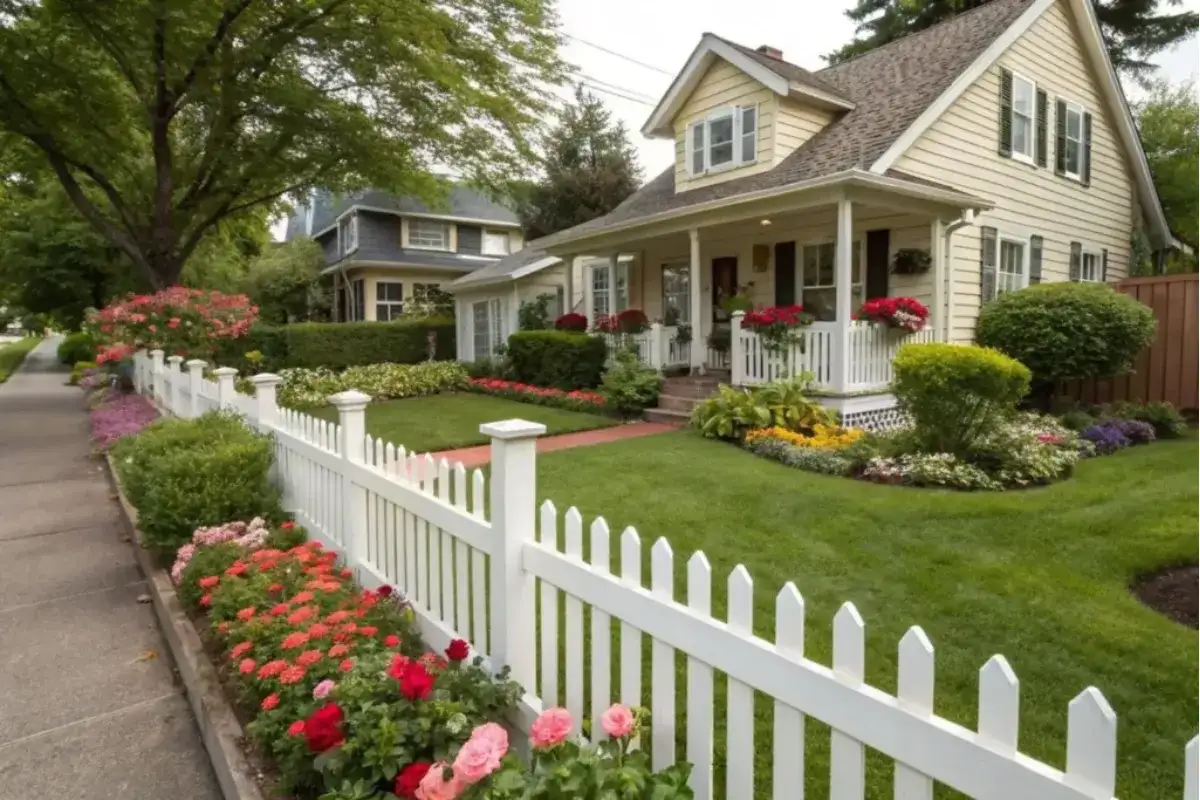
A light garden fence helps small front yards feel open, neat, and welcoming while keeping the landscape balanced (Source: Internet)
3.2. Villa Garden Fences That Match the Architecture
For villa landscapes, the fence should be considered part of the overall architecture. Size, proportion, color, and material must connect with the gate, house facade, garden, and main pathway.
Villa fences are usually larger in scale, stronger in structure, and more carefully finished in detail. Depending on the architectural style, homeowners can choose a modern metal fence, concrete fence combined with stone, wooden fence, faux wood fence, or green fence. This consistency helps the villa landscape become more elegant, layered, and distinctive.
4. Common Materials in Garden Fence Design
4.1. Wooden Garden Fence
A wooden garden fence brings warmth, rustic beauty, and a close connection with nature. This material is suitable for garden homes, resort villas, homestays, or spaces with abundant greenery. The beauty of wood lies in its natural grain, soft color, and ability to create a gentle feeling within the landscape.
However, when used outdoors, wood must be treated against moisture, termites, and weather impact. It also requires periodic maintenance to preserve durability. In rainy or humid areas, homeowners should choose suitable wood types, apply protective coatings, and design proper drainage to limit deterioration over time.
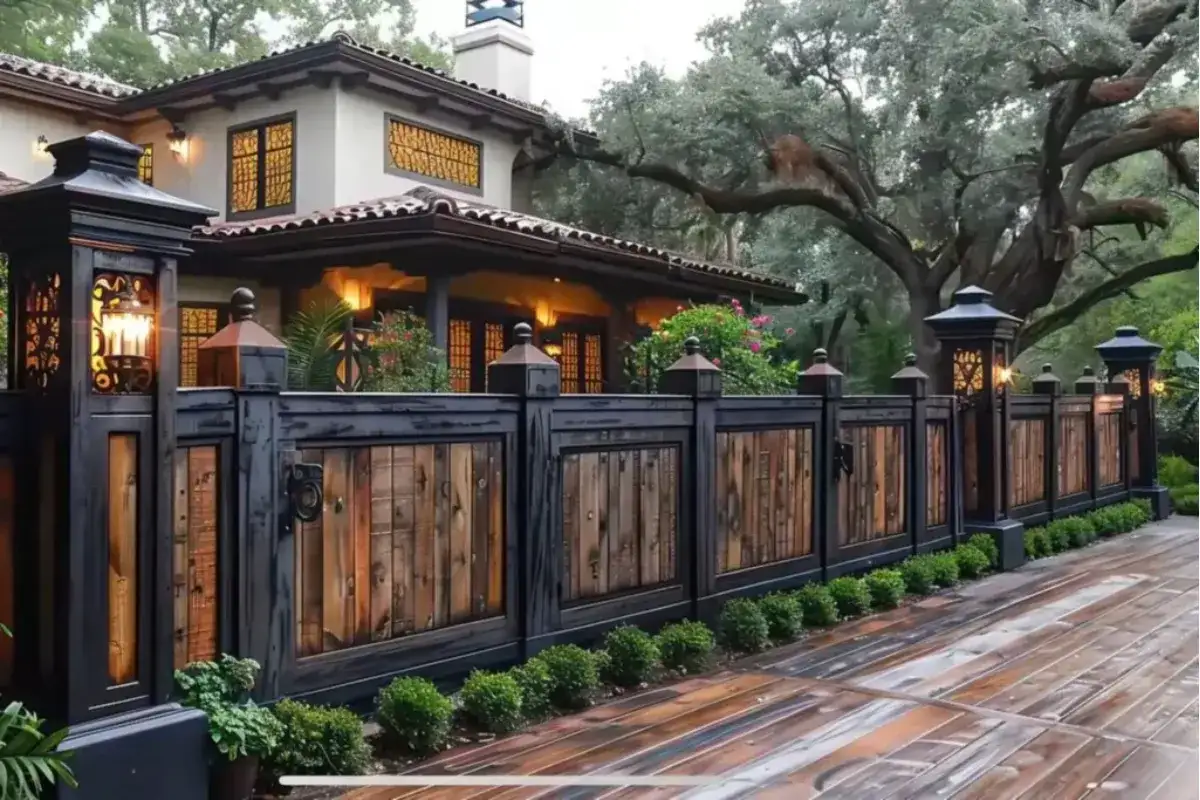
A wooden garden fence adds warmth, privacy, and a natural character to villas, homestays, and green outdoor spaces (Source: Internet)
4.2. Modern Metal Fence
Metal fences, especially powder-coated iron or aluminum, are popular thanks to their durability, flexible shaping ability, and modern appearance. Metal garden fences can be designed with vertical bars, horizontal bars, curved patterns, or minimalist geometric forms depending on the project style.
For modern villas, metal fences in black, gray, white, or deep brown tones often create a clean and luxurious feeling. If homeowners want a more open space, they can choose a slim fence design combined with greenery. If more privacy is needed, the fence can be paired with screens, low walls, or shrub layers inside.
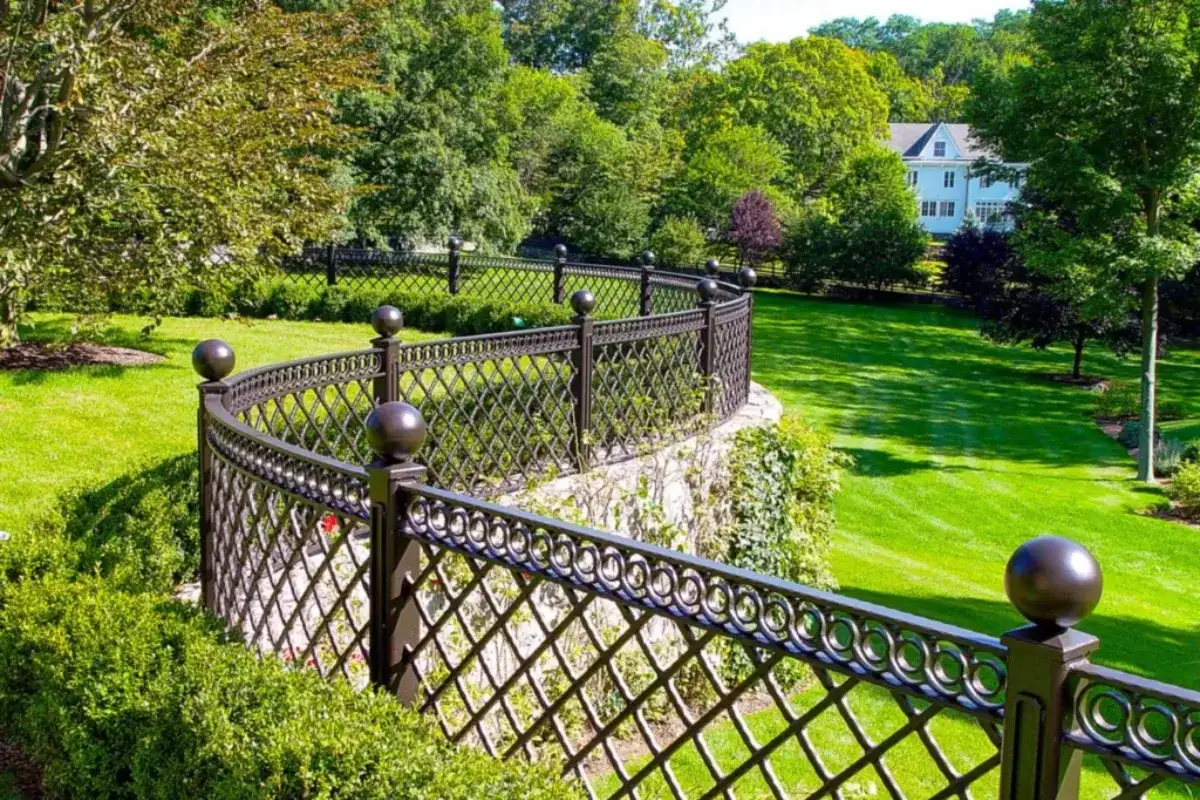
Metal garden fencing offers strength, openness, and a refined appearance for modern villas and spacious landscapes (Source: Internet)
4.3. Concrete and Faux Wood Concrete Fence
Concrete fences are suitable for projects that require strength, long-term durability, and high protection. This material is often used for villa gardens, large townhouses, or properties that need more privacy.
In addition to traditional concrete, faux wood concrete is also a worthwhile option. This type of fence maintains the durability of concrete while creating a warmer surface through a wood-grain effect. When combined with iron gates, stone cladding, or greenery, a concrete fence can become more refined and avoid feeling too heavy.
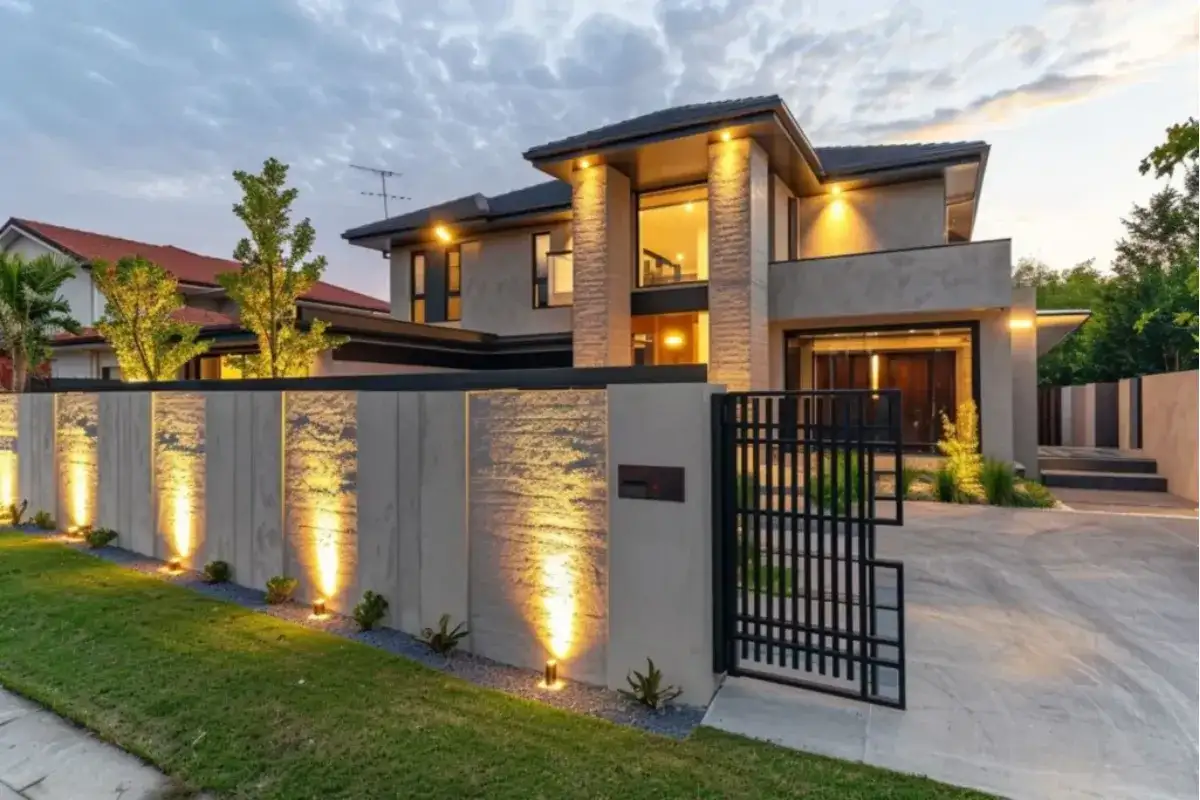
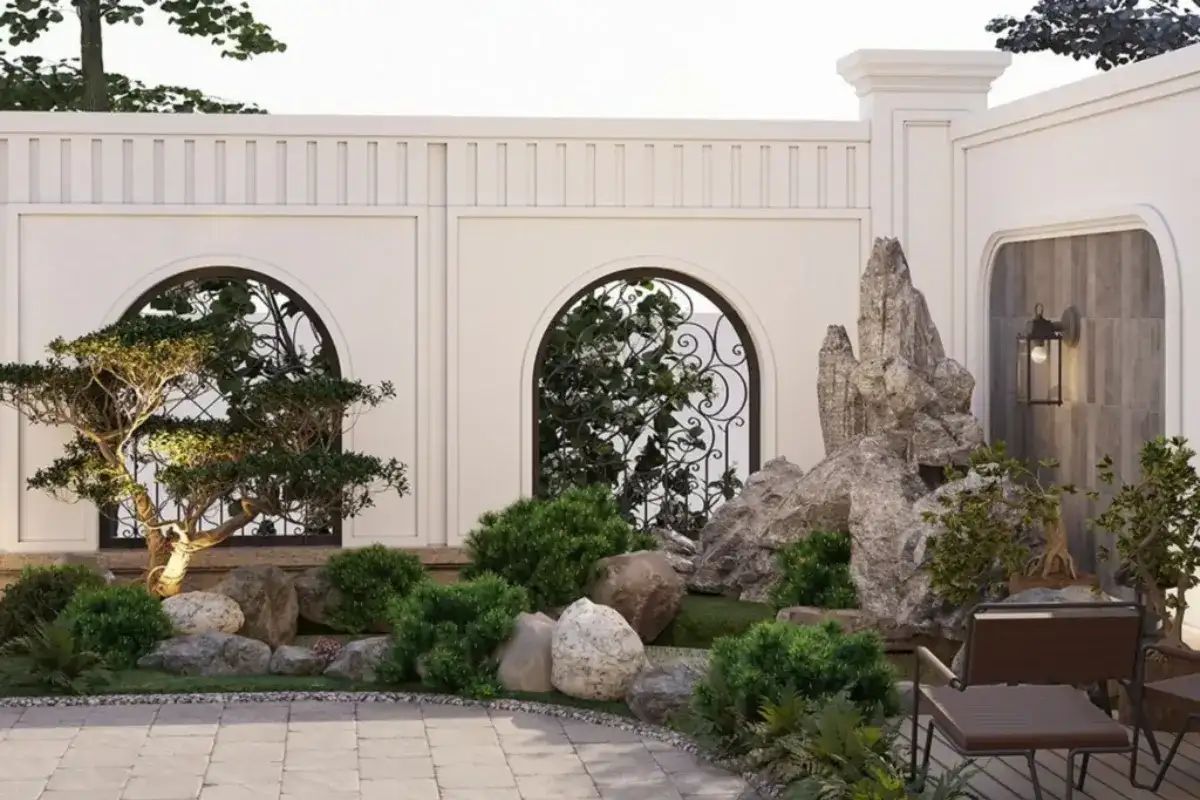
Concrete fencing creates a solid, private, and modern boundary for large homes and contemporary garden landscapes (Source: Internet)
4.4. Decorative Plastic Garden Fence
Decorative plastic garden fences are lightweight, easy to install, and usually more accessible in cost. This type of fence is suitable for secondary decorative areas, small flower gardens, pathways, vegetable gardens, or family yards that need a simple and quick solution.
White plastic fences often create a clean, friendly feeling and are easy to pair with greenery. However, when choosing plastic fences for outdoor use, prioritize products with good thickness, stable surfaces, and suitable sun resistance to reduce brittleness, fading, or deformation over time.
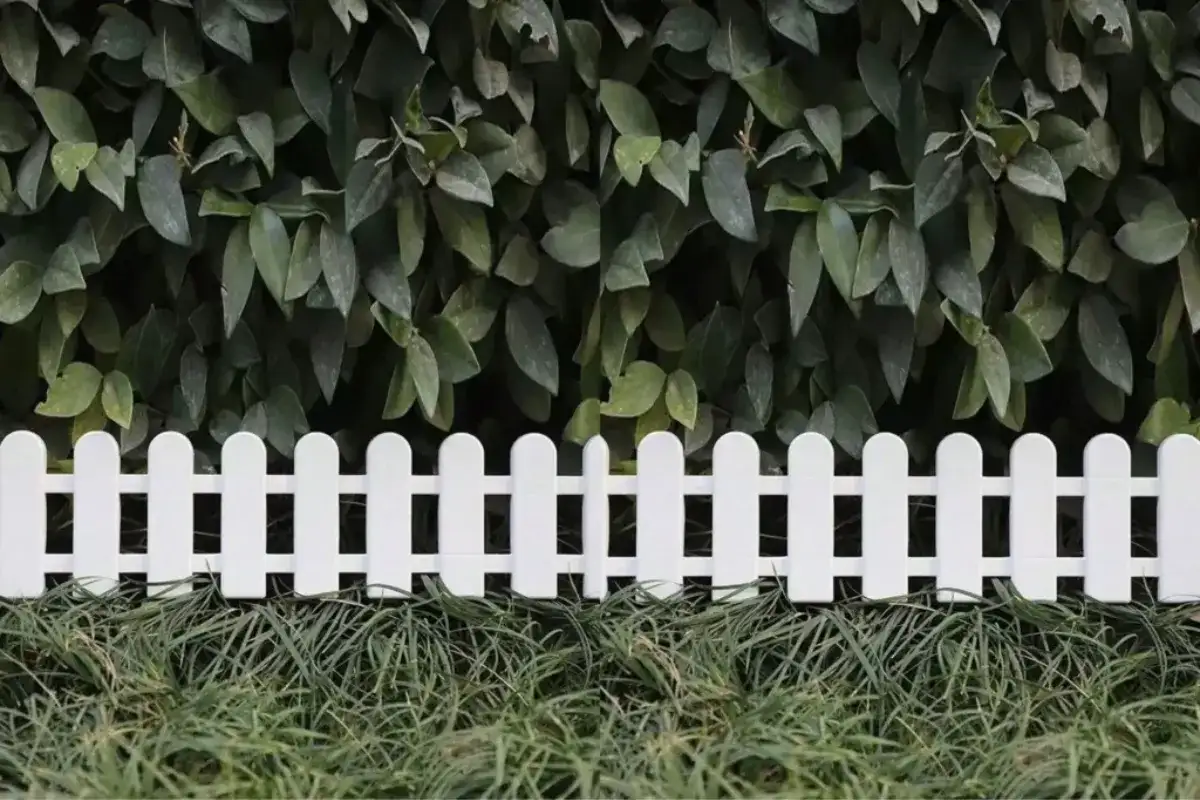
A white plastic fence gives small garden areas a clean, friendly, and easy-to-arrange decorative touch (Source: Internet)
4.5. Fence Combined with Greenery
A fence combined with greenery is an ideal choice for spaces that need privacy while still maintaining softness. Instead of building a hard barrier, homeowners can use shrubs, climbing plants, green walls, or tall plant rows to create a natural boundary for the garden.
This fence style is especially suitable for outdoor seating areas. When combined with rattan sofas, garden tea tables, or lounge chairs, the green backdrop creates a gentle background that makes the space quieter and more comfortable. This is also a beautiful choice for villas, resorts, homestays, or garden homes with a retreat-inspired style.
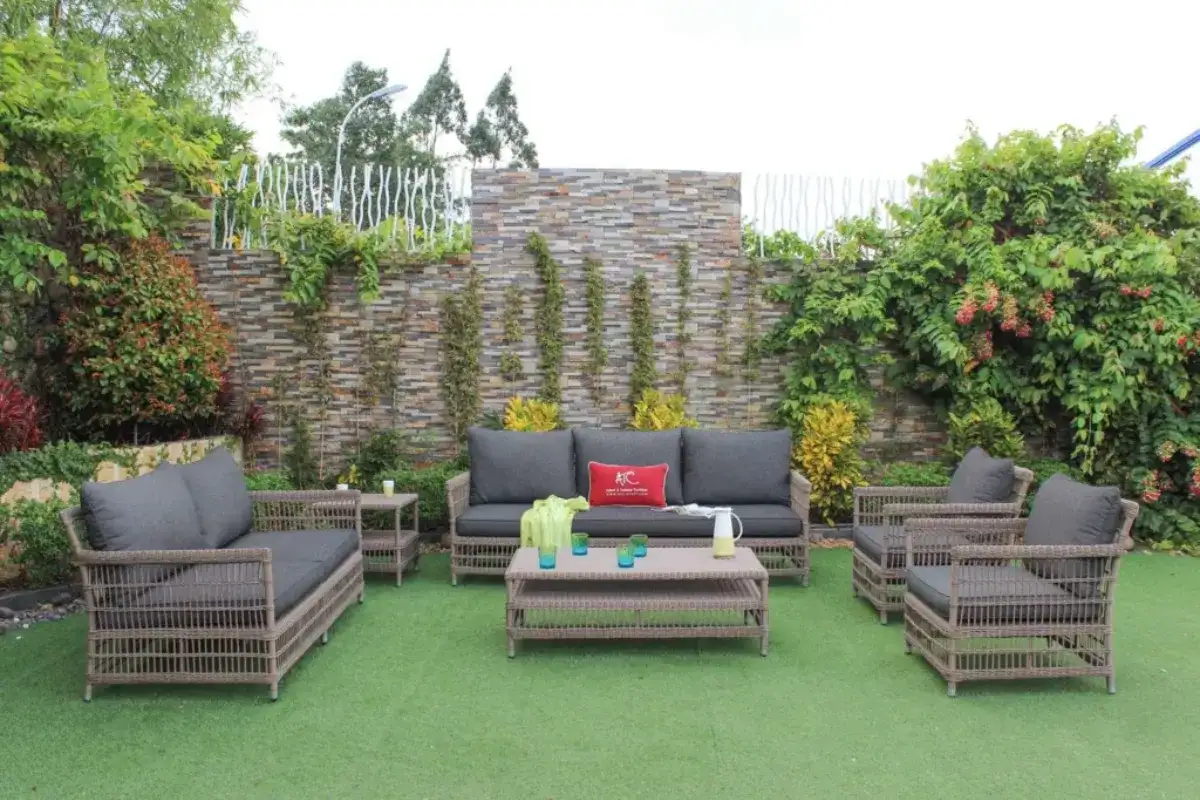
A mixed material fence can become a strong design feature when paired with greenery and outdoor furniture (Source: Internet)
4.6. Mixed-Material Fence
A mixed-material fence combines several materials such as stone, iron, wood, concrete, or greenery to create a strong and distinctive overall design. The fence pillars often use stone or concrete for stability, while the fence body can use metal, wood, or decorative slats to maintain openness.
This material combination makes the fence more flexible in style. For modern villas, stone and metal create a strong and luxurious feeling. For garden homes close to nature, wood and greenery bring warmth and relaxation. When treated with the right proportion, a mixed-material fence can become a standout feature for the entire property.
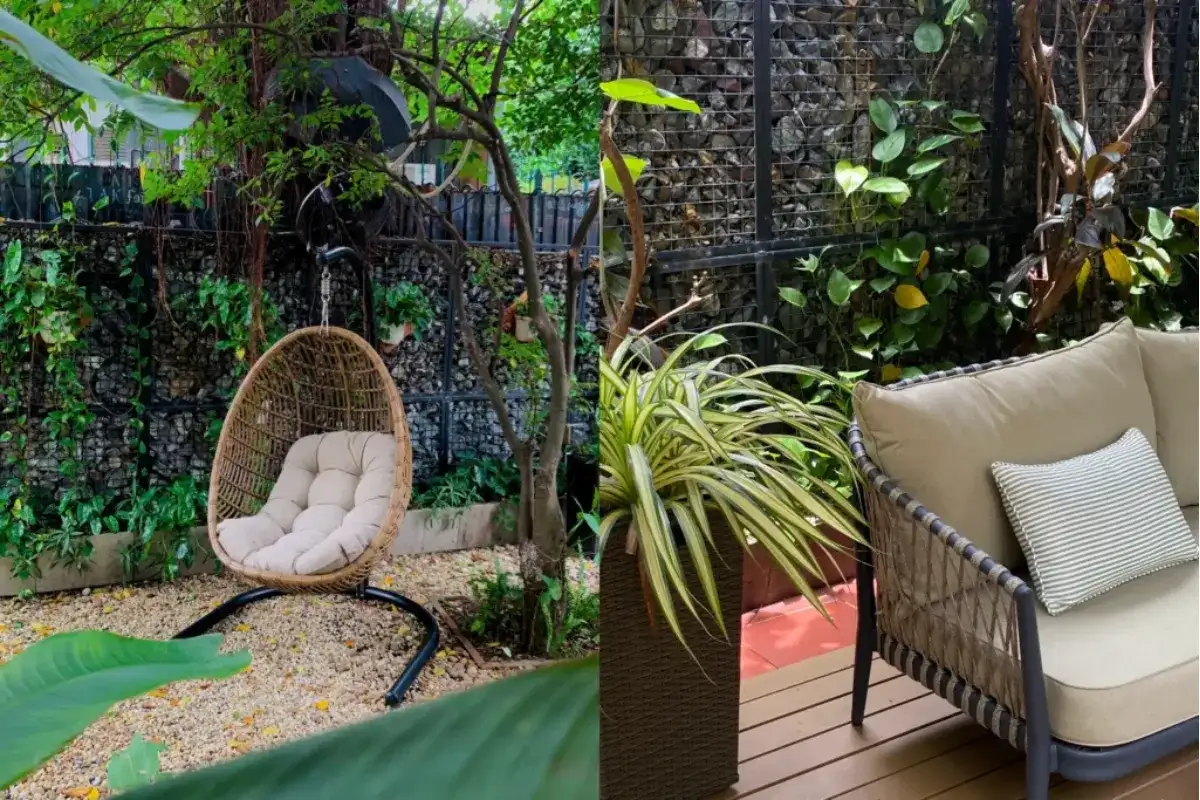
A mixed-material fence brings depth, privacy, and a distinctive design character when paired with greenery and outdoor seating (Source: Internet)
5. How to Combine Garden Fences with Outdoor Layouts
5.1. Combining Fences with Pathways and Greenery
A beautiful fence becomes more effective when placed within a well-planned landscape layout. When combined with stone pathways, lawn, planting beds, or low tree rows, the garden gains depth and clearer visual guidance.
For long pathways, the fence can act as a soft border that divides the space without reducing openness. Materials such as wood, brick, stone, or neutral-colored metal help the pathway feel warmer, more private, and more aesthetically refined.
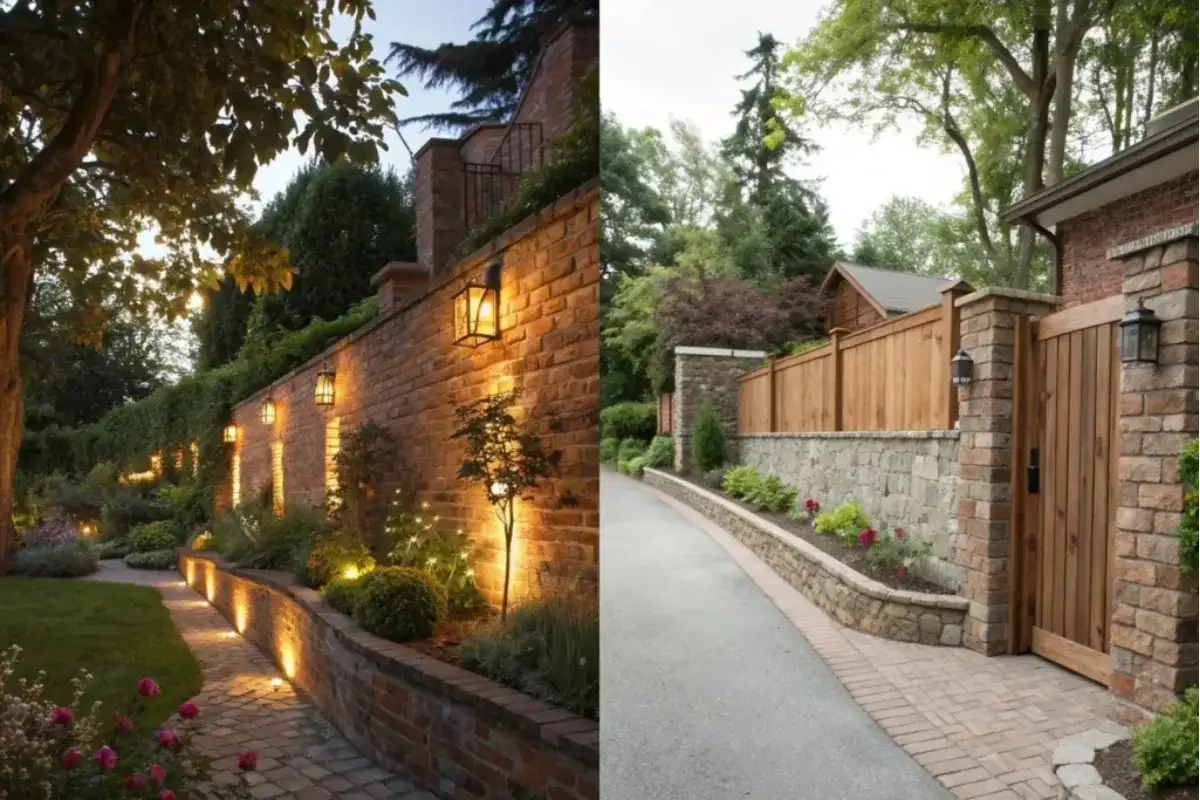
Combining fences with pathways and plants helps guide the eye while giving the garden more depth and structure (Source: Internet)
5.2. Combining Fences with Outdoor Seating Areas
In premium garden designs, seating areas are often arranged near fences to create a more private and peaceful feeling. A fence combined with greenery behind a garden furniture set makes the space feel more secluded while creating a beautiful backdrop for daily relaxation activities.
Homeowners can place a synthetic rattan sofa, outdoor tea table, lounge chair, or swing chair near the fence. When combined with decorative lights, potted plants, outdoor rugs, or a small water feature, this area becomes an ideal relaxation corner for reading, chatting, or enjoying afternoon tea.
A fence placed near an outdoor seating area helps create a more private, peaceful, and relaxing garden corner (Source: Internet)
6. Criteria for Choosing a Beautiful Garden Fence
To choose a beautiful and suitable garden fence, homeowners need to consider several factors at the same time. The property size is the first factor, because small gardens should prioritize airy fences, while large villas can use taller, stronger fences with clearer architectural accents.
The architectural style of the house should also be considered carefully. Modern homes should choose minimalist fences, neutral colors, and durable outdoor materials. Traditional garden homes can use wood, stone, brick, or greenery to create a more natural feeling. For resort-style villas, the combination of fencing, greenery, and outdoor furniture areas helps the overall space feel more complete.
In addition, homeowners should define the desired level of privacy. If strong screening is needed, a tall wall fence, concrete fence, or dense green fence may be suitable. If an open feeling is preferred, slim metal fences or low wooden fences are better options. Factors such as climate, material durability, cleaning ability, investment cost, and long-term maintenance should also be calculated before construction.
7. Notes When Building a Garden Fence
When building a garden fence, the height and spacing between fence bars should be designed properly to ensure both aesthetics and safety. A fence that is too low may not provide enough privacy, while one that is too high can feel heavy if not softened with greenery or suitable materials.
The foundation and fence posts are also very important, especially for concrete, stone, or metal fences. The foundation must be solid to keep the fence stable against wind, rain, and external impact. For wood or metal materials, moisture resistance, rust protection, and high-quality protective coatings should be carefully handled.
Maintenance should also be planned in advance. Wooden fences need periodic coating, metal fences need anti-rust paint inspection, green fences require regular trimming, and concrete fences should be checked for cracks or water penetration. With proper care, the fence can maintain stable beauty and enhance the landscape value for a long time.
8. Frequently Asked Questions About Beautiful Garden Fences
8.1. What Material Should Be Chosen for a Beautiful Garden Fence?
A beautiful garden fence can be made from wood, powder-coated metal, concrete, faux wood concrete, decorative plastic, greenery, or mixed materials. The material should be selected based on architectural style, privacy needs, budget, and climate conditions in the area of use.
8.2. How Tall Should a Garden Fence Be?
The fence height depends on its purpose. If it is mainly for decoration and light division, a low or medium-height fence is suitable. If more privacy and safety are needed, a taller fence can be used and combined with greenery or screens to avoid a closed-in feeling.
8.3. Which Fence Is Suitable for Villa Gardens?
Villa gardens are often suitable for modern metal fences, concrete fences combined with stone, wooden fences, green fences, or mixed-material fences. Most importantly, the fence should be consistent with the main architecture, entrance gate, and surrounding landscape.
8.4. Should Fences Be Combined with Greenery?
Yes. Combining fences with greenery makes the space softer, more private, and closer to nature. This design approach is especially suitable for resort gardens, villas, homestays, or outdoor seating areas that need a peaceful feeling.
8.5. How Can a Garden Fence Stay Beautiful and Durable for a Long Time?
To keep a garden fence beautiful and durable, choose materials suitable for outdoor conditions, build a strong foundation, and maintain it periodically. Wood needs moisture treatment, metal requires anti-rust coating, greenery needs regular trimming, and concrete should be checked for cracks and water penetration over time.
Conclusion
A beautiful garden fence is an important detail that completes the appearance of gardens, townhouses, and villas. A suitable design not only creates a clear boundary, but also increases privacy, improves safety, and highlights the homeowner’s lifestyle.
Depending on the area, architecture, and usage needs, you can choose wood, metal, concrete, decorative plastic, greenery, or mixed materials. When harmoniously combined with pathways, plants, landscape features, and outdoor furniture areas, the fence becomes a natural part of the landscape, making the garden more beautiful, layered, and enjoyable every day.