Beach Club Outdoor Furniture: Designing High-Capacity VIP Sunbed & Lounge Layouts
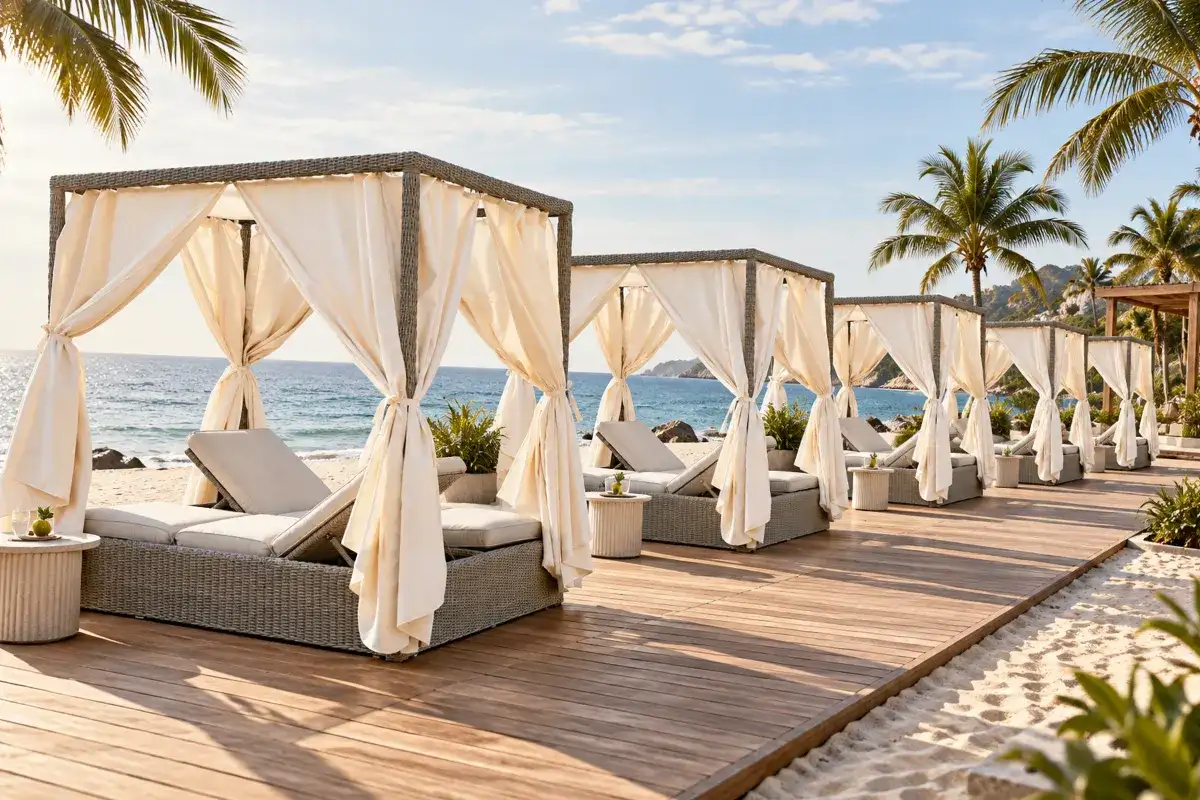
Beach clubs need to accommodate large numbers of guests without making premium areas feel crowded or operationally difficult. The right beach club outdoor furniture strategy therefore combines guest comfort, coastal durability, efficient circulation and a consistent visual identity.
For owners, developers and hospitality procurement teams, the challenge is not simply choosing attractive sunbeds. Product dimensions, materials, layout density, maintenance requirements and supplier capability all influence how successfully a beachfront venue performs over time. This guide explains how to plan commercial loungers, daybeds, cabanas and lounge seating for high-capacity beach clubs while maintaining the experience expected in VIP hospitality environments.
1. What Makes Beach Club Outdoor Furniture Different?
A beach club places very different demands on outdoor products compared with a private villa or residential patio. Seating may remain outdoors for extended periods, accommodate many guests throughout the day, and be repeatedly moved, cleaned, and rearranged by staff.
At the same time, beach clubs are highly visual hospitality environments. A sunbed or daybed contributes not only to seating capacity but also to the overall atmosphere, guest experience and perceived quality of the venue. Commercial buyers therefore need to evaluate appearance and operational performance together.
1.1 Coastal Exposure and Weather Conditions
Beachfront products operate in an environment where sunlight, humidity, rain, sand and salt-laden air can accelerate material deterioration. Poolside zones may introduce additional exposure to splashes and chlorinated water.
The consequences can appear in different components. Poorly protected metal may develop surface corrosion, unsuitable fabrics can fade, low-quality woven materials may become brittle, and cushions that retain moisture can take too long to return to service after rain.
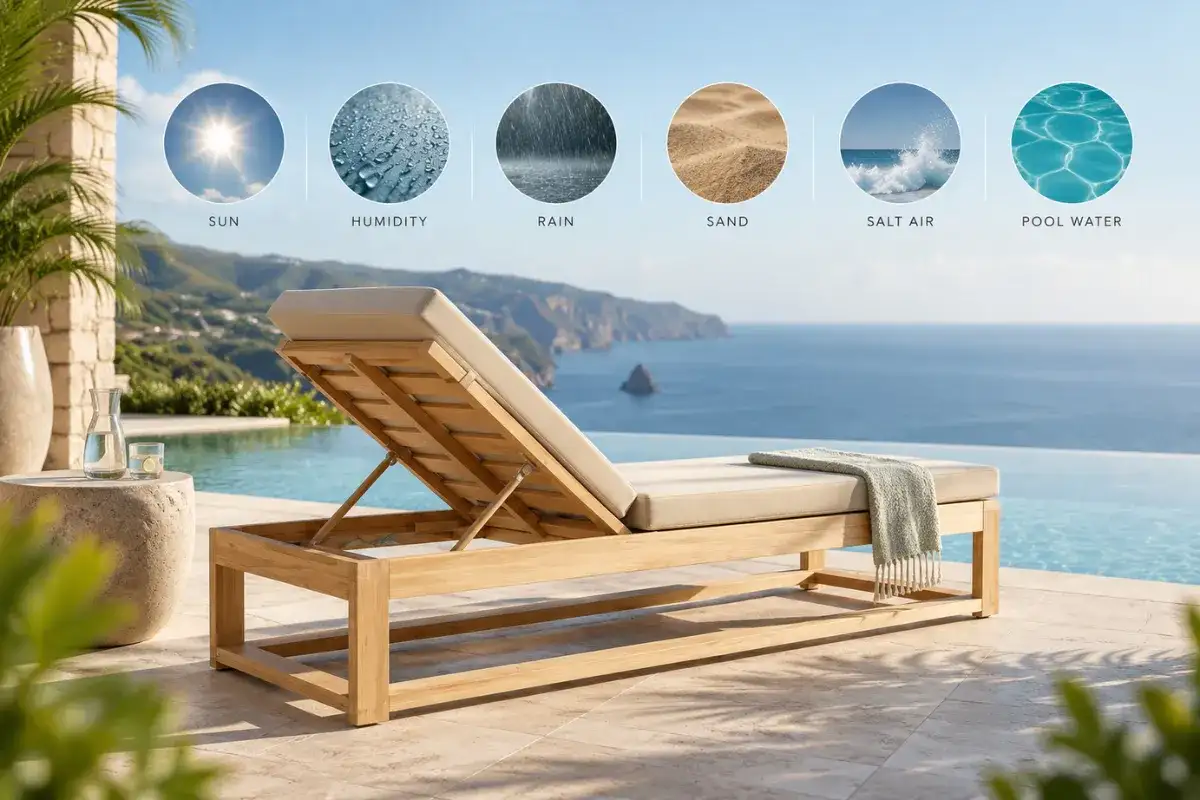
Beachfront products need materials suited for demanding coastal environments.
For oceanfront beach club loungers, material specifications should therefore be considered as a complete system. The frame, surface finish, weaving material, hardware, fabric and cushion construction all contribute to outdoor performance.
1.2 High-Frequency Commercial Use
A residential sun lounger may stay in approximately the same position for months. In a busy beach club, the same type of product may be repositioned several times during daily operations.
Staff may move loungers during cleaning, reset rows before opening, combine seating for groups or completely reconfigure a zone for an evening event. Guests also adjust reclining mechanisms and move side tables throughout the day.
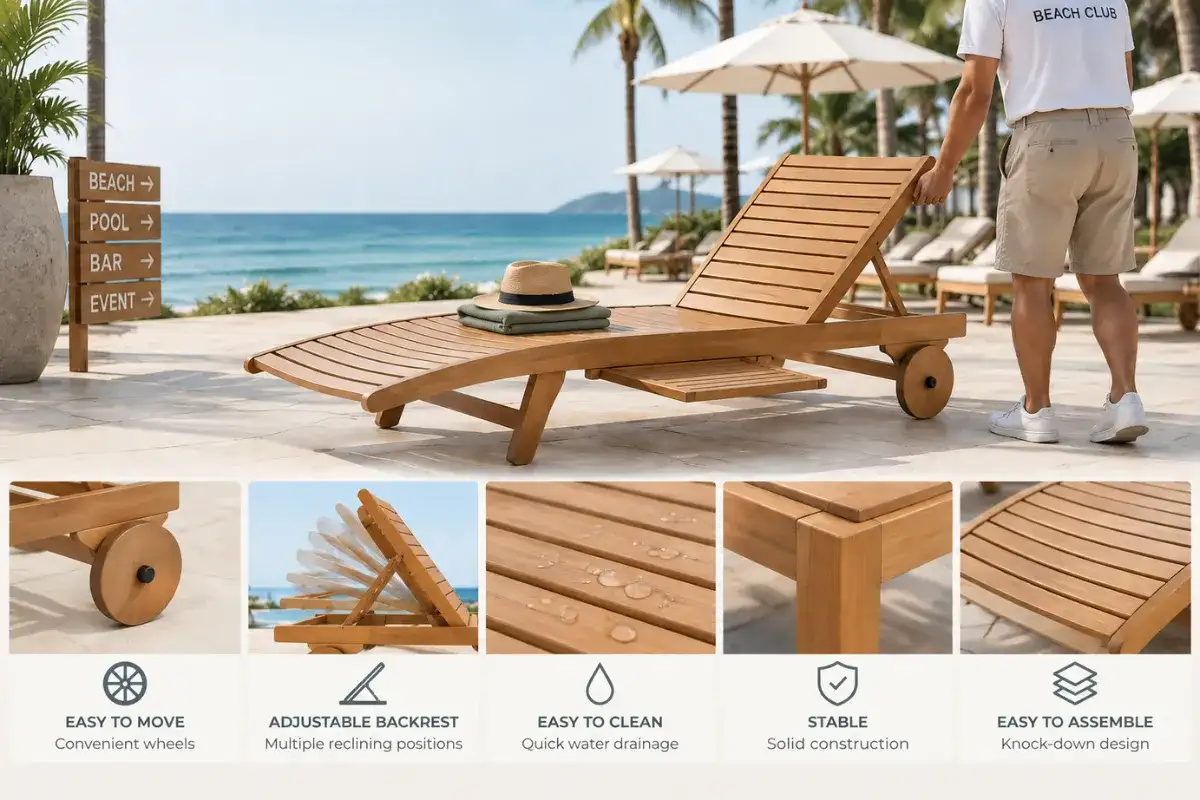
Easy-to-move loungers support efficient daily beach club operations.
This makes weight, stability, handling, replaceable components and ease of cleaning important commercial considerations. A beautiful product that is difficult to operate can create additional work for staff across hundreds of daily interactions.
1.3 Guest Comfort and Beach Club Image
Capacity should never be interpreted simply as placing the maximum possible number of seats into a defined area. High-capacity planning works when the venue can accommodate more guests while preserving circulation, privacy and comfort.
VIP zones make this particularly important. Larger daybeds, cabanas and deep lounge seating require more space but can support premium experiences and create a stronger visual identity.
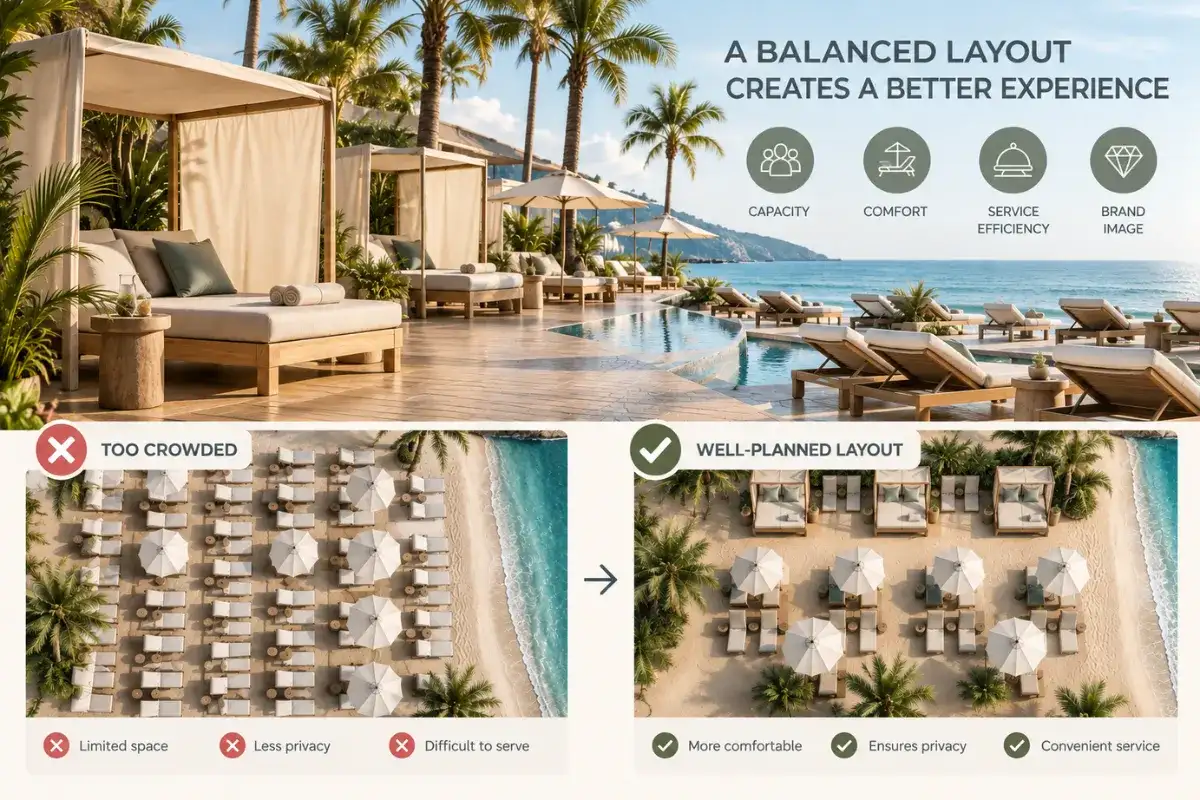
A balanced beach club layout improves capacity, comfort, privacy and service.
For buyers, the objective is therefore to find a balance between seat capacity, guest comfort, service efficiency and brand positioning.
2. Essential Beach Club Outdoor Furniture for Commercial Projects
A successful beach club rarely depends on one seating type. Different products support different lengths of stay, service levels and revenue zones.
Instead of selecting products independently from a catalogue, procurement teams should first determine the role of each area and then specify the appropriate seating.
2.1 Oceanfront Beach Club Loungers and Sunbeds
Sun loungers usually provide the highest seating density within beachfront and poolside zones. They work particularly well in repeated rows where individual guests need their own reclining space and convenient access to side tables.
Commercial buyers should examine reclining mechanisms, frame stability, cushion attachment, ease of movement and cleaning requirements. Stackability can also be valuable where products need to be stored seasonally or moved regularly.
For luxury beach sunbeds commercial projects, visual consistency is especially important. When dozens or hundreds of units are installed together, differences in frame alignment, fabric tone or woven tension become much easier to notice.
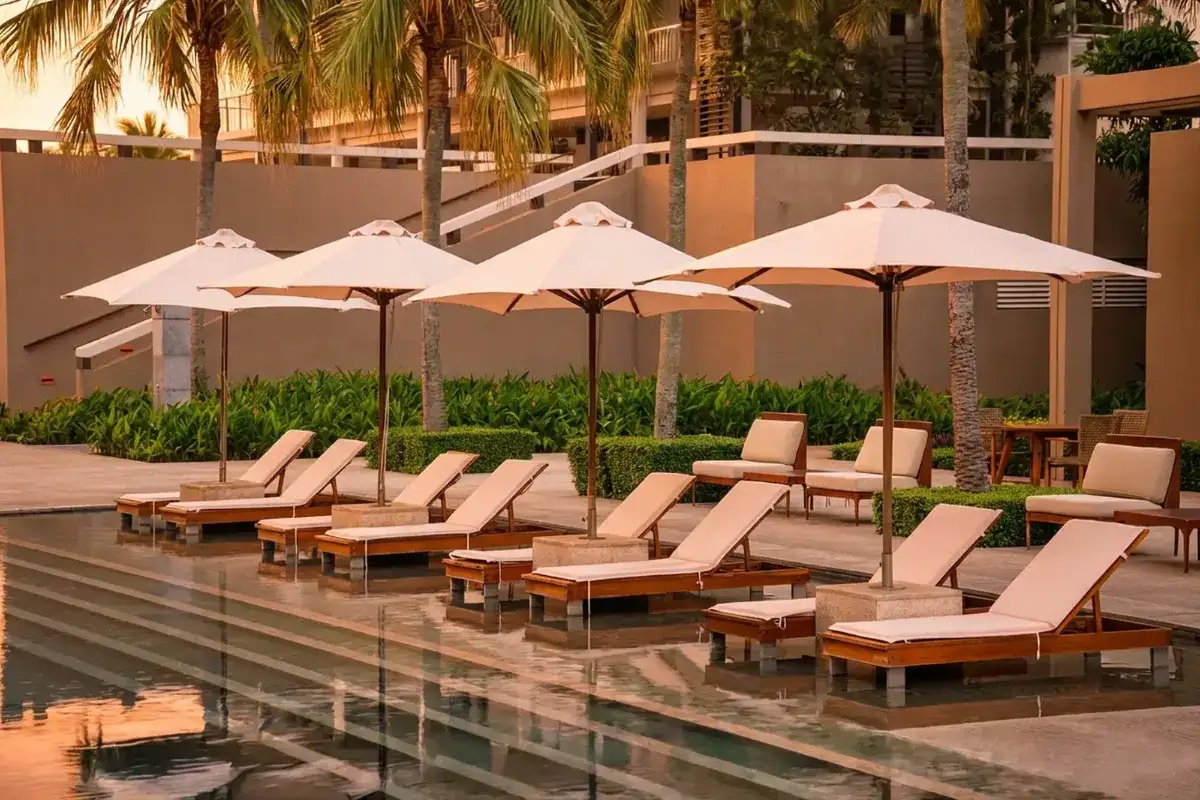
Commercial sun loungers help maximize capacity while maintaining a cohesive layout.
2.2 Commercial Beach Club Daybeds
Commercial beach club daybeds create a different guest experience. Their larger dimensions make them suitable for couples, groups and premium zones where guests are expected to remain for longer periods.
Round, rectangular and double daybeds can all work in beach club environments, while integrated canopy structures provide additional shade and privacy. The correct choice depends on available space, expected occupancy and the positioning of the zone.
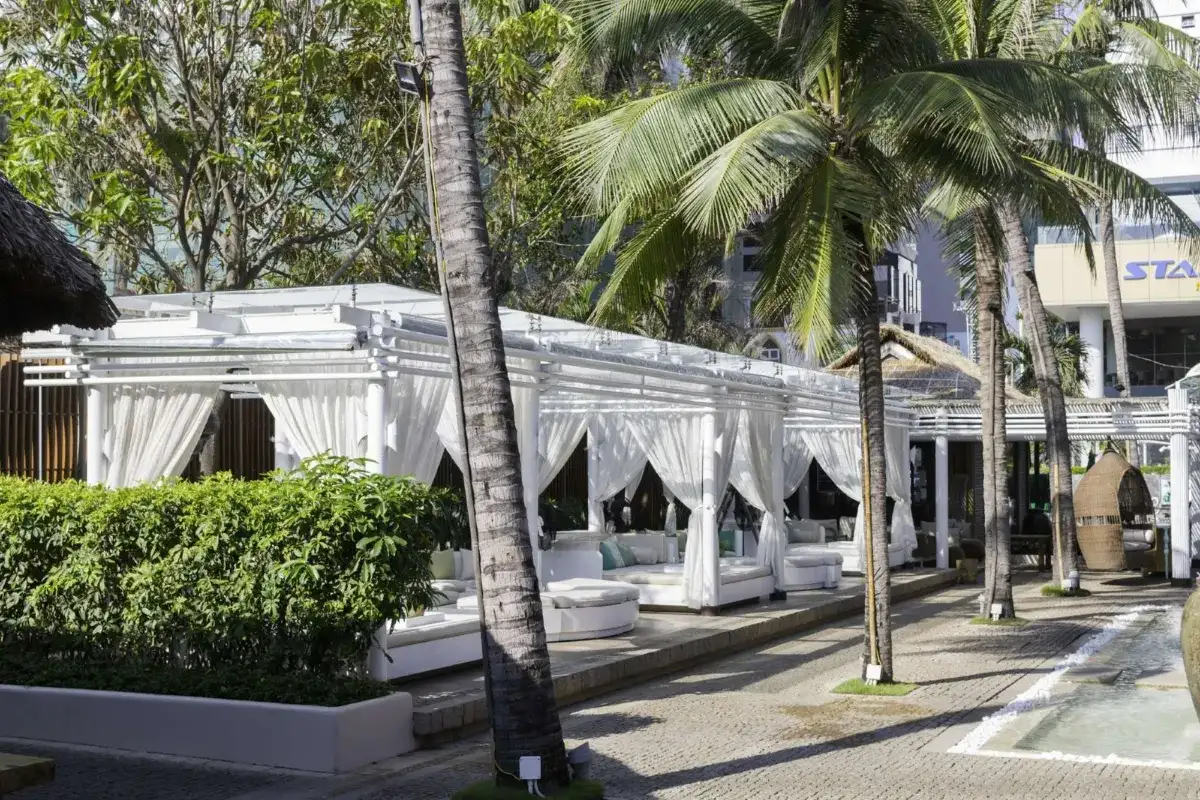
Commercial daybeds create comfortable, private spaces for premium beach club zones.
Buyers should pay particular attention to the real operating footprint. A large daybed requires more than its catalogue width and depth; staff access, side tables, cushion handling and guest circulation all require additional space.
2.3 Cabana Seating for VIP Areas
Cabanas can create semi-private zones without separating VIP guests completely from the energy of the beach club. They may combine a large daybed with a canopy or use lounge chairs and sofas within a more architectural structure.
Beach club cabana seating should combine privacy, comfort and coastal durability.
When sourcing waterproof beach club cabana seating, specifications should be reviewed carefully. In many applications, “weather-resistant” or “water-repellent” is more accurate than assuming every cushion or fabric is completely waterproof.
Buyers should check how quickly cushions drain and dry, whether covers are removable, how the canopy responds to wind and moisture, and whether replacement fabrics or cushions can be ordered later.
2.4 Beach Club Lounge Seating
Not every guest wants to spend the entire visit on a sunbed. Sofa sets, lounge chairs, modular seating and coffee tables create social areas for drinks, conversation and evening use.
This is particularly relevant when sourcing beach club lounge furniture wholesale, because multiple product types must often share a consistent material palette. Coordinating aluminum finishes, rope or wicker colors, teak details and fabrics helps create a unified environment even when several collections are used.
Dining sets, bar-height seating and parasols can then extend the same design language into F&B and transition zones without requiring every area to use identical products.
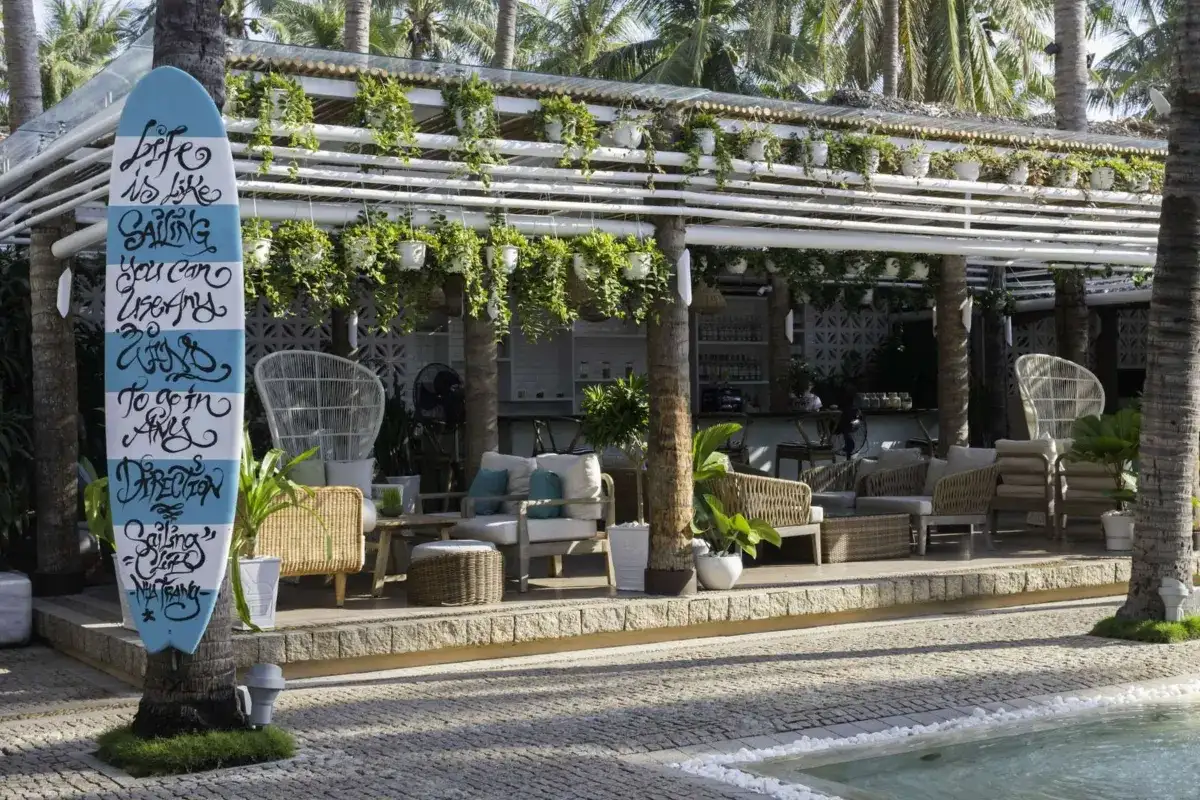
Coordinated lounge seating helps maintain a consistent design across beach club zones.
3. Best Materials for Beach Club Outdoor Furniture
Material selection should reflect both the coastal environment and the operating model of the project. There is no single material that is automatically best for every beach club.
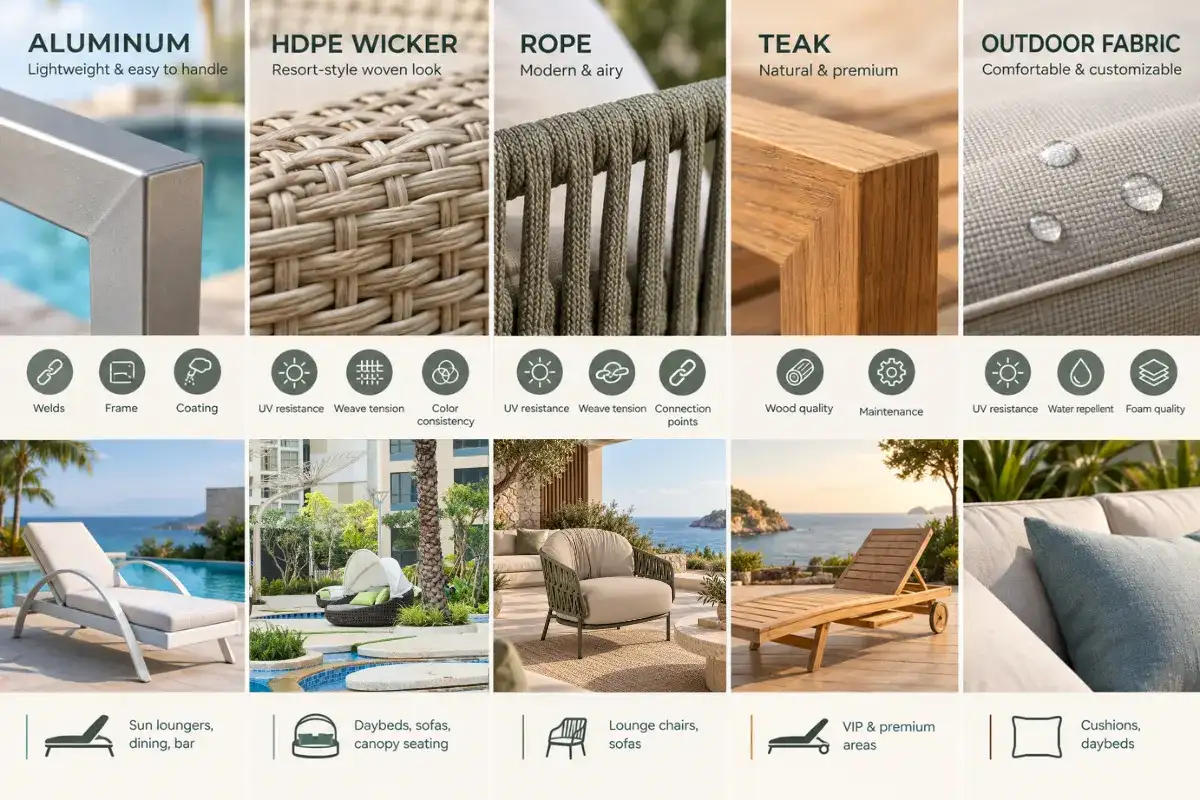
A lightweight aluminum lounger may be ideal for frequently rearranged beachfront rows, while teak can provide the natural character expected in a premium cabana area. HDPE wicker and outdoor rope offer further design possibilities for lounge seating and daybeds.
3.1 Powder-Coated Aluminum
Aluminum is widely used for commercial outdoor frames because it combines relatively low weight with good resistance to outdoor conditions when properly fabricated and finished.
Its lower weight can be particularly useful for high-capacity projects where staff regularly reposition large numbers of loungers.
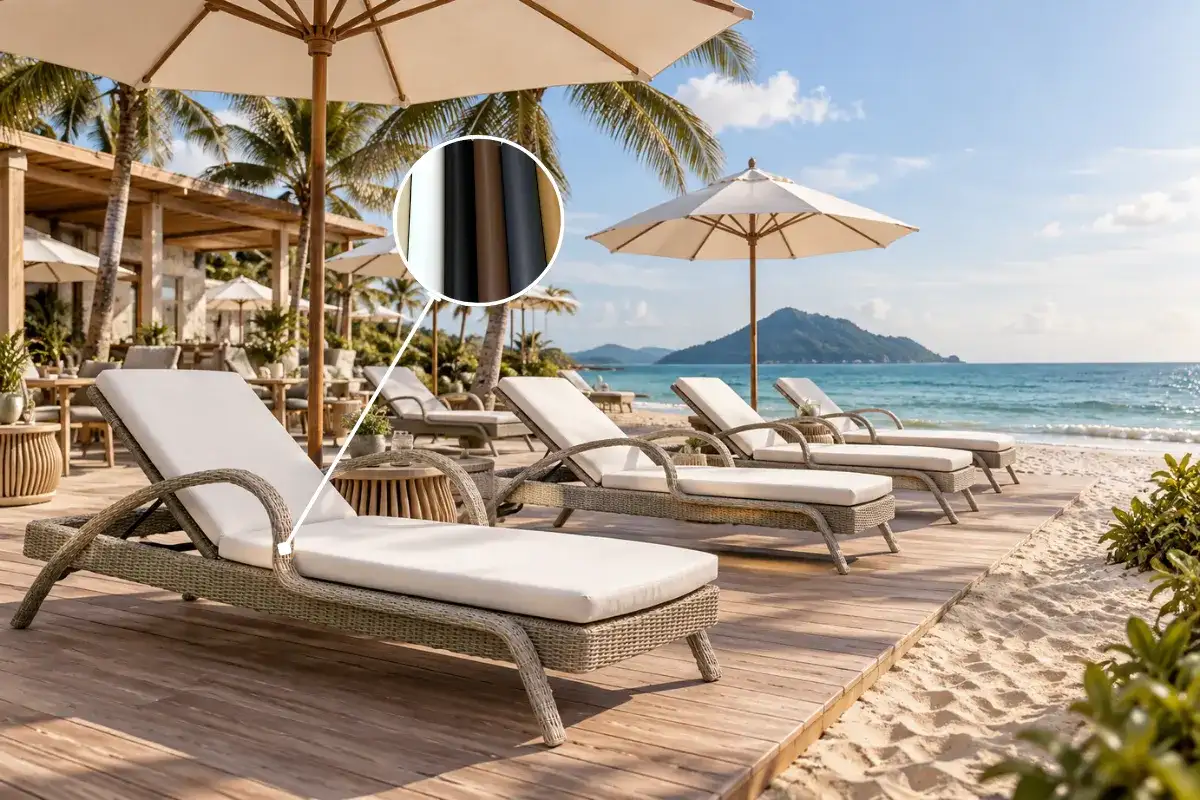
Aluminum frames are practical for high-use beach club areas.
However, buyers should look beyond the word “aluminum” in a specification sheet. Frame construction, tube specifications, weld quality, reinforcement, powder coating and hardware all affect finished-product performance.
3.2 HDPE Synthetic Wicker and Outdoor Rope
HDPE synthetic wicker provides the handwoven character associated with many tropical and resort environments while being designed for exterior applications. Buyers should inspect UV stability, strand consistency, weaving tension, connection points and color consistency across production batches.
Outdoor rope creates a lighter and more contemporary appearance. It can work particularly well for modern beach clubs seeking visually open lounge chairs, sofas or daybeds.
For both materials, samples are valuable before bulk production. A small material swatch can help buyers evaluate texture and color, while a finished sample provides a better indication of weaving quality and overall construction.
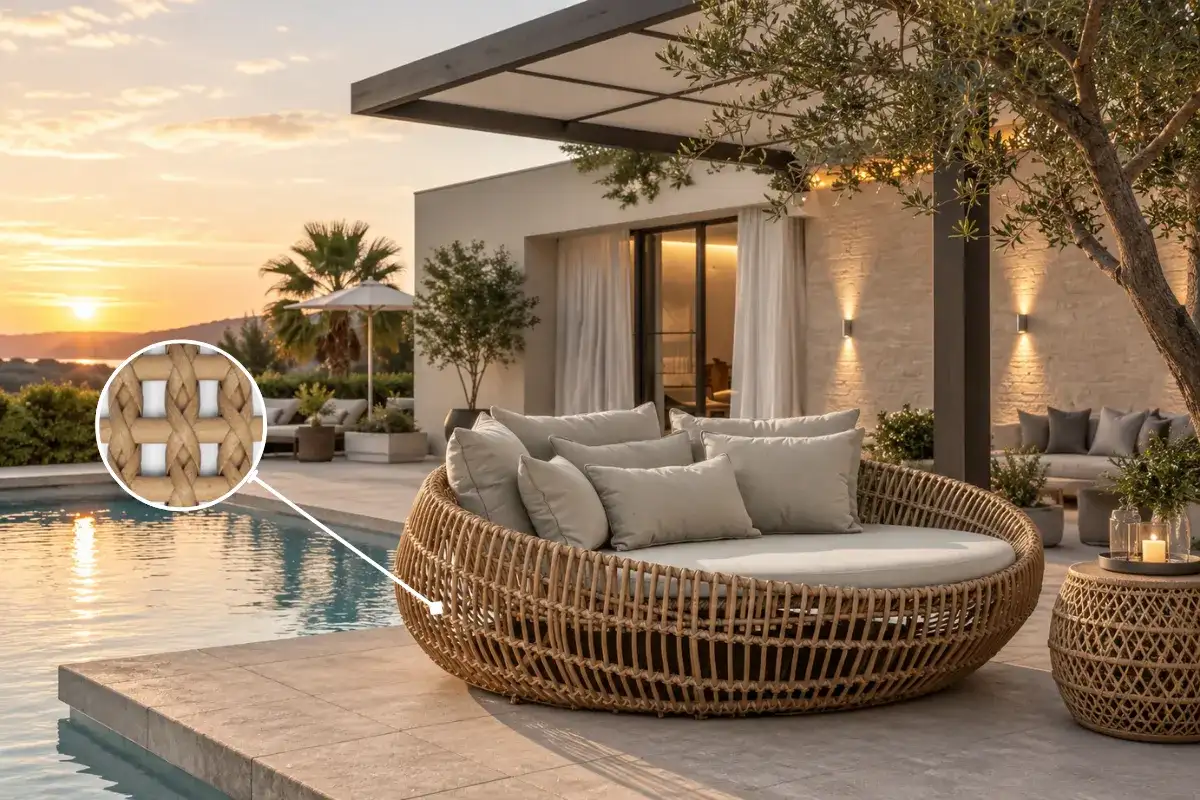
HDPE wicker and outdoor rope bring texture and durability to resort spaces.
3.3 Teak Wood
Teak is frequently selected for luxury beachfront projects because of its natural appearance and ability to integrate with tropical, coastal and contemporary resort concepts.
Buyers should nevertheless understand the expected appearance and maintenance of natural wood. Exposure can gradually alter its surface appearance, and maintenance expectations should be established before specifying teak across a large commercial area.
Combining teak with aluminum, rope or outdoor fabrics can provide the warmth of natural wood without requiring every structural component to be made from timber.
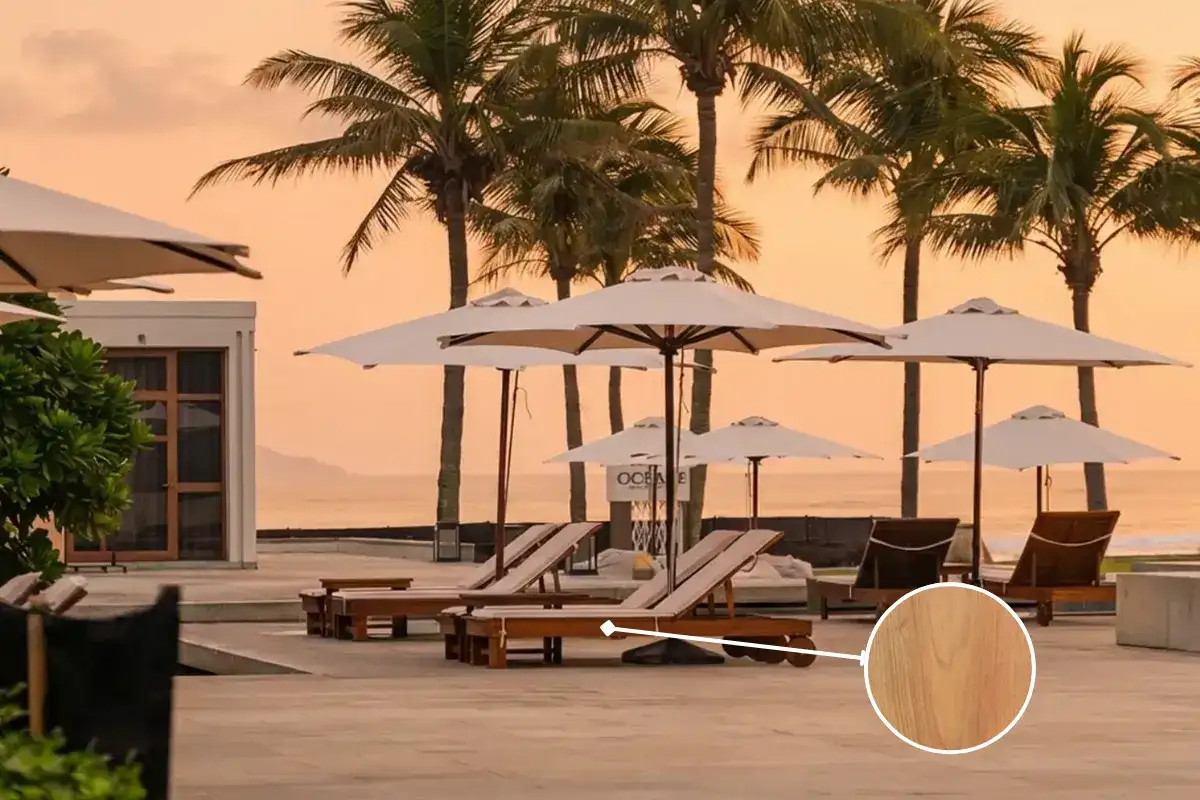
Teak adds natural warmth to premium beachfront spaces.
3.4 Outdoor Fabrics and Cushion Systems
Cushions are one of the most operationally sensitive components in a beach club. Buyers should examine fabric weight and construction, UV performance, water repellency, removable covers, zippers and the internal foam system.
Quick-dry foam can be considered for demanding poolside and beachfront applications where reducing downtime after moisture exposure is important. Replacement covers are also worth discussing during procurement rather than waiting until they are needed several seasons later.
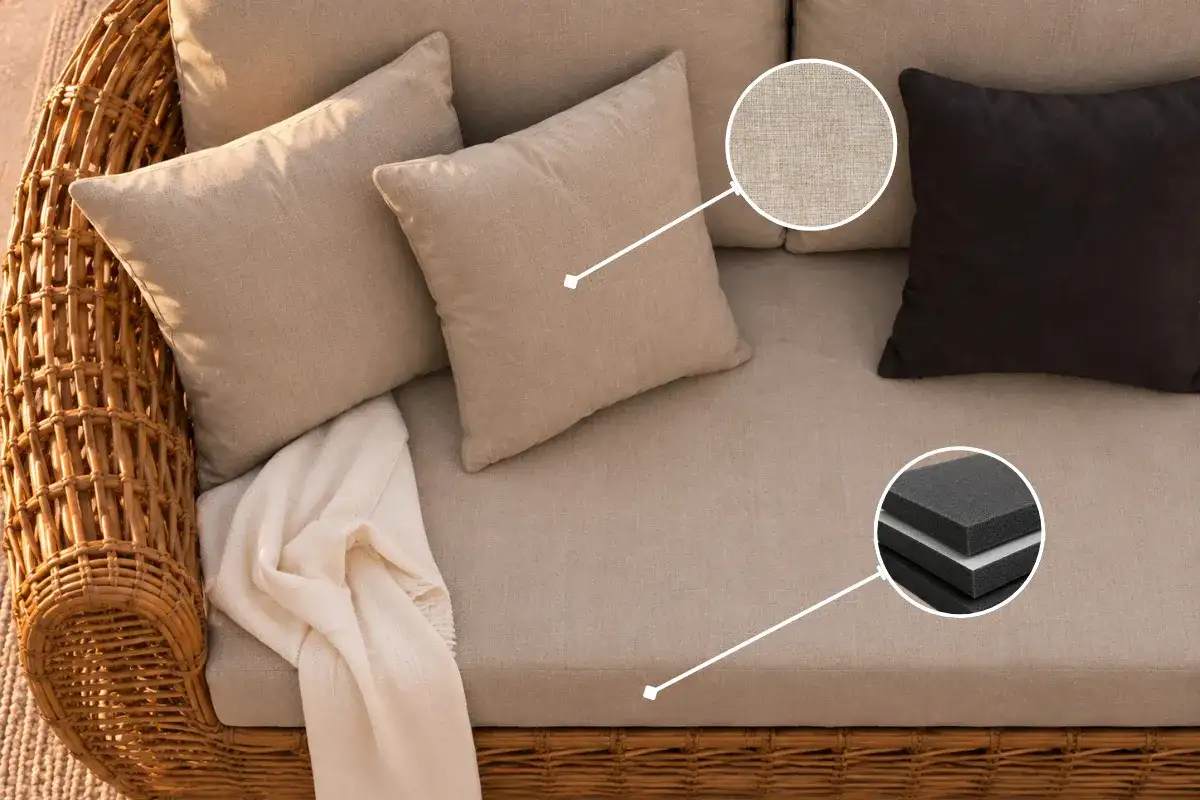
Fabric performance directly affects comfort and daily beach club operations.
4. How to Plan High-Capacity Sunbed and Lounge Layouts
Layout planning is where product selection becomes an operational decision. A catalogue may provide the dimensions of a sunbed, but those measurements do not represent the complete space required when the product is installed and used.
For high-capacity projects, procurement and design teams should work from actual dimensions rather than estimating product scale from photographs.
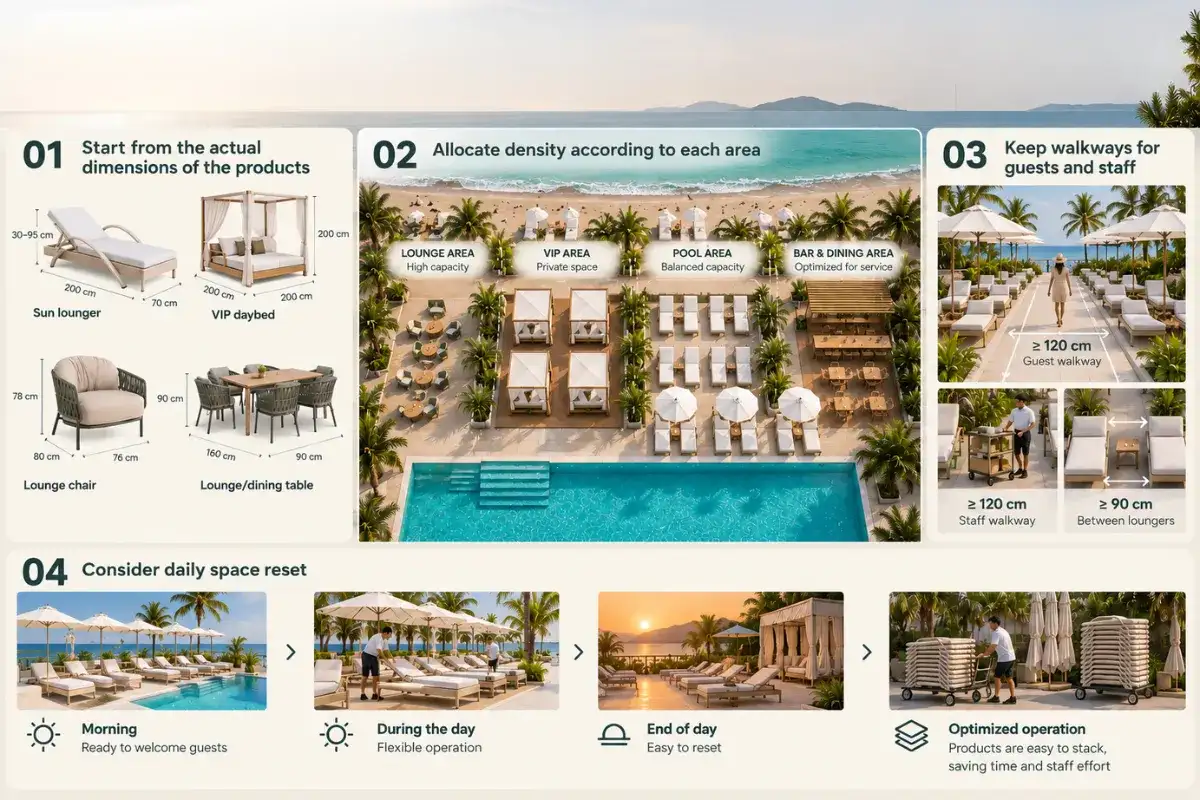
Effective beach club layouts balance dimensions, density, circulation and daily reset.
4.1 Start With the Exact Product Footprint
The planning footprint should account for product width and depth as well as access from the front and sides. Reclining loungers need sufficient clearance for different backrest positions, while large daybeds may require access from multiple sides.
Cabanas introduce additional considerations such as canopy structures, curtains and cushion removal.
This is especially important when comparing a conventional lounger with a round or double daybed. The larger product may accommodate more guests, but its operational footprint can increase considerably once circulation is included.
4.2 Match Seating Density to Different Guest Zones
High-capacity design does not require equal density throughout the property.
Standard beachfront rows can use individual loungers efficiently, while front-row or premium zones can provide more generous spacing. VIP areas can then use larger daybeds and cabanas to create privacy and differentiated service. This approach allows operators to increase overall capacity without making every section feel densely arranged.
4.3 Protect Guest and Staff Circulation
A layout can look spacious on a floor plan but become difficult to operate once guests, bags, towels, side tables and service staff are added.
Walkways should therefore consider guest access as well as cleaning and service routes. Applicable local safety and accessibility requirements should also be verified during project planning rather than relying on a universal spacing figure.
Service efficiency matters even more in large installations. A small inconvenience repeated across 100 loungers can become a significant operational problem every day.
4.4 Plan for Daily Reset, Cleaning and Events
Many beach clubs transform throughout the day. A sunbed-focused morning environment may become a social lounge in the afternoon and an event space after sunset.
Products that are reasonably easy to move, clean and reconfigure give operators more flexibility. Stackability, storage requirements, replaceable glides, removable cushion covers and modular configurations should therefore be evaluated alongside appearance.
This is also where lifecycle cost becomes more useful than purchase price alone. A slightly higher initial investment may be justified when a product reduces maintenance, replacement or labor requirements over repeated commercial use.
5. How to Choose a Beach Club Outdoor Furniture Supplier
For large hospitality projects, choosing the product and choosing the supplier are closely connected. Even a suitable design can become problematic if dimensions vary between units, finishes are inconsistent or production cannot meet the required quantity and timeline.
Commercial buyers should therefore evaluate manufacturing capability alongside price.
5.1 Manufacturing Capability and Commercial Experience
The first question is whether the supplier can reliably reproduce the approved specification across the complete order.
Buyers can examine factory capability, production processes, material sourcing, quality-control procedures, export experience and previous hospitality work. These factors become increasingly important when a project contains several product categories and customized finishes.
ATC Furniture has manufactured outdoor products in Vietnam since 2006 and operates a production facility of approximately 30,000 square meters. Its product portfolio includes outdoor sofa sets, dining sets, loungers, daybeds, swing chairs and bar sets for residential and commercial projects.
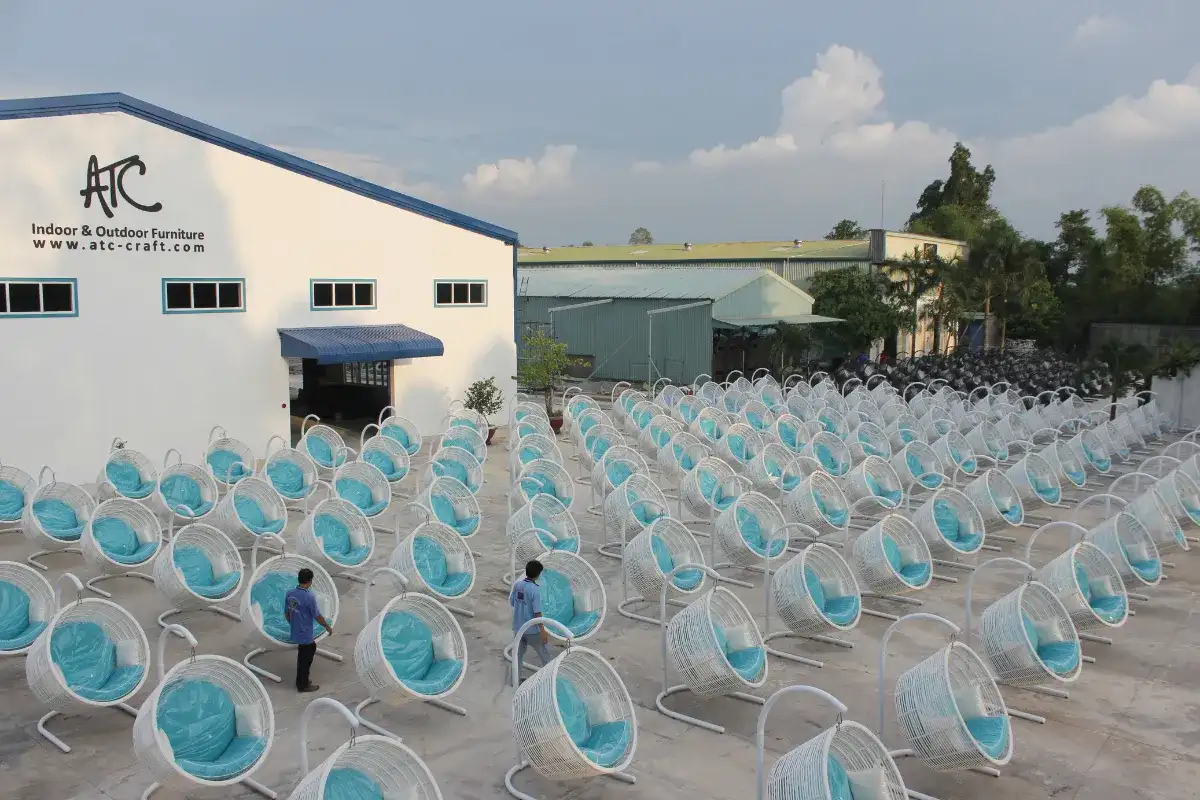
Experienced manufacturers can better manage volume, consistency and project requirements.
5.2 Confirm Materials Before Bulk Production
Material names alone are not enough for a commercial order. Buyers should confirm the actual colors, textures and specifications that will enter production.
Physical swatches for wicker, rope, fabrics and finishes can help prevent misunderstandings. For customized projects, an approved sample or pre-production unit can provide another checkpoint for dimensions, comfort, construction and appearance.
The objective is to establish a clear reference before dozens or hundreds of units are manufactured.
Experienced manufacturers can better manage volume, consistency and project requirements.
5.3 Evaluate OEM and ODM Capability
Beach club projects often require modifications because standard catalogue dimensions or colors may not fit a particular concept.
OEM and ODM capability can allow buyers to customize dimensions, weaving colors, rope, fabrics, cushions and selected structural details. However, customization is valuable only when the manufacturer can reproduce the approved design consistently during bulk production.
For large projects, each customization should therefore be documented through drawings, specifications, material approvals or samples where appropriate.
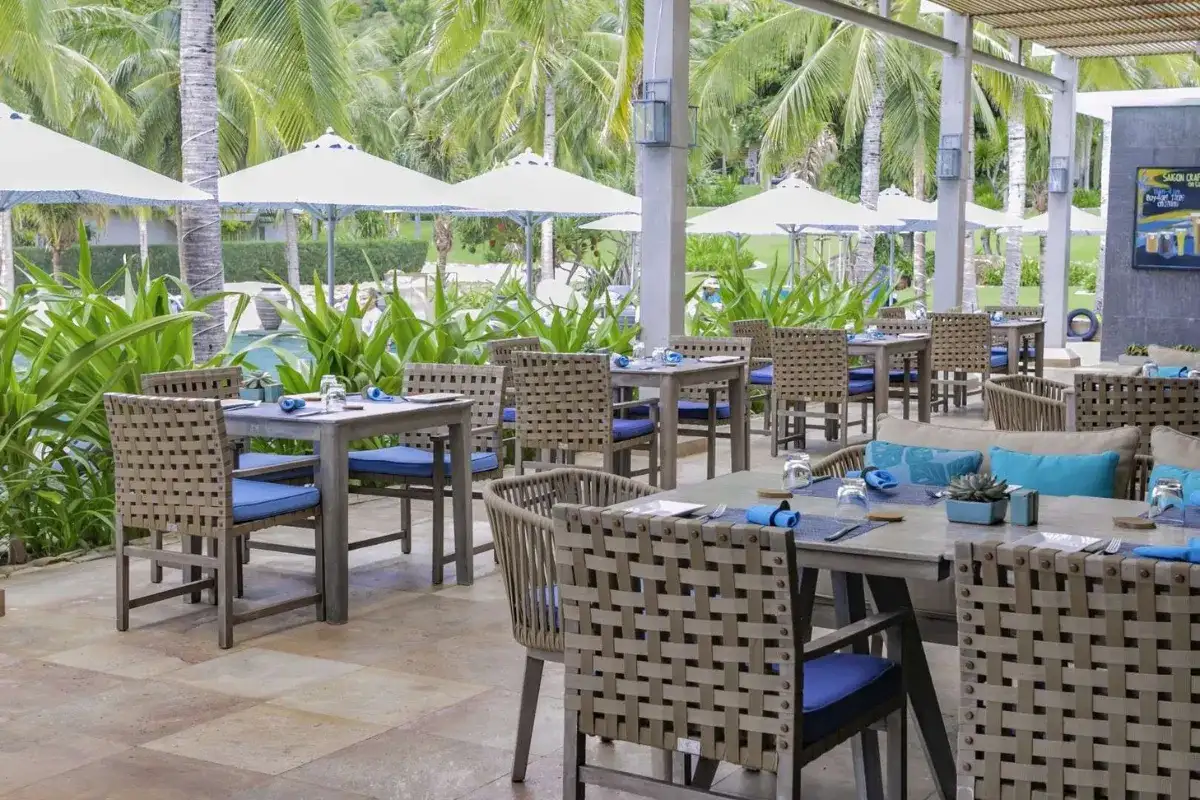
Product customization requires a balance between design requirements and consistency in production.
5.4 Review Quality Control Before Shipment
Quality control should take place throughout production rather than only when finished products are packed.
At ATC Furniture, the process can include incoming material inspection, frame fabrication checks, surface finishing, weaving verification, cushion and upholstery inspection, final product inspection and packaging checks before shipment.
For a commercial beach club order, buyers should agree on the relevant inspection criteria before production. This creates a clearer reference for both the manufacturer and any pre-shipment inspection process.
5.5 Check MOQ, Lead Time, Packaging and Export Support
Before placing a bulk order, buyers should also confirm MOQ, whether different models can be combined, expected production lead time, export packaging and container-loading requirements.
Replacement components deserve attention at this stage as well. Cushion covers, glides or other replaceable elements can be much easier to source when specifications and colors remain documented from the original production.
ATC Furniture's standard MOQ is one 40'HC container, with up to seven models mixed within the container, making project planning and model selection important before quotation and production.
6. FAQ About Beach Club Outdoor Furniture
6.1 What furniture does a beach club need?
Most beach clubs use a combination of sun loungers, daybeds, cabanas, lounge chairs, sofas, side tables, dining sets, bar seating and shade solutions. The exact mix should reflect guest capacity, service model, available space and the distinction between standard and VIP zones.
6.2 What is the best material for beach club outdoor furniture?
There is no single best material for every project. Powder-coated aluminum is lightweight and practical, HDPE wicker provides a resort-style woven appearance, outdoor rope suits contemporary designs, and teak offers natural warmth. Material selection should consider coastal exposure, maintenance, intended use and project aesthetics.
6.3 What should buyers look for in commercial beach club daybeds?
Buyers should evaluate dimensions, frame construction, stability, cushion comfort, fabric performance, drainage, canopy operation and maintenance requirements. For large orders, consistency between units and the availability of replacement cushions or covers should also be considered.
6.4 Which loungers are suitable for oceanfront beach clubs?
Suitable oceanfront beach club loungers should be designed for outdoor commercial use and specified for the conditions of the project. Buyers should examine UV exposure, corrosion resistance, frame construction, outdoor fabrics, reclining mechanisms, ease of cleaning and how frequently staff will need to move the loungers.