Standard Bar Table and Chair Dimensions Based on Anthropometrics 2026
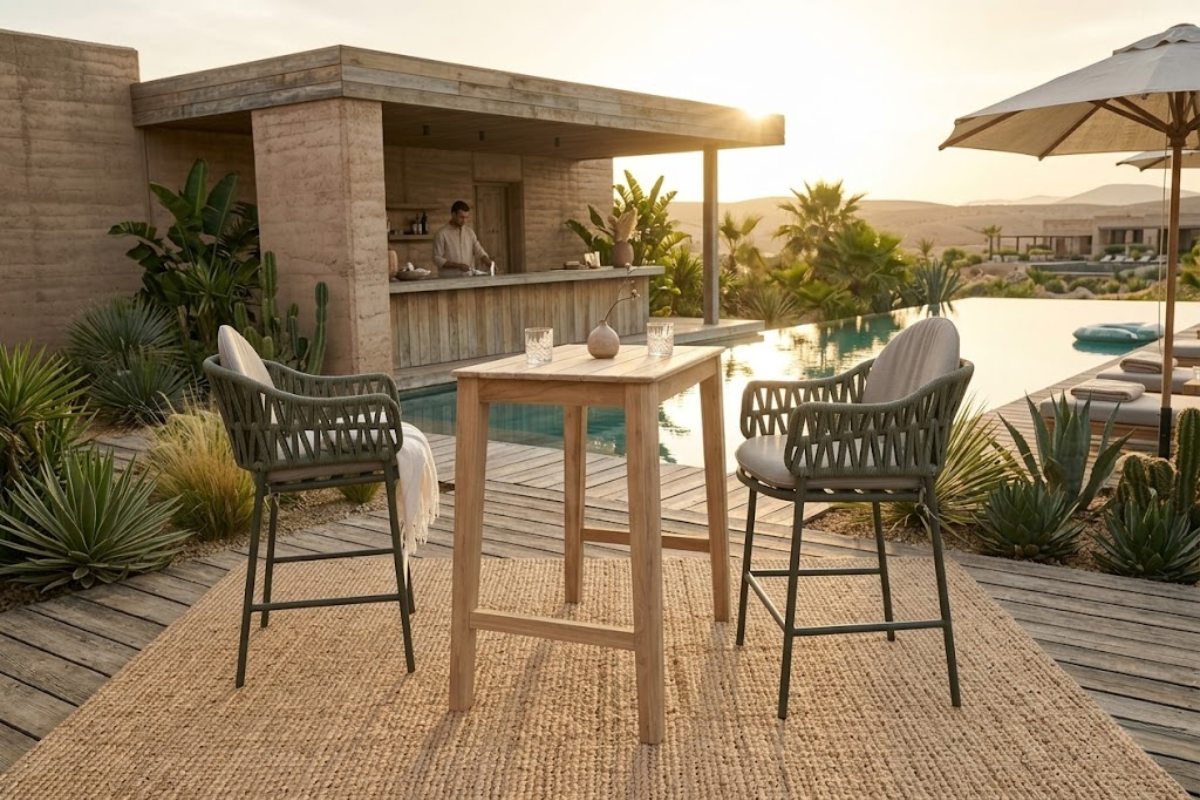
Designing and selecting accurate bar table and chair dimensions based on modern anthropometric standards not only optimizes operational efficiency for staff, but also delivers an absolute sense of comfort and luxury for guests and homeowners. These proportions help define a refined identity for the entire architectural space.
1. The Importance of Defining Standard Bar Counter Dimensions for Premium Spaces
Bar areas in villas, resorts, hotels, and high-end entertainment destinations are often considered the focal point where artistic connection meets an upscale lifestyle. Choosing the right bar table and chair dimensions is not only an aesthetic decision, but also a deep understanding of the human experience. A well-balanced design proportion creates true physical comfort, inspires the enjoyment of premium cocktails, and enhances the overall appearance of the entire project.
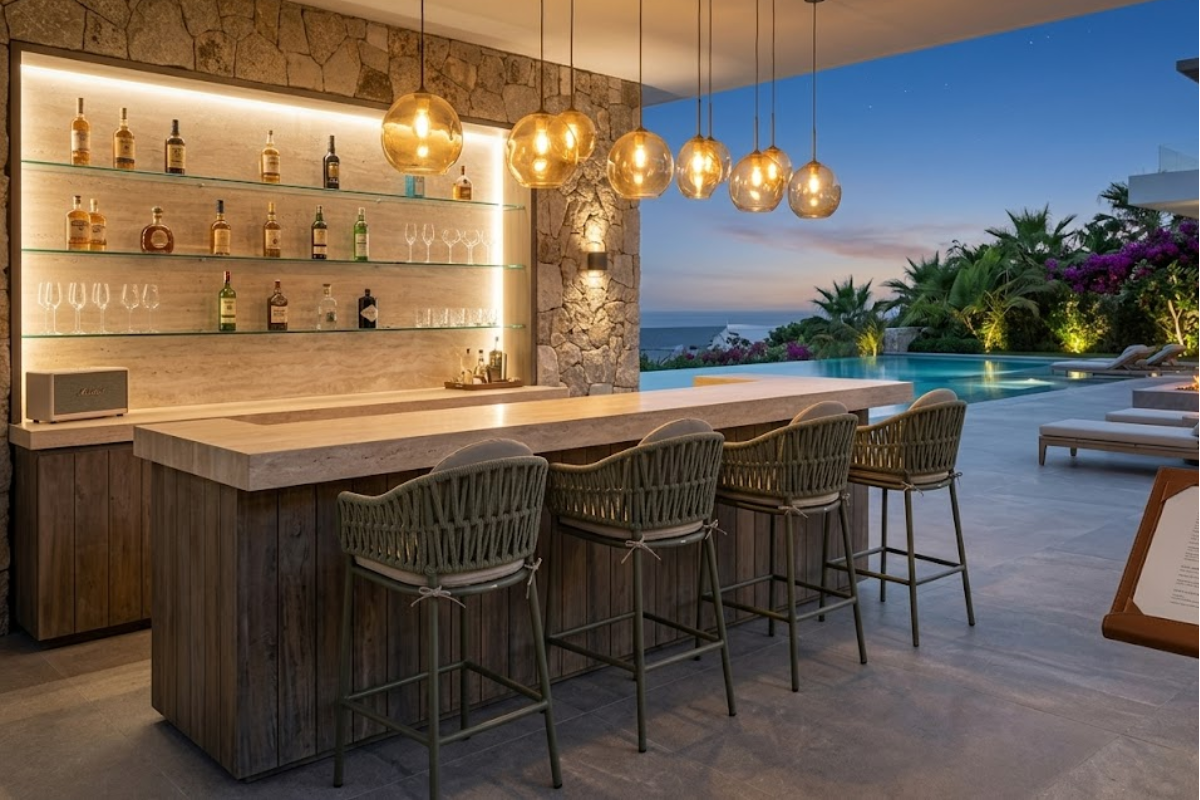
A well proportioned bar counter and seating layout brings comfort, elegance, and a refined social atmosphere to luxury villas and resorts.
2. Standard Bar Counter Dimensions for Different Architectural Spaces
2.1 Café Spaces: Natural Communication Proportions
In modern café architecture, the standard height of the outer bar counter, which is the customer-facing side, usually ranges from 100 to 110 cm, while the ideal countertop width is 80 cm. These measurements are carefully calculated based on the modern Asian body proportion, helping baristas and customers maintain a comfortable eye level. This balanced proportion creates a sense of closeness and respect while enhancing the customer’s experience of watching the handcrafted brewing process.
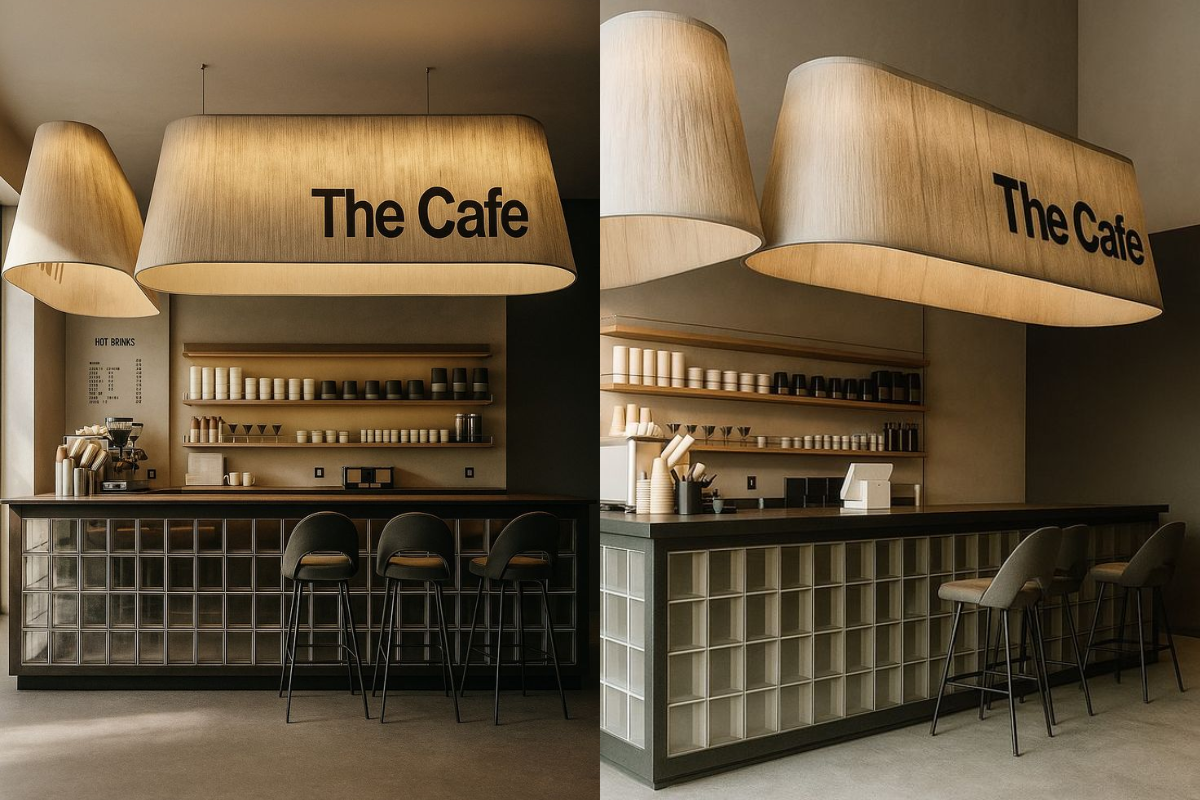
A well balanced cafe bar counter height creates a comfortable interaction between guests and baristas while enhancing the overall customer experience. (source: internet)
Bar counter systems often prioritize L-shaped, U-shaped, or softly curved designs to free up circulation space, maximize service capacity, and create visual appeal as guests observe baristas at work.
2.2 Wine Bar and Lounge Spaces: Artistic Flexibility
Bar counter systems in premium lounges and wine bars require flexible design variations to harmonize with the overall structure and exterior lighting concept.
Height: Usually maintained between 110 and 120 cm to create a tall, elegant seating posture that flatters the guest’s appearance.
Width: Designed within a refined range of 60 to 70 cm, offering enough space for professional glassware, premium leather menus, and light finger food without creating a cramped feeling.
Length: Calculated scientifically based on the desired guest capacity. The standard center-to-center distance between bar chairs is always between 60 and 75 cm to maintain the minimum level of personal space for each guest. Therefore, a premium bar counter measuring 6 to 7 meters in length is ideal for arranging 8 to 10 elegant seating positions.
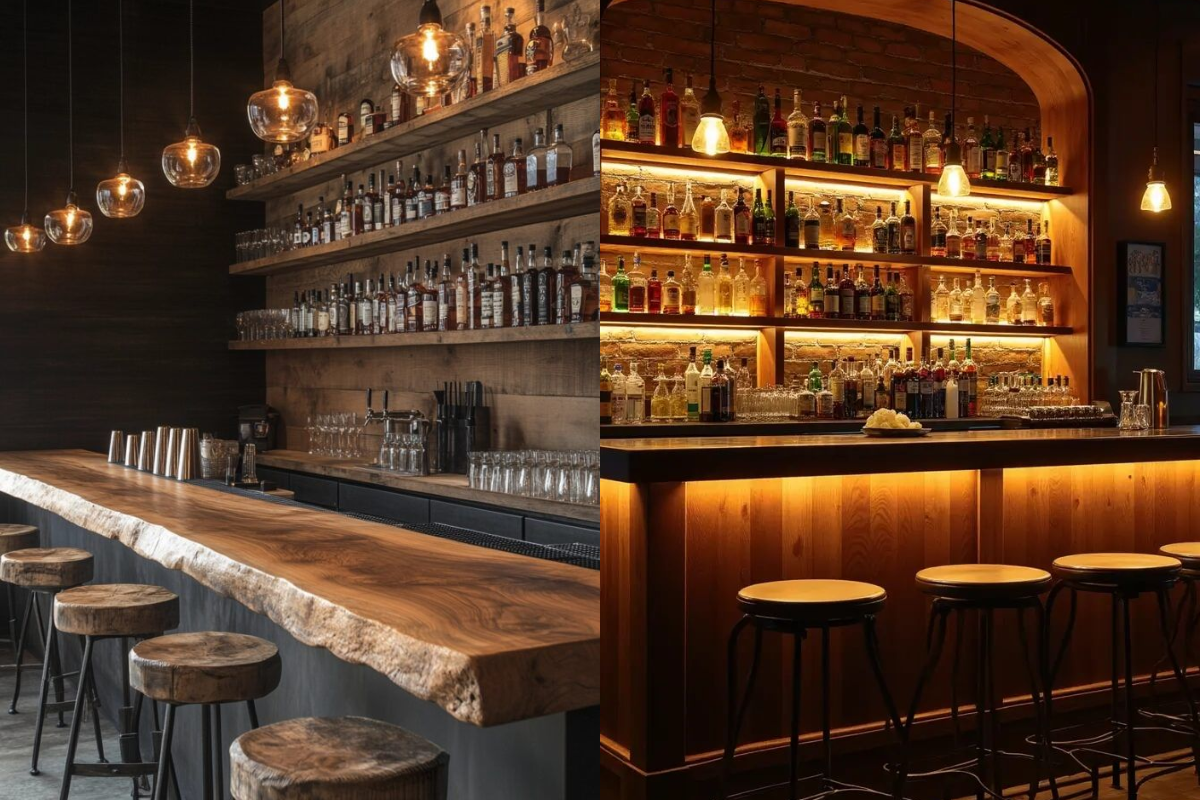
A well planned lounge bar layout balances height, spacing, and warm lighting to create a refined and comfortable experience for every guest. (source: internet)
2.3 Fine Dining Restaurant Spaces: Functional Complexity
For dining zones integrated with lounge areas, international standard restaurant bar counter dimensions are usually slightly higher, ranging from 107 to 122 cm. The countertop width can vary from 45 to 60 cm depending on the menu concept. The core principle in restaurant bar design is structural layering. The inner preparation counter for staff should be 15 to 20 cm lower than the outer service counter for guests, helping discreetly hide technical tools while ensuring a clean and professional presentation.
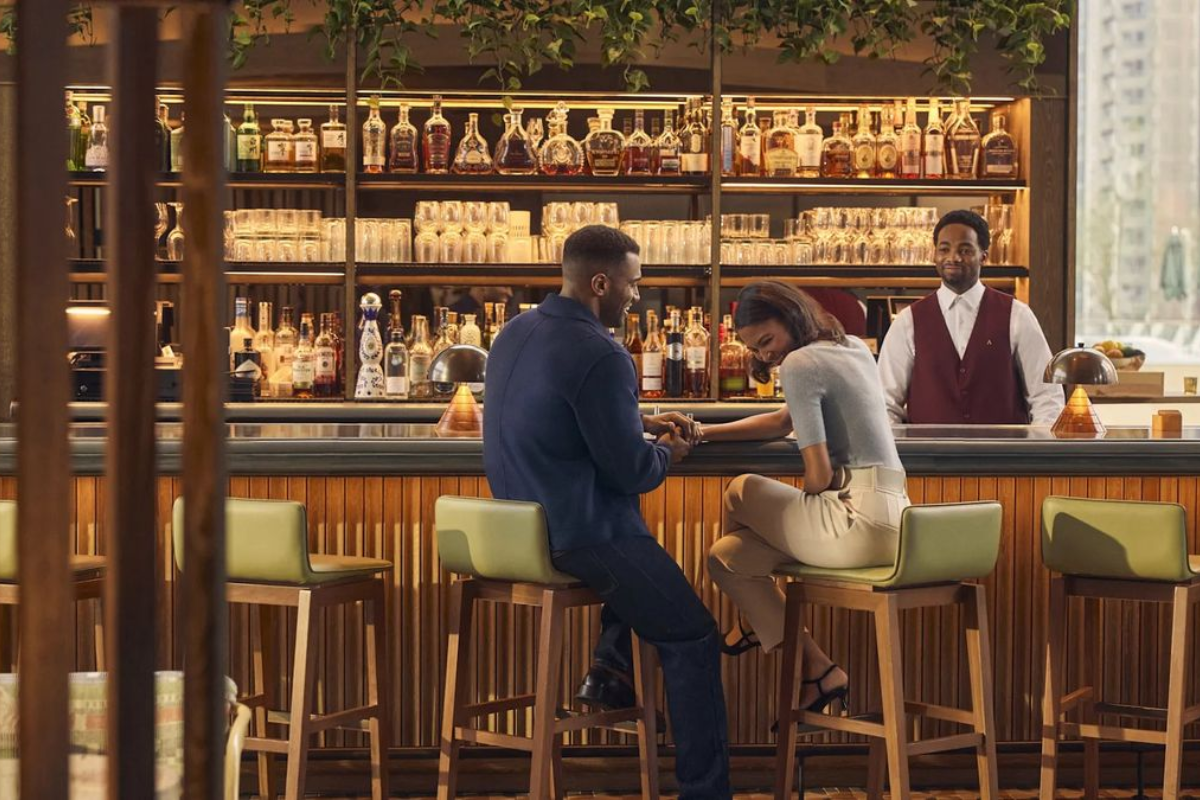
A well structured restaurant bar balances guest comfort, service efficiency, and visual refinement, creating a polished dining and lounge experience. (source: internet)
2.4 Family Kitchens and Penthouses: Modern Warmth
The trend of integrating bar counters into upscale living spaces such as villas and penthouses is becoming increasingly popular. Family bar counter dimensions are often refined and compact to harmonize with the kitchen island system. The most common standard height for a home bar counter ranges from 90 to 105 cm, paired with a stone countertop width of 40 to 50 cm. This setup not only serves as an intimate space for welcoming guests and enjoying wine, but can also function as a convenient breakfast counter, seamlessly connecting the living room, kitchen, and breezy rooftop balcony.
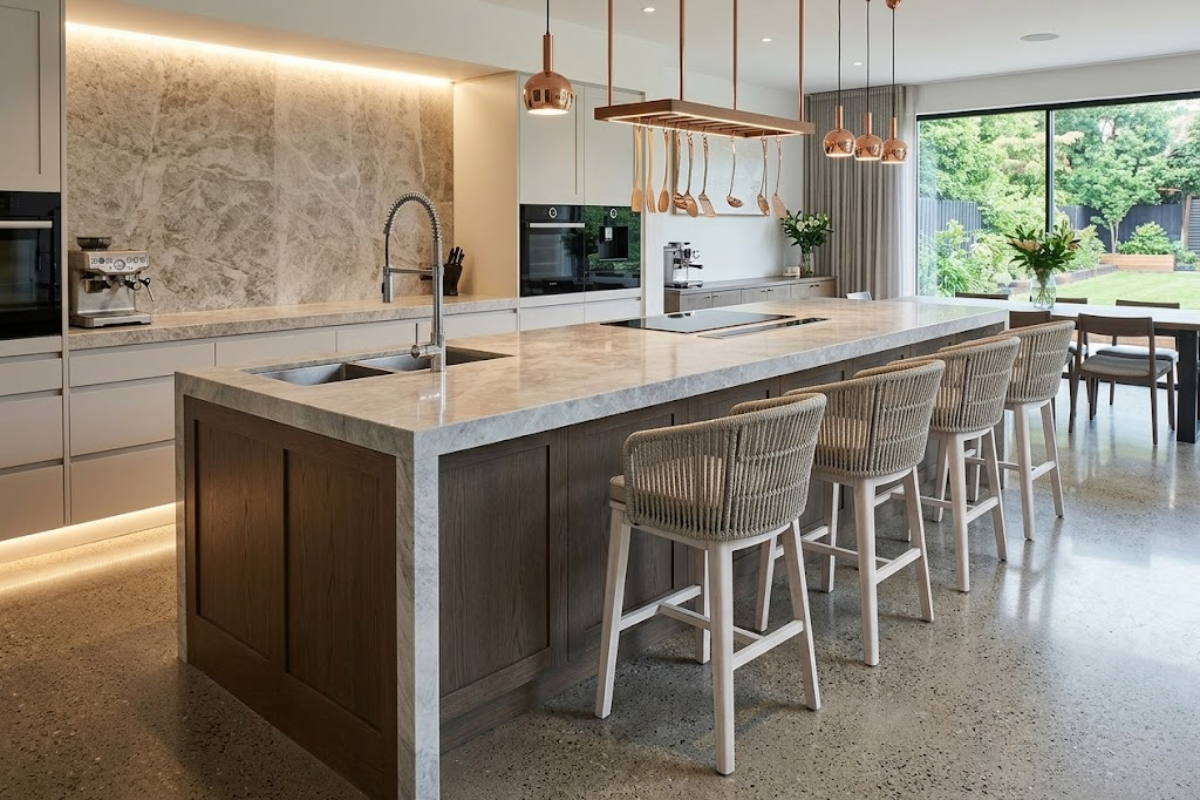
A thoughtfully designed kitchen island bar brings warmth, functionality, and a refined sense of connection to modern family homes and penthouses.
3. Standard Bar Chair Dimensions for Optimized Sitting Posture
The harmony between the chair and the countertop is the key to true relaxation. The golden rule of anthropometrics states that the bar seat height should be 30 to 35 cm lower than the bar tabletop to ensure enough thigh clearance and allow the body to sit in the most natural and relaxed position.
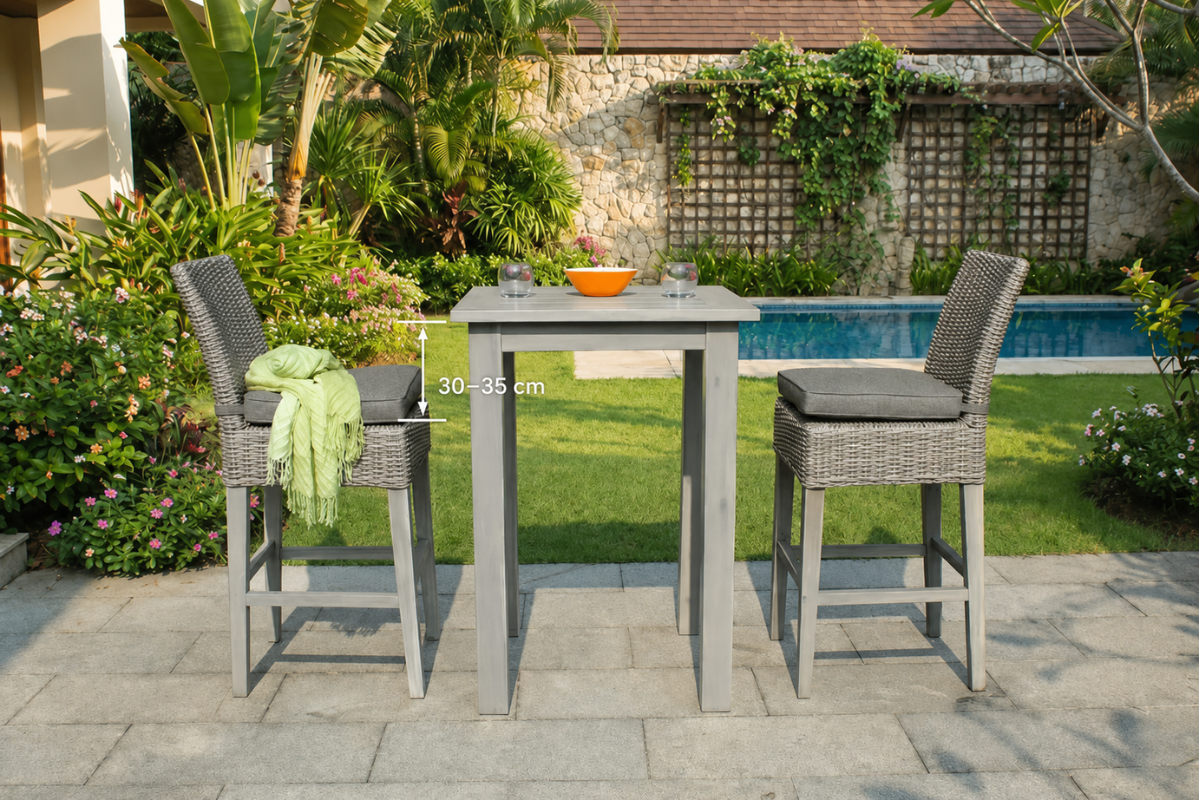
A 30 to 35 cm gap between the bar seat and tabletop helps create a relaxed posture and a more comfortable outdoor dining experience.
3.1 Standard Seat Width
To maintain mobility, lightness, and stability, the standard bar chair seat width usually ranges from 400 to 460 mm. The seat depth is also designed proportionally to support the hips comfortably, offering a secure feeling even though bar chairs are typically taller than regular furniture pieces.
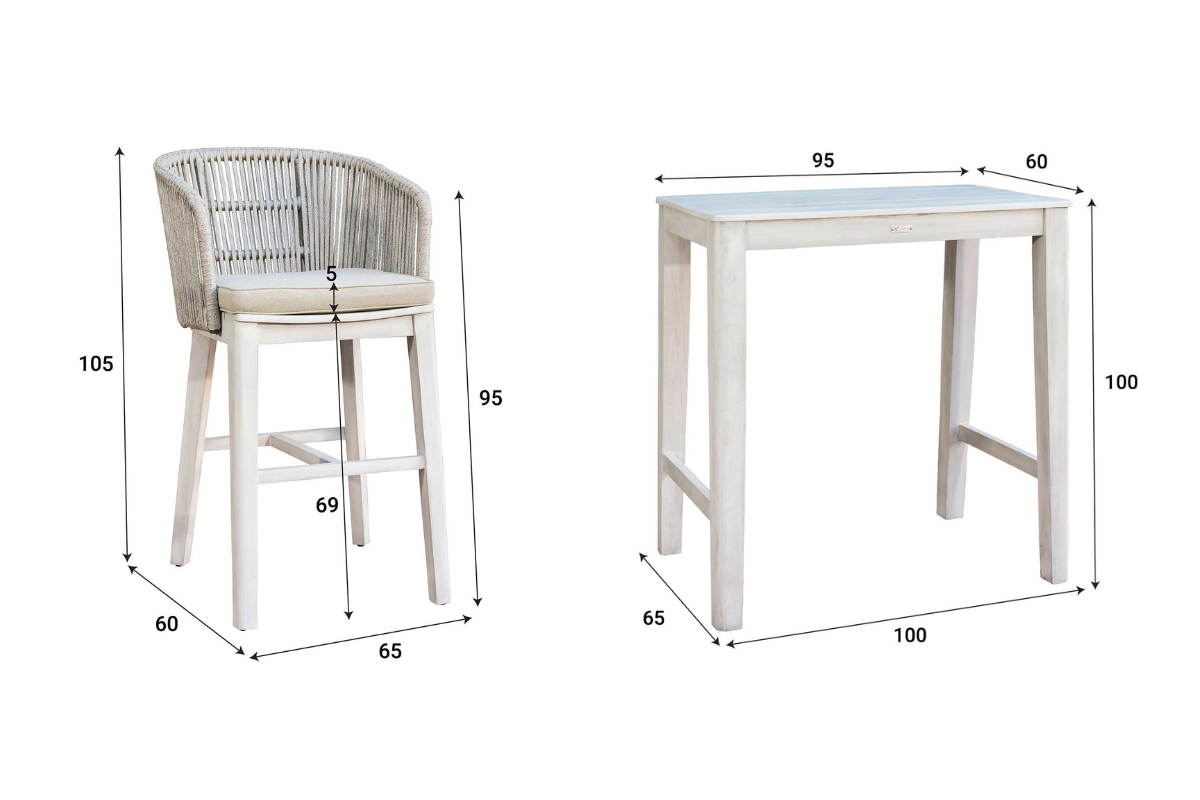
Fixed height bar chairs paired with proportionate bar tables help create a comfortable and balanced seating arrangement for outdoor entertaining.
3.2 Fixed-Height Bar Chairs
Fixed-height bar chairs usually have a seat height of 750 to 850 mm, measured from the floor to the seat cushion, and are suitable for bar counters from 105 to 115 cm high. In premium segments, the leg frame is usually integrated with a metal or natural wood footrest placed 20 to 30 cm above the floor, helping reduce pressure on the legs during long periods of sitting.
3.3 Adjustable-Height Bar Chairs
For spaces that serve different customer groups with different needs, bar chairs with a hydraulic piston mechanism are an advanced solution. The adjustable height range of this type of chair usually varies from 450 to 800 mm or from 600 to 900 mm, allowing it to adapt easily to both regular kitchen islands and specialized outdoor bar counters with a simple adjustment.
4. Premium Criteria for Designing Bar Table and Chair Systems
4.1 Choosing a Chair Style That Matches the Architectural Concept
The high-end furniture market offers a wide range of options, from minimalist backless bar stools that can be tucked neatly under the counter to high-back chairs with a classic royal appearance. For spaces that emphasize openness, luxury, and a strong sense of identity, round or softly curved bar chair designs are often preferred to reduce the stiffness of straight architectural lines.
4.2 Selecting Premium Materials to Express Sophistication
The luxury of a bar furniture system is clearly reflected through its materials. Alongside powder-coated metal, natural wood, and marble, premium synthetic rattan bar table and chair sets are becoming a highly sought-after signature choice for semi-outdoor spaces such as villa balconies, resort pool areas, and rooftops. New-generation synthetic rattan combined with a specialized powder-coated aluminum frame not only withstands UV rays and humidity effectively, but also delivers an elegant, refined appearance, minimizes maintenance costs, and preserves its artistic value over time.
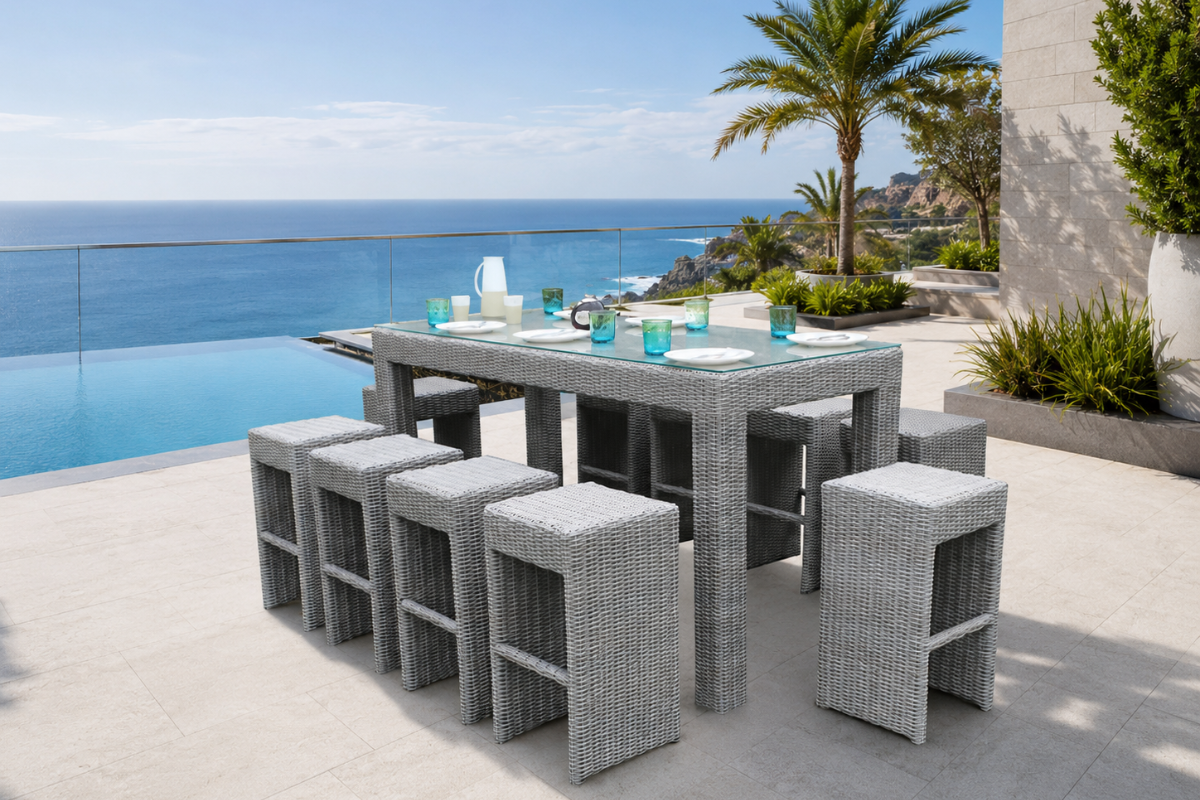
Premium wicker bar furniture paired with a coastal outdoor setting reflects durability, elegance, and lasting appeal for villas, resorts, and semi open spaces.
4.3 Perfect Compatibility with the Available Space
The dimensions of bar chairs must be calculated based on seating density and actual floor area. Slim, minimalist chairs made with rope or open-weave synthetic rattan are ideal for busy areas because they create an airy feeling and allow better ventilation. In contrast, for VIP rooms or spacious penthouses, homeowners can freely choose more substantial bar chairs with thick cushions and a stronger design presence to express their personal aesthetic identity.
Slim rope bar chairs and a compact bar table create an airy, elegant arrangement that suits open outdoor spaces and refined resort settings.
5. Conclusion
A perfect bar counter system is not measured only by static numbers, but by the way the body feels when leaning back and enjoying a refined living space. Let your entertainment area become a vivid symbol of an upscale lifestyle by investing in furniture with the most precise bar table and chair dimensions. Explore ATC Furniture’s masterpieces of sofas, bar table and chair sets, and premium synthetic rattan furniture to create artistic and timeless living spaces with us.
6. Frequently Asked Questions About Bar Table and Chair Dimensions
6.1 What is the ideal bar seat height to prevent back fatigue?
The ideal bar seat height should always be 30 to 35 cm lower than the bar tabletop. This anthropometric distance allows the sitter to maintain a naturally upright spine, place both arms on the tabletop at a relaxed right angle, and avoid hunching or thigh pressure during long-term use.
6.2 What is the minimum space required to build a home bar counter?
To design a compact yet functional home bar counter, you need a minimum space with a length of about 1.2 meters, a width of 40 to 45 cm, and a height of around 90 to 100 cm. The area around each bar chair should have a minimum clear radius of 60 cm from the chair center to ensure comfortable sitting, standing, and movement within the kitchen.
6.3 How should the spacing between bar chairs on the same counter be calculated?
The ideal distance from the center of one chair to the center of the next chair is between 60 and 75 cm. This spacing ensures that two people sitting side by side remain completely comfortable, prevents elbow collisions while eating or drinking, and creates a clear circulation path behind the bar counter.
6.4 Should resorts choose bar chairs with backrests or backless stools?
This choice depends on how long guests are expected to stay at the bar. For pool bars or quick order counters, backless bar stools are the optimal choice because they are flexible and compact. However, for lounges, restaurants, or indoor wine bars where guests stay longer, bar chairs with mid-height or high backrests and thick cushions are essential to provide maximum comfort and relaxation throughout the resort experience.
6.5 How Do I Choose The Right Chair Height For A Bar Table?
Measure the table height first, then choose a chair or stool that leaves about 25–30 cm of space between the seat and the underside of the tabletop. This usually provides enough legroom and a comfortable sitting position.